
US military’s CENTCOM launches air exercise as Washington shifts significant forces to region to enable possible strike on Iran after regime’s devastating crackdown on protesters
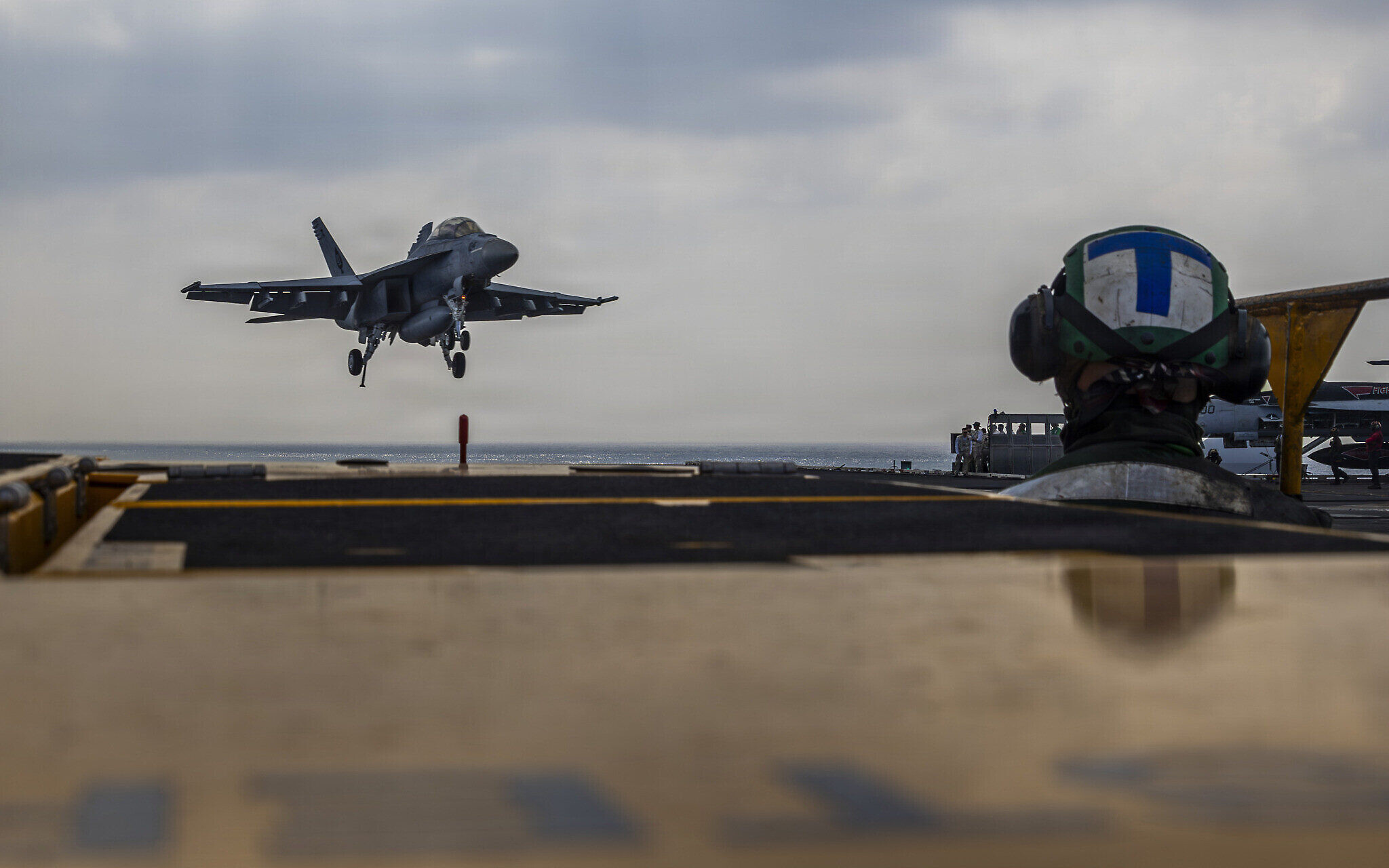
The United States announced on Tuesday that it was conducting an aerial military exercise in the Middle East amid ongoing tensions with Iran.
The US Ninth Air Force — also known as Air Forces Central (AFCENT) — the air component in United States Central Command (CENTCOM) — will be conducting a “multi-day readiness exercise to demonstrate the ability to deploy, disperse, and sustain combat airpower across the US Central Command area of responsibility,” AFCENT said.
The drill came a day after CENTCOM announced that the USS Abraham Lincoln aircraft carrier and accompanying warships had arrived in the Middle East.
The strike group’s arrival boosts the US’s available firepower and defensive capabilities in the region, giving Trump the option to launch an attack on Iran.
“The Abraham Lincoln Carrier Strike Group is currently deployed to the Middle East to promote regional security and stability,” CENTCOM said Monday.
AFCENT said Tuesday that during the drill, US forces would “deploy teams to multiple contingency locations and validate rapid set-up, launch and recovery procedures with small, efficient support packages,” adding that it will “conduct all activities with host-nation approval and in close coordination with civil and military aviation authorities, emphasizing safety, precision and respect for sovereignty.”
“This exercise is designed to enhance asset and personnel dispersal capability, strengthen regional partnerships and prepare for flexible response execution throughout CENTCOM,” the US statement read. It added that the drill will allow the Ninth Air Force “to validate procedures for rapid movement of personnel and aircraft; dispersed operations at contingency locations; logistics sustainment with a minimal footprint; and integrated, multi-national command and control over a large area of operations.”
The protests in Iran were sparked by the collapse of its currency, the rial, as Iranian citizens’ savings cratered in value, pushing millions to take to the streets for over two weeks. As of Tuesday, the rial traded with the US dollar at 1,077,500 to $1, nearly its lowest-ever value.
Over the weekend, opposition-linked outlet Iran International, which is based outside Iran, said more than 36,500 Iranians were killed by security forces between January 8 and 9, citing reports, documents, and sources. It was not immediately possible to verify the report.
And a new tally from the US-based Human Rights Activists News Agency said the regime crackdown killed at least 6,126 people while many others still are feared dead. The group has been accurate in multiple rounds of unrest in Iran. It verifies each death with a network of activists on the ground in Iran.
The group identified the dead as including at least 5,777 protesters, 214 government-affiliated forces, 86 children and 49 civilians who weren’t demonstrating. The crackdown has seen over 41,800 arrests, it added.
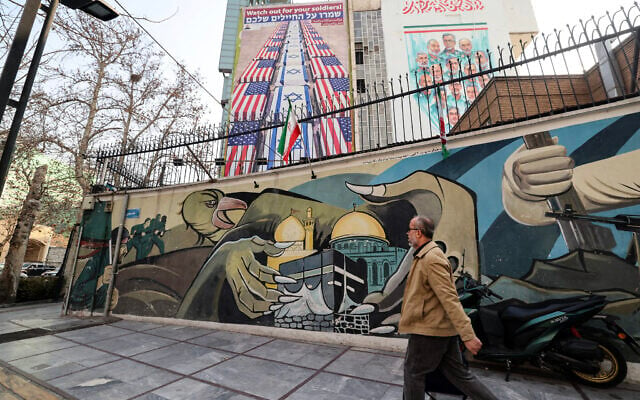
Iran’s government has put the death toll at a far lower 3,117, saying 2,427 were civilians and security forces, and labeled the rest “terrorists.” In the past, Iran’s regime has undercounted or not reported fatalities from unrest.
That death toll exceeds that of any other round of protest or unrest there in decades, and recalls the chaos surrounding Iran’s 1979 Islamic Revolution.
As the regime carried out its brutal crackdown, Trump vowed that “help is on the way,” and said he would take action against the regime if it began killing protesters en masse. While Trump backed down after he said Iran decided not to execute protesters, he has maintained that he may still take action against the regime. His move of significant military assets to the region could indicate a willingness to strike.
Trump has reportedly received multiple US intelligence briefings signaling that “the Iranian government’s hold on power is at its weakest point since the shah was overthrown in the 1979 revolution.”
Tehran has said in the past that it would target Israel and US military targets in the Middle East if Trump were to order strikes.
Times of Israel staff contributed to this report.

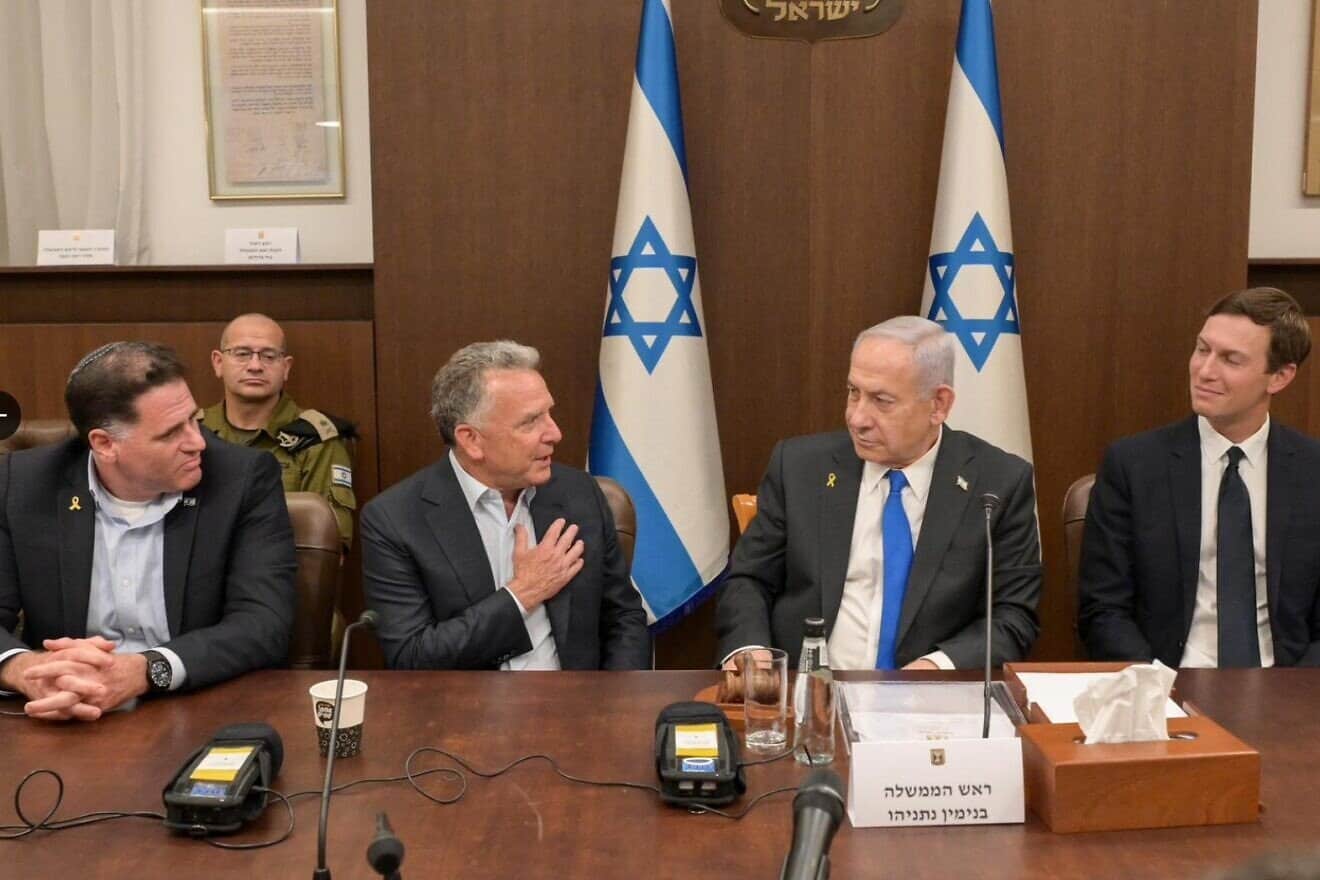 From left, Strategic Affairs Minister Ron Dermer, U.S. envoy Steve Witkoff, Prime Minister Benjamin Netanyahu and U.S. presidential representative Jared Kushner at an Israeli Cabinet meeting in Jerusalem on Oct. 9, 2025. Credit: GPO.
(Jan. 25, 2026 / JNS)
Israeli Prime Minister Benjamin Netanyahu met on Saturday with a United States delegation, including Special Envoy to the Middle East Steve Witkoff and the architect of the White House’s Gaza initiative, Jared Kushner, to discuss the implementation of Trump’s 20-point plan to end the Gaza Conflict.
“The discussion was constructive and positive, with both sides aligned on next steps and the importance of continued cooperation on all matters critical to the region,” Witkoff posted to X on Saturday. Also joining the discussion were White House advisor Josh Gruenbaum and Senior Advisor Aryeh Lightstone.
The U.S. delegation reportedly intended to
From left, Strategic Affairs Minister Ron Dermer, U.S. envoy Steve Witkoff, Prime Minister Benjamin Netanyahu and U.S. presidential representative Jared Kushner at an Israeli Cabinet meeting in Jerusalem on Oct. 9, 2025. Credit: GPO.
(Jan. 25, 2026 / JNS)
Israeli Prime Minister Benjamin Netanyahu met on Saturday with a United States delegation, including Special Envoy to the Middle East Steve Witkoff and the architect of the White House’s Gaza initiative, Jared Kushner, to discuss the implementation of Trump’s 20-point plan to end the Gaza Conflict.
“The discussion was constructive and positive, with both sides aligned on next steps and the importance of continued cooperation on all matters critical to the region,” Witkoff posted to X on Saturday. Also joining the discussion were White House advisor Josh Gruenbaum and Senior Advisor Aryeh Lightstone.
The U.S. delegation reportedly intended to 