Analysis: Tense day for Mossad chief Barnea at Langley

Can Israel influence the U.S. after Iran nuclear talks? This is what Mossad chief Barnea must now prove.

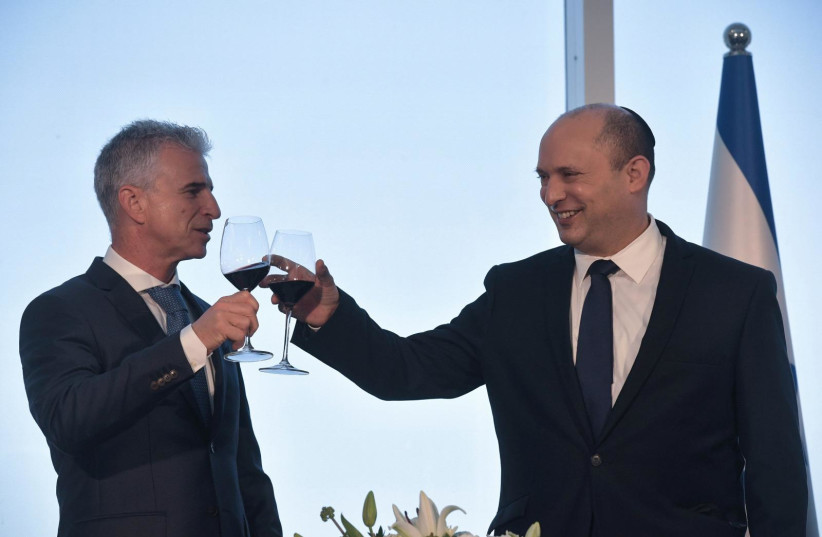
 PM Naftali Bennett and Mossad head David Barnea toast ahead of Rosh Hashana on September 1, 2021. (photo credit: KOBI GIDEON/GPO)
PM Naftali Bennett and Mossad head David Barnea toast ahead of Rosh Hashana on September 1, 2021.
(photo credit: KOBI GIDEON/GPO)
Shortly after this article goes up, Mossad Director David Barnea may be walking through the large lobby at the CIA Langley’s wall of stars for fallen intelligence heroes into one of the most critical and tense meetings of his career.
The fateful questions in the balance: can Israel influence the US after the shaky first week of Iran nuclear talks and has Barnea increased or lost personal influence following his major combative speech last Thursday.
During that speech, Barnea left no doubts about where he stands in the internal Mossad debates and the broader global discussions about how to handle the Islamic Republic.
Former Mossad chiefs Tamir Pardo, Shabtai Shavit, Efrayim Halevy and Danny Yatom have all in different ways said that Israel should try hard to stop Tehran from getting a nuclear weapon, but may need to plan for living with such a reality.
In contrast, most recently retired former Mossad director Yossi Cohen has said Israel and the clandestine agency have the power to act aggressively to prevent Iran from getting the bomb indefinitely.
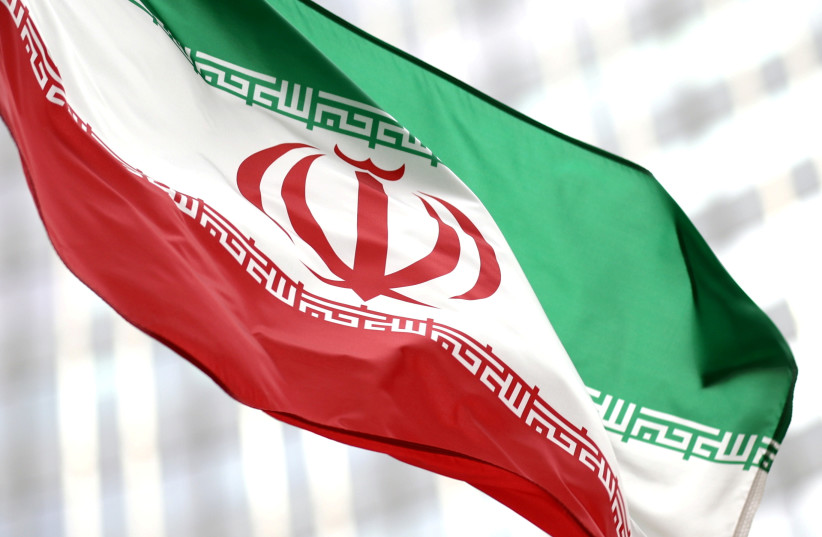
Iranian flag flies in front of the UN office building, housing IAEA headquarters, amid the coronavirus disease (COVID-19) pandemic, in Vienna, Austria, May 24, 2021. (credit: LISI NIESNER/ REUTERS)Iranian flag flies in front of the UN office building, housing IAEA headquarters, amid the coronavirus disease (COVID-19) pandemic, in Vienna, Austria, May 24, 2021. (credit: LISI NIESNER/ REUTERS)

One side wants to prevent a nuclear Iran, but is also concerned about acting too aggressively in a way that could lead Jerusalem into a regional war or permanently damage relations with the US.
The other side believes the Jewish state is a mini-super power that can use overt or covert force to stop the ayatollahs – the consequences be damned since a nuclear Iran would be far worse.
Last week, Barnea said, “Iran will not have nuclear weapons – not in the coming years, not ever. This is my personal commitment: This is the Mossad’s commitment.”
“Our eyes are open, we are alert, and together with our colleagues in the defense establishment, we will do whatever it takes to keep that threat away from the State of Israel and to thwart it in every way,” said the Mossad chief.
Barnea also sharply criticized the 2015 JCPOA nuclear deal as “terrible” and “barely tolerable.”
Reports are hazy, but it is also possible that Israel and the Mossad may have had a failed drone attack on Natanz over the weekend.
If Washington is Jerusalem’s big-brother, maybe Barnea might be worried that CIA Director William Burns might be ready to chew him out when he went loud and public against everything the Biden administration is striving for?
Was Barnea thinking that he would get a more attentive ear by going public with his criticism of US policy like the previous government of Benjamin Netanyahu?
There is one argument for this.
Maybe if the US really believes Israel is on the verge of overt or covert action against Iran, they might push harder for a deal on Jerusalem’s terms.
But Biden’s policy of wanting to rejoin the JCPOA takes into account many more factors than Israel’s security needs.
One combative speech by a new Mossad chief is not likely to change that policy, but it could lead to Barnea being more ignored.
If Barnea wanted to be seen as a trusted non-political convincing intelligence provider, wouldn’t he keep his criticisms private?
It turns out that either the government of Prime Minister Naftali Bennett is not as different from Netanyahu in publicly fighting with the US over Iran as some might have thought, or that Barnea himself has chosen Cohen’s path over the other former chiefs.
Five or so years from now when evaluating Barnea’s legacy and ability to convince or be ignored by his US counterparts, last week’s speech may stand out and today’s meeting might be when he gets some major CIA pushback.

Gantz, Mossad chief to pressure US to attack Iran – report

Israeli sources believe the failure of nuclear talks could help persuade the US to ramp up the pressure on Tehran.

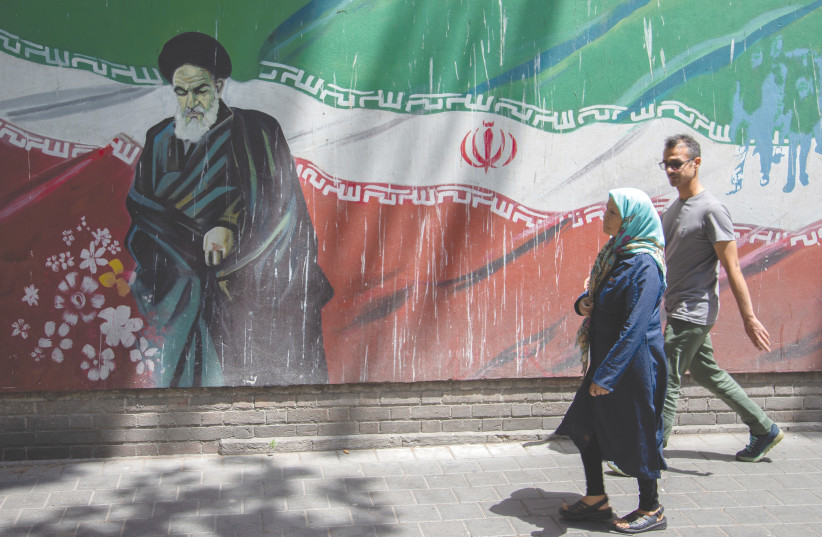
 PEOPLE PASS a mural of Iran's late leader Ayatollah Ruhollah Khomeini in Tehran (photo credit: NAZANIN TABATABAEE/WANA VIA REUTERS)
PEOPLE PASS a mural of Iran’s late leader Ayatollah Ruhollah Khomeini in Tehran
(photo credit: NAZANIN TABATABAEE/WANA VIA REUTERS)
Mossad chief David Barnea will fly out to Washington on Sunday evening to attempt to convince the US to engage in military action against Iran, Israeli media reported.
Defense Minister Benny Gantz is set to join the Mossad head in the United States on Thursday.
Indirect US-Iranian nuclear talks are reportedly on the brink of crisis, with European officials expressing dismay at the extreme demands of the Islamic Republic during the negotiations. Israeli sources believe the failure of the nuclear talks could help persuade the US to ramp up the pressure on Tehran, KAN News reports.
In a phone call between Prime Minister Naftali Bennett and US Secretary of State Antony Blinken on Thursday, the former said world powers must halt negotiations with and impose strict measures on Iran.
On Friday, Blinken himself said that the latest round of Iran nuclear talks ended because the Islamic Republic “does not seem to be serious.”

 President Isaac Herzog, Prime Minister Naftali Bennett, and Mossad chief David Barnea presented certificates of excellence to twelve Mossad employees. (credit: CHAIM TZACH/GPO)President Isaac Herzog, Prime Minister Naftali Bennett, and Mossad chief David Barnea presented certificates of excellence to twelve Mossad employees. (credit: CHAIM TZACH/GPO)

On Thursday, the Mossad head stated that Israel’s intelligence agency will thwart any attempts by Tehran to possess nuclear weapons.
“Iran will not have nuclear weapons – not in the coming years, not ever. This is my personal commitment: This is the Mossad’s commitment,” Barnea said.
Israeli President Isaac Herzog made a similar statement during a ceremony to accept US Ambassador to Israel Thomas Nides’ credentials, stating Israel will act on its own if the international community fails to foil Iran’s nuclear ambitions.
“If the international community does not take a vigorous stance on this issue—Israel will do so. Israel will protect itself,” Herzog said.


Deputy Defense Minister Alon Schuster says Israel will use military means in extreme situations, a day after an explosion near Natanz that Tehran said was an air defense test


Alon Schuster, March 19, 2021. (Michael Giladi/Flash90)

Alon Schuster, March 19, 2021. (Michael Giladi/Flash90)

Deputy Defense Minister Alon Schuster on Sunday refrained from directly answering questions about a blast in the vicinity of an Iranian nuclear site a day earlier, only saying he “can’t say” what hit Natanz.

When asked what Israel had to say about the explosion on Saturday near the Natanz site, Schuster said: “We don’t ask a man what he did at night, but we are currently trying to bring about a change in the motivations of the whole world through diplomatic means.”

“Iran is a problem for the whole world, and not just the State of Israel alone,” the Blue and White lawmaker told Radio 103FM when asked about potential Israeli involvement in the explosion.

“We have a duty to be brave and responsible for the fate of our children and grandchildren,” he said. “We have used force against our enemies in the past and we are convinced that in extreme situations, there is a need to act using military means.”

“We hope the whole world will be mobilized for the mission. For that, we’ve allocated a significant sum to increase our readiness. What hit Natanz? I can’t say,” Schuster added.

Israel has reportedly approved a budget of some NIS 5 billion ($1.5 billion) to be used to prepare the military for a potential strike against Iran’s nuclear program. It includes funds for various types of aircraft, intelligence-gathering drones and unique armaments needed for such an attack, which would have to target heavily fortified underground sites.

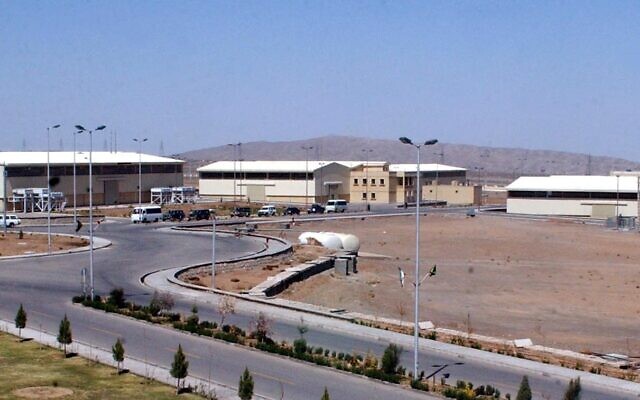
The Natanz uranium enrichment facility buildings are pictured some 200 miles (322 km) south of the capital Tehran, Iran, on March 30, 2005. (AP Photo/Vahid Salemi)

The explosion on Saturday was heard in the skies over the Iranian city of Badroud, 20 kilometers (12 miles) from the Natanz nuclear plant.

Several media outlets including Nour News, a website linked to Iran’s Revolutionary Guards, said the explosion was not an attack, but rather was caused by a missile as part of a test of air defenses’ response to a potential attack.

Some of the reports said a drone was shot down.

The blast came amid heightened tensions between Iran and world powers, as Tehran continues to race forward with its nuclear enrichment. It came a day after nuclear negotiations were halted in Vienna, with Western countries saying Iran had come to the talks with unrealistic proposals.

Iran’s uranium enrichment facilities in Natanz have seen several reported attacks in recent years that have been attributed to Israel.

A building damaged by a fire, at the Natanz uranium enrichment facility some 200 miles (322 kilometers) south of the capital Tehran, Iran, in a photo released on July 2, 2020. (Atomic Energy Organization of Iran via AP)

In April, the underground nuclear facility there experienced a mysterious explosion that damaged some of its centrifuges. Last July, unexplained fires struck the advanced centrifuge assembly plant at Natanz, which authorities later described as sabotage.

The landmark 2015 nuclear accord — initially agreed between Britain, China, France, Germany Iran, Russia and the US — began unraveling in 2018 when then-US president Donald Trump pulled out and reimposed sanctions, while Iran began to publicly breach the deal.

Israel has vowed that it will not allow Iran to possess nuclear weapons.

AFP contributed to this report.