State Department pushes back on signature Trump admin foreign policy decision

An Israeli soldier walks early morning near Moshav Alonei HaBashan in the Israeli-annexed Golan Heights on April 29, 2021. / Getty Images

 • June 24, 2021 7:30 pm


The Biden administration is walking back the United States’ historic recognition of Israeli sovereignty over the contested Golan Heights region along Israel’s northern border, a significant blow to the Jewish state and one of the Trump administration’s signature foreign policy decisions.

The Trump administration declared the territory—seized by Israel from Syria in 1967 and later annexed by the country—to be wholly part of the Jewish state in 2019. Then-secretary of state Mike Pompeo took a trip to the area in 2020 and reaffirmed that America formally abandoned a decades-long policy of considering the area occupied.

Secretary of State Antony Blinken first raised questions about the Biden administration’s view on the matter in February, when he would not say if his State Department continues to abide by the former administration’s decision. At the time, Blinken would only say the Golan Heights “remains of real importance to Israel’s security,” but that its formal status remains unclear. Pressed on the issue by the Washington Free Beacon, a State Department official said the territory belongs to no one and control could change depending on the region’s ever-shifting dynamics.

The shift in policy is already causing outrage among Republican lawmakers who backed the Trump administration’s decision and hoped to see it continue. It is also likely to rankle Israeli leaders of all political stripes, the plurality of whom say the Golan Heights is absolutely vital to Israel’s security in light of persistent threats from the Iran-backed Hezbollah terror group in Lebanon and other militant forces stationed in war-torn Syria.

“The secretary was clear that, as a practical matter, the Golan is very important to Israel’s security,” a State Department official told the Free Beacon. “As long as [Bashar al-Assad] is in power in Syria, as long as Iran is present in Syria, militia groups backed by Iran, the Assad regime itself—all of these pose a significant security threat to Israel, and as a practical matter, the control of the Golan remains of real importance to Israel’s security.”

Recognizing Israel’s control as a “practical matter,” however, falls far short of the formal policy change ordered by the Trump administration, which became the first government to recognize Israel’s complete control over the territory. As it stands now, U.S. policy on the matter is unclear, at best.

Pompeo, who was central to formulating and advancing the Trump administration’s decision on the Golan Heights, told the Free Beacon that the current administration is jeopardizing Israel’s security at a time when Iran-backed militants continue to plot attacks on the country’s northern cities.

“The Golan Heights are not occupied by Israel, they are a part of it. The Israelis have a right to it as sovereign land,” Pompeo told the Free Beacon. “To suggest that these lands should be returned to Syria, even if conditioned on changes in the Syrian regime, is inconsistent with both Israeli security and the international law.”

The State Department’s “suggestion that if Assad falls and the Iranians leave Syria, the Golan Heights should be given to Syria misreads history and misreads the eternal security needs of the state of Israel,” Pompeo said.

Rep. Mike Gallagher (R., Wis.), who introduced a bill earlier this year to lock in the U.S. recognition of Israeli sovereignty over the Golan Heights, told the Free Beacon that it is now incumbent on GOP leaders in Congress to stop the Biden administration from reversing the recognition.

“These comments [from the State Department] should serve as a call to action,” Gallagher said. “It’s time to pass legislation I’ve introduced with Senator [Ted] Cruz [(R., Texas)] that ensures that the U.S. will continue to recognize Israeli sovereignty over the Golan Heights, regardless of who is in the White House.”

Rep. Lee Zeldin (R., N.Y.), who pressed United Nations Ambassador Linda Thomas-Greenfield on the Golan issue during a congressional hearing on June 16, said the Biden administration is being intentionally vague about its policy, generating pressing questions on the international stage.

“I pressed UN Ambassador Linda Thomas-Greenfield at a House Foreign Affairs Committee hearing about the administration’s position on recognizing Israeli sovereignty over the Golan Heights, and she acknowledged that the Trump administration policy recognizing Israeli sovereignty is unchanged as of now,” Zeldin said after reviewing the State Department’s most recent comments on the matter. “However, Secretary Blinken and the Biden Administration need to stop beating around the bush, and unambiguously commit to maintain recognition of Israeli sovereignty over the Golan Heights permanently.”

Former U.S. diplomats who worked on the Golan Heights issue also expressed concern over the Biden administration’s comments to the Free Beacon. David Milstein, former special assistant to the U.S. ambassador to Israel under Trump, said walking back U.S. recognition of Israeli sovereignty over the area signals “an unconscionable betrayal of our close ally Israel.”

“Our allies depend upon the United States keeping its commitments,” Milstein told the Free Beacon. “But now Secretary Blinken has re-injected the dangerous and delusional idea the U.S. could support pressuring Israel to give up the Golan Heights in the future.”

“In one of the most dangerous regions that can go from bad to worse in an instant, the Golan Heights is crucial for Israel’s security, providing a strategically necessary defensible border to help Israel counter threats to its north,” Milstein said. “This is why there is clear support across Israel’s political spectrum for Israel forever maintaining sovereignty over the Golan Heights.”
NY Times says facility manufactured centrifuges to replace those destroyed in April attack on Natanz; strike was carried out by drone launched from within Islamic Republic


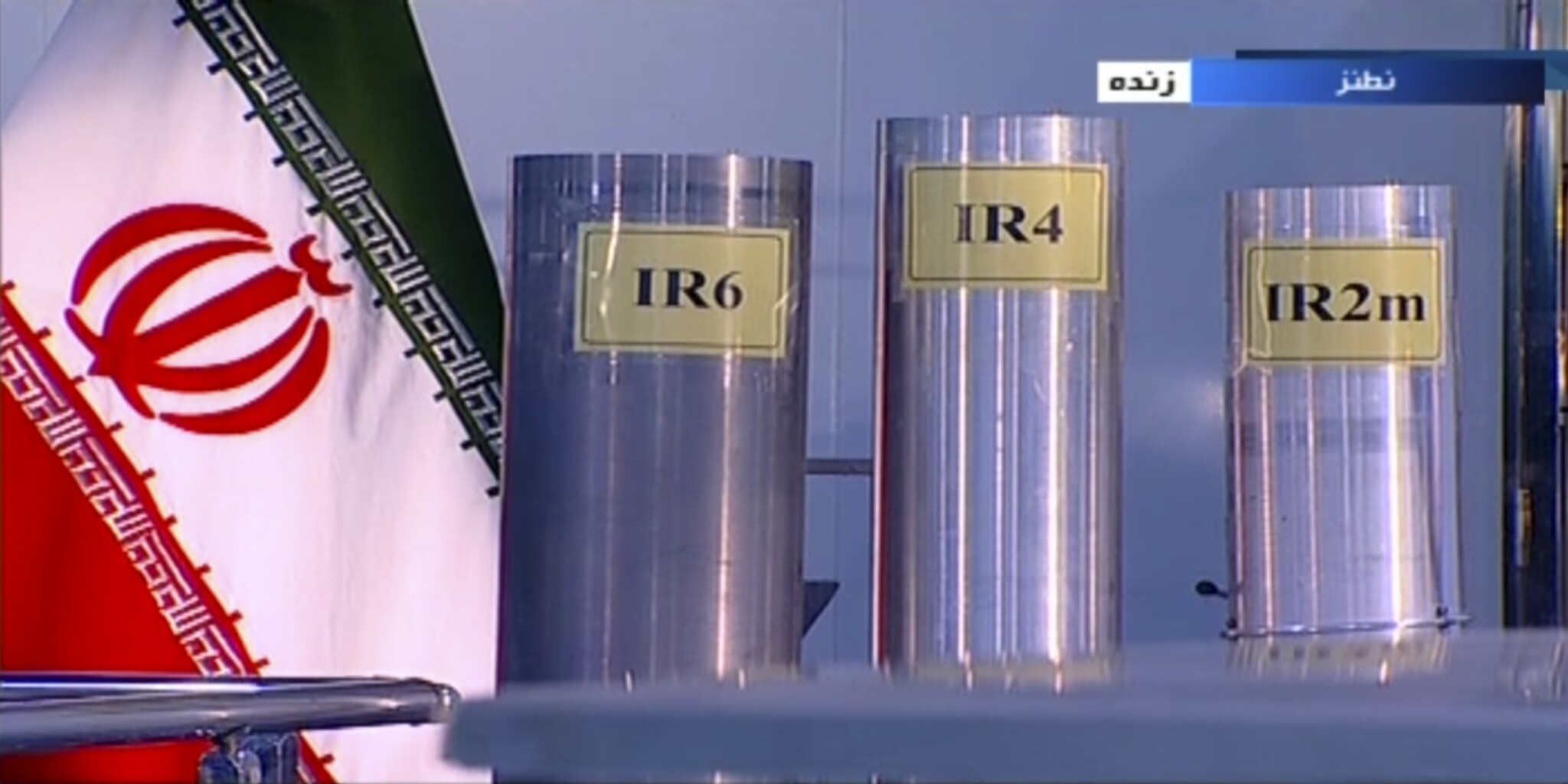
In this June 6, 2018 frame grab from the Islamic Republic Iran Broadcasting, IRIB, state-run TV, three versions of domestically-built centrifuges are shown in a live TV program from Natanz, an Iranian uranium enrichment plant, in Iran. (IRIB via AP, File)

In this June 6, 2018 frame grab from the Islamic Republic Iran Broadcasting, IRIB, state-run TV, three versions of domestically-built centrifuges are shown in a live TV program from Natanz, an Iranian uranium enrichment plant, in Iran. (IRIB via AP, File)

The Iranian centrifuge production site said targeted in a drone attack Wednesday was reportedly on a list of targets that Israel presented to the Trump administration last year.

Israel proposed hitting the Iran Centrifuge Technology Company, or TESA, to former US president Donald Trump along with then-secretary of state Mike Pompeo and Gina Haspel, at the time director of the CIA, an intelligence source told The New York Times.

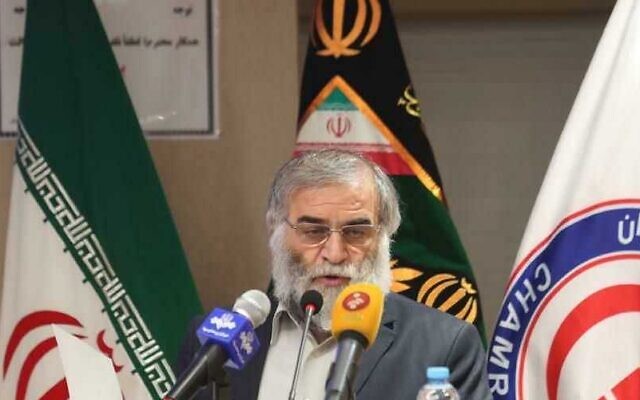
The source said that Israel also suggested striking Iran’s uranium enrichment site at Natanz and assassinating Mohsen Fakhrizadeh, a scientist who began the country’s military nuclear program decades earlier.

Fakhrizadeh was killed in November 2020 in an attack Iran blamed on Israel, while a mysterious explosion damaged a large number of centrifuges at the Natanz plant in April 2021. Israel’s former Mossad spy agency chief recently indicated in an interview given after he left office that Israel was behind that incident.

The TESA factory was tasked with replacing the damaged centrifuges at Natanz and also produces more advanced centrifuges that can more quickly enrich uranium, The Times report said.

The intelligence source said that Israel’s campaign against Iran’s nuclear program had the blessing of the Trump administration.

Iranian nuclear scientist Mohsen Fakhrizadeh. (Agencies)

A small quadcopter drone was used in the attack on TESA, the report said, citing an Iranian source who was not identified.

The drone was apparently launched from within Iran, not far from the site, and succeeded in hitting the target, according to the Iranian source familiar with the incident, the report said. However, the source did not know if it caused any damage.

Following Wednesday’s attack, Iran’s aviation authority said that a new law will require all civilian drones to be registered on a government website within six months. The drones will then be issued licenses, the report said.

Official Iranian media said the target of Wednesday’s strike was a facility that belongs to Iran’s Atomic Energy Organization in the city of Karaj, northwest of Tehran, known as the Karaj Agricultural and Medical Research Center.

Unverified reports from Iranian opposition-aligned outlets said the specific target of the attack was a factory that manufactures parts for Iran’s centrifuges.

Iranian media maintained that the attack had failed and “left no casualties or damages and was unable to disrupt the Iranian nuclear program.”

Despite the official Iranian claims to the contrary, the strike caused damage to the facility, according to unsourced reports in Hebrew media on Wednesday evening. They could not be independently confirmed.

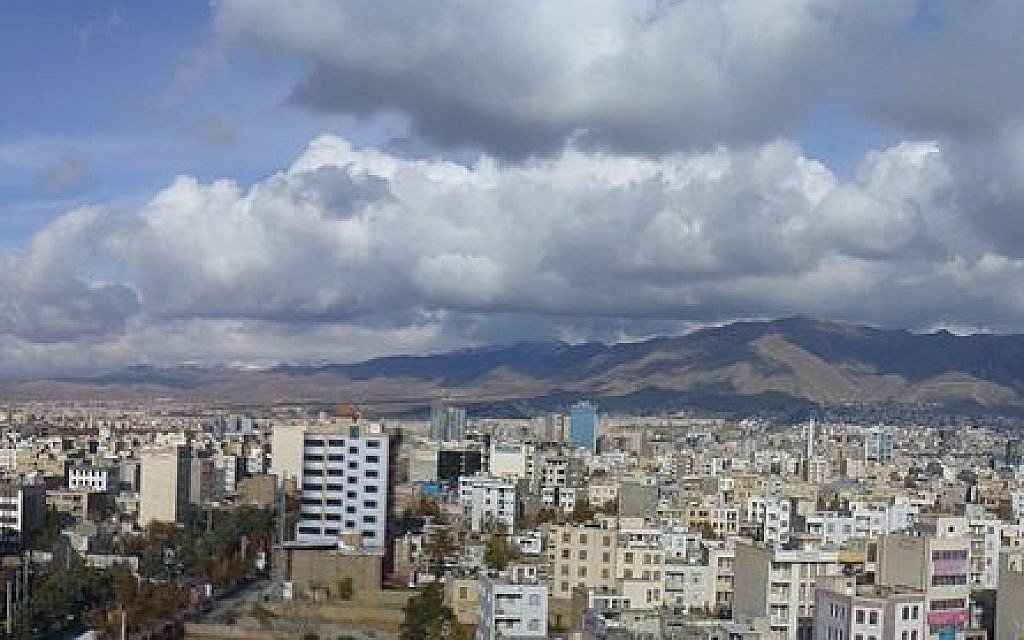
The Iranian town of Karaj (Mojtaba Momeni/Wikimedia Commons)

While Iran maintains that the Karaj facility is used for civilian purposes, it has been subjected to United Nations, European Union and American sanctions since at least 2007 for being involved in Iran’s nuclear and ballistic missile programs. The US lifted those sanctions under the 2015 nuclear deal, but then reimposed them in 2018 when Trump unilaterally withdrew from the accord.

Iran did not identify who was behind the attack, though it has accused Israel of conducting similar strikes on its nuclear facilities in recent years.

In April, Iran’s underground Natanz nuclear facility experienced a mysterious explosion that damaged some of its centrifuges. Last July, unexplained fires struck the advanced centrifuge assembly plant at Natanz, which authorities later described as sabotage. Iran now is rebuilding that facility deep inside a nearby mountain.

Iran also blamed Israel for the November killing of Fakhrizadeh.

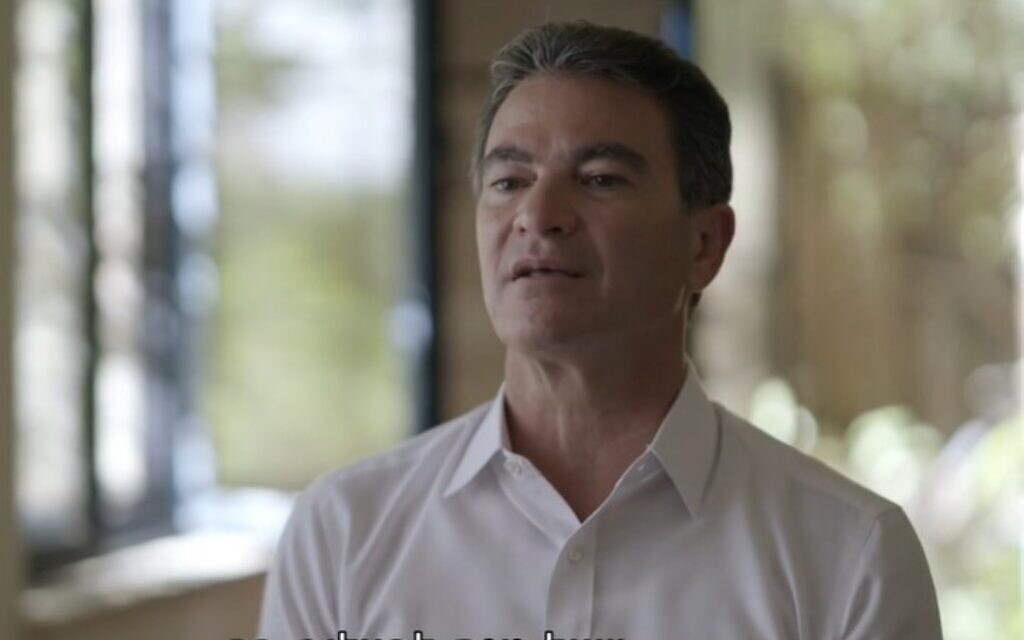
In a bombshell interview earlier this month, the former head of the Mossad spy agency all but confirmed that Israel was behind both the Natanz blast and the killing of Fakhrizadeh.

More generally, Cohen said: “We say very clearly [to Iran]: We won’t let you get nuclear weapons. What don’t you understand?”

Former Mossad chief Yossi Cohen in an interview with Channel 12 broadcast on June 10, 2021 (Screencapture)

In August 2019, a drone attack targeted a facility run by the Iran-backed Hezbollah terror group in the Lebanese capital of Beirut. Though they did not take responsibility, Israeli officials said the site manufactured vital parts for Hezbollah’s precision-guided missiles. Hezbollah blamed Israel for the attack.

Wednesday’s New York Times report said that attack was carried out by tiny armed drones that took off from the coast near Beirut and that the drone operators were picked up by a submarine.

Earlier this week Iran’s southern Bushehr nuclear power plant was temporarily shut down over a “technical fault,” the country’s atomic energy body said. The statement said the plant will be reconnected to the grid and the issue will be resolved “in a few days,” but did not elaborate further.

Wednesday’s attack came as the US and Iran — through intermediaries — were negotiating a mutual return to the 2015 nuclear deal, known formally as the Joint Comprehensive Plan of Action. When Trump abrogated the agreement in 2018, he put in place a crushing sanctions regime, which prompted Iran to also abandon the accord a year later, enriching more uranium and at greater levels of purity than was permitted under the deal, as well as taking part in other forms of proscribed nuclear research.

Iran’s uranium enrichment is a key talking point at negotiations in Vienna to revive the deal.

Israel staunchly opposes US President Joe Biden’s plan to reenter the JCPOA, which he has said he’s prepared to do, provided Iran returns to compliance with the agreement.

In an apparent effort to ramp up pressure during these negotiations, Iran in April boosted its uranium enrichment to 60 percent purity, bringing it closer to the 90% purity threshold for full military use and shortens its potential “breakout time” to build an atomic bomb — a goal the Islamic Republic denies.

Iran has always denied seeking a nuclear weapon, but as it dropped its commitments to the deal it began enriching uranium to levels that the International Atomic Energy Agency said are only sought by countries aiming to build a weapon.

Judah Ari Gross contributed to this report.