The
Iranians are probably exhausted from keeping up with all of the hits they have taken and are hoping for a break.
They should not hold their breath.
Though
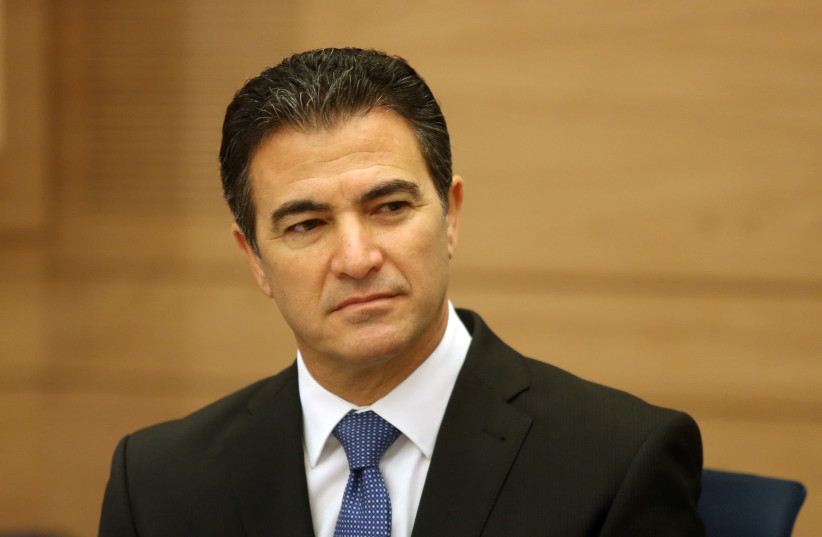
Mossad Director Yossi Cohen only has until June for the end of his term – presuming reports are correct that his spy agency was behind the latest incident at the Natanz nuclear facility – he may still have some surprises left up his sleeve before he exits the stage.
Much can be said about Cohen’s reign as Mossad chief since January 2016, but one unambiguous message he has sent the Islamic Republic is that, like the science fiction movie “Terminator,” he never stops, and they are perpetually in his cross-hairs.
Tehran was all ready to pat itself on the back this Saturday after it seemed like it had recovered from a presumed Mossad operation in July 2020 at the same facility.
Back on July 2, 2020, physical sabotage led to the destruction of 75% of an above ground nuclear facility at Natanz for assembling advanced centrifuges on a mass scale.
The destruction was so vast that it was as if the whole facility had been wiped out.
Intelligence sources and nuclear experts told The Jerusalem Post at the time that it would set back the ayatollahs’ advanced centrifuge efforts by one-to-two-years.
But Iran was determined to learn from the experience so that it could not repeat itself.
After all, this was really the second attack on a Natanz area nuclear facility, following Stuxnetc, a massive cyber sabotage in 2010, credited to both Israel and the US.
So the Islamic Republic decided to rebuild the destroyed facility underground.
For years, one of the major arguments why Israel needs to show greater diplomatic flexibility on the nuclear issue is that the IDF does not have the ability to attack Iran’s underground facilities.
Already for a long time, Iran’s Fordow nuclear facility has been the lead point for this argument.
The Iranians reasoned that Israel has not touched Fordow, so if they rebuilt the destroyed Natanz facility underground, it would be beyond Israel’s reach.
All they had lost was some time. Within a year or two, more of their nuclear program would be underground and impervious to Israeli meddling.
What other meddling?
In between the July 2, 2020 strike and Sunday, Cohen, according to many reports, was keeping Iran busy on many other fronts besides its nuclear facilities.
Aside from a series of still unexplained explosions around Iran in July 2020, al-Qaeda’s number two global commander was assassinated in Iran, reportedly by the Mossad, in August 2020.
The news of his assassination was leaked in mid-November 2020.
This was only a few weeks before the assassination of Iran nuclear military program founder and chief Mohsen Fakhrizadeh – also credited to the Mossad.
The Post has also reported that the Mossad’s reported role in assisting the US with assassinating Islamic Revolutionary Guard Corps Quds Force leader Qasem Soleimani was far greater than has been publicized to date.
This is without getting into one of the most daring operation in Israeli history when dozens of agents raided Iran’s secret nuclear archives in the heart of Tehran in January 2018.
So they were feeling pretty good about their move underground at Natanz – until the Mossad reportedly took out the facility’s electricity on Sunday, causing an estimated nine-month delay.
Apparently underground would not protect Iranian secrets, nuclear machines or anything else from Cohen.
In addition, the Post reported Monday that the operation to sabotage the underground part of Natanz’s nuclear facility was underway long before the current nuclear talks in Vienna.
This might seem obvious, but the truth is that this is the first major publicized Mossad operation against the Islamic Republic since US President Joe Biden took office; the attack on Iran’s Saviz ship, if carried out by Israel as reported by many, would have been an IDF operation and also only took place over the last week.
It might have been assumed by the Iranians that their underground Natanz facility was protected not only from the Israeli Air Force and other means of strikes which could only be deployed above ground, but also because Israel would not want to rock the boat while the new Biden administration is trying to negotiate.
Tehran might have thought that a Biden administration had bought it some time off from Mossad adventures.
They also might have thought that Cohen is a lame-duck, given that he has only around two months left in office.
The main lesson from the news that this operation was long planned and that it hit an underground facility, is that Cohen’s doctrine is to never stop hitting Iran.
He is unable to determine what diplomatic stances the US and other world powers will take.
Cohen also won’t be running the agency by the time any new nuclear deal might be struck.
But as long as he has a trigger to pull and there is time left on the game clock, he will use it to physically or by cyber means, or both, push back the ayatollahs from getting too close to the nuclear threshold.
Whether above ground or below, there is nowhere to hide.