Tehran official claims person behind attack identified, will be arrested; FM Zarif also says damage to centrifuges will only enable Tehran to install more advanced ones
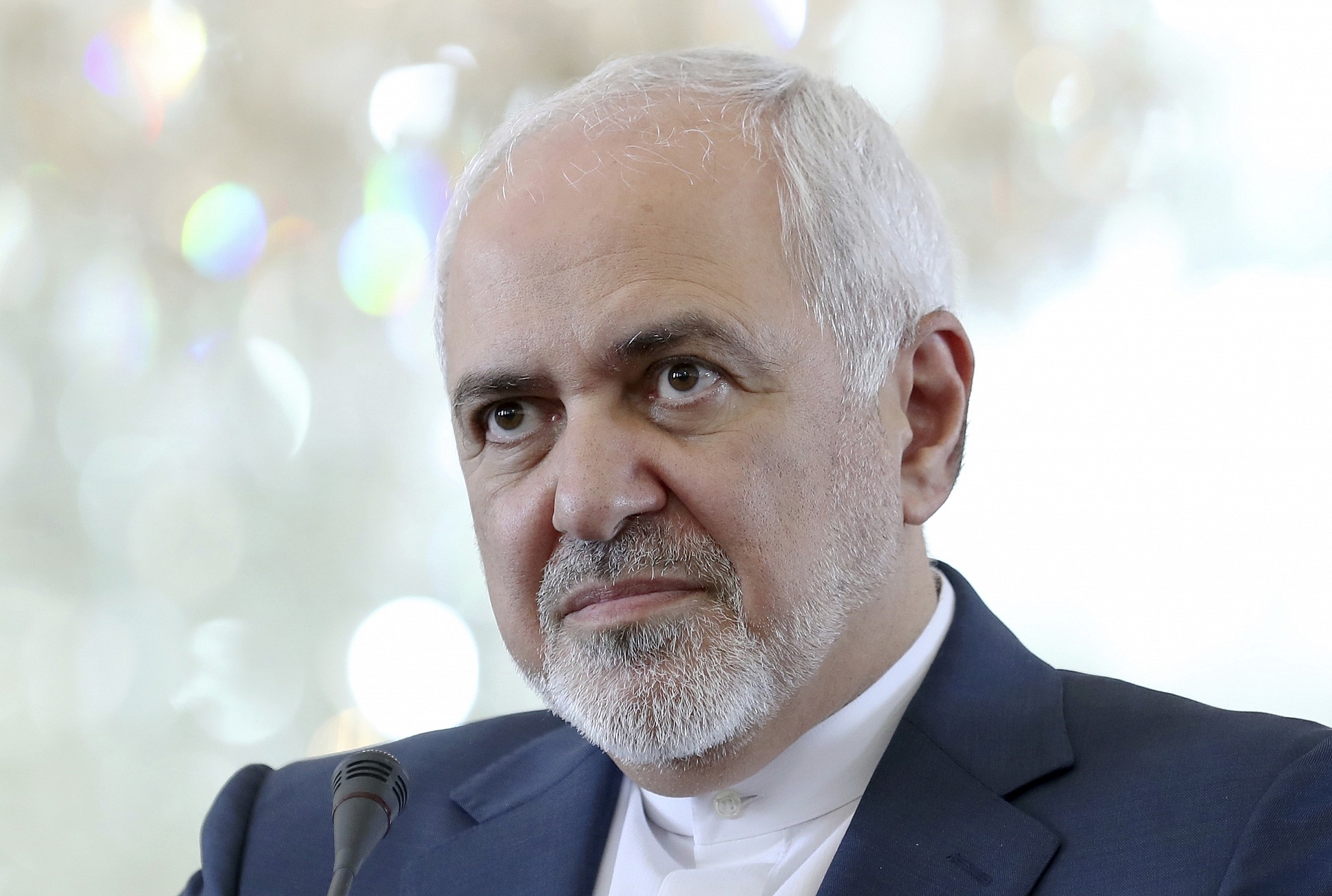
 

Iranian Foreign Minister Mohammad Javad Zarif, during a press conference in Tehran, Iran, June 10, 2019. (Ebrahim Noroozi/AP)

Iranian Foreign Minister Mohammad Javad Zarif, during a press conference in Tehran, Iran, June 10, 2019. (Ebrahim Noroozi/AP)

Iran’s foreign minister on Monday blamed Israel for a power failure that reportedly caused massive damage to the Natanz nuclear facility, vowing to “take revenge on the Zionists” and to replace damaged centrifuges at the site with even better ones.

Meanwhile, according to Reuters, Tehran claimed it had identified the individual behind the attack and would arrest him. The report was based on the comments of an unnamed intelligence official who spoke to the Nournews website.

The apparent sabotage at the site was reported by the New York Times to have been caused by a massive blast at the centrifuges’ power supply. Israeli and US media quoted unnamed intelligence sources as saying it was believed to have caused significant damage to the centrifuges and set back Iran’s uranium enrichment ability by at least nine months.

Mohammad Javad Zarif’s latest statements blaming Israel were made during meetings with the Iranian parliament’s National Security Committee Monday, according to Iranian media.

“The Zionists want to take revenge on the Iranian people for their success in lifting the oppressive sanctions,” Zarif was reported to say, “but we will not allow it and take revenge on the Zionists themselves.”

Zarif said Israel had sought to block the removal of international sanctions against Iran, but that “the Zionists will get their answer in further nuclear progress.”

He said older first-generation centrifuges that were damaged in the alleged cyberattack could now be replaced with newer, better machines, some of which Iran has already been using in breach of the 2015 nuclear deal.

“If they think our hand in the negotiations has weakened, this will happen to strengthen our position… The negotiating parties should know if they faced an enrichment facility with 1st generation centrifuges, now Natanz can be full of advanced centrifuges.”

The top Iranian diplomat also told lawmakers that better protection was needed at sensitive sites to prevent further such incidents, the reports said.

A truck containing cylinder of uranium hexafluoride gas leaves Ahmadi Roshan uranium enrichment facility in Natanz to Fordo nuclear facility for the purpose of injecting the gas into Fordo centrifuges, in a photo released on November 6, 2019. (Atomic Energy Organization of Iran via AP/File)

A spokesman for the foreign ministry made similar comments, saying Israel was “of course” behind the attack.

“Of course the Zionist regime, with this action, tried to take revenge on the people of Iran for their patience and wise attitude regarding the lifting of sanctions,” spokesman Saeed Khatibzadeh said at a press conference.

According to Khatibzadeh, the attack affected a number of first-generation IR-1 centrifuges “which will all be replaced with advanced” ones.

He vowed that Iran’s response to the attack would be “revenge on the Zionist regime” when and where Tehran chooses. “If the purpose was to interrupt the path of lifting the oppressive sanctions against Iran, they will certainly not reach their goal”.

Iran has called the incident an act of “nuclear terrorism.”

Senior Israeli officials Israel hinted at, but did not confirm, involvement in the apparent cyberattack, although the New York Times cited American and Israeli intelligence officials confirming that there had been an Israeli role.

An unnamed intelligence official told Israel’s Kan news that the damage at the site was “extensive” and that several “different types of centrifuges” installed at the top-secret underground center were harmed, setting back Iran’s ability to enrich uranium. Iran had publicly inaugurated cascades of advanced IR-5 and IR-6 centrifuges at the facility on Saturday.

The source said Iran’s abilities had been seriously set back and that the timing of the apparent strike was not coincidental.

Israel’s Channel 13, also citing unnamed intelligence officials, offered a similar assessment, saying that the cyberattack caused “severe damage at the heart of Iran’s enrichment program.”

This satellite photo from Planet Labs Inc. shows Iran’s Natanz nuclear facility on April 7, 2021. (Planet Labs Inc. via AP)

Meanwhile, the New York Times, citing two intelligence officials briefed on the damage, said that “it had been caused by a large explosion that completely destroyed the independent — and heavily protected — internal power system that supplies the underground centrifuges that enrich uranium.”

In the early hours of Sunday morning, the underground Natanz facility suffered an electrical disruption in what was widely speculated to be an Israeli cyberattack. Iran said the attack did not cause any casualties and did not cause radioactive pollution. Israel has officially refrained from commenting on the matter, and Iran has not specifically accused the Jewish state of being responsible for the incident.

On Sunday evening, unnamed intelligence sources were cited by a number of Hebrew news outlets as saying that the Mossad was involved in the attack.

Israel made no official comment on the incident, but officials, from Prime Minister Benjamin Netanyahu on down, hinted at Israeli responsibility.

The Israeli comments, along with Hebrew media reports attributing the cyberattack to the Mossad, marked a significant change. Israel is normally completely silent on the secret exploits of its security services, and Israel’s military censor routinely prevents publication of such details, forcing local media to cite foreign media reports. But that did not happen this time.

Prime Minister Benjamin Netanyahu appeared to refer to the recent events in Iran at a ceremony honoring the country’s security forces on Sunday night, saying that the fight against the Islamic Republic was a massive undertaking.

Prime Minister Benjamin Netanyahu visits the Leumit Health Care Services vaccination facility in Jerusalem, February 16, 2021. (Alex Kolomoisky/ Pool via AP, File)

Sunday’s incident came as US Defense Secretary Lloyd Austin landed in Israel for talks with Netanyahu and Gantz. The US, Israel’s main security partner, is seeking to reenter the 2015 atomic accord aimed at limiting Tehran’s program so that it cannot pursue a nuclear weapon — a move staunchly opposed by Israel, particularly Netanyahu.

In addition to an ongoing, largely covert fight on the nuclear front, Tehran and Jerusalem are engaged in a maritime shadow war, with both sides blaming the other for explosions on vessels.

In recent months, at least two Israeli-owned cargo ships have been damaged in alleged Iranian attacks, one in the Gulf of Oman and the other as it was sailing to India.

IDF Chief of Staff Aviv Kohavi appeared to reference the recent tensions between Israel and Iran in a speech on Sunday.

The Israeli military’s “operations in the Middle East are not hidden from the eyes of the enemy,” Kohavi said. “They are watching us, seeing [our] abilities and weighing their steps with caution.”

The timing of the apparent cyberattack came the day after Iran celebrated its National Nuclear Technology Day; the day after Iranian scientists began operating more powerful centrifuges; and amid ongoing talks in Vienna aimed at revitalizing the flagging 2015 nuclear accord between Iran and world powers, which Israel fiercely opposes.

IDF Chief of Staff Aviv Kohavi speaks at a memorial ceremony on Jerusalem’s Mount Herzl national cemetery on April 11, 2021. (Israel Defense Forces)

The disruption at Natanz appears to have been designed to counter Iran’s efforts to raise pressure on the United States by amassing greater quantities of uranium and enriching it to higher levels as the two sides negotiate a return to the 2015 nuclear deal.

The spokesman for Iran’s atomic program, Ali Akbar Salehi, confirmed that the electrical disruption at Natanz was a deliberate act of sabotage, calling it “nuclear terrorism.”

In comments carried by Iranian state news, Salehi refrained from identifying a perpetrator, but said the attack was carried out by those who oppose Iran’s ongoing negotiations with the West to remove the sanctions against Tehran through the nuclear deal.

The Natanz nuclear facility, which maintains aboveground workshops and subterranean uranium enrichment halls, is considered a major facet of Iran’s atomic program. The alleged Israeli attack against it came hours after scientists at the site turned on a chain of 164 advanced IR-6 centrifuges that threatened to shorten the amount of time it would take for Iran to amass the highly enriched uranium needed for a nuclear bomb.

On Saturday, officials also began testing the IR-9 centrifuge, which they say will enrich uranium 50 times faster than Iran’s first-generation centrifuges, the IR-1. The nuclear deal limited Iran to using only IR-1s for enrichment.

Iranian President Hassan Rouhani is shown new centrifuges on April 10, 2021. (Screenshot/Iranian state TV)

Natanz was largely built underground to withstand enemy airstrikes. It became a flashpoint for Western fears about Iran’s nuclear program in 2002, when satellite photos showed Iran building its underground centrifuges facility at the site, some 200 kilometers (125 miles) south of the capital, Tehran.

Last summer, an explosion rocked the Natanz facility, in what was also said to have been an Israeli attack aimed at disrupting uranium enrichment and research at the site.

In 2010, the United States and Israel allegedly halted Iran’s nuclear program with the Stuxnet virus, which caused Iranian centrifuges to tear themselves apart, reportedly destroying a fifth of the country’s machines.

Iran has also blamed Israel for the killing last year of scientist Mohsen Fakhrizadeh, who began the country’s military nuclear program decades earlier.


Israeli and US intelligence officials reportedly confirm Mossad involvement in apparent cyberattack on uranium enrichment facility, which Tehran calls an act of ‘nuclear terrorism’


In this June 6, 2018 frame grab from Islamic Republic Iran Broadcasting, IRIB, state-run TV, three versions of domestically-built centrifuges are shown in a live TV program from Natanz, an Iranian uranium enrichment plant, in Iran. (IRIB via AP)

In this June 6, 2018 frame grab from Islamic Republic Iran Broadcasting, IRIB, state-run TV, three versions of domestically-built centrifuges are shown in a live TV program from Natanz, an Iranian uranium enrichment plant, in Iran. (IRIB via AP)

The major power cut at Iran’s Natanz nuclear facility, which Tehran described as an act of “nuclear terrorism,” caused significant damage to the centrifuges and set back Iran’s uranium enrichment ability by at least 9 months, Israeli and US media quoted unnamed intelligence sources as saying Sunday.

Senior Israeli officials hinted at, but did not confirm, Israeli involvement in the apparent cyberattack, although the New York Times cited American and Israeli intelligence officials confirming there had been an Israeli role.

An unnamed intelligence official told Israel’s state-owned Kan news that the damage at the site was “extensive” and that various “different types of centrifuges” installed at the top-secret underground center were harmed, setting back Iran’s ability to enrich uranium. Iran had publicly inaugurated cascades of advanced IR-5 and IR-6 centrifuges at the facility on Saturday.

The Kan source said Iran’s abilities had been seriously set back and that the timing of the apparent strike was not coincidental.

“The assessment is that the fault in the Natanz power grid – result of an Israeli cyber operation,” a Kan reporter also tweeted, without any of the usual hedging.

Israel’s Channel 13, also citing unnamed intelligence officials, offered a similar assessment, saying that the cyberattack caused “severe damage at the heart of Iran’s enrichment program.”

Meanwhile, the New York Times, citing two intelligence officials briefed on the damage, said that “it had been caused by a large explosion that completely destroyed the independent — and heavily protected — internal power system that supplies the underground centrifuges that enrich uranium.”

The report said that it would take at least nine months to restore Natanz’s production.

This satellite photo from Planet Labs Inc. shows Iran’s Natanz nuclear facility on April 7, 2021 (Planet Labs Inc. via AP)

In the early hours of Sunday morning, the underground Natanz facility suffered an electrical disruption in what was widely speculated to be an Israeli cyberattack. Iran said the attack did not cause any casualties and did not cause radioactive pollution. Israel has officially refrained from commenting on the matter, and Iran has not specifically accused the Jewish state of being responsible for the incident.

On Sunday evening, unnamed intelligence sources were cited by a number of Hebrew news outlets as saying that the Mossad was involved in the attack.

Israel made no official comment on the incident, but officials, from Prime Minister Benjamin Netanyahu on down, hinted at Israeli responsibility.

The Israeli comments, along with Hebrew media reports attributing the cyberattack to the Mossad, marked a significant change. Israel is normally completely silent on the secret exploits of its security services, and Israel’s military censor routinely prevents publication of such details, forcing local media to cite foreign media reports. But that did not happen this time.

On Sunday, Israel’s government announced that the high-level security cabinet is scheduled to meet next week for the first time since early February, reportedly to discuss the Iran issue. The meeting was said to have been called at the request of Defense Minister Benny Gantz and Attorney General Avichai Mandelblit, in light of the recent exchanges between Israel and Iran.

Netanyahu appeared to refer to the recent events in Iran at a ceremony honoring the country’s security forces on Sunday night, saying the fight against the Islamic Republic was a massive undertaking.

Prime Minister Benjamin Netanyahu and Mossad chief Yossi Cohen (right) at an Indendence Day toast on April 11, 2021. At left is Minister of Intelligence Eli Cohen (Amos Ben Gershom/GPO)

“The fight against Iran and its proxies and the Iranian armament is a giant mission. The situation that exists today doesn’t say anything about the situation that will exist tomorrow,” Netanyahu said.

Sunday’s incident came as US Defense Secretary Lloyd Austin landed in Israel for talks with Netanyahu and Gantz. The US, Israel’s main security partner, is seeking to reenter the 2015 atomic accord aimed at limiting Tehran’s program so that it cannot pursue a nuclear weapon — a move staunchly opposed by Israel, particularly Netanyahu.

Meeting with Austin on Sunday, Gantz said Israel viewed America as an ally against all threats, including Iran.

“The Tehran of today poses a strategic threat to international security, to the entire Middle East and to the State of Israel,” Gantz said. “And we will work closely with our American allies to ensure that any new agreement with Iran will secure the vital interests of the world, of the United States, prevent a dangerous arms race in our region, and protect the State of Israel.”

In addition to an ongoing, largely covert fight on the nuclear front, Tehran and Jerusalem are engaged in a maritime shadow war, with both sides blaming the other for explosions on vessels.

In recent months, at least two Israeli-owned cargo ships have been damaged in alleged Iranian attacks, one in the Gulf of Oman and the other as it was sailing to India.

IDF Chief of Staff Aviv Kohavi speaks at a memorial ceremony on Jerusalem’s Mount Herzl national cemetery on April 11, 2021. (Israel Defense Forces)

IDF Chief of Staff Aviv Kohavi appeared to reference the recent tensions between Israel and Iran in a speech on Sunday.

The Israeli military’s “operations in the Middle East are not hidden from the eyes of the enemy,” Kohavi said. “They are watching us, seeing [our] abilities and weighing their steps with caution.”

The timing of the attack came the day after Iran celebrated its National Nuclear Technology Day; the day after Iranian scientists began operating more powerful centrifuges; and amid ongoing talks in Vienna aimed at revitalizing the flagging 2015 nuclear accord between Iran and world powers, which Israel fiercely opposes.

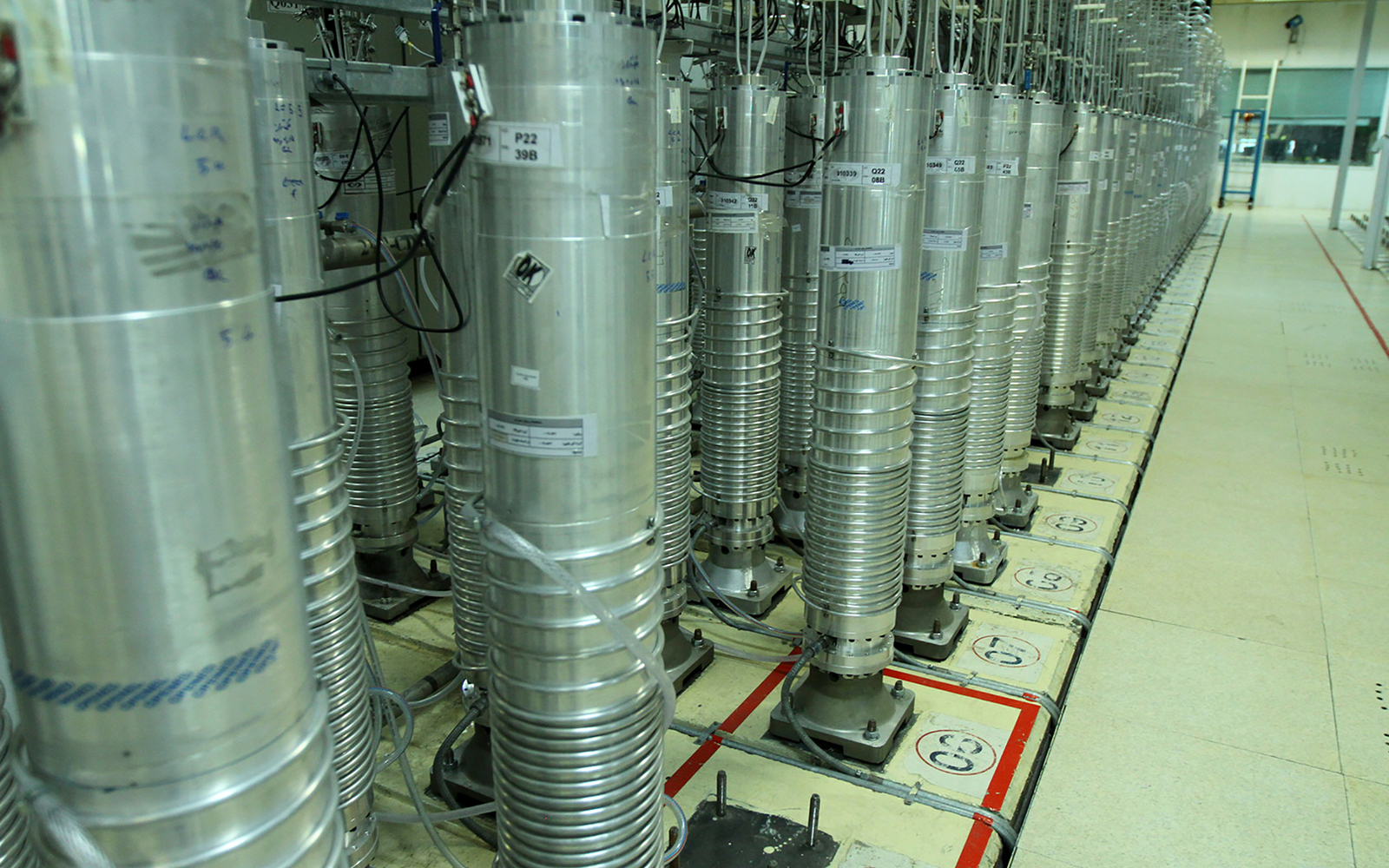
Centrifuge machines in the Natanz uranium enrichment facility in central Iran, November 5, 2019. (Atomic Energy Organization of Iran via AP)

The disruption at Natanz appears to have been designed to counter Iran’s efforts to raise pressure on the United States by amassing greater quantities of uranium and enriching it to higher levels as the two sides negotiate a return to the 2015 nuclear deal.

The spokesman for Iran’s atomic program, Ali Akbar Salehi, confirmed that the electrical disruption at Natanz was a deliberate act of sabotage, calling it “nuclear terrorism.”

In comments carried by Iranian state news, Salehi refrained from identifying a perpetrator, but said the attack was carried out by those who oppose Iran’s ongoing negotiations with the West to remove the sanctions against Tehran through the nuclear deal.

“To thwart the goals of this terrorist movement, the Islamic Republic of Iran will continue to seriously improve nuclear technology on the one hand and to lift oppressive sanctions on the other hand,” Salehi said, according to state TV.

He added: “While condemning this desperate move, the Islamic Republic of Iran emphasizes the need for a confrontation by the international bodies and the (International Atomic Energy Agency) against this nuclear terrorism.”

The apparent strike comes amid surging tensions between Israel and Iran.

Last Tuesday, an Iranian cargo ship said to serve as a floating base for Iran’s paramilitary Revolutionary Guard forces off the coast of Yemen was struck by an explosion, likely from a limpet mine. Iran has blamed Israel for the blast. An American official told the New York times that Israel was behind the attack.

A private Israeli intelligence firm released a satellite photograph of the ship from Sunday, showing that the vessel has not moved since last week’s attack and remained anchored in the Red Sea, directly between Yemen and Eritrea.

The Natanz nuclear facility, which maintains aboveground workshops and subterranean uranium enrichment halls, is considered a major facet of Iran’s atomic program. The alleged Israeli attack against it came hours after scientists at the site turned on a chain of 164 advanced IR-6 centrifuges that threatened to shorten the amount of time it would take for Iran to amass the highly enriched uranium needed for a nuclear bomb.

On Saturday, officials also began testing the IR-9 centrifuge, which they say will enrich uranium 50 times faster than Iran’s first-generation centrifuges, the IR-1. The nuclear deal limited Iran to using only IR-1s for enrichment.

President Hassan Rouhani, second right, listens to head of the Atomic Energy Organization of Iran Ali Akbar Salehi, while visiting an exhibition of Iran’s new nuclear achievements in Tehran, Iran, April 10, 2021. (Iranian Presidency Office via AP)

Natanz was largely built underground to withstand enemy airstrikes. It became a flashpoint for Western fears about Iran’s nuclear program in 2002, when satellite photos showed Iran building its underground centrifuges facility at the site, some 200 kilometers (125 miles) south of the capital, Tehran.

Last summer, an explosion rocked the Natanz facility, in what was also said to have been an Israeli attack aimed at disrupting uranium enrichment and research at the site.

In 2010, the United States and Israel allegedly halted Iran’s nuclear program with the Stuxnet virus, which caused Iranian centrifuges to tear themselves apart, reportedly destroying a fifth of the country’s machines.

Iran has also blamed Israel for the killing last year of scientist Mohsen Fakhrizadeh, who began the country’s military nuclear program decades earlier.
Since then-US president Donald Trump’s withdrawal from the Iran nuclear deal in 2018, Tehran has abandoned all the limits of its uranium stockpile. It now enriches up to 20 percent purity, a technical step away from weapons-grade levels of 90%. Iran maintains that its atomic program is for peaceful purposes — despite its leaders regularly threatening to destroy Israel and the Mossad stealing and publicizing Iranian documents showing plans to affix a nuclear device onto a missile — but fears about Tehran having the ability to make a bomb saw world powers reach the deal with the Islamic Republic in 2015.

The deal lifted economic sanctions on Iran in exchange for it limiting its program and allowing IAEA inspectors to keep a close watch on its work, though not at military sites and some other locations — a key sticking point for critics of the deal.

US President Joe Biden hopes to return to the 2015 agreement, which his predecessor Trump abandoned in favor of a “maximum pressure” campaign in hopes of bringing Tehran to its knees. However, Biden has maintained that he will remove sanctions on Iran only after it returns to compliance with the nuclear deal. Iran, meanwhile, is demanding full sanctions relief before it returns to the negotiating table.

Agencies contributed to this report.


Jerusalem appears to be wading deeper into a water fight with Tehran in the Red Sea, while remaining vulnerable in the Persian Gulf, with no guarantees the US will dive in to help

By LAZAR BERMAN
Today, 11:04 pm

A suspicious boat off the stern of the Iranian ship ‘Saviz’ in the Red Sea in 2018. (Al Arabiya video screenshot/File)

In early March, after an Israel-owned ship was damaged by limpet mines in the Gulf of Oman, The Times of Israel wrote that “Israel could send its own message by targeting an Iranian ship in the Red Sea, such as the Saviz.”

Last Tuesday, Israel is believed to have done just that, attacking that very Iranian vessel, with mines of its own, according to reports.

As detailed in that story a month ago, “since 2017, the Saudis have alleged the Saviz served as a maritime base and weapons transshipment point for the [Islamic Revolutionary Guards Corps].”

Get The Times of Israel’s Daily Edition by email and never miss our top storiesFREE SIGN UP
In many ways, the Saviz was the perfect target. After the covert maritime struggle between Israel and Iran burst into the open this year, with Tehran displaying new audaciousness in its attacks on Israeli-owned vessels, Israel had to respond in a way that would send a clear message.

But in so doing, Israel risks getting in a fight in which it has some glaring vulnerabilities. It also runs the danger of irritating a US administration intent on restarting nuclear talks with Iran, negotiations that could be scuppered, should the struggle between Iran and its regional foes heat up.

The IRGC mothership
The Saviz, anchored in international waters just off Eritrea’s Dahlak archipelago, lay vulnerable and relatively close to Israel. In that regard, it was an obvious choice as a target.

This October 1, 2020, satellite photo from Planet Labs Inc. shows the Iranian cargo ship MV Saviz in the Red Sea off the coast of Yemen. (Planet Labs Inc. via AP)
The vessel – formerly known as the Azalea, Iran Ocean Candle, Lantana, and Ocean Candle — was initially put under sanctions by the US government, but was removed from the list of designated vessels on January 16, 2016, the day the 2015 JCPOA nuclear deal went into effect. In April 2020, the Treasury Department announced that the Saviz was back on the list.

The “mothership,” as described in a Washington Institute report, came to public attention in 2017, when the Saudi-led Arab Coalition fighting Iran-backed Houthi rebels in Yemen released a dossier showing uniformed personnel on the ostensibly civilian vessel. Coalition spokesman Col. Turki Al-Maliki accused the Saviz of supporting Houthi naval attacks. In 2018, the Saudi-owned Al Arabiya channel aired footage of the ship, as well as Boston Whaler-type speedboats on deck, typically used by the Iranian Revolutionary Guards Corps Navy.

“It has been equipped with four 50-caliber machine guns that have been hidden by the ships’ crew…” alleges the report. “It also has a satellite and highly-developed military communications system.” Al Arabiya cameras captured one of the speedboats transferring equipment from a passing Iranian ship to the Saviz.

The ship drew the ire of locals as well. In November 2018, fishermen in the Yemeni city of Taiz staged a protest against the Saviz, calling it a threat to their well-being, according to local reports.

The vessel has been anchored a few miles from the narrow Bab al-Mandeb straits at the southern end of the Red Sea since 2017, and has barely moved since then, according to reports based on maritime tracking technology.

“It’s more like a platform, a floating island, a barge, than a ship,” said Steffan Watkins, a private open-source defense researcher based in Canada.

Based on its location, the Saviz can keep a close eye on ships – including Israeli vessels – sailing through the key shipping lane, and is also well-positioned to play a supporting role in attacks on tankers, allegedly by Iranian proxies, that have taken place in the area.

The Saviz certainly isn’t the only ship lurking around the Bab al-Mandeb.

“That area has a lot of ships that drop anchor and hang out,” said Watkins, especially private military company vessels that accompany cargo ships through the dangerous waters.

“By international law, they’re in international waters, so no one can tell them to go away,” said Watkins, who began examining the Saviz in 2017. “They can be blown up, but they can’t legally be evicted from that location.”

On Sunday, private satellite photography analysis firm ImageSat International released a picture of the Iranian ship taken earlier in the day, showing that it had not moved since the attack and remained anchored in the Red Sea, between Yemen and Eritrea.

Deterrence and its limits
The alleged attack on the Saviz is the latest incident in a simmering gray zone conflict between Israel and Iran.

“Gray zone operations” are coercive, ambiguous actions taken by actors trying to upend the regional order while staying below the threshold that would justify a military response by stronger parties. NATO militaries have increasingly recognized them as a challenge.

Experts believe the gray zone approach is a central component of Iran’s national security strategy. Deniable attacks on civilian shipping fit into Iran’s broader, asymmetric naval strategy.

An attack that makes attribution difficult “creates ambiguity that serves Iran’s interests,” said Anthony Cordesman, the Arleigh A. Burke Chair in Strategy at the Washington, DC-based Center for Strategic and International Studies. “If you can use gray zone operations to achieve your objectives without escalating to more serious conflict, these kinds of operations offer you advantages and a level of security that higher intensity combat doesn’t. And Iran has practiced a very wide range of attacks.”

Israeli soldiers survey the border with Syria from a military post in the Golan Heights, following a series of aerial clashes with Syrian and Iranian forces in Syria, on February 10, 2018. (Flash90/File)
Part of that campaign is unfolding on Israel’s doorstep. While Syria is consumed by a decade-long civil war, Iran has been trying to open a new front on the border. It has sent allied forces to the Syrian Golan Heights to set up infrastructure for carrying out attacks on Israeli targets. Iran has also been working to arm its Hezbollah proxy terrorist group with precision rocket capabilities, shipping weapons through Syria to Lebanon.

However, Israel has displayed competence in sniffing out Iranian actions and a firm willingness to disrupt them using military force. Israel’s air force has launched hundreds, even thousands, of strikes against Iran and its proxies in Syria and Iraq since 2011.

There has been naval theater in this struggle as well, though it only came to light recently. In March, the Wall Street Journal reported that Israel has targeted at least 12 ships bound for Syria, most of them transporting Iranian oil, with mines and other weapons, starting in late 2019.

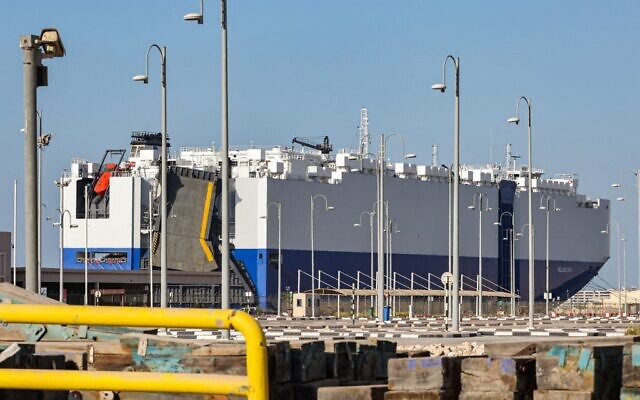
The Israeli-owned Bahamian-flagged MV Helios Ray cargo ship docked in Dubai’s Mina Rashid (Port Rashid) cruise terminal, on February 28, 2021. (Giuseppe CACACE / AFP)
In likely retaliation, Iran reportedly struck two Israeli-owned ships in March, both in the Gulf of Oman.

An Israeli response in the Red Sea seems entirely plausible, said Yaakov Amidror, former national security advisor and senior fellow at the Jerusalem Institute for Strategic Studies.

“It’s a range in which Israel knows how to operate,” he told The Times of Israel.

The attack, if Israel was behind it, also makes strategic sense, he argued. “The endgame is to make it clear to the Iranians that they cannot strike civilian ships that have a connection to Israel that haven’t violated any international law,” he said. “And if they continue to do that, then Israel knows how to operate very from its borders.”

“It’s an area that we don’t want to stop sailing in… The Iranians should know that there’s a price for these types of actions,” he added.

Former Israeli national security adviser Yaakov Amidror (Flash90)
Others aren’t so sanguine about the operation. “Even though on the operational level, this is fascinating, but trying to evaluate what the strategic goal is, I’m not sure it’s defined well,” said Prof. Shaul Chorev, head of the University Of Haifa’s Maritime Policy & Strategy Research Center. “It might be some kind of deterrence to the IRGC not to attack again an Israeli ship.”

But deterrence is not an easy goal to achieve or even measure. While Israel’s operations in Syria seem to have forced decision-makers in Tehran to accept that they would be wise to avoid attacking Israeli soldiers and infrastructure from across the border, the Persian Gulf and Gulf of Oman are different stories entirely. Israel has little capacity – beyond submarines — to project power there, while Iran has invested heavily in pursuing hegemony over the seas in its neighborhood, which includes the Strait of Hormuz, a shipping lane no less important than the Bab el-Mandab.

“The experience that we have is that the Iranians are not hesitating to escalate in an area where the Israeli navy has no capability to operate,” said Chorev, a former deputy chief of the Israel Navy.

Iran will “definitely” respond to a recent attack on an Iranian ship in the Red Sea, a spokesman for the Islamic Republic’s military said last week.

Splitting the seas
Israel cannot put its soldiers on Israeli civilian ships in the Persian Gulf, as they could be captured by Iran. The most promising avenue for Israel is to seek some sort of security guarantees by the US and Arab Gulf states to protect Israeli shipping. The Pentagon’s January decision to include Israel in its Central Command will make it easier for the Jewish state to work closely with the US Fifth Fleet and its Arab partners in the Persian Gulf.

A centerpiece of Israel’s normalization with the Gulf states was increased trade, especially with the global shipping hub of Dubai. If Israel is not careful, it might cause an escalation that leads to increased attacks where Iran knows Israel is quite vulnerable.

“This situation endangers other Israeli civilian ships, and the fear is that the Iranians will try to strike other vessels. Someone must take this into consideration,” a defense official told Walla! news.

The balance of power between Israel and Iran in the Red Sea, where the Saviz is anchored, is much more even. Israel’s Eilat naval base is closer to the Red Sea theater than the nearest Iranian base, but Iranian-backed Houthi rebels control coastline and islands near the Bab al-Mandeb straits. The Houthis have targeted civilian and military ships from their bases there.

An Israeli Navy boat escorts the cargo vessel Klos C (left) into the Israeli port of Eilat. (Flash90)
The Red Sea is a difficult area for any navy to operate in. Its narrow sea lanes mean ships sail near each other and near the coastline of countries like Egypt, Sudan, Eritrea, and Yemen, which have all struggled to impose control over swathes of their territory. Ships sailing through the Red Sea are easy for governments and rebel groups to track in real-time.

Still, some believe that in light of the Iranian threat and the burgeoning trade relationship with Gulf countries, Israel must improve its capabilities in the Red Sea.

“I think the Navy should move its center of activity from the Mediterranean to the Red Sea,” said Chorev.

That task is more complex than it may seem. In addition to the proximity to hostile groups like the Houthis, Israel must gain permission from Egypt every time it wants to move ships from the Mediterranean Sea to the Red Sea by sailing a naval vessel through the Suez Canal.

“It’s not easy to operate in this area,” stressed Chorev. “Nevertheless we have to operate there.”

The war over the war
The same day that the attack on the Saviz was carried out, US and Iranian negotiators carried out indirect talks in Vienna to seek a way back to the 2015 Joint Comprehensive Plan of Action, better known as the Iran nuclear deal.

Some Israeli outlets suggested that Israel timed its operation to coincide with the Vienna talks, possibly as a message to either Washington or its Arab partners that it would continue to operate against Iranian threats.

Deputy Secretary General and Political Director of the European External Action Service (EEAS), Enrique Mora, right, leaves the Grand Hotel Wien where closed-door nuclear talks with Iran take place in Vienna, Austria, April 6, 2021. (AP Photo/Florian Schroetter)
Amidror dismissed that notion out of hand. “That’s media nonsense, come on. An operation like this takes two or three weeks to prepare, no one knew what the date of the meeting would be.”

But there could be a different connection to the nuclear talks. The Saviz attack came to light through an American leak to The New York Times. By revealing the incident, the Biden administration may well have been sending a message to Israel that it disapproves of such operations while it is trying to find a formula that will allow it to rejoin the nuclear deal.

Israel, it appears, is not backing down. On Sunday morning, word came of another mysterious attack, this time what appeared to be a cyber assault sabotaging the Natanz nuclear plant.

Officially Israel has remained mum, but by Sunday evening, leaks were reaching Hebrew-language media from unidentified intelligence sources — not US officials to a US outlet — that Israel’s Mossad intelligence agency was responsible for the attacks, what may have been intended as an Israeli message back to the Biden administration that it will not be cowed by Washington’s pre-nuclear talks shushing.

Israel’s foe, though, is not in Washington, but in Tehran, and if it wants to deter Iran and feel safe sailing through the Middle East, it will likely need to find a way to work with the Biden administration and quit rocking the boat.