
Azerbaijani official calls to open embassy in Israel

At virtual event marking 29 years to the establishment of Jerusalem-Baku ties, senior Azerbaijani official Farid Shafiyev says, “Historians attack the image of the Israelis and the Azerbaijanis. This is antisemitism and anti-Azerbaijanism. Nevertheless, that is also what unites us.”

Israel and Azerbaijan celebrated 29 years to the establishment of bilateral ties, Wednesday.

Senior officials from both countries, including Azeri politicians and Israel’s Deputy Ambassador to Azerbaijan Doron Pe’er, took part in the event.

Marking the occasion, Farid Shafiyev, the chairman of Azerbaijan’s Center of Analysis of International Relations, said, “The Azeri people and the Jewish people have a long history together.”

According to Shafiyev, “Jews have lived in Azerbaijan for 2,500 years. The historic ties between the peoples are deep.”

He said this shared history was the basis for bilateral ties.

“There are Israelis that are influenced by the Armenian lobby, who think the basis for Israel-Azerbaijan ties is oil and weapons,” he said. “Factually speaking, they are wrong; the basis for the ties is historic. There’s also no doubt the economic ties are significant.”

He said, “Historians attack the image of the Israelis and the Azerbaijanis. This is antisemitism and anti-Azerbaijanism. Nevertheless, that is also what unites us. We are united, and we need to upgrade our ties. The time has come to open an Azerbaijan Embassy in Israel.”

Anatoliy Rafailov, the head of the Azerbaijan-Israel lobby in the National Assembly in Baku, and fellow lobby member Shahin Seyidzade, both members of Azerbaijan’s parliament, also took part in the virtual event.

“I represent the Jewish community in the Azeri parliament. It’s known that Azerbaijan has no antisemitism problem, and that relations between the countries are particularly strong. Israel has also supported Azerbaijan’s territorial continuity.

“A very important point is Holocaust memory in Azerbaijan, and on the other hand events marking the Khojaly massacre [of over 200 Azerbaijanis by Armenian forces in the First Nagorno-Karabach War] in Israel,” Rafailov said.

Seyidzade said, “Israel has always welcomed cooperation with Azerbaijan. I have been to Israel many times, and we took care to promote various initiatives in the fields of education and innovation. As a member of the science and education committee, we collaborated many times.”

Israel’s deputy ambassador said, “We mark our entry into the 30th year of ties between Israel and Azerbaijan. These ties are much more than friendly; they are strategic, deep, and above all, the ties are not just between the states but between the nations. Our nations share a wonderful history, religious, cultural, musical, and particularly moral ties. Both countries should continue to promote initiatives based on both countries’ shared values.”

According to Aryeh Gut, an expert on Israel-Azerbaijan ties and the executive director of the Azerbaijan House in Israel, “Azerbaijan is Israel’s strategic partner in the South Caucasus. Within the framework of the strategic alliance, Azerbaijan receives all of the technological advantages from Israel, the likes of which no other post-Soviet country gets to receive.”


BEIRUT, LEBANON (8:10 P.M.) – The Iranian Armed Forces vowed on Thursday that they would respond without any doubt to the targeting of the Saviz ship in the waters of the Red Sea earlier this week.

“We will respond without any doubt to the targeting of the two Saviz ships in the waters of the Red Sea, after knowing those involved, and we will never be silent,” Iranian Armed Forces spokesman Major General Abu Al-Fadl Shikaraji said in an exclusive statement to Sputnik on Thursday.

“We can not take any action until the end of the investigations and the circumstances of the incident are known,” he stressed.

He explained, “In any case, the ship was targeted, and now various things may have happened with the ship, but we cannot decide what we will do until after our investigations are meticulously completed.”

Regarding those who might have a hand in the attack, he replied, “We do not accuse any of the Gulf states of being involved in the incident targeting our ship in the Red Sea.”

“The finger of accusation is hovering around our direct enemies, and what is meant here is Israel and the United States,” he said.

“The United States undoubtedly has a hand in all attempts to undermine and harm Iran,” he added.

On Tuesday, the Iranian media announced an attack on the Saviz vessel as it was sailing through the Red Sea waters.

A report by the New York Times quoted an American official, who said that Israel had informed the United States that it had attacked the Iranian ship.

ALSO READ  Former Jordanian PM accuses Iran of attempting to spread its revolution to Jordan

The official, who preferred not to be named, stated that Israel had informed the United States that its forces had bombed the Iranian ship stationed in the Red Sea.

The American official pointed out that “the Israelis described the attack as a retaliatory response to previous Iranian strikes on Israeli ships.”

Israeli officials have not commented on the incident, and have rarely confirmed or denied responsibility for attacks against Iran, according to the report.


US appears to cave to Iran, says it’s ready to lift sanctions

Biden Administration changes policy, says it is now prepared to lift sanctions before Iran stops its violations of the nuclear deal.

By Paul Shindman, World Israel News

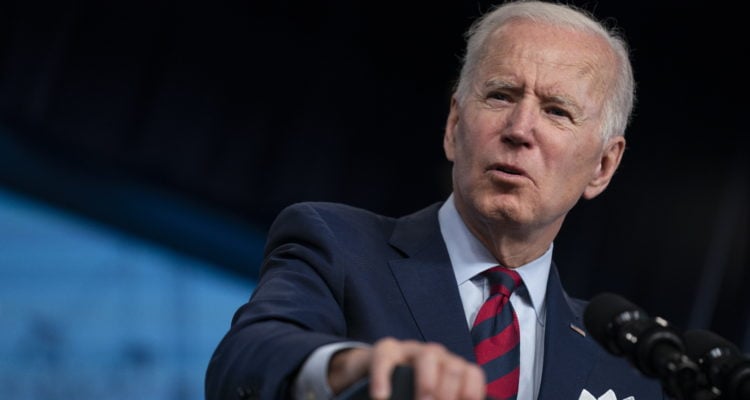
The Biden administration changed its stance on Iran, announcing it is prepared to accede to Iranian demands to lift sanctions before Iran resumes its compliance with the nuclear deal aimed at preventing the rogue regime from developing nuclear weapons.

The announcement was made in Washington as negotiating teams from the partners behind the 2015 Iran nuclear deal, known formally as the Joint Comprehensive Plan of Action (JCPOA), held talks in Vienna with Iran. The major powers are trying to convince the Islamic Republic to stop violating the agreement and cease producing enriched uranium.

“We are prepared to take the steps necessary to return to compliance with the JCPOA, including by lifting sanctions that are inconsistent with the JCPOA,” said State Department Spokesperson Ned Price.

“I’m not in a position here to give you chapter and verse on what those might be. That is precisely why we have agreed to engage in diplomacy to this effect. The precise nature of any sanctions relief is the subject of diplomacy,” Price told reporters at the daily State Department press briefing.

Price’s statement is an about-face for President Biden, who in an interview in February indicated that Iran would first have to stop enriching uranium before the U.S. would lift sanctions.

This week the UN Security Council’s five permanent members – Britain, China, France and Russia, along with Germany, resumed talks in Vienna with the Iranians. The U.S. team, led by special envoy Robert Malley, is working in a separate hotel at the insistence of the Iranians, who refuse to meet with them for the time being.

Until Wednesday, the Americans had insisted that Iran first stop its enrichment of uranium before any economic sanctions would be lifted. The Iranians refused, pressuring the Biden administration to first roll back sanctions before they would talk.

During his term in office, former President Donald Trump pulled out of the JCPOA, saying in 2018 that the Iranians had lied about their nuclear weapons program. Trump hit the Iranians with harsh economic sanctions to try and force them to scale back their nuclear ambitions and military expansion in the region.

Known for having one of the world’s most oppressive regimes, Iran’s leaders have maintained their mantra of “death to America, death to Israel,” with an explicit national policy that seeks the “total annihilation” of Israel.

Arab states in the region also fear Iran’s nuclear weapons program, with Saudi Arabia demanding that they be consulted before the U.S. makes any policy changes.

Israel has repeatedly stated it will not accept a return to the original JCPOA, under whose terms the Iranians could resume unimpeded uranium enrichment when the agreement expires.

Speaking Wednesday at the ceremony marking the start of Holocaust Remembrance Day, Prime Minister Benjamin Netanyahu directed a warning at the Biden administration and others seeking to reenter the Iran deal.

“The nuclear deal with Iran, which gives it international approval to advance the development of an arsenal of atomic bombs, is once again on the table. But history has taught us that such agreements, with such extremist regimes, aren’t worth the paper they’re written on,” Netanyahu said.

“Even to our best friends, I say: We are not bound in any way to an agreement with Iran that paves the way for nuclear weapons. We are obligated to only one thing: To prevent anyone who seeks to destroy us from carrying out their plot,” Netanyahu said.