
MOSCOW (Sputnik) – Russian President Vladimir Putin told German Chancellor Angela Merkel and French President Emmanuel Macron that Russia was ready to restore normal interaction with the EU, if there is an interest in this, the Kremlin said on Tuesday.

“The state of affairs in relations between Russia and the European Union was discussed. The Russian side reiterated its readiness to restore normal depoliticized interaction with the EU, if there is a reciprocal interest in this,” the statement says.

The leaders also noted the observance of the ceasefire in Libya, called the formation of a single transitional government there as an important step, the Kremlin said.

The parties also noted that the situation in Syria has continued to stabilise and that the issues of providing the Syrian people with humanitarian assistance were now very acute. Moscow has recently said that a lack of political will to settle the Syrian crisis head-on is hampering efforts to return Syrian refugees to their homes. The Russian military has also said that militants operating in Syria have been preventing civilians from leaving through humanitarian corridors, and humanitarian aid does not reach the people there.

According to the Kremlin, the leaders also spoke in favor of preserving and implementing the Joint Comprehensive Plan of Action (JCPOA) on the Iranian nuclear program.

The new US administration has vowed to revive the 2015 agreement but has failed to make the first conciliatory move. Iran has insisted that since Washington was one that abandoned the deal under the Trump administration in 2018, the US must first lift sanctions against the Islamic Republic. Tehran has also rejected any efforts to renegotiate the original agreement.

The talks were held in a businesslike and frank atmosphere, it was agreed to continue work on the entire current agenda, the Kremlin added.

The relations between Moscow and the EU have become strained after the latter had sanctioned Russia’s Prosecutor General Igor Krasnov, Investigative Committee chief Alexander Bastrykin, Federal Penitentiary Service head Alexander Kalashnikov and National Guard chief Viktor Zolotov over the situation with Russian vlogger e Alexey Navalny.

In a coordinated move hours later, the US imposed sanctions on seven senior Russian officials.

Navalny returned to Moscow from Germany in January after treatment for alleged poisoning and was arrested upon arrival at Sheremetyevo International Airport. Shortly after, a Moscow court rescinded Navalny’s suspended sentence in the 2014 Yves Rocher fraud case over multiple probation breaches and replaced it with a 3.5-year prison term.

Even before the sanctions were officially unveiled, Russian Foreign Minister Sergey Lavrov said the relations with the EU were at a low point. EU High Representative for Foreign Affairs Josep Borrell, in turn, described the bilateral relationship as being at a “standstill” during his Moscow visit in early February.
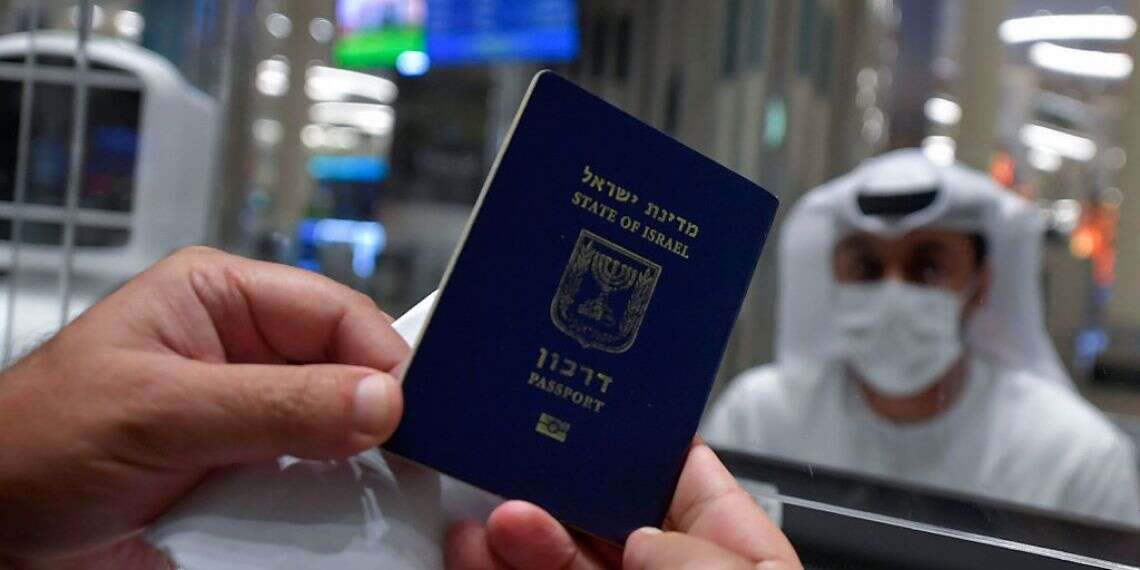

Security agency warns of an increased likelihood of an Iranian or Iran-sponsored terrorist attack against Israeli targets. Counterterrorism Bureau warns against travel to Abu Dhabi, Dubai, Bahrain, and the Kurdish region of Iraq, as well as Turkey, Jordan, Egypt, Georgia, and Azerbaijan.


Israel’s National Security Council on Monday advised tourists against travel to the United Arab Emirates and other countries across the region, citing an increased likelihood of an Iranian or Iran-sponsored terrorist attack against Israelis overseas.

The NSC reported increased motivation on the part of Iran and its regional proxies to harm Israelis abroad, and has issued a special travel advisory for those planning on vacationing in Sinai.

The report cited as a motivating factor last year’s assassination of a top Iranian nuclear scientist near Tehran, an incident which Iran has claimed was the handiwork of the Mossad intelligence agency.

The warning further included both Dubai and Abu Dhabi in the UAE as well as Bahrain. Both Gulf Arab countries established diplomatic ties with Israel last year under historic US-brokered agreements.

The agency also identified Georgia, Azerbaijan, the Kurdish region of Iraq, as well as Turkey, Jordan and Egypt as areas to avoid.

After establishing ties with Israel last year, the UAE became a popular destination for Israeli tourists, even after a similar travel advisory was issued.

“We estimate that Iran will continue to operate in the near future to harm Israeli targets,” the agency’s Counterterrorism Bureau said in a statement.


Iranian official tells Press TV Tehran will stop its 20-percent uranium enrichment only if the US lifts “all” sanctions first.

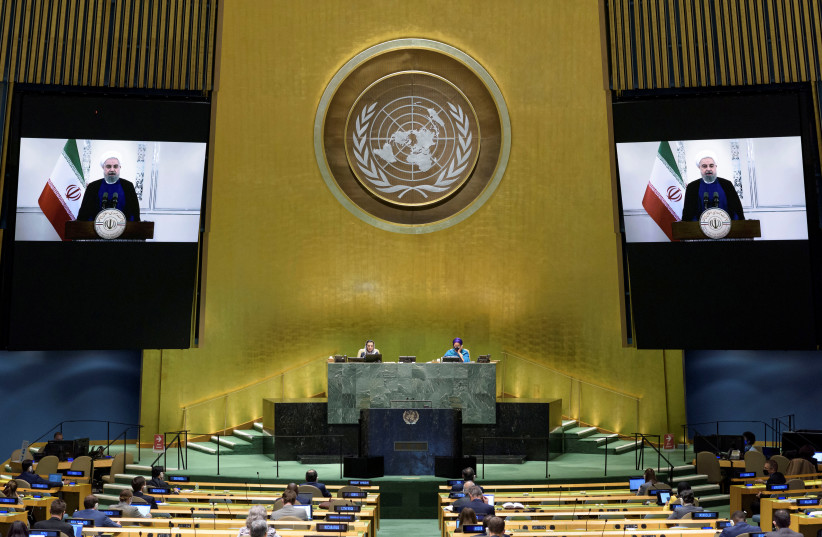
President of Islamic Republic of Iran Hassan Rouhani speaks virtually during the 75th annual UN General Assembly, which is being held mostly virtually due to the coronavirus disease (COVID-19) pandemic in the Manhattan borough of New York City, New York, US, September 22, 2020. (photo credit: UNITED NATIONS/HANDOUT VIA REUTERS)
President of Islamic Republic of Iran Hassan Rouhani speaks virtually during the 75th annual UN General Assembly, which is being held mostly virtually due to the coronavirus disease (COVID-19) pandemic in the Manhattan borough of New York City, New York, US, September 22, 2020.
(photo credit: UNITED NATIONS/HANDOUT VIA REUTERS)
Iran rejected a US offer – revealed in Politico on Tuesday – to launch negotiations over a new nuclear deal in exchange for a lifting of some American sanctions.

Iran said that it will not stop its 20% uranium enrichment before the United States lifts all sanctions, Iranian state TV quoted an unnamed official as saying in reaction to the US media report that Washington would offer a new proposal to jump-start talks.

“A senior Iranian official tells Press TV that Tehran will stop its 20-percent uranium enrichment only if the US lifts ALL its sanctions on Iran first,” state-run Press TV said on its website.

“The official said Tehran will further reduce its commitments under the 2015 nuclear deal if the US does not lift all sanctions, warning that Washington is rapidly running out of time,” it added.

The Iranian rejection of new talks was the third time the Islamic Republic had turned down a US offer to open talks about a new nuclear deal and the continuation of international sanctions against the regime.

The Biden administration has been seeking to engage Iran in talks about both sides resuming compliance with the deal, under which economic sanctions on Tehran were removed in return for curbs on Iran’s nuclear program to make it harder to develop a nuclear weapon.

At the same time, Washington has wanted to ensure that Iran fully returned to the limits in a way that could give it leverage to negotiate new concessions which were not part of the 2015 nuclear deal from Iran .

Some of the issues emphasized by the Biden administration — extending nuclear limits beyond 2030, limits on ballistic missile testing and limits on Iran’s aggressive behavior in the Middle East — reflect Israeli positions, though there is doubt in Jerusalem about how committed Biden is to achieving these concessions.

Publicly, Israel has opposed any deal which does not completely end Iranian nuclear enrichment.

Politico said a US proposal, the details of which it said are still being worked out, would ask Iran to halt some of its nuclear activities, such as work on advanced centrifuges and the enrichment of uranium to 20% purity, in exchange for some relief from US economic sanctions.

Despite the initial Iranian reports rejecting ending 20% uranium enrichment at this point, there was no rejection of the US demand to halt work on advanced centrifuges.

Both issues are important if Iran were to want to cut down its current estimated three month timeline to being able to develop a nuclear bomb.

However, in the past Israeli intelligence and nuclear experts have told the Jerusalem Post that the Islamic Republic has had trouble developing advanced nuclear centrifuges.

Even recent announcements have reflected that Tehran has few working advanced centrifuges and has not necessarily recovered from the destruction of its main advanced centrifuge assembly facility in July 2020, which the ayatollahs attributed to Israel.

US President Joe Biden’s predecessor, Donald Trump, withdrew from the deal in 2018 and reimposed US sanctions, prompting Iran, after waiting more than a year, to violate some of the pact’s nuclear restrictions in retaliation.

The odds of any progress to revive the deal before Iran holds a presidential election in June have dwindled after Tehran opted to take a tougher stance before returning to talks, officials have said.

According to the Politico report, the American proposal would ask Iran to stop some of its nuclear activities — such as work on advanced centrifuges and the enrichment of uranium to 20 percent purity — in exchange for some relief from US economic sanctions, said one of Politico’s two sources.

However, the details of this potential deal are still being worked out by the US and it’s not at all certain that Iran will accept the terms. Indeed, Tehran rejected a US proposal earlier this year, saying it was “unacceptable,” countering with their own idea, which the Biden team declared a non-starter.

The American proposal slated to be set forth this week is “about trying to get the conversation started” between the United States and Iran, one of the sources familiar with the situation told Politico.

Which country makes the first step to resume compliance with the 2015 Iran nuclear deal is not an issue for the United States, a US official said earlier this year, suggesting greater flexibility on the part of Washington. “That’s not the issue, who goes first,” the official told Reuters on condition of anonymity.

“Like, we are going to go at 8, they are going to go at 10? Or they go at 8, we go at 10? That’s not the issue,” the official said. “The issue is do we agree on what steps are going to be taken mutually.”

Asked for official comment at the time, a senior Biden administration official declined to discuss details of diplomatic conversations, Politico reported. “We have been clear that we are ready to pursue a mutual return to the [Iran deal],” the official added. “We have also been open that we are talking with our [international] partners … about the best way to achieve this, including through a series of initial, mutual steps. We have been looking at options for doing so, including with indirect conversations through our European partners.”