
New equipment to be set up at Natanz enrichment plant; Iranian official says its scientists have exceeded expected output of enriched uranium
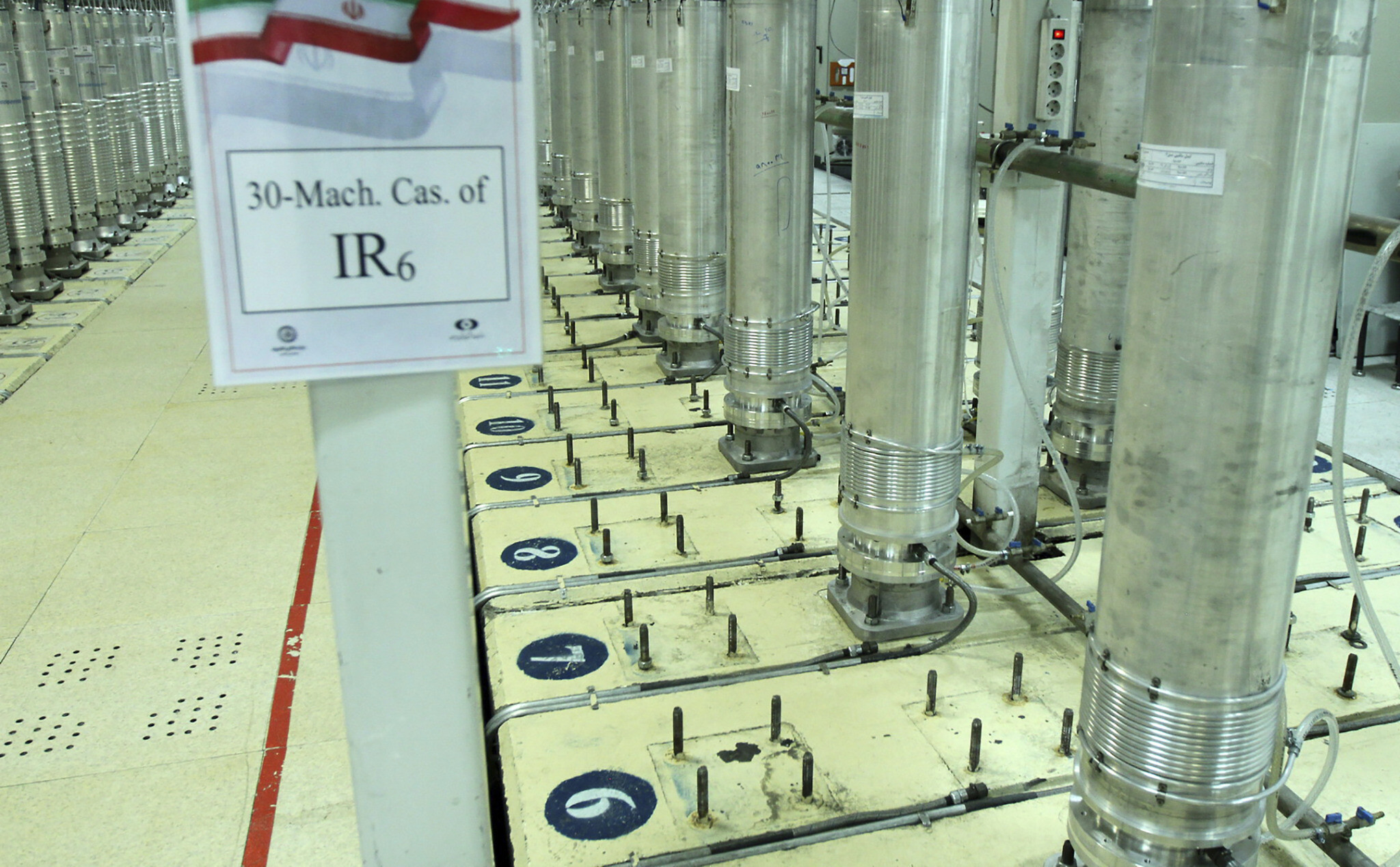
 

This photo released November 5, 2019, by the Atomic Energy Organization of Iran, shows centrifuge machines in the Natanz uranium enrichment facility in central Iran. (Atomic Energy Organization of Iran via AP, File)

This photo released November 5, 2019, by the Atomic Energy Organization of Iran, shows centrifuge machines in the Natanz uranium enrichment facility in central Iran. (Atomic Energy Organization of Iran via AP, File)

Iran said Thursday it plans to install 1,000 new centrifuges at the Natanz nuclear facility within three months and that its scientists had exceeded previous goals for uranium enrichment.

Behrouz Kamalvandi, a spokesperson for the Atomic Energy Organization of Iran, made the announcement about the centrifuges while Parliament Speaker Mohammad Bagher Qalibaf visited the Fordo nuclear facility, an underground site near the city of Qom.

Natanz is Iran’s main nuclear enrichment plant. An explosion at the site last year, which foreign media reports have attributed to Israel or the US, damaged an advanced centrifuge development and assembly plant.

Qalibaf said during the visit that in less than a month, Iranian scientists made more than 17 kilograms (37.5 pounds) of 20% enriched uranium. Qalibaf’s speech and Kamalvandi’s comments about the centrifuges were broadcast by Iranian state media.

Uranium enriched to 20% is a short technical step away from weapons-grade 90% enrichment. Western nations have criticized Iran’s enrichment activity and called on Tehran to adhere to its 2015 nuclear accord with world powers.

Iran has said it would produce 120 kilograms (44 pounds) of 20% enriched uranium per year, or 12 kilograms per month on average, so 17 kilograms would exceed that timetable.

The development brings Iran closer to crossing the line between nuclear operations with a potential civilian use, such as enriching nuclear fuel for power-generating reactors, and nuclear-weapons work, something Tehran has long denied ever carrying out.

Roughly 250 kilograms (550 pounds) of 20% enriched uranium are needed to convert it into 25 kilograms of the 90% enriched needed for a nuclear weapon.

The announcements came as tensions between Iran and the US remain high, with the top envoys from each country engaging in a war of words in recent days.
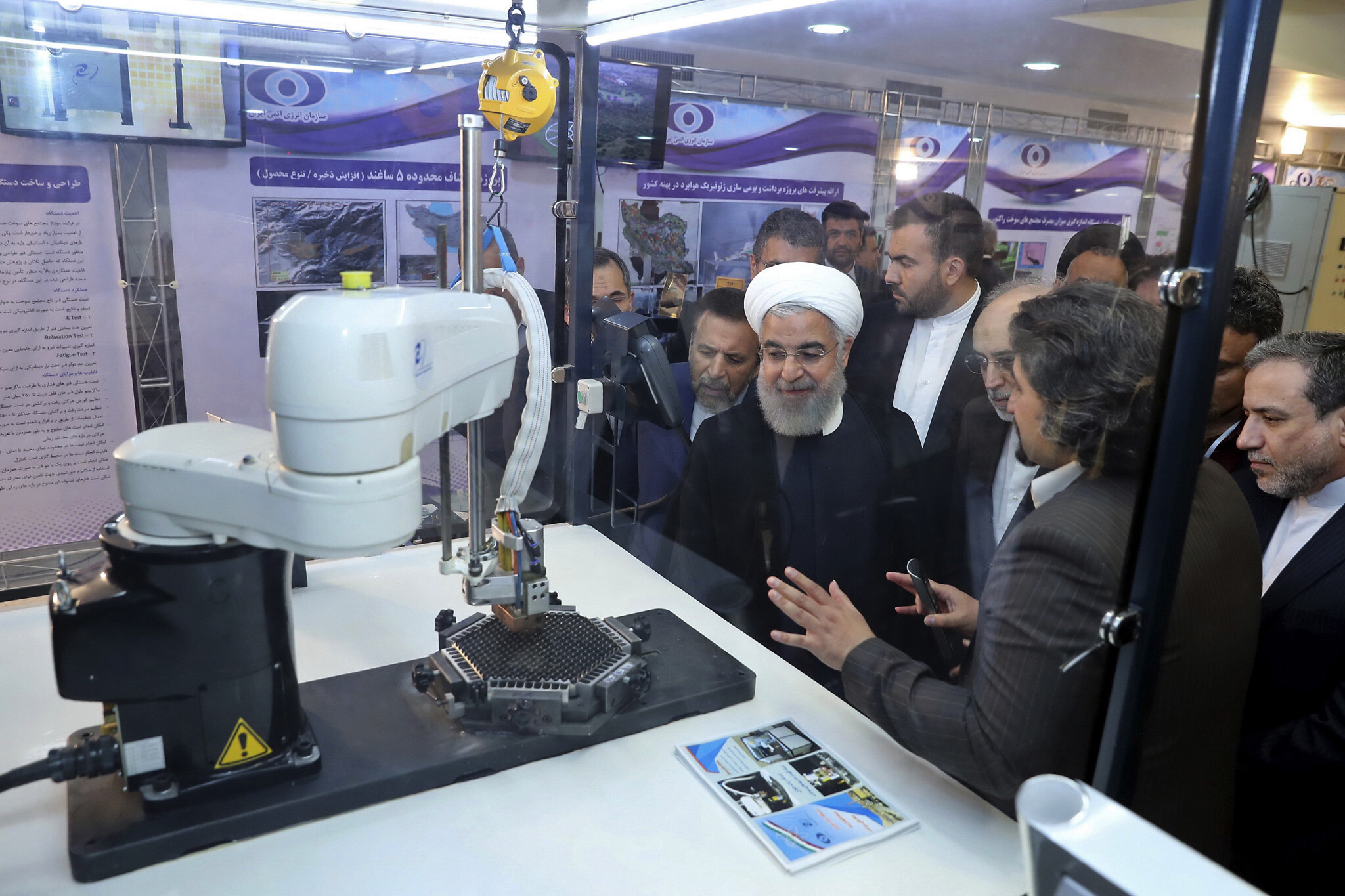
In this April 9, 2018 file photo, released by an official website of the office of the Iranian Presidency, President Hassan Rouhani listens to explanations on new nuclear achievements at a ceremony to mark “National Nuclear Day,” in Tehran, Iran. (Iranian Presidency Office via AP, File)

Former US president Donald Trump in 2018 unilaterally withdrew America from Iran’s nuclear deal, in which Tehran had agreed to limit its uranium enrichment in exchange for the lifting of economic sanctions. The US then ramped up sanctions and Iran gradually and publicly abandoned the deal’s limits on its nuclear development.

US President Joe Biden, who was vice president when the deal was signed during the Obama administration, has said he hopes to return the US to the deal if Iran returns to compliance.

The Biden administration’s policy on Iran is expected to be a point of contention between the new US administration and Israel.

Israeli officials have voiced strong objections to the US rejoining the nuclear deal, and have also issued threats against Iran in recent weeks.

IDF chief Aviv Kohavi issued a rare public criticism of the US plans on Tuesday and said that he had ordered the military to develop operational plans for striking Iran’s nuclear program.

Iran’s aggressive moves in recent months were believed to be partially aimed at increasing its leverage ahead of negotiations with Biden.

The Biden administration has pledged to consult with Israel and its other Middle East allies before making decisions regarding Iran.



Israel is “not yet aware” of all of Iran’s military capabilities, says Iranian army spokesperson Brig. Gen. Abolfazl Shekarchi in response to comments Tuesday by IDF Chief of Staff Lt. Gen. Aviv Kochavi.

Iranian general: We will level Tel Aviv if Israel makes slightest mistake
By Neta Bar and ILH Staff Published on 01-28-2021 07:57 Last modified: 01-28-2021 13:22

Iranian general: We will level Tel Aviv if Israel makes slightest mistake
Iranian army spokesperson Brig. Gen. Abolfazl Shekarchi | Screenshot


Iranian army spokesperson Brig. Gen. Abolfazl Shekarchi on Wednesday dismissed comments made a day earlier by IDF Cheif of Staff Lt. Gen. Aviv Kochavi as “psychological warfare” and warned that the “slightest mistake” by Israel would lead the Islamic republic to “level Haifa and Tel Aviv.”

Follow Israel Hayom on Facebook and Twitter

Kochavi on Tuesday said the IDF was preparing offensive contingencies against Iran to be used if necessary and warned the Biden administration against rejoining the 2015 Iran nuclear deal.

In an address to the Institute for National Security Studies, Kochavi said a return to the deal, even with some improvements, “is bad operationally and it is bad strategically.” He said allowing Iran to proceed with a nuclear program would be “an unacceptable threat and will lead to nuclear proliferation across the region.”

Shekarchi told Iran’s the semi-official Tasnim News Agency: “If we notice the slightest mistake on the part of the Zionist regime towards the regime of the Islamic republic, we will strike both the missile bases, which, according to them, are intended to strike Iran, and in the shortest time will level Haifa and Tel Aviv to the ground.”

According to Shekarchi, Israel was “not yet aware” of all of Iran’s military capabilities.

Mahmoud Vaezi, Iranian President Hassan Rouhani’s chief of staff, also responded to Kochavi’s comments, saying, “Our people and people of the region are familiar with the language so far used by the Zionist regime’s officials, who talk more and seek to conduct psychological warfare”

Vaezi also argued that Israel has “neither a plan nor the ability” to wage an attack on Iran.

Prime Minister Benjamin Netanyahu on Wednesday reiterated Kochavi’s warnings to Tehran.

“I would like to emphasize that the policy I am pursuing is clear: We will not allow Iran to arm itself with nuclear weapons. I say this to enemies and friends alike, it is our top mission, to preserve the life of our country.”


BEIRUT, LEBANON (8:20 P.M.) – The spokesman for the Iranian armed forces, Major General Abu Fadl Shikaraji, threatened to “destroy Tel Aviv” in case Israel “makes any mistake” against Iran.

“Israel’s threats are part of psychological warfare, and if they are realistic, then they are illusions,” Shkaraji said, adding that the Iranian army “will destroy Tel Aviv and erase it if Israel commits any stupidity against our nuclear facilities.”

“The Israeli army lives in a state of terror and is too weak to carry out its threats on the ground,” he said, adding that “Israel’s threat to destroy our nuclear facilities is just illusions and pipe dreams.”

Shkharji stressed that the Iranian army “will destroy the Israeli missile bases as soon as Iran is exposed to any attack,” noting that “the large part of Iran’s military capabilities have not been revealed.”

“The Israeli army is unable to confront Hezbollah and the Palestinian resistance movements despite international support,” he continued.

Shkaraji claimed that “Iran’s nuclear facilities are completely peaceful, and there is no place for the production, storage or use of nuclear weapons in Iran’s defense strategy, and we have a legal fatwa from the guide to do so.”

Shkaraji’s comments came a day after the Chief of Staff of the Israeli army, Aviv Kochavi, announced that Israel stands with a strong alliance that includes Arab countries to confront Iran.