Archaeologists believe that this niche represents the remains of the throne of Herod Antipas. From here, the decision to execute John the Baptist may have been made.
(Image: © Győző Vörös)

Archaeologists claim that they have identified the deadly dance floor where John the Baptist — a preacher who foretold the coming of Jesus — was sentenced to death around A.D. 29.

The Bible and the ancient writer Flavius Josephus (A.D. 37-100) both describe how King Herod Antipas, a son of King Herod, had John the Baptist executed. Josephus specified that the execution took place at Machaerus, a fort near the Dead Sea in modern-day Jordan.

Herod Antipas feared the growing influence of John the Baptist among the population and so he executed him Josephus wrote. The Bible, on the other hand, tells a far more elaborate tale, claiming that Herod Antipas had John the Baptist executed in exchange for a dance.

CLOSE
Gate-Shrine Described in Hebrew Bible Excavated in Israel
Volume 0%
PLAY SOUND

Related: Proof of Jesus Christ? 6 pieces of evidence debated

The Biblical story claims that Herod Antipas was set to marry a woman named Herodias, both of whom had been divorced — something that John the Baptist objected to.

At Herod Antipas’ birthday party, Herodias’ daughter, named Salome, performed a dance that so delighted Herod Antipas that the king promised her anything she wanted as a reward. Salome, goaded on by Herodias, asked for the head of John the Baptist. Herod Antipas was reluctant to grant the request, according to the Bible, but he ultimately decided to fulfill it and had John the Baptist’s head brought to Salome on a platter.

Image 1 of 5

The remains of part of Machaerus can be seen here.

The remains of part of Machaerus can be seen here. (Image credit: Győző Vörös)

Megiddo, seen here, was one of many archaeological sites where excavations were suspended or curtailed during 2020.

Megiddo, seen here, was one of many archaeological sites where excavations were suspended or curtailed during 2020. (Image credit: Shutterstock)

Here, a reconstruction of the upper citadel of Machaerus.

Here, a reconstruction of the upper citadel of Machaerus. (Image credit: Győző Vörös)

The reconstruction of the courtyard where Salome's dance may have taken place.

The researchers created a reconstruction of the courtyard where Salome’s dance may have taken place. (Image credit: Győző Vörös)

Archaeologists believe that this niche represents the remains of the throne of Herod Antipas. From here, the decision to execute John the Baptist may have been made.

Archaeologists believe that this niche represents the remains of the throne of Herod Antipas. From here, the decision to execute John the Baptist may have been made. (Image credit: Győző Vörös)

Deadly dance floor found?

A courtyard uncovered at Machaerus is likely the place where Salome’s dance was performed and where Herod Antipas decided to have John the Baptist beheaded, wrote Győző Vörös, director of a project called Machaerus Excavations and Surveys at the Dead Sea, in the book “Holy Land Archaeology on Either Side: Archaeological Essays in Honour of Eugenio Alliata” (Fondazione Terra Santa, 2020). The courtyard, Vörös said, has an apsidal-shaped niche that is probably the remains of the throne where Herod Antipas sat.

After King Herod’s death his kingdom was divided among his sons and Herod Antipas controlled a kingdom that included Galilee and part of Jordan. He controlled his kingdom at times from Machaerus. .

Archaeologists discovered the courtyard in 1980, but they didn’t recognize the niche as being part of Herod Antipas’ throne until now, Vörös wrote in the article. The presence of the throne next to the courtyard solidifies the conclusions about the dance floor, Vörös wrote.

The archaeological team has been reconstructing the courtyard and published several images in the book showing what it looked like around the time of John the Baptist’s execution.

Here, a reconstruction of the courtyard where Salome’s dance may have taken place. (Image credit: Győző Vörös)

Scholars respond

More than half a dozen scholars not involved with the excavations talked to Live Science about the claim that Herod Antipas’ throne, and the courtyard where the deadly dance was performed, had been found. Some scholars were convinced, while others were skeptical.

Related: 8 alleged relics of Jesus of Nazareth

“I think it is historically probable that this excavation has brought the ‘dance floor’ of Salome to light,” said Morten Hørning Jensen, a professor at the Norwegian School of Theology, who wrote the book “Herod Antipas in Galilee” (Mohr Siebeck, 2010).

Some scholars were not convinced, expressing doubts about whether the newly identified niche represents the remains of the throne of Herod Antipas. Jodi Magness, a professor of religious studies at the University of North Carolina at Chapel Hill, praised the work by Vörös and his team; and while Magness said that it is possible that Vörös found the throne of Herod Antipas, she has doubts.

For instance, the niche found at Machaerus seems small compared with the throne of his father King Herod found at the winter palace of Jericho, Magness told Live Science, referring to a throne in the palace that is covered with a semi-circular overhead apse. She added that the niche at Machaerus looks similar to two niches found at the Upper Herodium, a palace-fortress built by King Herod, but those two niches have never been identified as the remains of thrones.

Eric Meyers, a professor emeritus of Jewish studies at Duke University, said that it is quite possible that the throne of Herod Antipas has been found and is eager to read the final reports on the site. Whether “a perfect match between literary and archaeological sources that places the execution of John the Baptist in that very spot remains to be seen. In any event, a strong case has been made and I look forward to the final reports,” Meyers said.

Originally published on Live Science.

Editor’s Note: This article has been updated to correct a statement about where Salome performed her dance. It happened during a birthday party, not a wedding as had been stated earlier.
Day after upping uranium enrichment to 20%, Ismic Republic’s atomic chief announces steps to increase production further

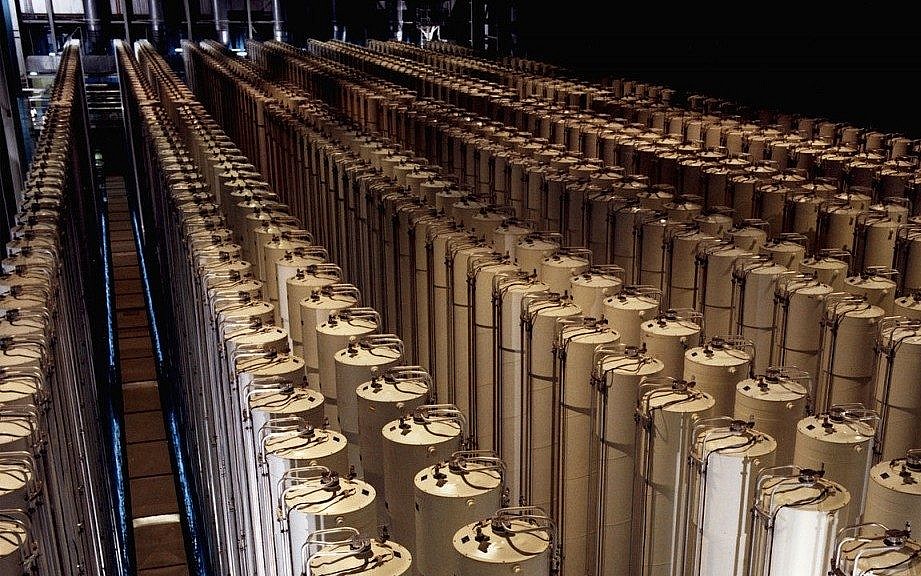
Illustrative. Centrifuges enriching uranium. (Public Domain/US Department of Energy/Wikimedia Commons)

After Iran confirmed that it has stepped up its uranium enrichment in breach of the 2015 nuclear deal, the head of Iran’s atomic agency said Tuesday the Islamic Republic is in the process of installing 1,000 new centrifuges to help increase production.

“One thousand centrifuges are being installed inside the country,” Ali Akbar Salehi said, according to the semi-official Fars News Agency.

“We are currently installing one thousand IR-2m centrifuges, but two cascades are installed and working,” he added.

Salehi also said that Iran had increased its supply of yellowcake, a precursor to enriched uranium, eight-fold in the past two years.

“Until three or four years ago, we used to produce an average of 4 to 5 tons of yellowcake, but for the past two years, we have increased the production of yellowcake to 30 tons,” he said in his reported comments. “This year, the production of yellowcake will be between 35 and 40 tons, which means that we have 8-folded the production of yellowcake.”

Yellowcake is a uranium concentrate in powder form and an early step in uranium processing. It is produced by mining uranium ore from rocks and separating the uranium from the rocks by bathing them in acid. The yellowcake can then be converted, enriched to raise its purity, and then used for weapons or energy production.

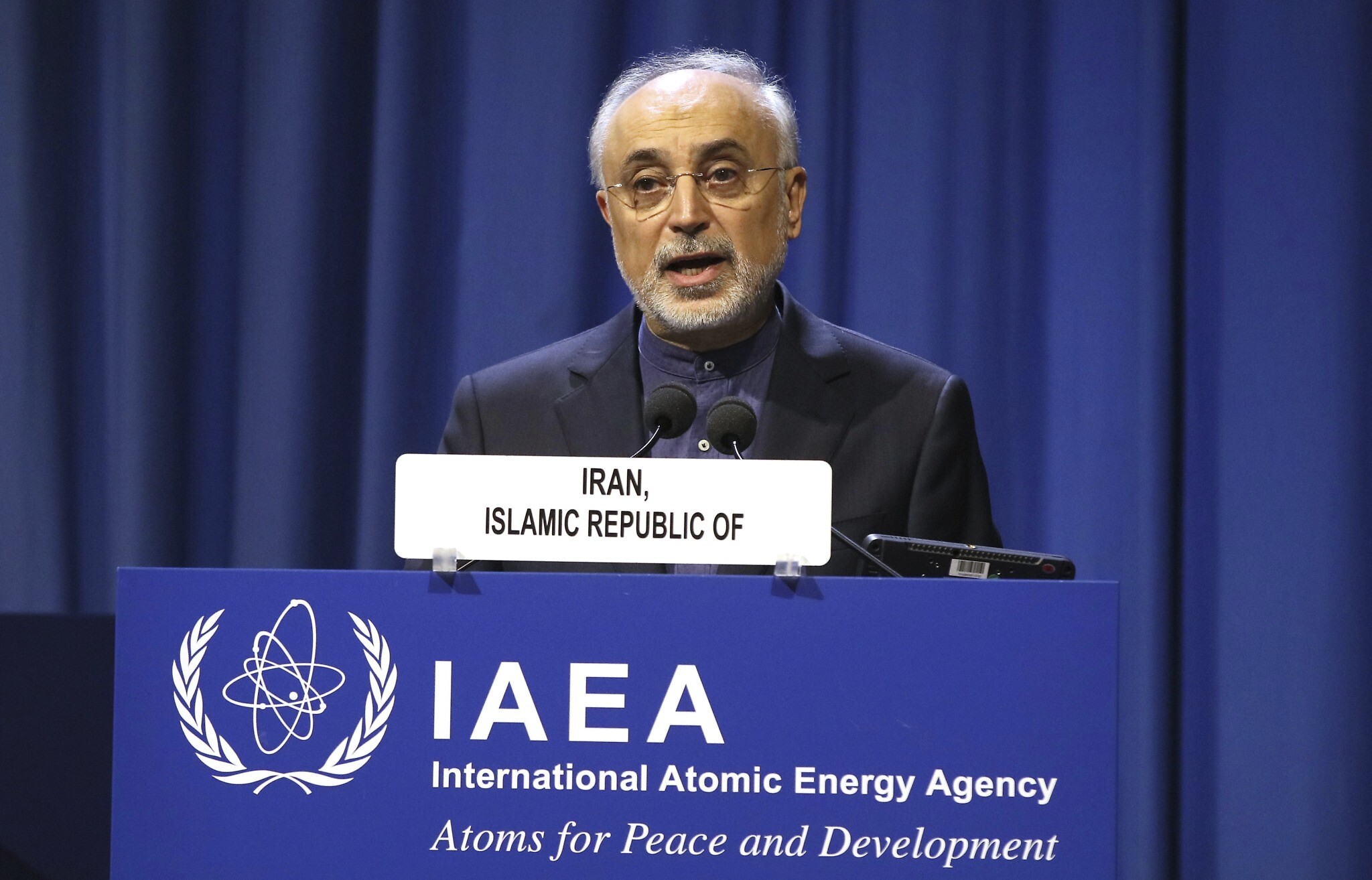
File: The head of Iran’s Atomic Energy Organization Ali Akbar Salehi delivers his speech at the opening of the general conference of the IAEA in Vienna, Austria, September 16, 2019. (AP Photo/Ronald Zak)

Salehi’s comments came a day after Iran said it had begun enriching uranium to 20 percent purity — far above the level permitted under its 2015 agreement with world powers — in a step the US State Department condemned as “nuclear extortion.” The 2015 deal capped enrichment at 3.75%. The jump from 20% to the 90% required for an atomic bomb is actually rather quick compared to the work needed to move from approximately 4% to 20%.

Increasing enrichment to 20% was the most striking suspension yet of Tehran’s commitments under its landmark deal with six nations, which has been fraying since US President Donald Trump withdrew from it in 2018 and reimposed crippling sanctions.

Responding to the uranium announcement, the US Treasury imposed new sanctions targeting Iran’s steel sector Tuesday, slapping penalties on a dozen Iranian companies, three foreign holding companies of Iranian firms, and one China-based manufacturer that supplies graphite electrodes to the Islamic Republic.

“The Iranian metals sector is an important revenue source for the Iranian regime, generating wealth for its corrupt leaders and financing a range of nefarious activities, including the proliferation of weapons of mass destruction and their means of delivery, support for foreign terrorist groups, and a variety of human rights abuses, at home and abroad,” the US Treasury said in a statement.

“The Trump Administration remains committed to denying revenue flowing to the Iranian regime as it continues to sponsor terrorist groups, support oppressive regimes, and seek weapons of mass destruction,” said Treasury Secretary Steven T. Mnuchin.

The European Union noted Iran’s step “with deep concern” and said it planned to “redouble our efforts to preserve the agreement and return to its full implementation by all parties.”

Iranian nuclear scientist Mohsen Fakhrizadeh. (Agencies)

Iran’s conservative-dominated parliament voted in favor of increasing uranium enrichment after the November killing of its top nuclear physicist Mohsen Fakhrizadeh, an assassination Iran blamed on Israel.

Prime Minister Benjamin Netanyahu has charged Iran’s latest nuclear move proves it is seeking to build an atomic bomb — a claim Iran has always strongly denied — and pledged the Jewish state “will not allow” it to do so.

Iran’s Foreign Minister Mohammad Javad Zarif said Tehran took the latest enrichment step “after years of non-compliance” by other parties and that “our measures are fully reversible upon full compliance by all.”

Russia’s foreign ministry said in a statement it “paid tribute to the regular declarations by Iranian leaders of their willingness to return to full respect for the requirements of the agreement”.

It added, however, that “additional efforts and costs will now be required to bring the Fordo site in line with the terms of the agreement.”


Iran vows ‘decisive response’ to any Israeli move against it

Iran gave more details about its enrichment decision by saying it had the capacity to produce up to 9 kg of 20% enriched uranium per month.

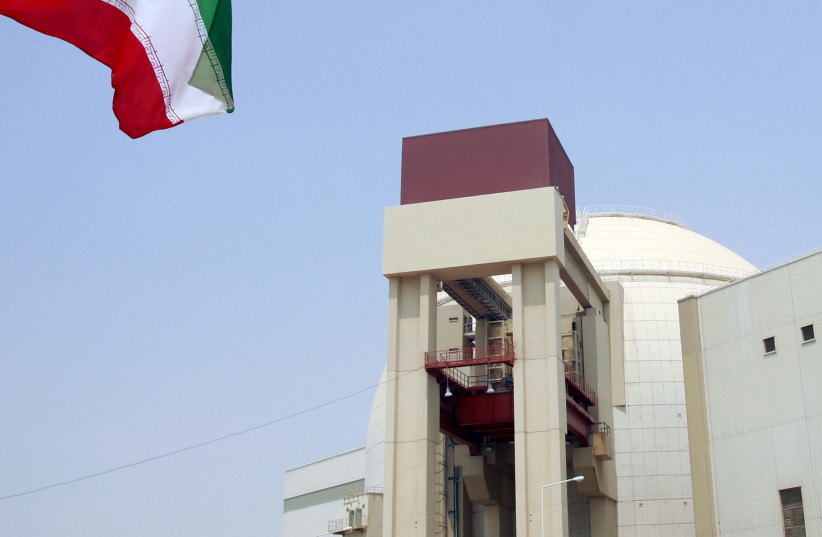
A general view of the Bushehr main nuclear reactor, Iran (photo credit: REUTERS/RAHEB HOMAVANDI)
A general view of the Bushehr main nuclear reactor, Iran
(photo credit: REUTERS/RAHEB HOMAVANDI)
Iran said on Tuesday it would deliver a “decisive response” to any Israeli move against it, after Prime Minister Benjamin Netanyahu said Israel would not allow Tehran to develop nuclear weapons, a news agency close to the Revolutionary Guards said.

On Monday, Iran said it resumed 20% uranium enrichment at a nuclear facility, a move that coincides with rising tensions with the United States in the last days of President Donald Trump’s term. The decision is the latest of several Iranian breaches of a 2015 nuclear accord with world powers.
Netanyahu said the move was aimed at developing nuclear weapons and Israel would never allow Tehran to build them. Iran says it has never sought nuclear weapons.
Iran’s Nour News quoted an unnamed security official as saying: “This regime (Israel) should be aware that any aggression against Iran’s interests and security from any side and in any way, whether (Israel) admits or denies responsibility, will face a decisive response from Iran against this regime.”
The statement was widely carried by Iranian news agencies and state media.
Separately, Iran on Tuesday gave more details about its enrichment decision by saying it had the capacity to produce up to 9 kg of 20% enriched uranium per month.
“At present, we produce 17 to 20 grams of 20% uranium every hour,” Ali Akbar Salehi, head of Iran’s Atomic Energy Organization, said according to state media. “We have a monthly production capacity of 8 to 9 kg to reach the 120 kg stipulated by the law.”
The decision to enrich to 20 percent purity was one of many moves mentioned in a law passed by Iran’s hardline-dominated parliament last month in response to the killing of the country’s top nuclear scientist, which Tehran has blamed on Israel.
Tehran started violating the accord in 2019 in a step-by-step response to Trump’s withdrawal from the nuclear accord in 2018 and the reimposition of US sanctions lifted under the deal.