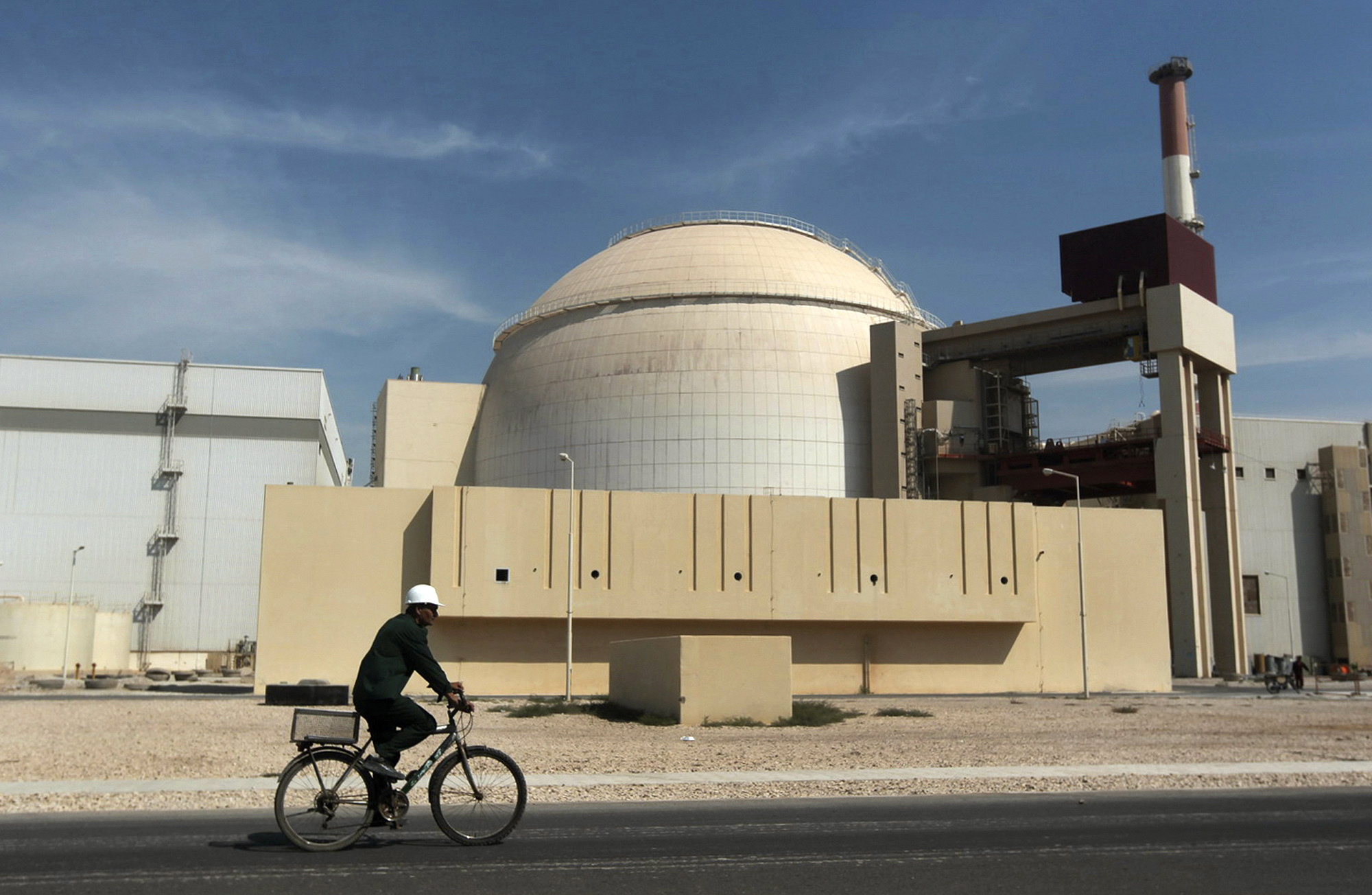
Iran said Saturday it plans to enrich uranium up to 20 percent at its underground Fordo nuclear facility “as soon as possible,” pushing its program a technical step away from weapons-grade levels as it increases pressure on the West over the tattered atomic deal.
Ali Akbar Salehi, the US-educated head of the civilian Atomic Energy Organization of Iran, offered a military analogy to describe his agency’s readiness to take the next step.
“We are like soldiers and our fingers are on the triggers,” Salehi told Iranian state television. “The commander should command and we shoot. We are ready for this and will produce [20% enriched uranium] as soon as possible.”
Get The Times of Israel’s Daily Edition by email and never miss our top storiesFREE SIGN UP
The move comes amid heightened tensions between Iran and the US in the waning days of the administration of President Donald Trump, who unilaterally withdrew America from Tehran’s nuclear deal in 2018, and ahead of the Sunday anniversary of a US drone strike that killed a top Iranian general in Baghdad a year ago, that has American officials now worried about possible retaliation by Iran.

The head of Iran’s Atomic Energy Organization Ali Akbar Salehi delivers his speech at opening of the general conference of the IAEA in Vienna, Austria, September 16, 2019. (AP Photo/Ronald Zak)
Iran informed the International Atomic Energy Agency that it intends to produce uranium enriched to up to 20% purity, well beyond the threshold set by the 2015 Vienna accord, the UN nuclear watchdog said Friday.
“Iran informed the agency of its intention to enrich uranium at a rate of up to 20 percent in its Fordo underground plant, to comply with a law recently passed by the Iranian parliament,” an IAEA spokesperson said.
The letter dated December 31 “did not state exactly when this enrichment activity would begin,” the spokesperson added.
Iran has not enriched to such levels since it entered into the 2015 nuclear deal with world powers, which capped its enrichment at 3.67%. Tehran has recently broken that limit as the nuclear deal has disintegrated, reaching 4.5%.
Uranium enriched to 20% is far below the 90% needed to construct nuclear bombs, but the jump from 20% to 90% is actually rather quick compared to the work needed to move from 4% to 20%.
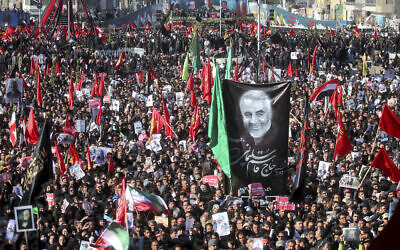
Mourners attend a funeral ceremony for Iranian Gen. Qassem Soleimani and his comrades, who were killed in Iraq in a US drone strike, in the city of Kerman, Iran, January 7, 2020. (Erfan Kouchari/Tasnim News Agency via AP)
Iran’s announcement coincides with the anniversary of the US drone killing of Revolutionary Guard Gen. Qassem Soleimani in Baghdad last year. That attack later saw Iran retaliate by launching a ballistic missile strike injuring dozens of US troops in Iraq. Tehran also accidentally shot down a Ukrainian passenger jet that night, killing all 176 people on board.
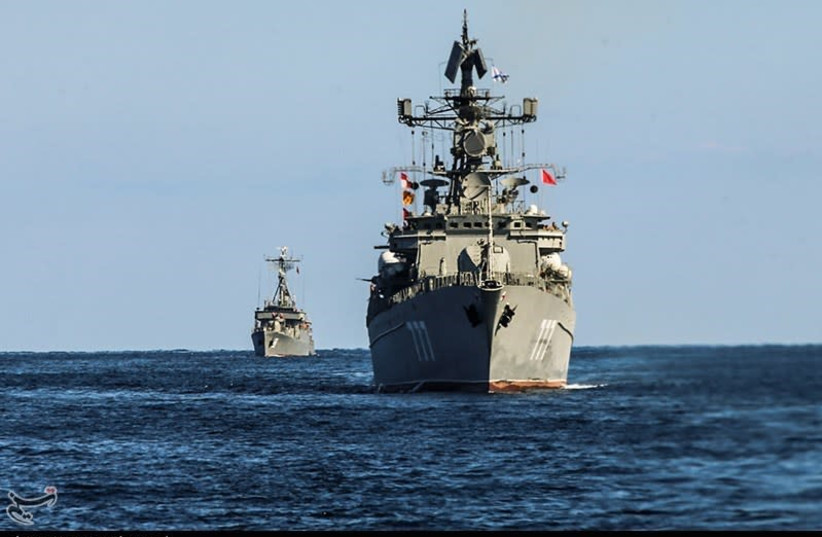
As the anniversary approached, the US has sent B-52 bombers flying over the region and sent a nuclear-powered submarine into the Persian Gulf.
On Thursday, sailors discovered a limpet mine on a tanker in the Persian Gulf off Iraq near the Iranian border as it prepared to transfer fuel to another tanker owned by a company traded on the New York Stock Exchange. No one has claimed responsibility for the mining, though it comes after a series of similar attacks in 2019 that the US Navy blamed on Iran. Tehran denied being involved.
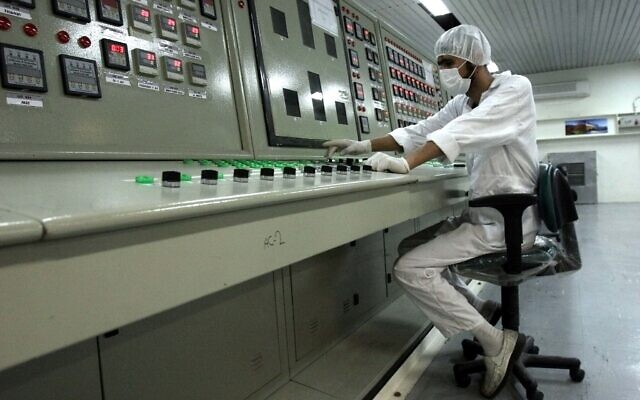
In this Feb. 3, 2007 file photo, a technician works at the Uranium Conversion Facility just outside the city of Isfahan, Iran (AP Photo/Vahid Salemi, File)
Tensions have been increasing since Trump withdrew from the accord in 2018 and began imposing a host of sanctions against Tehran as part of a so-called maximum pressure campaign aimed at buckling Iran and convincing it to agree to a more favorable agreement, in Washington’s eyes.
But Iran has not done so, instead choosing to enrich uranium to numbers far beyond what the deal allowed. The Islamic Republic’s stockpile of enriched uranium is more than 2.4 tons, 12 times the JCPOA limit, though still less than the more than eight tons Iran had enriched before signing the deal.
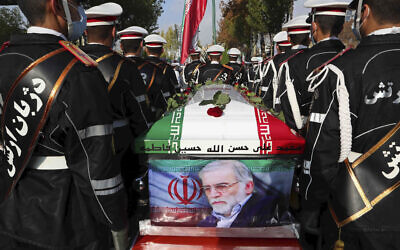
Military personnel stand near the flag-draped coffin of Mohsen Fakhrizadeh, an assassinated top nuclear scientist during his funeral ceremony in Tehran, Iran, November 30, 2020. (Iranian Defense Ministry via AP)
Since the assassination in late November of Iranian nuclear physicist Mohsen Fakhrizadeh, which Iran has blamed on Israel, hardliners in Tehran pledged a response and parliament passed a controversial law calling for the production and storage of “at least 120 kilograms per year of 20 percent enriched uranium” and to “put an end” to the IAEA inspections intended to check that the country is not developing an atomic bomb.
The Iranian government opposed the initiative which was also condemned by the other signatories to the accord who called on Tehran not to “compromise the future.”
Iran has indicated some willingness to return to compliance with the agreement if the US, under incoming president Joe Biden, lifts the sanctions that were put in place after Trump’s withdrawal.
Biden has vowed to re-enter the nuclear agreement if Iran first returns to compliance with it. He has also expressed a desire to negotiate a “longer and stronger” follow-up agreement that would extend the time-limited provisions on the JCPOA, while also addressing Iran’s missile program and curbing the influence of Tehran’s regional proxies.

US President-elect Joe Biden delivers remarks at the Queen Theater on December 28, 2020, in Wilmington, Delaware. (Mark Makela/Getty Images/AFP)
Iran has rejected any such negotiations.
The remaining countries that signed the agreement with Iran — Germany, France, Britain, China and Russia — have been trying to keep it from collapsing after the unilateral withdrawal of the United States in 2018.
In late December the countries agreed to “positively address” the possibility of a US return to the accord. Germany’s foreign minister urged Iran not to waste what he called a final window of opportunity.
The three European powers have expressed hope that with the change of administrations in Washington, the US could be brought back into the deal, whose goal is to prevent Iran from developing a nuclear bomb — something Tehran insists it doesn’t want to do.
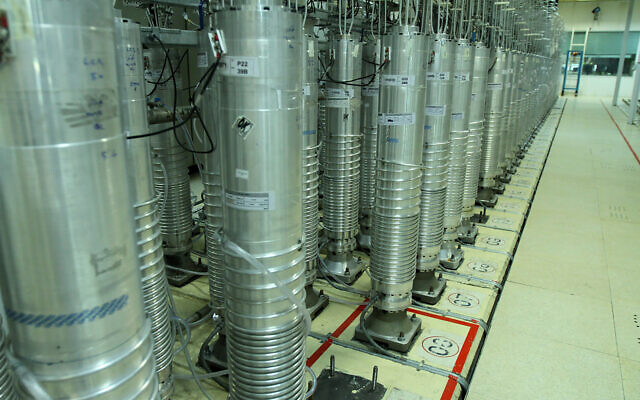
Centrifuge machines in the Natanz uranium enrichment facility in central Iran, November 5, 2019. (Atomic Energy Organization of Iran via AP)
The deal promises Iran economic incentives in exchange for curbs on its nuclear program, but with the reinstatement of American sanctions, the other nations have been struggling to provide Iran the assistance it seeks.
Iranian Foreign Minister Mohammad Javad Zarif has said that Iran would “rapidly reverse” its violations of the nuclear accord when the United States and the three European powers “perform their duties.”
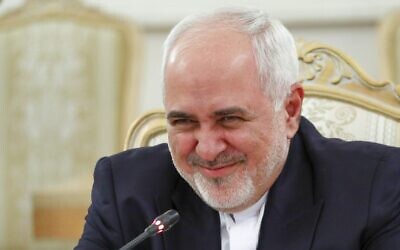
Iranian Foreign Minister Mohammad Javad Zarif smiles during talks in Moscow, Russia, September 24, 2020. (Russian Foreign Ministry Press Service via AP)
Despite Iran’s violations, the International Atomic Energy Agency has reported that Tehran continues to give inspectors full access to its nuclear sites — a key reason the JCPOA member nations say it is worth preserving.
In December, photos obtained by The Associated Press showed that Iran has begun construction on a site at its underground nuclear facility at Fordo.
Iran has not publicly acknowledged any new construction at Fordo, whose discovery by the West in 2009 came in an earlier round of brinkmanship before world powers struck the 2015 nuclear deal with Tehran.
While the purpose of the building remains unclear, any work at Fordo will likely trigger new concern. Already, Iran is building at its Natanz nuclear facility after a mysterious explosion in July there that Tehran described as a sabotage attack.
“Any changes at this site will be carefully watched as a sign of where Iran’s nuclear program is headed,” said Jeffrey Lewis, an expert at the James Martin Center for Nonproliferation Studies at the Middlebury Institute of International Studies who studies Iran.
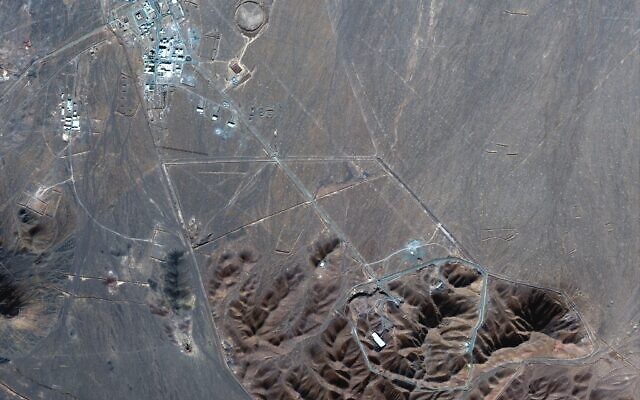
This Nov. 4, 2020, satellite photo by Maxar Technologies shows Iran’s Fordo nuclear site (Maxar Technologies via AP)
The IAEA as of yet has not publicly disclosed if Iran informed it of any construction at Fordo.
Under the 2015 nuclear deal, Iran agreed to stop enriching uranium at Fordo and instead make it “a nuclear, physics and technology center.”
“This location was a major sticking point in negotiations leading to the Iran nuclear deal,” Lewis said. “The US insisted Iran close it while Iran’s supreme leader said keeping it was a red line.”
Since the deal’s collapse, Iran has resumed enrichment there.