
December 2, 2025 6:15 pm

by Ailin Vilches Arguello

Turkish President Tayyip Erdogan attends a press conference with German Chancellor Friedrich Merz at the Presidential Palace in Ankara, Turkey, Oct. 30, 2025. Photo: REUTERS/Umit Bektas

Despite the recent reimposition of UN sanctions on Iran, Turkey has called for closer diplomatic and trade relations with the Iranian regime, as both countries seek to bolster their influence in the Middle East while openly targeting Israel.

In a new interview with the semi-official Iranian news outlet ISNA, Turkey’s Ambassador to Iran, Hicabi Kırlangıç, said Ankara was working to expand bilateral cooperation with Tehran by leveraging existing capabilities to increase economic ties between the two countries.

“One of the obstacles to expanding trade relations between Iran and Turkey is the issue of sanctions. However, we should not cling to this excuse and refrain from trying to increase trade relations,” Kırlangıç said.

“The goal is to raise the level of trade relations to $30 billion, but we are still far from this figure,” he continued, emphasizing the vast potential for economic growth and the need for careful planning to achieve it.

The Turkish diplomat’s latest remarks followed Foreign Minister Hakan Fidan’s visit on Sunday to Tehran, where he also pushed for stronger bilateral cooperation between the two countries and denounced what he called “unfair sanctions” on Iran.

In a joint press conference with Iranian Foreign Minister Abbas Araghchi, Fidan reaffirmed Turkey’s support for Tehran while calling for the country’s nuclear program to be addressed through dialogue amid ongoing discussions to restart nuclear talks with the West.

After repeated unsuccessful negotiations over Iran’s nuclear program, European countries launched the process to reinstate wide-ranging UN sanctions earlier this year under the so-called snapback mechanism, adding further pressure on Tehran, which was already facing mounting US sanctions.

Fidan called for the removal of these “unrighteous” sanctions, stressing that the Iranian regime must resolve outstanding issues “on the basis of international law.”

“Turkey has always stood with Iran and will continue to stand with Iran within the framework of international law,” the top Turkish diplomat said, adding that “these unfair sanctions should be lifted.”

During their high-level meeting in Tehran, officials from both countries vowed to significantly expand cooperation on trade, energy, border management, and regional security, noting that economic ties remain well below their potential.

As part of their announced initiatives, the two nations agreed to build a new joint rail line that will serve as a strategic trade corridor between Asia and Europe, with construction expected to take three to four years and cost roughly $1.6 billion.

Fidan also said both countries consider Israel “the biggest threat to stability in the Middle East,” pointing to the war in Gaza, tensions in Lebanon and Syria, and broader concerns over what he called “Israeli expansionist policies.”

“The international community must fulfill its responsibilities,” he said, calling for stronger global pressure on the Jewish state.

Amid international efforts to uphold the Israel-Hamas ceasefire and chart a path for post-war Gaza, Turkey — a longtime backer of Hamas — has been pushing to expand its role in Gaza’s reconstruction efforts, which experts have warned could potentially strengthen Hamas’s terrorist infrastructure.

The talks come one year after a ceasefire between Israel and Hezbollah, which Israeli officials say is eroding.

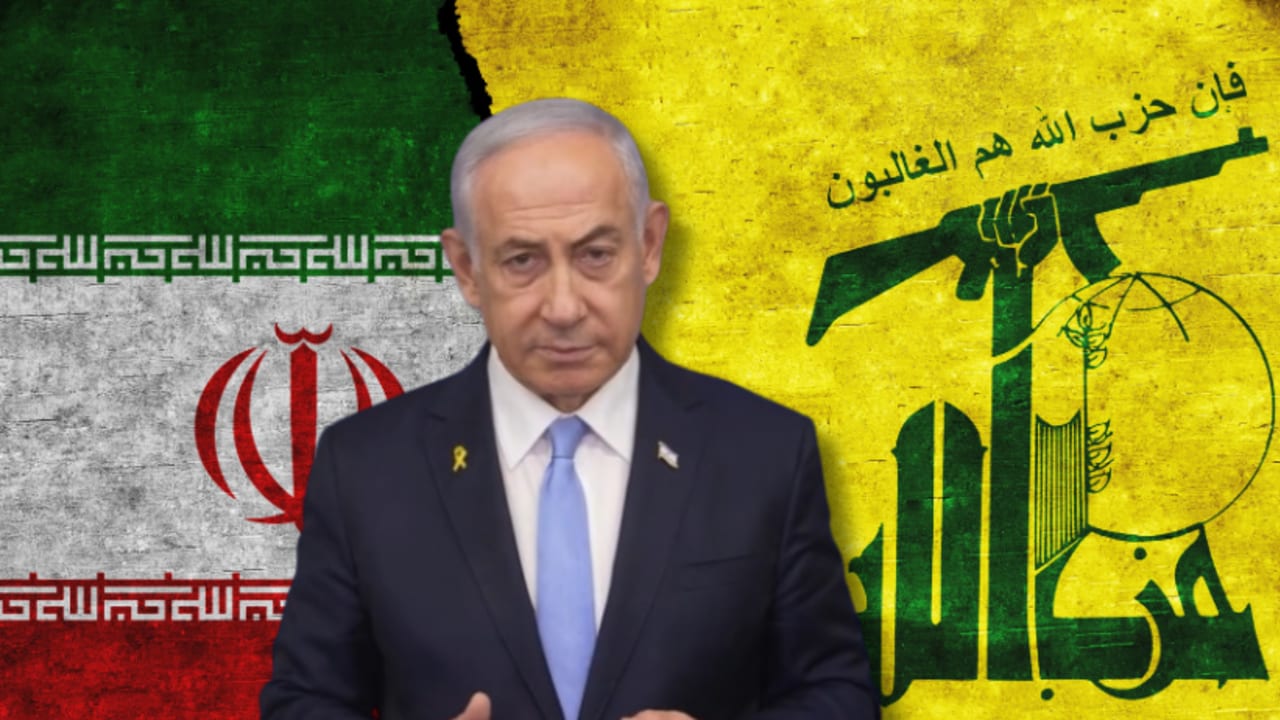
 (Illustrative) Prime Minister Benjamin Netanyahu over a backdrop of Iran and Hezbollah flags.
(Illustrative) Prime Minister Benjamin Netanyahu over a backdrop of Iran and Hezbollah flags.
(photo credit: Canva, PMO, SHUTTERSTOCK)
Prime Minister Benjamin Netanyahu on Tuesday met with US President Donald Trump’s envoy for Lebanon affairs, Morgan Ortagus, in Israel as border tensions with Lebanon intensify, according to Israeli officials.
Defense Minister Israel Katz and IDF Intelligence Chief Maj. Gen. Shlomi Binder joined the meeting. The talks come one year after a ceasefire between Israel and Hezbollah, which Israeli officials say is eroding.
“If there is no dramatic change by the end of the agreement period, another round of fighting in the north is almost inevitable,” a security official told The Jerusalem Post.
Hezbollah supporters hold images of late Hezbollah leader Hassan Nasrallah, and Palestinian and other flags at a ceremony held by Hezbollah to commemorate the first anniversary of Nasrallah's killing by Israel, on the outskirts of Beirut, Lebanon (credit: REUTERS/MOHAMED AZAKIR)
Hezbollah supporters hold images of late Hezbollah leader Hassan Nasrallah, and Palestinian and other flags at a ceremony held by Hezbollah to commemorate the first anniversary of Nasrallah’s killing by Israel, on the outskirts of Beirut, Lebanon (credit: REUTERS/MOHAMED AZAKIR)

Deadline to reassess Israel-Hezbollah conflict set for end of December

Another security official said Israel has plans for every scenario. “There is already a prepared plan for every type of operation,” the official said. In both Jerusalem and Washington, December 31 is being discussed as a deadline after which Israel and the United States will reassess options.

Representatives of the countries overseeing the ceasefire’s implementation are due to meet on Wednesday in Naqoura. Ortagus is expected to attend the session, then travel to Beirut to convey a message from senior Israeli officials. The message, according to officials, is direct: “Either Hezbollah disarms, or Israel will be forced to act.”
Israeli and Western frustration over Hezbollah’s disarmament pace has grown in recent weeks, alongside reports of increased activity along the frontier and debate over UNIFIL’s role. The ceasefire’s first anniversary has sharpened scrutiny of whether Beirut is enforcing commitments to keep Hezbollah’s weapons away from the border.


US envoy Morgan Ortagus receives evidence from senior Israeli officials pointing to Hezbollah’s rapid rearmament and Lebanon’s lack of action.

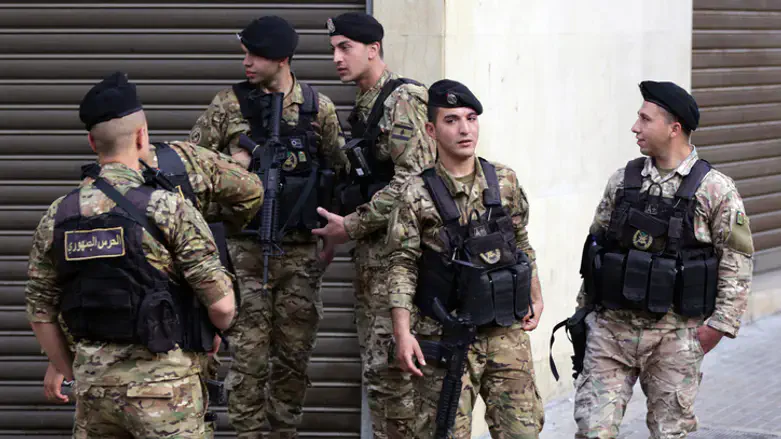
Lebanese soldiers in Beirut

Lebanese soldiers in BeirutiStock

US President Donald Trump’s envoy to Lebanon, Morgan Ortagus, arrived in Israel on Tuesday and began her visit with a series of meetings with senior political and security officials.

Participants included the Prime Minister, the Defense Minister, and the head of Military Intelligence, Major General Shlomi Binder. The meetings were part of Washington’s efforts to prevent escalation along the northern border and to uphold the existing ceasefire agreement.

During the discussions, Israeli security officials presented updated intelligence on Hezbollah’s efforts to rebuild and enhance its capabilities. According to the briefing shown to the envoy, Hezbollah continues to violate existing arrangements in the area and restore its military strength, while the Lebanese army fails to enforce those agreements.

He stated, “The terrorist organization is arming itself at a much faster pace than it is disarming. The responsibility lies with the Lebanese government. There is also a transfer of funds from Iran to Hezbollah through Turkey. This must be stopped.”
