
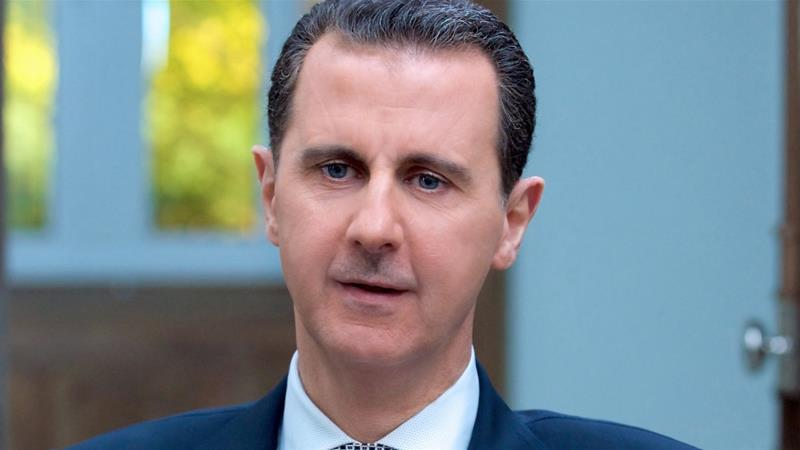
Assad sends out feelers for peace deal with Israel – report

Syrian President Bashar Assad, evidently disinclined to be left out in the cold by the Arab world’s pursuit of peace with Israel, has put out his own feelers, according to the influential Saudi Sharq al-Awsat of Sunday, Sept. 27. He is considering climbing on the bandwagon driven by the Trump administration, whose peace diplomacy brought about United Arab Emirates and Bahrain normalization deals with the Jewish state. More Arab governments, including Sudan, are heading in the same direction. Latterly, as DEBKAfile reported this week, Lebanon and Israel have also been led to the table to discuss their longstanding maritime and land border disputes.

The Sharq al-Awsat’s senior commentator Omar Hamidi noted that Syria’s Bashar al Assad, like his predecessor and father Hafez al-Assad, has more than once, when finding themselves in difficult quandaries, turned to seeking an accommodation with Jerusalem as the gateway to Washington. Today, trouble is crowding in on his regime from all directions:  the Syrian economy is drowning fast, the generals and business leaders in his circle are at each other’s throats, his battlefronts are at a standstill, with chaos on the Syrian Golan; the Turkish army is entrenched in the north and the Kurds in the northeast are unifying for self-rule under US military protection.

While the Syrian ruler would seek joint Russian-American patronage for a new negotiating track with Israel, he is not clear on how his leading protector, Iran, will respond to the move. He has therefore not yet decided to jump in and is still turning the option over in his mind. The Trump administration’s recognition of Israel sovereignty over a part of the Golan could be an obstacle. However, Putin, if he decides to join the move, may be asked to conjure up a creative formula that falls between security control and full sovereignty to resolve the issue.

Some Israel security circles favor a deal with Syria as it holds some prospect for breaking up Assad’s alliance with Tehran, which was recently solidified by a formal defense cooperation accord. Once clinched, this deal may eventually persuade Damascus to get rid of the regime’s Iranian “advisers” and expel the IRGC-backed Shiite militias from the country.

The omens for the coming Jewish year are therefore positive. In 2020, Yom Kippur, the most solemn day of prayer and fasting on the Jewish calendar, is the harbinger of an unparalleled era of Middle East peace for the Jewish state – in stark contrast to the perils and deaths of Israel’s most perilous and deadly conflict with the Arab world that marked Yom Kippur 1973.


New US threats to Iraq widen rifts, leave PM exposed

US President Donald Trump(R) meets with Iraqi Prime Minister Mustafa al-Kadhemi in the Oval Office of the White House in Washington on August 20
US President Donald Trump(R) meets with Iraqi Prime Minister Mustafa al-Kadhemi in the Oval Office of the White House in Washington on August 20 SAUL LOEB AFP
4 min

Baghdad (AFP)

Enraged by near-daily attacks on its interests in Iraq, Washington has threatened to close its embassy in Baghdad, in a blow to a premier seen as a bulwark against Iran.

Iraq has long been caught in a tug-of-war between its allies Iran and the US, rendered rockier by Washington’s “maximum pressure” policy against Tehran since 2018.

In a new escalation, US Secretary of State Mike Pompeo called Iraqi President Barham Saleh last week to deliver an ultimatum, Iraqi and foreign officials told AFP.

Unless Iraq’s government puts an end to the rockets raining down on US military and diplomatic sites, Washington would shutter its embassy and recall its troops, the sources said.

“The Americans aren’t just angry. They’re really, really, really angry,” one Iraqi official told AFP.

Another said: “The honeymoon is over.”

The US still has hundreds of diplomats in its mission at the high-security Green Zone in Baghdad and around 3,000 troops based in three bases across the country.

Since 2019, dozens of rockets and improvised explosives have targeted these sites, with US and Iraqi officials blaming Tehran-backed factions including Kataeb Hezbollah.

Washington has twice retaliated with strikes on Kataeb Hezbollah in Iraq and threatened earlier this year to bomb more than 120 further sites if the rocket attacks cost American lives, a top Iraqi official told AFP.

The frustration failed to ease even after Mustafa al-Kadhemi, seen as Western-leaning, took office as premier in May.

Ahead of Kadhemi’s visit to Washington in August, the US signalled it was “unsatisfied with his actions” against pro-Iran armed groups, an Iraqi official said.

The US declined to comment on Pompeo’s latest call, but a State Department official told AFP that “Iran-backed groups launching rockets at our embassy are a danger not only to us, but to the Government of Iraq”.

– Growing rift –

Fresh in the minds of Iraqi officials and armed groups is the US drone strike in January that killed top Iranian general Qasem Soleimani and Abu Mahdi al-Muhandis, the deputy head of Iraq’s state-sponsored Hashed al-Shaabi.

Since then, many pro-Iran paramilitary leaders have gone into hiding lest they be subject to American strikes or sanctions.

The new US threats seem to have deepened the growing rift between factions loyal to Iran and those less willing to enter into a full confrontation with the US.

After months of silence, influential cleric and political leader Moqtada Sadr took to Twitter this week to call for “the creation of a security, military and parliamentary committee to investigate” the rocket attacks.

Within minutes, Kadhemi and other top government figures endorsed the recommendation.

“There’s a consensus on condemning these attacks. Kataeb Hezbollah and other hardliners are isolated and left without political cover,” an Iraqi official said.

Even the Hashed al-Shaabi slammed rocket attacks as “illegal military acts”, denied involvement and formally sidelined a pair of commanders seen as too Tehran-leaning.

But the hardliners, too, are organising.

A half-dozen previously unheard-of groups have claimed responsibility for rocket attacks on the US and even threatened the United Nations in recent months.

Iraqi intelligence officials and political sources say Iran has been gathering the most hardline among its Iraqi allies into these new formations.

– PM in hot water? –

These reconstituted groups see Kadhemi as Washington’s man in Baghdad and are irked by his vows to rein them in.

“They’re sending a message from Iran to the US: the recent political developments have changed nothing. We can still hit you hard, and no leader can implement your agenda in Iraq,” said a source from Iraq’s Shiite political network.

That has left the prime minister in a precarious position.

A US withdrawal could hand his rivals an unintended propaganda win, a Western diplomat in Baghdad told AFP.

“If Washington follows through and withdraws its people, these groups will be able to brag that they kicked the Americans out of Iraq at little cost,” the official said.

Iraq’s parliament voted after Soleimani’s killing to oust foreign troops posted in the country to help fight jihadist remnants, but Kadhemi has tried to slow-walk the decision.

He has also embarked on an anti-corruption drive, launched a strategic dialogue with Washington and sought to fast-track deals with US companies that would decrease Iraq’s reliance on Iranian energy imports.

His downfall, Western diplomats and analysts said, could be a nightmare for Iraq’s stability.

“If the US really closes its embassy, it will leave Kadhemi in a very weak and dangerous position, opening the door for militias to expand and maybe take extreme action against the state,” said Ali Mamouri, an analyst and editor of the Iraq Pulse at Al-Monitor news website.

https://www.france24.com/en/20200927-new-us-threats-to-iraq-widen-rifts-leave-pm-exposed


Has Hezbollah defeated France in Lebanon?

France had wanted to reduce the sectarian nature of the government, but Hezbollah has increased its clout in recent years.

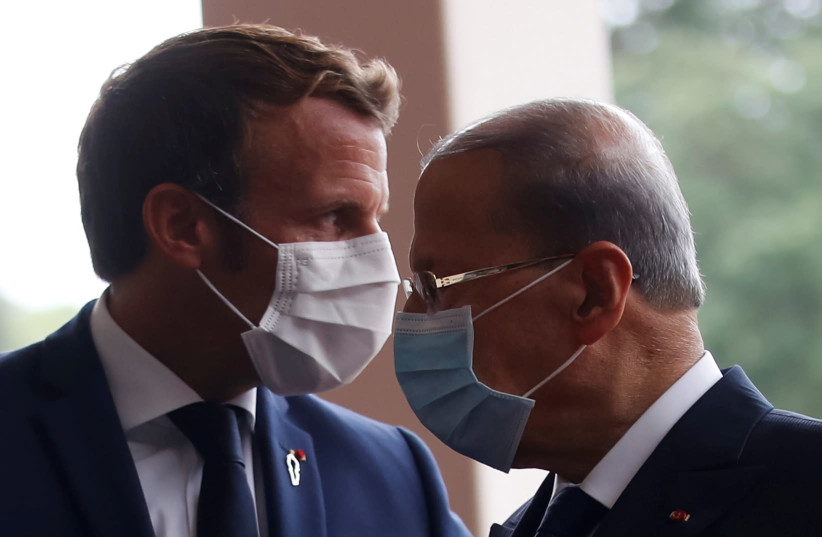
French President Emmanuel Macron and Lebanon's President Michel Aoun wear face masks as they arrives to attend a meeting at the presidential palace in Baabda, Lebanon September 1, 2020. (photo credit: REUTERS/GONZALO FUENTES/POOL)
French President Emmanuel Macron and Lebanon’s President Michel Aoun wear face masks as they arrives to attend a meeting at the presidential palace in Baabda, Lebanon September 1, 2020.
(photo credit: REUTERS/GONZALO FUENTES/POOL)
A month and a half after a massive explosion in Beirut caused a crisis in Lebanon that saw the government fall, France’s decision to try to push for reforms may have been defeated.

Regional media from the UAE to Turkey are focused on what might come next in Lebanon. Lebanon’s Prime Minister designate Mustapha Adib resigned, according to Anadolu. French President Emmanuel Macron will hold a news conference on Sunday to discuss the situation.

Lebanese analysts quoted at Al-Ain said that Lebanon could be heading to “chaos” as Hezbollah and the Amal movement prevented the creation of a new government. France has sought to mediate in Lebanon, with France’s President Macron playing a key role. This even included meetings with Hezbollah’s members of Lebanon’s parliament. Now the political parties and entrenched sectarian elites in Lebanon appear to have sought to frustrate France’s attempts at reform.

It appears that Hezbollah and Amal had sought to obtain the finance ministry as part of the reform. This would put Iran at the helm of Lebanon’s key ministry. Lebanon already needs $93 billion to bail it out of a financial crisis. Iran has used Lebanon for money laundering and other fraudulent transactions in the past.

France had wanted to reduce the sectarian nature of the government, but in Lebanon many ministries are divided as spoils for various groups. Hezbollah has increased its clout in recent years, even though it has only a handful of members of parliament. It has sought to grab the health ministry and other posts.

It also has an ally in Lebanon’s President, Michel Aoun. The President of Lebanon is a Christian and the Prime Minister a Sunni under the agreement that governments Lebanon as a sectarian state. This agreement dates back decades and was also enshrined in the Taif accords that ended the civil war and empowered the Sunni prime minister with Saudi backing. But Saudi Arabia has lost influence in Lebanon in the last few years, and Iran and Turkey are now trying to increase their influence and hold.

This is why media in the UAE is concerned about chaos in the country. Chaos feeds Iran’s role. Anadolu in Turkey noted that Adib had given up in the face of failure to form a government.

“I excuse myself from continuing the task of forming the government,” Adib said.

Adib, a former ambassador to Germany, had agreed at the end of August with the task of forming a new government after his predecessor Hassan Diab resigned.

Saad Hariri said “Those rejoicing for the fall of the French President Emmanuel Macron’s initiative will bite their fingers in regret for wasting an exceptional opportunity to stop economic collapse and initiate reforms.”

Hariri is a former prime minister and also son of Rafic Hariri, the former Prime Minister murdered by Hezbollah in 2005.

Lebanon is at a crossroads. The US has pushed for mediation on Israel-Lebanese maritime disputes. Hezbollah has sought to leverage anti-US sentiment. The US airlifted a Lebanese-American out of the country earlier this year and Hezbollah has slammed the US ambassador for interference in the country. Hezbollah has suggested China could invest in Lebanon.

France has now sought to play a larger role. France is the former colonial power. The US sanctioned former finance minister Ali Hassan Khalil, who is a member of Amal, in early September. This appears to have also played a role in the impasse. In some ways the current dispute over Lebanon could be seen as a quest for influence between Iran, the US, Turkey and France.

https://www.jpost.com/middle-east/has-hezbollah-defeated-france-in-lebanon-643696