
Arab League rejects Palestinian demand to condemn Israel-UAE deal

The Arab league’s refusal to endorse the draft resolution is considered a severe blow to the Palestinians.
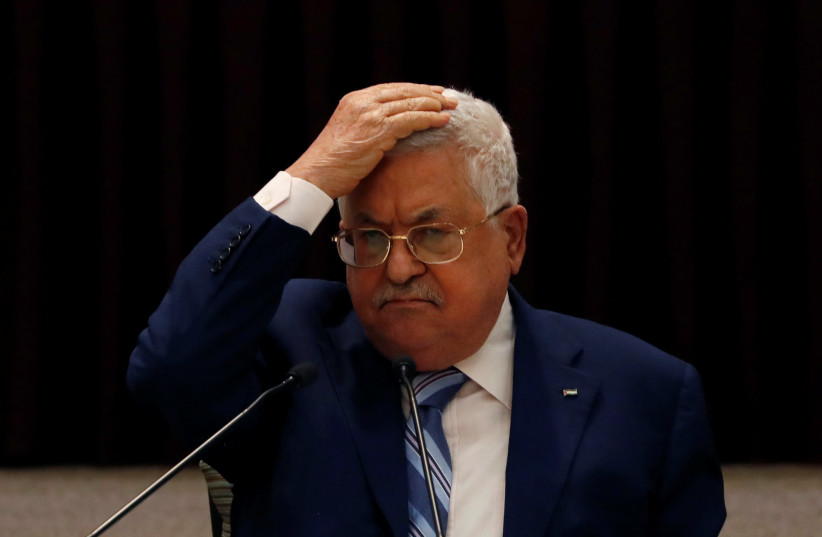
President Mahmoud Abbas gestures during a meeting with the Palestinian leadership to discuss the United Arab Emirates' deal with Israel to normalize relations, in Ramallah in the Israeli-occupied West Bank August 18, 2020 (photo credit: REUTERS/MOHAMAD TOROKMAN/POOL)
President Mahmoud Abbas gestures during a meeting with the Palestinian leadership to discuss the United Arab Emirates’ deal with Israel to normalize relations, in Ramallah in the Israeli-occupied West Bank August 18, 2020
(photo credit: REUTERS/MOHAMAD TOROKMAN/POOL)
The Arab League on Wednesday refused to endorse a Palestinian draft resolution condemning the United Arab Emirates for its normalization agreement with Israel, a move that is a severe blow to the Palestinians, Ramallah officials said.

The proposal was presented by the Palestinians to a meeting of Arab League foreign ministers, and Palestinian officials said some Arab countries objected to it.

After the Israel-UAE deal was announced, the Palestinian Authority called on Arab states to reject the agreement and said it had not authorized anyone to speak on its behalf.

PA Foreign Minister Riad Malki, speaking to the ministers’ meeting by videoconference, thanked some Arab countries for not moving toward establishing ties with Israel. He also labeled the efforts of US Secretary of State Mike Pompeo and US senior adviser Jared Kushner to forge the Israel-UAE deal as “blackmail.”

Tensions between the Palestinians and some Gulf states have risen sharply following the agreement’s announcement.

Last month, the Arab League turned down a PA request to hold an emergency meeting to discuss the deal. The Palestinians have denounced it as a “stab in the back” and a “betrayal of al-Aqsa Mosque, Jerusalem and the Palestinian issue.”

The Arab League then said the accord, along with other issues, would be discussed by the foreign ministers at their ordinary meeting, which took place on Wednesday.

Palestinian officials have accused some Gulf states of foiling the plan to hold the emergency meeting and also accused them of thwarting a Palestinian draft resolution to condemn the UAE for normalizing ties with Israel. They called on other Arab countries not to follow suit.

The foreign ministers also discussed Iranian and Turkish interventions in the internal affairs of Arab countries.

In his speech, Malki said that some Arab states had cut financial aid to the Palestinians at the behest of the US administration. In reference to the Israel-UAE deal, he said it “legalizes normalization for free and revives the ‘Deal of the Century’ after we thwarted it.”

The “Deal of the Century” is US President Donald Trump’s vision for Middle East peace, “Peace to Prosperity.”

Malki also stated that the Israel-UAE deal “recognizes occupied Jerusalem as Israeli territory.” The deal, he said, was an “earthquake that undermines joint Arab action” and put the Palestinians on the defensive.

“Instead of placating us… we have found ourselves in a situation where we have had to defend ourselves and our cause. We have even become the troublemakers,” Malki said.

He was apparently referring to Bahrain when he said that an Arab country had objected to the PA request to hold the emergency meeting.

The Gulf kingdom, which objected to the wording of the Palestinian draft, is believed to be close to also deciding to establish ties with Israel.

“Isn’t what happened an earthquake that requires an emergency meeting? We were surprised that an Arab country objected to our request. Did the State of Palestine go too far in asking to hold an emergency meeting? Did it cross redlines?”

Malki demanded to know whether Arab countries remain committed to the 2002 Arab Peace Initiative, which says that the Arab states will normalize relations with Israel after a Palestinian state is established along pre-1967 lines. The PA has accused the UAE of violating the terms of the initiative by engaging in normalization with Israel in exchange for nothing.

Noting that the Israel-UAE signing ceremony will take place shortly, Malki said: “The UAE is moving ahead with the normalization decision despite its violation of the Arab Peace Initiative and the resolutions of the Arab summits. Therefore, it has become imperative for us to take a stance rejecting this step. Otherwise, our meeting will be considered a blessing or collusion with it.”

Before the Arab League foreign ministers met, PLO secretary-general Saeb Erekat expressed his hope that Arab states would reaffirm their commitment to the Arab Peace Initiative and the decisions of past Arab summits.

“We do not want our Arab brothers to give us support that exceeds their capacity, we want them to stick to the initiative that they unanimously agreed upon, and to implement the decisions of successive Arab summits, including decisions related to the [Arab] financial safety net” for the Palestinians,” Erekat said.

He expressed satisfaction with the position of countries that affirmed their commitment to the initiative, including Saudi Arabia, Jordan, Morocco, Sudan, Algeria, Kuwait and Qatar.

Most Arab countries have stopped funding to support the Palestinian budget according to past commitments, Erekat added.

Arab League secretary-general Ahmad Aboul Ghiet said at the meeting that the Palestinian issue was, is, and will remain, at the core of Arab consensus.

“Countries starting to let go of old conflicts and move in the direction of peace,” declared Kushner.

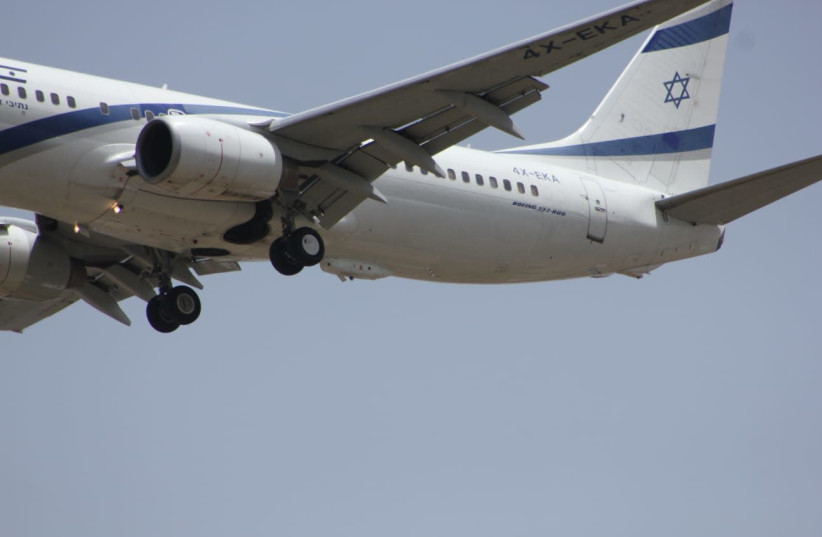
El Al plane equipped with Elbit's Directed IR Countermeasures (photo credit: ELBIT)
El Al plane equipped with Elbit’s Directed IR Countermeasures
(photo credit: ELBIT)
Saudi Arabia agreed to open their airspace, not just to flights from Israel to the United Arab Emirates and back, but to all eastward travel, says Jared Kushner, President Trump’s senior adviser. Kushner briefed the press on Wednesday ahead of the September 15 signing ceremony of the Abraham Accords between Israel and the UAE. Addressing the decision of Saudi Arabia to open its airspace, Kushner said: “That will save people a lot of time and knock down a barrier that’s been up for 72 years.”

“Countries starting to let go of old conflicts and move in the direction of peace,” he continued. Kushner added following Saudi Arabia, Bahrain, took the same step. ”All this will cut down a lot of the travel time between different countries that allow people from Saudi to go to Europe faster if they fly over Israel and people from Israel to Asia and Asia to Israel to have much more connectivity.”

“It’s a tremendous barrier that’s been taken away,” he said. “You’re seeing everyday new announcements of airlines that are looking to fly from Israel to different Arab cities that traditionally they weren’t allowed to go to and backward; You have a lot of excitement building in the Arab world and Muslim world with people wanting to go to Israel to visit the tourist sites and to pray at the Al-Aqsa Mosque. You’re seeing kosher restaurants opening up now and Dubai and so every day we’re seeing new and new announcements, which is showing the progress that this peace is bringing to the Middle East,” Kushner said.

Speaking about the ceremony between Israel and the UAE, Kushner said that the administration plan to invite representatives from both parties to attend the event. “This is something that should be bipartisan. We will invite Democrats or Republicans to be here. This has been praised by people on both sides of the aisle, and hopefully, this is one issue that can stay out of politics,” he said.

The senior adviser also addressed the “Peace for Prosperity” plan and the Israeli-Palestinian conflict. “People want to see a resolution that’s fair and proper, but they’re not going to hold back their own progress now in order to allow this conflict to continue to be stuck in the mud,” he said.

“We put out the most detailed proposal ever for the Palestinians,” Kushner added. “Israel agreed to a state for the Palestinians, and they agreed to a map, which is something that had never been done before. In the first meetings with President Abbas, he said, if you could get Israel to agree to a map, then the rest will be easy to figure out. We did better than that. We got them to agree to a state.” He added that while the offer still stands, the administration decided “not to chase them.”

“We worked very carefully on that proposal, which is what we thought would be a fair place to start from America. Israel agreed to negotiate on that basis, and then the Palestinians rejected it before it even came out. So before they even knew what was in it. Their strategy has been just to try to avoid getting into the details on this. But I think that there’s a real desire in the region to try to see it resolved and move on,” said Kushner. “The offer still remains out there for their leadership, we’ve chosen not to chase them, but the moment that they’re ready to engage, we believe that we have the ability to make a peace deal between them and Israel. We can’t want them to have peace more than they want to have peace.”


UAE, Saudi Arabia now in the cross hairs

The UAE and Saudi Arabia will bear the brunt of any retaliation against “any incident – covert or overt” carried out by the Zionists, said Hossein Amir-Abdollahian, former Iranian deputy foreign minister. The interview was aired on Iran’s Arabic language Al-Alam TV on September 6.