For a decade now, Israel’s energy exploration and exportation policies have brought it mostly smooth sailing in the Mediterranean and abroad with stormy politics at home.
The government viewed energy discovery in the Eastern Mediterranean as a source of diplomatic opportunities, a chance for expanded cooperation with other countries. Greece and Cyprus have become closer than ever with Israel, working together on energy projects. The major one is the EastMed gas pipeline, from Israeli waters to the European mainland, via Cyprus and Greece, which is meant to be the longest in the world. Israel’s government ratified the plan last month.
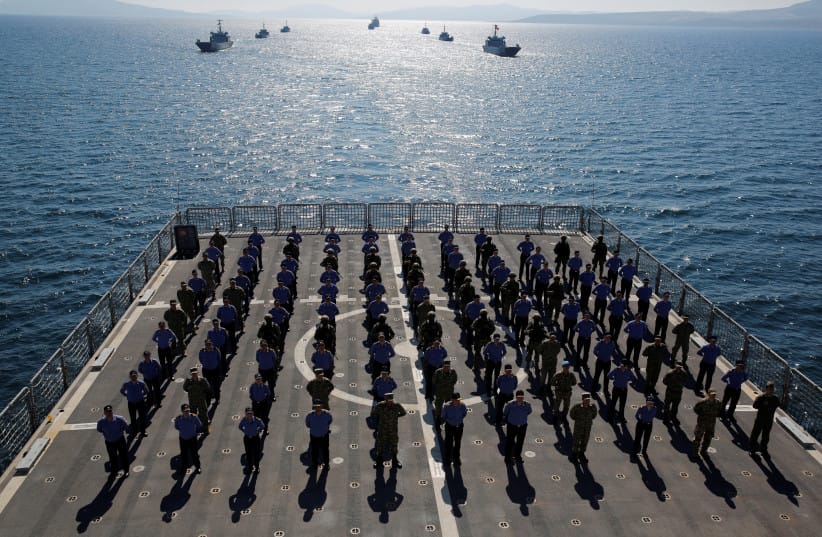
But Jerusalem’s partners have been eyeing Turkey’s actions with concern. Between signing an agreement with the Libyan Government of National Accord, dividing economic rights to the Eastern Mediterranean between Tripoli and Ankara in November, and encroaching on Greece’s and Cyprus’s exclusive economic zones, conducting a seismic survey near the Greek island of Kastellorizo and putting the Hellenic Navy on alert in recent weeks, Turkey’s latest moves in the Eastern Mediterranean could mean a tempest is brewing, with implications for Israel.
Israel and Turkey officially have diplomatic relations, but they mostly have been at a very low level since 2010, when IHH, an organization with ties to Turkish President Recep Tayyip Erdogan, sent the Mavi Marmara to bust the IDF’s naval blockade on Gaza, arming some of the people aboard. IDF naval commandos stopped the ship, killing nine activists.
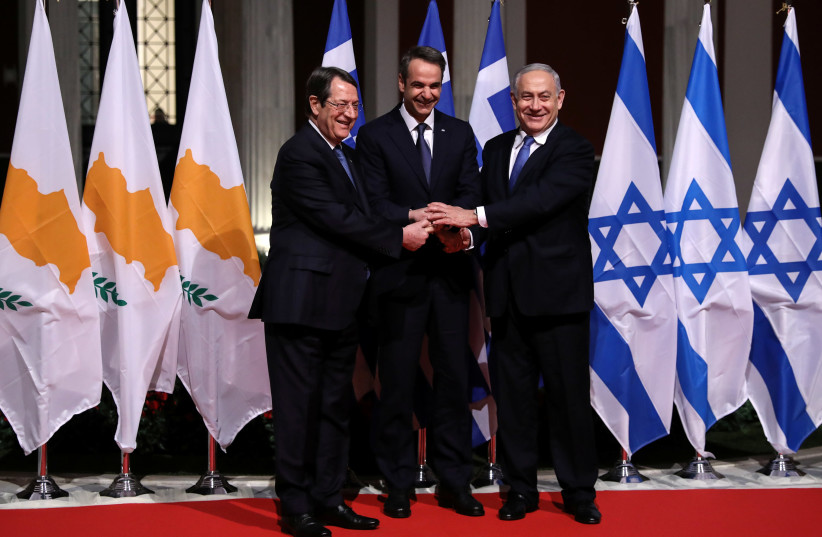 Cypriot President Nicos Anastasiades, Greek Prime Minister Kyriakos Mitsotakis and Israeli Prime Minister Benjamin Netanyahu pose for a photo before signing a deal to build the EastMed subsea pipeline to carry natural gas from the eastern Mediterranean to Europe, at the Zappeion Hall in Athens, Gree (Reuters/Alkis Konstantinidis)
Still, Israel is not looking to get into a conflict with Turkey, and believes that Turkey is not trying to escalate things with Israel either. Despite the poor shape of diplomatic ties, Turkey is Israel’s 10th-largest trading partner, and there is a huge amount of tourism between the countries, as well as cultural exchanges. Turkish Airlines is the company with the second-highest number of flights departing from Israel.
Publicly, the Foreign Ministry and Energy Ministry have nothing to say on the latest developments with Ankara in the Eastern Mediterranean. But they have been examining the Turkey-Libya agreement, because it could block Israel’s ability to export energy to Europe. Turkey essentially gave itself veto rights to the EastMed pipeline.
Gabriel Mitchell, a policy fellow at Mitvim – The Israeli Institute for Regional Foreign Policies, said that “when it comes to the Eastern Mediterranean, Israel is obviously frustrated with Turkey’s aggressive approach…. Israel has invested in its partnerships with Greece, Cyprus and Egypt, and does not want to disregard the importance of standing up for its partners.”
The Israeli approach has been “a middle ground,” rather than taking major diplomatic steps, Mitchell explained, which reflects a hesitation on both sides, Ankara and Jerusalem, to get into a conflict.
“Turkey’s calculus… is that the moment Israel gets involved is the moment American engagement and sensitivities will increase in some way, even if only diplomatically. Keeping Israel out of the conversation means the US will stay out of the picture,” he said.
Israel’s challenge, then, is to remain neutral in Turkey’s dispute with Greece and Cyprus without hurting its partnership with the latter two countries.
BUT ISRAELI interests can still be harmed, even if Jerusalem is not directly involved.
The EastMed project was always a long shot, as far as its commercial feasibility was concerned; it’s expensive, and energy prices are low. Now there’s a question of the political feasibility. The more the Eastern Mediterranean begins to look like a site for a potential conflict, the less likely energy companies will want to develop serious undertakings like the EastMed pipeline.
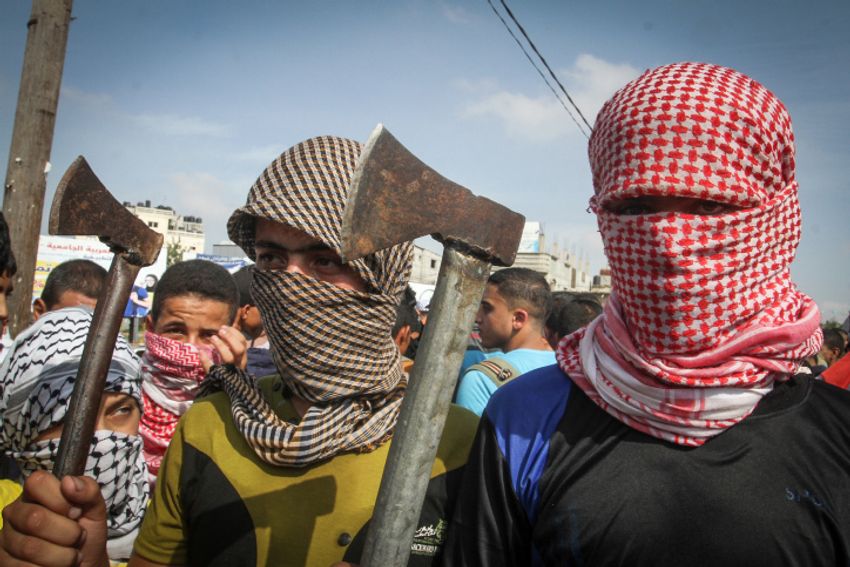
 HAMAS SUPPORTERS in Gaza hold posters of Turkish President Recep Tayyip Erdogan during a rall
Mitchell said that Turkey looks at the EastMed project as political: “They see the region and say Greece, Cyprus and Israel are cooperating, and now Egypt, too, and they’re not including us, so we’ll do whatever possible to derail the political feasibility of these kinds of projects, unless they want to negotiate with us.”
Prof. Mark Meirowitz, an expert on Turkey at SUNY Maritime College, referred to peace talks between Turkish-speaking northern Cyprus and Greek-speaking Cyprus, most recently in 2015-2017 in Switzerland, in which the sides did not reach an agreement: “The failure to reach an amicable settlement on resources in the Eastern Mediterranean precipitated the situation.”
From Turkey’s perspective, Meirowitz said, “Greece and Greek Cyprus gave rights to exploration, so Turkey had to assert its claims or it would have been tremendously disadvantaged.”
“The main motivation for Turkey to put forward these claims [with Libya] is to counterbalance some of the other claims,” he argued.
Meirowitz viewed the agreement with Libya as a starting point for eventual talks between Turkey and Greece and Cyprus.
Israel, meanwhile, is caught in the middle of that, having drawn up agreements with Greece and Cyprus on exploration in the Eastern Mediterranean.
“The whole world of maritime delimitation is wide open. There are competing claims that you work out by negotiation. You don’t work that out by saying, ‘We’ll create a coalition and divide it among ourselves and not let Turkey and Turkish Cyprus share.’ Turkey and Turkish Cyprus have their own claims based on the Law of the Sea, which should be taken seriously. The imperative would be to work up an amicable discussion and resolution based on the Law of the Sea,” he said.
Mitchell warned of Turkey trying to “push the conversation in a particular direction and being very aggressive in doing so,” with the many international incidents taking place in the Eastern Mediterranean.
That brings us to the view many have in Israel, both in government and think tanks, that Turkey’s behavior in the Eastern Mediterranean is an extension of Erdogan’s neo-Ottoman ambitions and his pursuit of greater influence in the Muslim world. This goes together with his support for Hamas, fiery rhetoric on the Palestinians and funding of organizations hostile to Israel in east Jerusalem.
 PRO-PALESTINIAN activists wave Turkish and Palestinian flags during the welcoming ceremony for the ‘Mavi Marmara,’ in Istanbul in December 2010. Nine Turkish activists died the previous May when IDF naval commandos stopped the ship. (Stringer/Reuters)
Mitchell explained that Turkey’s “blue motherland” policy, strengthening its claim over maritime space in the Eastern Mediterranean, was “developed by the secular leadership in the Turkish Navy,” reflecting that “for decades, Turkish strategists and policy-makers have sought to identify opportunities to strengthen Turkey’s regional position.”
At the same time, those policies blended with “the current flavor of Turkish domestic politics and ideology of Erdogan and his inner circle,” including creating partnerships with Muslim Brotherhood-affiliated groups across the region, Mitchell explained.
Still, Mitchell posited that Turkey would “happily” be a partner in energy projects with Israel, Greece and Cyprus, if offered to take part.
“Israeli and Turkish officials talked about an Israel-Turkey pipeline as late as 2017,” Mitchell said. “The price was the real sticking point, not political or international legal issues.”
Meirowitz noted the latest concerns about Turkey only highlight “the necessity to improve Turkish-Israel relations, reinstate the ambassadors and get back to where we were after finally resolving the disagreements following the Mavi Marmara… and in that context of working with one another, try to work out these outstanding issues.”