Iran moves from defensive to ‘fully offensive’ policy toward US and sets deadline for full MoU implementation within the next few weeks, Iranian official says

i24NEWS

August 16, 2026 at 11:21 PM ■ latest revision August 17, 2026 at 02:44 PM
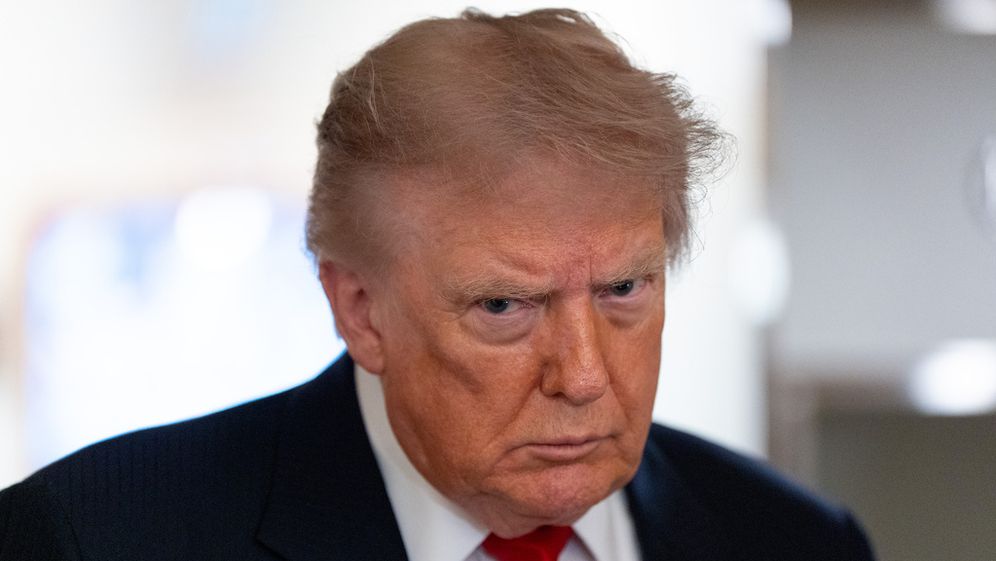
Donald Trump
Donald TrumpAP Photo/Alex Brandon

Eight Muslim countries say Israel ‘bears responsibility for obstructing efforts to achieve peace’ after rejecting Trump’s Gaza plan, in a joint statement of foreign ministers. The signatories included Jordan, the United Arab Emirates, Indonesia, Pakistan, Turkey, Saudi Arabia, Qatar, and Egypt. The countries say they condemn Israel’s public rejection of the Gaza peace plan, which “fundamentally undermines the collective efforts exerted to achieve a just and lasting peace.” The ministers reiterate the “urgent need” for the full and immediate implementation of a comprehensive plan, “which would contribute to addressing the dire humanitarian situation, ensuring security and stability for all in Gaza, paving the way for reconstruction and recovery, and advancing the achievement of a just and lasting peace based on the Palestinian people’s right to self-determination.”

Meanwhile, US Envoy Jared Kushner alongside Board of Peace high representative Nickolay Mladenov and former British Prime Minister Tony Blair flew to Egypt to meet with Egyptian President Abdel Fattah El-Sisi. According to the Egyptian President’s office, Kushner and Sisi discussed implementation of the Gaza ceasefire. The meeting focused on translating roadmap commitments into concrete, verifiable steps to preserve the ceasefire and begin transferring government authority in Gaza to the National Committee for the Administration of Gaza, i24NEWS learned from a source familiar with the conversation. READ MORE FROM SUNDAY

August 17, 2026

02:44 PM

Araghchi condemns attack on Iraqi Kurdistan PM Barzani’s office, warns Kurdish leaders of ‘false-flag ploys’

08:59 AM

Iran moves from defensive to ‘fully offensive’ policy toward US and sets deadline for full MoU implementation, Iranian official says

A senior Iranian official told Reuters that Tehran has decided to shift from a defensive posture to a “fully offensive” policy, warning that it will not wait indefinitely for the US naval blockade to continue. Iran has set Washington a deadline of several weeks to fully implement the memorandum of understanding, the official said, adding that Iranian entities are prepared to escalate tensions in the Strait of Hormuz and across the region if diplomacy fails. The timeframe is expected to be conveyed to the US and regional countries through mediators.07:29 AM

‘If Oman gets in the way, the US will bomb the s*** out of them,’ US President Trump tells Fox News as Iran and Oman continue Hormuz talks

06:09 AM

Kushner, BoP officials meet Netanyahu following meeting with Hamas delegation in Cairo

Alongside Kushner are senior Board of Peace officials Tony Blair and Nikolay Mladenov05:31 AM

“There is no provision titled ‘60-day deadline” in the text of the memorandum of understanding,” says Iranian Foreign Ministry Spokesperson Esmail Baghaei, contradicting statements made by President Trump

Baghaei said that instead of a deadline, “what was stipulated in the memorandum was merely a 60-day period for discussions on two issues: ‘lifting sanctions’ and ‘the nuclear issue.’” If no result was reached, this period could be extended the foreign minister stated

He also said no talks between the US and Iran were initiated due to the “gross and widespread violations of the June 18 MoU by the US”03:36 AM

Iran’s Army announces financial reward for killing US forces

Iran’s Army Commander-in-Chief Major General Amir Hatami announced a financial reward for anyone who kills or captures a US soldier, declaring the era of American military presence in the Persian Gulf is over, Iranian state-affiliated Mehr News Agency reported

Speaking at a ceremony marking National Journalists’ Day, Hatami said a new public crowdfunding initiative would offer 5 billion Tomans, about $30,000, to anyone who kills or captures a US soldier and hands them over to authorities. He said Iranian women who accomplish this would receive double the reward, and that the weapon used would be purchased by the Army at twice its market value and displayed in a museum12:56 AM

IRGC send commanders to Yemen’s Houthis areas, supply intelligence, for stepped-up confrontation with Saudi Arabia – report

ugust 16, 2026

11:43 PM

Shipping through Strait of Hormuz slows sharply after tanker attacks

Vessel traffic through the vital waterway has nearly ground to a halt following attacks on tankers last week, as US-Iran talks to resolve the conflict remain stalled.

Only five commodity vessels transited the Strait of Hormuz on Saturday, with none recorded Sunday, down from 31 the prior weekend, Kpler shiptracking data showed. Traffic collapsed after the UAE said three ADNOC-operated vessels were attacked in transit last week.

Iranian Foreign Minister Abbas Araqchi said Washington must meet Iran’s conditions for shipping to resume.11:38 PM

Erdogan: ‘Türkiye will not hesitate to fight’ if attacked

Turkish President Recep Tayyip Erdogan addressed Lebanon, potential conflict with Israel, and a new mutual defense pact in an interview with Al Jazeera. He said Ankara is working with Washington to protect Beirut while warning against any attack on Türkiye.

Erdogan said Israel is “naturally the aggressor” in Lebanon, which he said is “currently being subjected to continuous Israeli attacks.”

On the possibility of war with Israel, Erdogan said, “We are not talking about war, we are talking about peace.” He added that if Türkiye were attacked, “Türkiye will not hesitate to fight that war and will not run from it.”

Erdogan also addressed the Mecca Agreement, comparing it to NATO’s Article 5. He said Türkiye, Saudi Arabia and Pakistan would defend one another “against any kind of attack” under the mutual defense pact.11:37 PM

‘This is big,’ Trump praises Mecca agreement between Saudi Arabia, Turkey, and Pakistan

In a post on Truth Social, US President Donald Trump said the agreement shows how “the Middle East is coming together, and how Countries will finally be able to defend themselves in a more meaningful way.” He ended his post by adding that the agreement was a “big, bold, and important first step.”
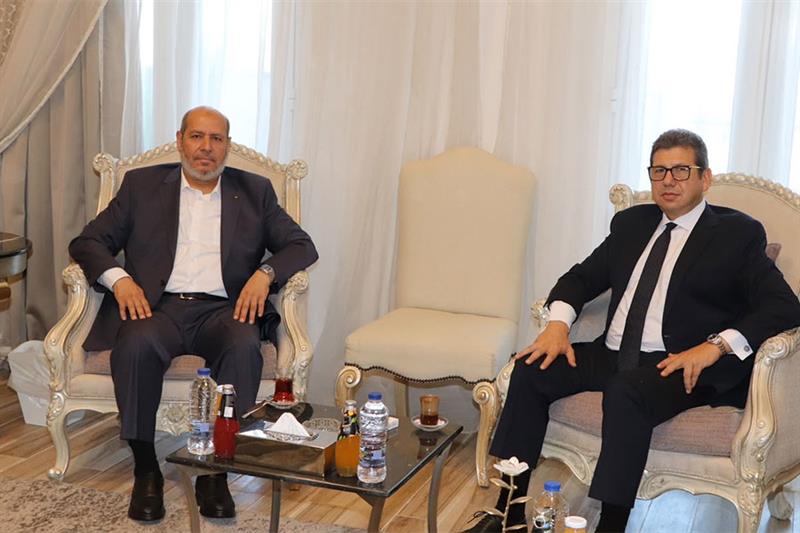
Hamas says it will only begin disarming if Netanyahu publicly commits to plan, diplomat tells ToI; Egyptian, Turkish and Qatari mediators also present; after his first meet with terror group head since ceasefire, Kushner flies to Israel

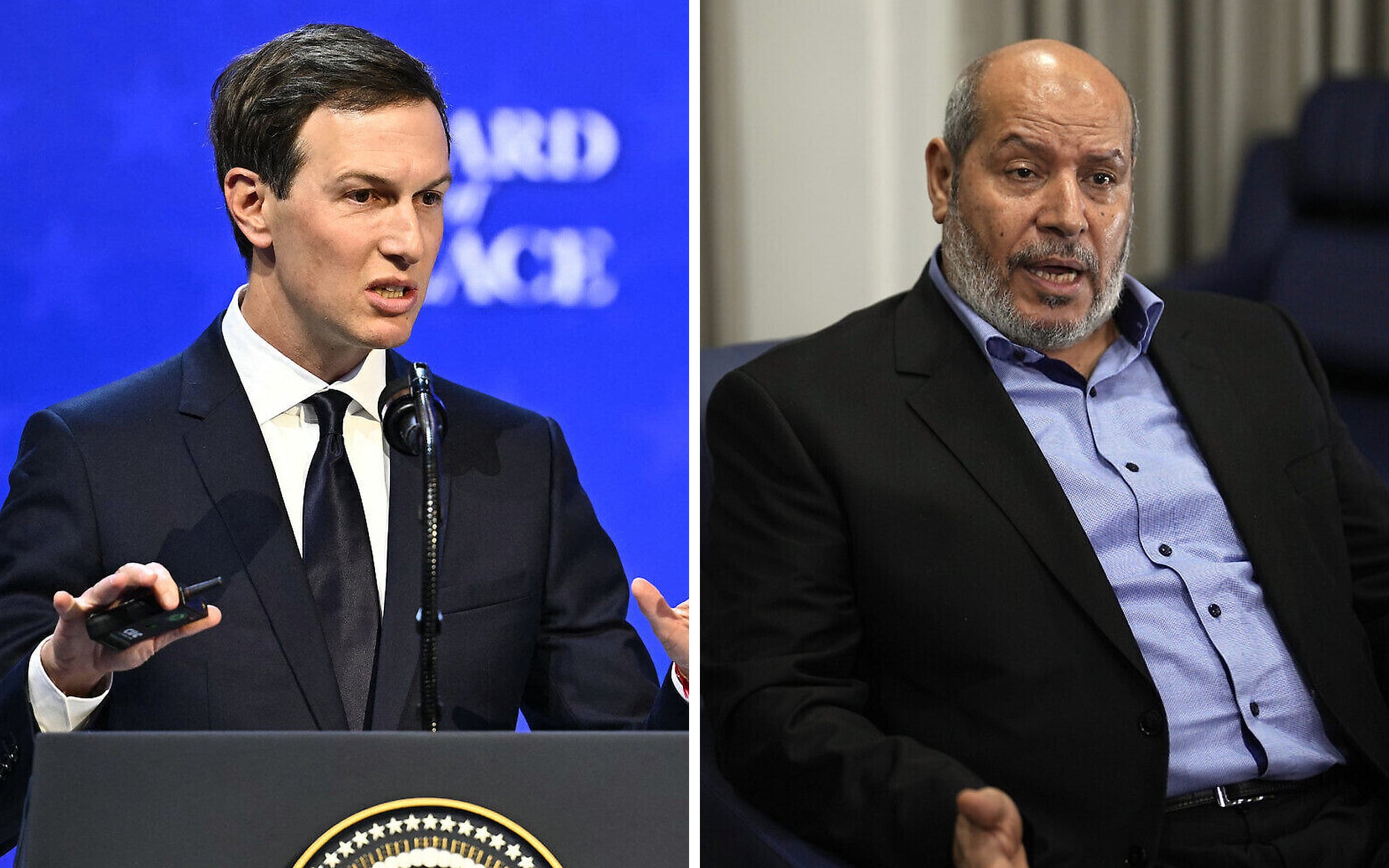
US envoy Jared Kushner (left) and Hamas chief Khalil al-Hayya (right) in a photo montage. (Fabrice COFFRINI / AFP; AP/Khalil Hamra)

US envoy Jared Kushner (left) and Hamas chief Khalil al-Hayya (right) in a photo montage. (Fabrice COFFRINI / AFP; AP/Khalil Hamra)

US President Donald Trump’s son-in-law and top aide Jared Kushner met with Hamas chief Khalil al-Hayya in the Egyptian coastal city of El-Alamein on Sunday, an Arab diplomat told The Times of Israel, even as Israel kept up strikes targeting terror groups in the Strip.

At the talks, Hamas said it would only begin disarming, as required by the US-backed Board of Peace’s Gaza plan, if Prime Minister Benjamin Netanyahu publicly commits to adhering to the terms of the plan, an Arab diplomat told The Times of Israel. Hamas said later that it had asked the Board of Peace to “compel” Israel to accept the plan.

Kushner was joined in the talks by Board of Peace senior envoys Nickolay Mladenov and Tony Blair, as well as top diplomats from Mideast mediating countries Egypt, Qatar, and Turkey.

Sunday’s meeting was Kushner’s first with Hayya and other Hamas officials since October 2025, when he sat down with them for the first time to finalize a ceasefire and hostage release deal with Israel.

Trump officials have defended the engagement with the US-designated terror group as necessary for advancing Washington’s Gaza peace plan, while critics have argued that such meetings legitimize Hamas.

Hayya told Kushner that Hamas remains committed to the disarmament plan, but will only implement it if Israel upholds its end of the bargain, noting Netanyahu’s public rejection of the proposal, the Arab diplomat said.

Kushner sought to assure Hayya that the US-controlled Board of Peace would lean on Israel to halt strikes in Gaza and gradually withdraw from the Strip once Hamas begins handing over its weapons, the diplomat added.

Netanyahu has insisted that Israel will conduct no withdrawals until Hamas has been completely disarmed, though a Board of Peace source has told The Times of Israel that the premier privately has shown more flexibility.

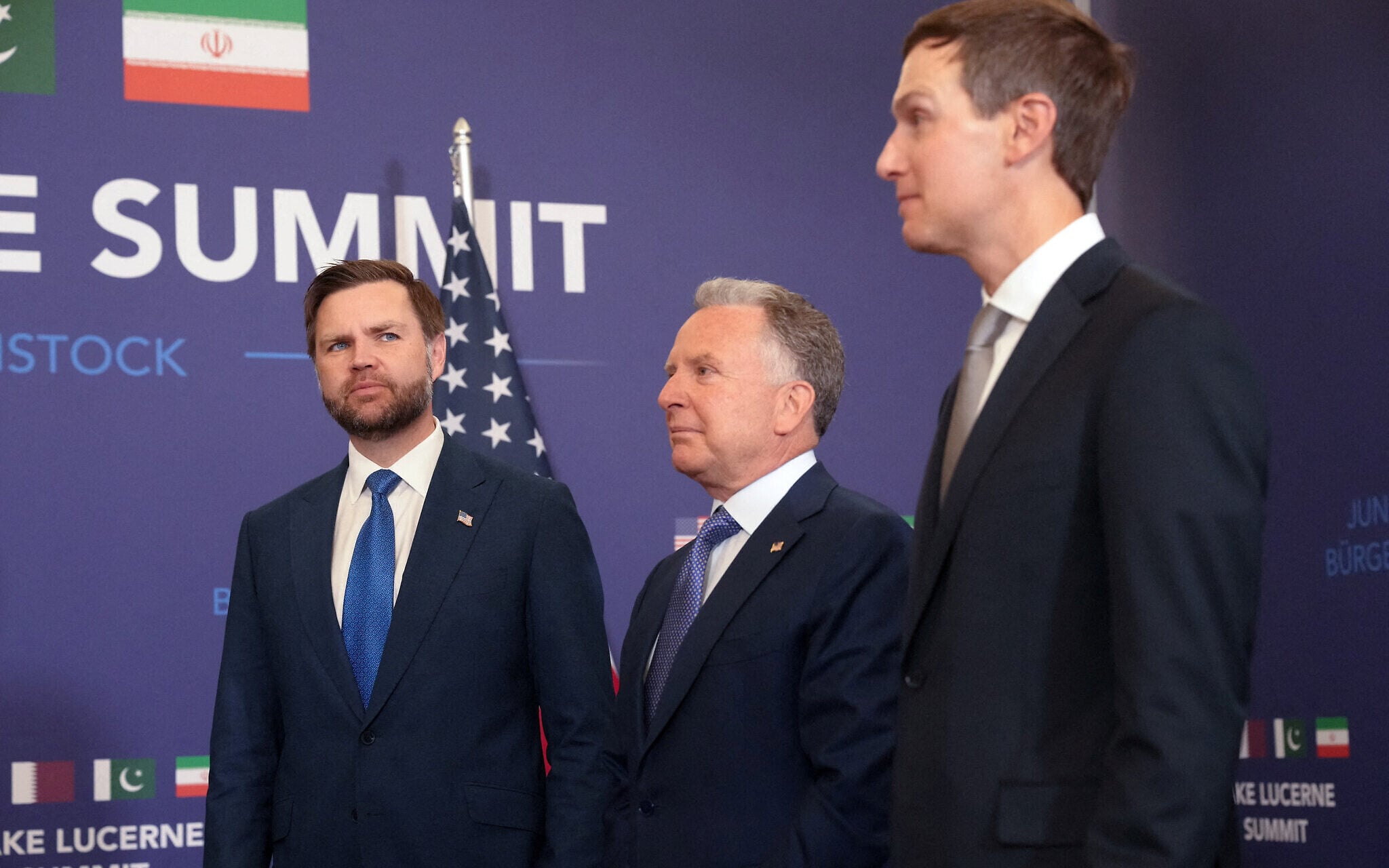
US Vice President JD Vance (L) waits, alongside US President Donald Trump’s special envoy Steve Witkoff (C) and Jared Kushner, to meet with Pakistan’s Prime Minister Shehbaz Sharif (not seen), at the Burgenstock luxury hotel complex overlooking Lake Lucerne, Switzerland, on June 21, 2026. (Nathan Howard / POOL / AFP)

While Board of Peace officials had touted an initial halt on Israeli strikes in Gaza, which followed Hamas’s acceptance of the disarmament plan, IDF killings in the Strip have picked up again over the past week.

Kushner, during the Sunday meeting, pressed Hamas to cease shows of force throughout the Strip, which have included the deployment of armed and uniformed Hamas members on the streets of Gaza, the Arab diplomat said.

He also urged the Hamas delegation led by Hayya to allow for a smooth handover of governing authority in the Strip to the new Palestinian technocratic government overseen by the Board of Peace, known as the National Committee for the Administration of Gaza (NCAG), the diplomat said.

While the Board of Peace was hoping to conduct the first handover of weapons from Hamas to the NCAG in the coming weeks, the Arab diplomat said that is unlikely to take place before the end of the year, as the International Stabilization Force tasked with assisting in the process was still in the very initial phases of training.

Moreover, the diplomat expressed skepticism that Netanyahu would allow for any significant progress of the Board of Peace disarmament plan before the October 27 Knesset election. There will then likely be an additional one- to two-month lull in progress, as the next Israeli government is set up.

While senior Trump administration officials have been willing to engage at times with Hamas, the more moderate Palestinian Authority has not received any meetings from such senior Trump officials, who have paid less attention to developments in the West Bank, where the PA has nominal authority.

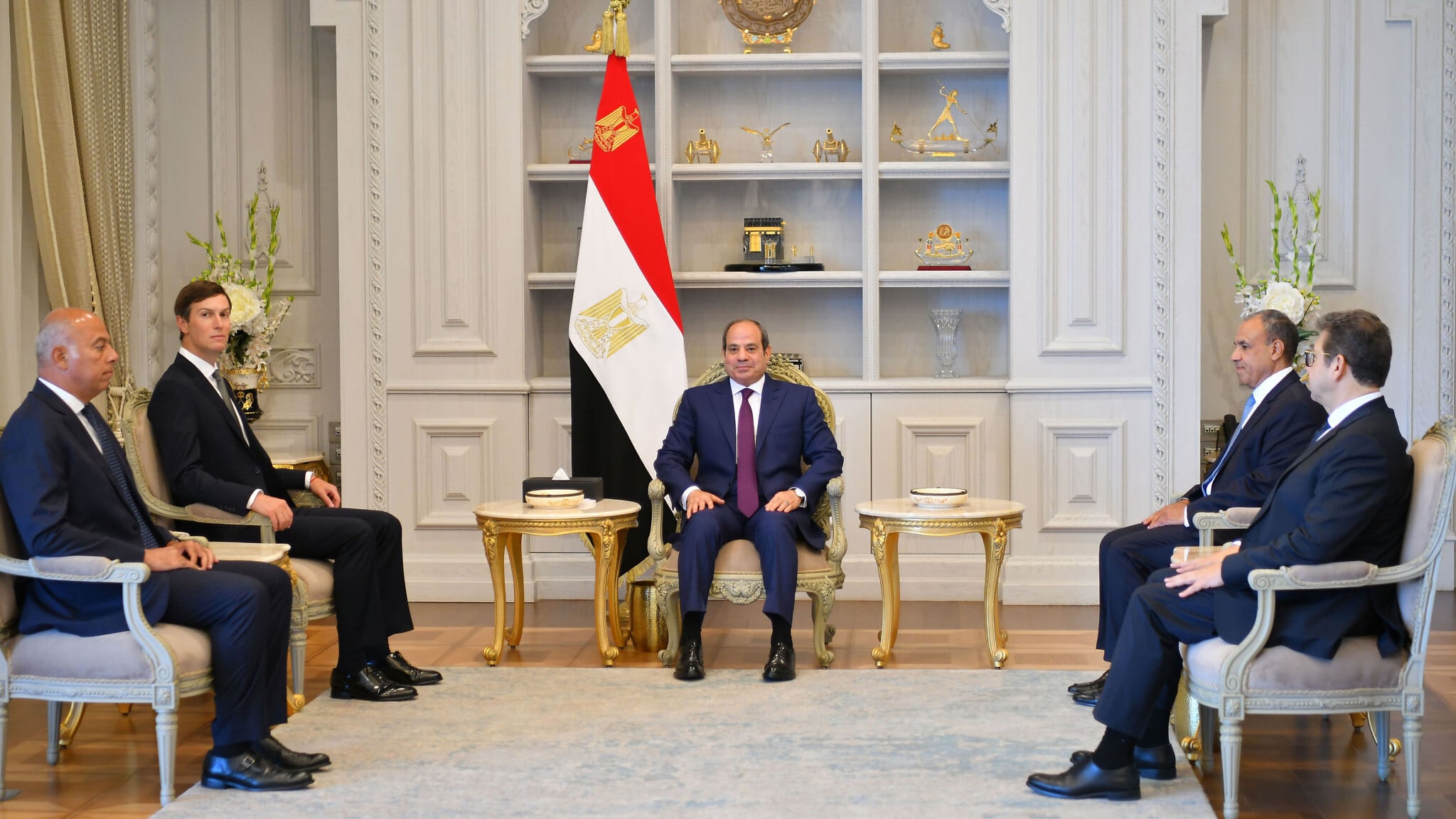
US senior official Jared Kushner (second from left) meets with Egyptian President Abdel-Fattah al-Sissi in El-Alamein, Egypt, on August 16, 2026. (Egyptian Presidency)

Both Kushner and Hayya held additional meetings in Egypt, with Kushner sitting down with Egyptian President Abdel-Fattah al-Sissi and Hayya meeting with Egyptian intelligence chief Hassan Rashad.

The meeting between Kushner and Sissi “emphasized the need for all parties to fulfill their obligations under the Gaza Strip ceasefire agreement,” according to presidential spokesperson Mohamed El-Shennawy.

Kushner departed Egypt on Sunday evening for Israel, where he will meet on Monday with Netanyahu, together with Mladenov and Blair.

In addition to halting strikes in Gaza and pushing for Israeli withdrawals in the event that Hamas begins disarming, Kushner will lean on Netanyahu to fulfill humanitarian-related commitments that were made as part of the October 2025 ceasefire, the Arab diplomat said.

Egypt’s General Intelligence Service head, Hassan Rashad (right), hosts Hamas leader Khalil Al-Hayya in Cairo, August 16, 2026. (Via X, used in accordance with clause 27a of the copyright law)

These include allowing 600 trucks per day of aid into the Strip and allowing the repair of critical infrastructure throughout the enclave.

Additional Israeli authorizations are also needed to allow for the deployment of the ISF in Gaza and the establishment of a pilot humanitarian zone that the Board of Peace wants to establish on the ruins of the southern Gaza city of Rafah.

As for the Yellow Line ceasefire demarcation, which Israel unilaterally pushed toward the coast to give it control of over 60 percent of Gaza — in violation of the October ceasefire that left the IDF in control of roughly 53 percent — Kushner is not expected to raise the issue during his meetings with Netanyahu, the Arab diplomat said.

A Board of Peace source told The Times of Israel last week that Israeli forces aren’t physically deployed along the new Yellow Line and it therefore is not a major concern for the Gaza deal mediators.

Strikes continue

Meanwhile, on Sunday, the Israeli military said it targeted two terror operatives, who were advancing attacks, in two separate strikes.

A member of the terror group Palestinian Islamic Jihad was targeted in southern Gaza’s Khan Younis, and a Hamas operative was targeted in Nuseirat in central Gaza, according to the military.

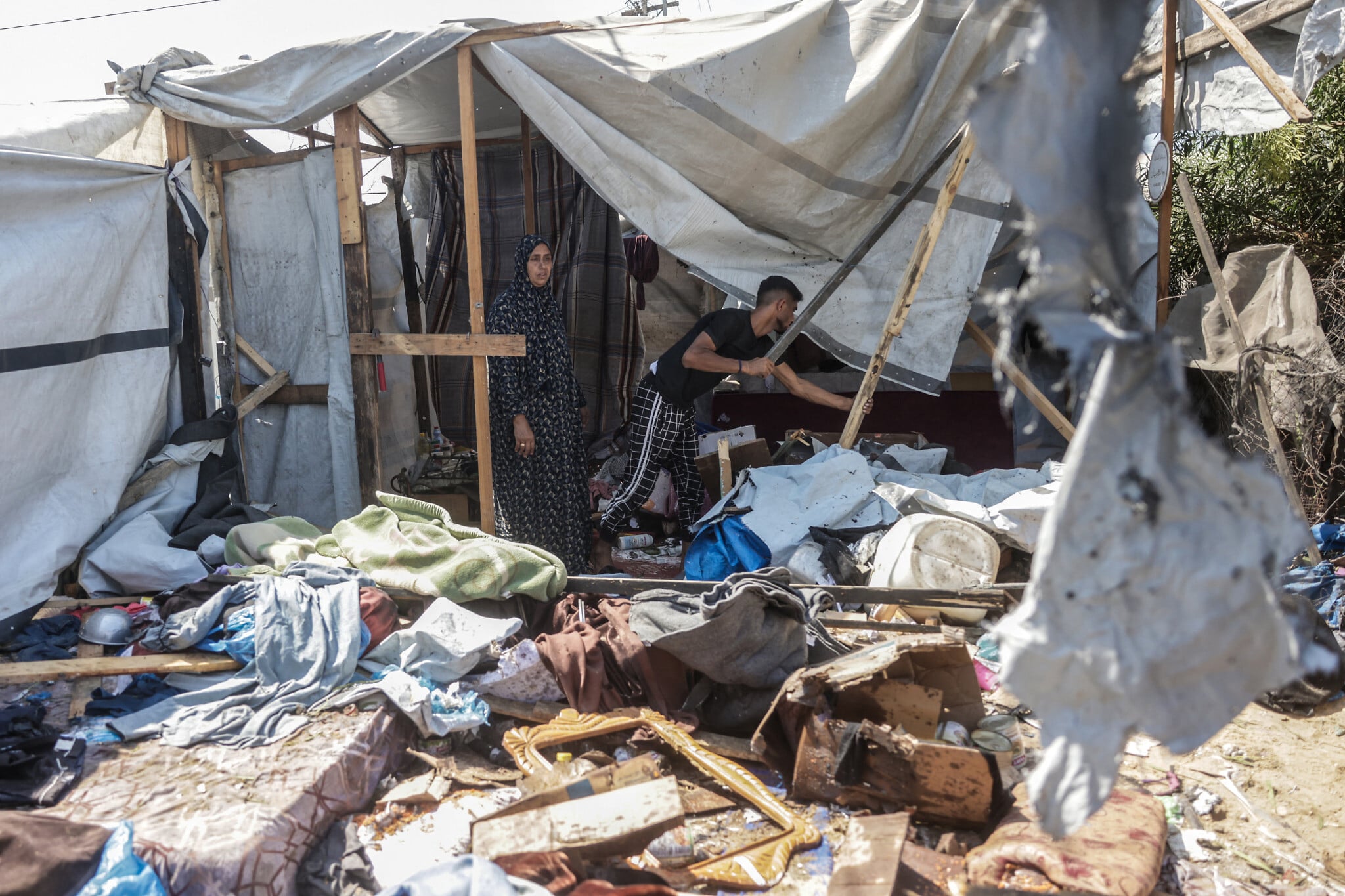
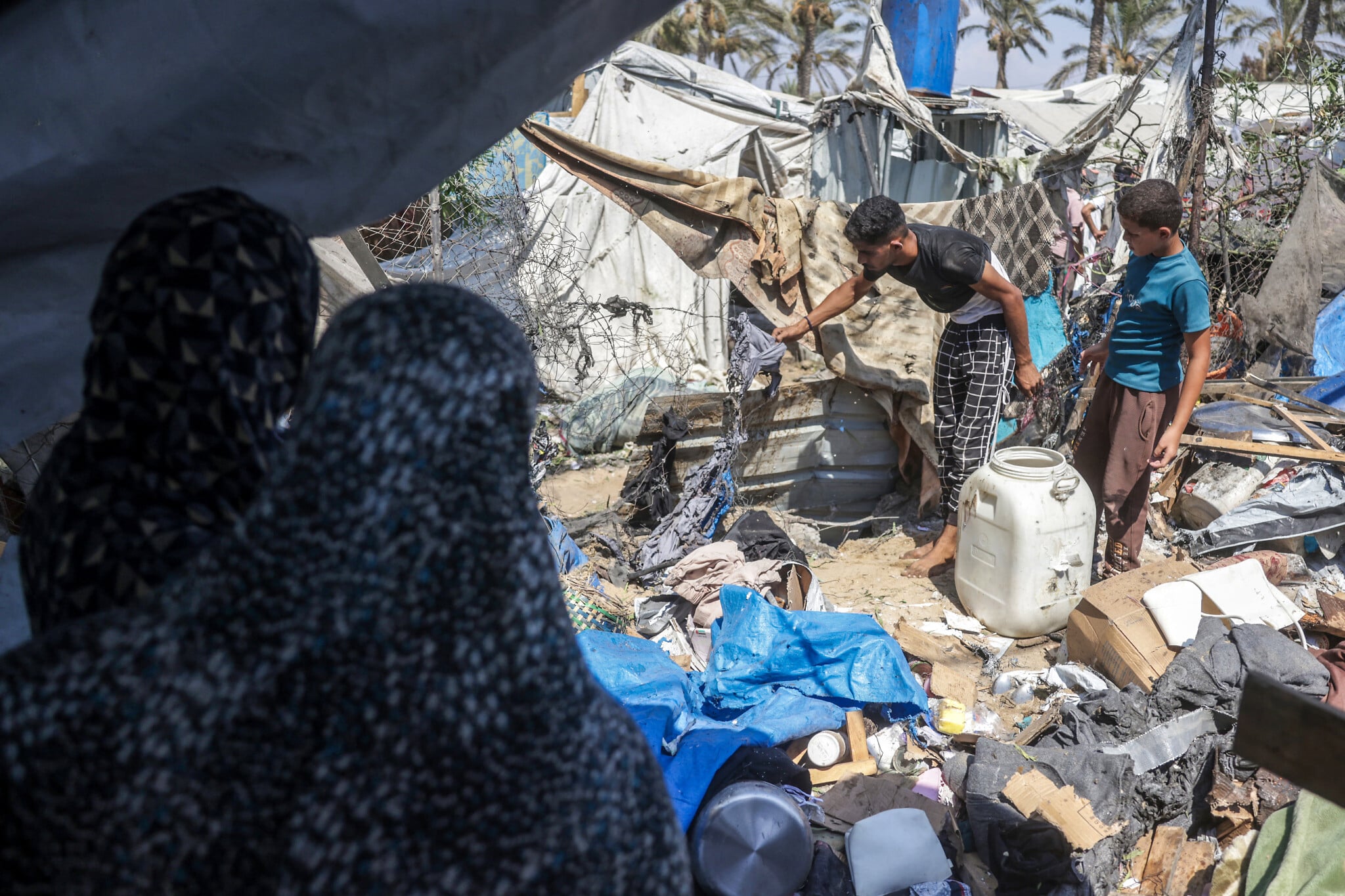
Palestinians inspect the damage at the site of an alleged Israeli strike on a tent in Khan Yunis, in the southern Gaza Strip, on August 16, 2026. (Bashar Taleb/AFP)

“The terrorists advanced terror attacks and were struck in precise aerial strikes to remove the threat,” the army says.

Palestinian media reported that several people were injured in both strikes.

The Gaza strikes came a day after an IDF tank was struck by a Hamas explosive device in the southern Gaza Strip, with the Israeli military decrying the incident as a violation of the ceasefire in the enclave.

The Israel Defense Forces said the incident took place during operations of the Givati Brigade near the Yellow Line, which divides the Israeli-held part of Gaza from the Hamas-held part, with no injuries caused.

Amid efforts to advance a US-backed plan to disarm Hamas in the Strip, Israel quietly halted airstrikes in Gaza for a week before resuming them on Wednesday.

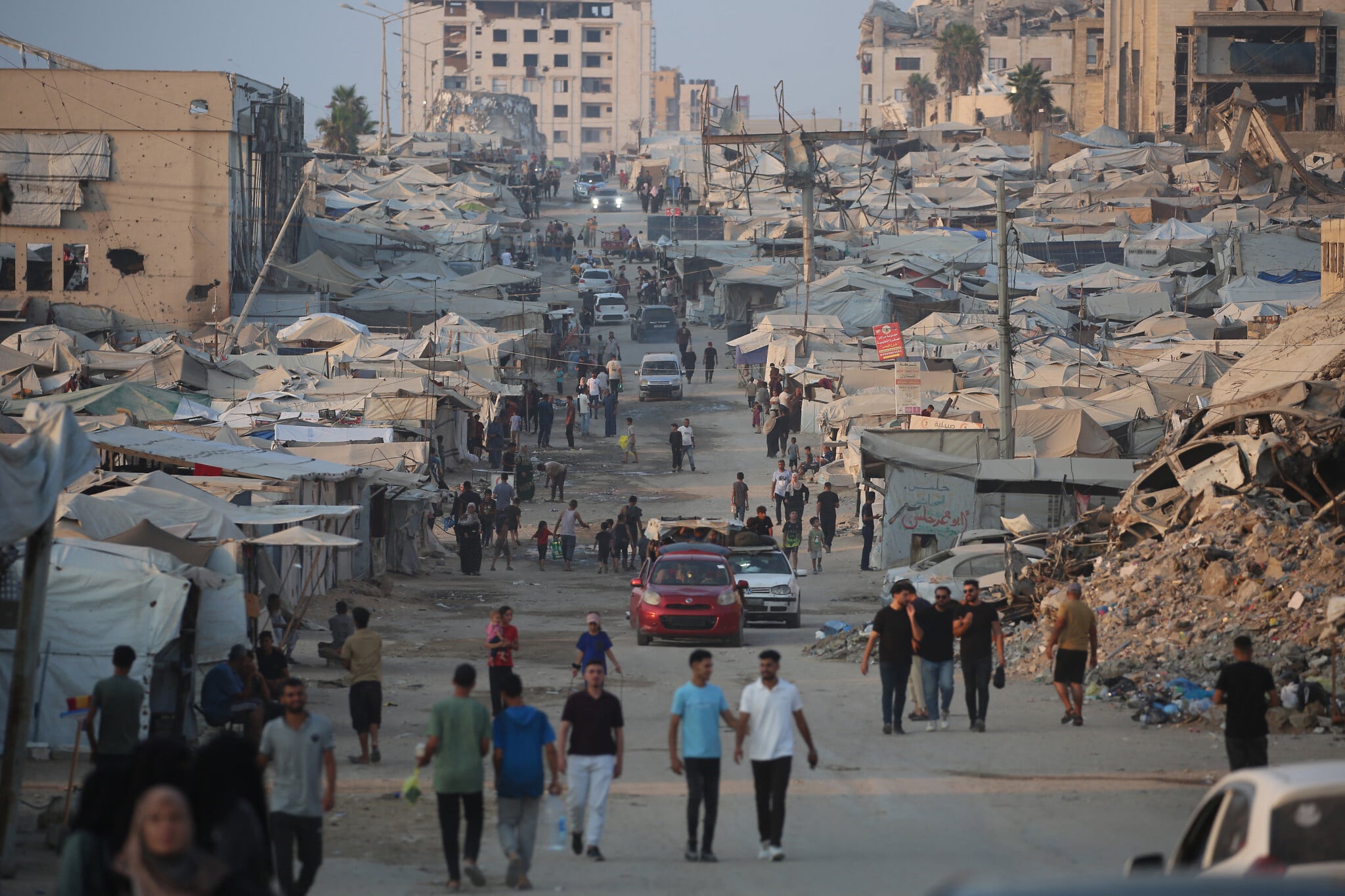
Palestinians walk past tents and destroyed buildings near the beach front in Gaza City on August 14, 2026. (Eyad Baba/AFP)

The US-backed Board of Peace is trying to move forward with its roadmap for postwar Gaza, which Hamas has accepted, while calling on the US and other mediators to pressure Israel into agreement. The terror group has avoided the use of the term “disarmament,” saying instead that it agrees to hand over weapons to be stored under a US-backed Palestinian technocrat administration, the National Committee for the Administration of Gaza, that would run affairs in the territory instead of Hamas, under the supervision of the Board of Peace.

Israeli officials warn that the terror organization is exploiting the process to prevent renewed Israeli military action, with top officials reportedly calling Hamas’s agreement to the deal a “strategic ambush” of Israel.

Egypt, Jordan, UAE, Qatar, Turkey, Saudis slam Israel’s refusal

Amid Israel’s refusal to move forward with the deal, several top Muslim countries on Sunday called on the US to enforce Israel’s compliance.

In a joint statement, the countries including Egypt, Qatar, Saudi Arabia, the United Arab Emirates, Turkey, Pakistan, and Indonesia said Israel the rejection threatens Trump’s intensified efforts to end war in Gaza.

“Israel bears responsibility for disrupting peace efforts in Gaza and the Palestinian territories,” the statement read. “These positions amount to a direct repudiation of the Comprehensive Plan, jeopardize its implementation, and fundamentally undermine the collective efforts undertaken to achieve a just and lasting peace.”

Israel’s rejection of the plan “directly threatens to derail the extensive efforts exerted by US President Trump to bring an end to the war in Gaza and establish the conditions for lasting peace,” it said.

Displaced Palestinians inspect the damage at the site of an alleged Israeli strike on a tent in Khan Yunis, in the southern Gaza Strip, August 16, 2026. (Bashar Taleb/AFP)

The countries called for “sustained and active US engagement to ensure and enforce Israel’s full compliance with the commitments and arrangements envisaged under the Comprehensive Plan and its Road Map, and to prevent further obstruction of their implementation.”

Israel therefore bears “direct and full responsibility for any consequences resulting from its continued rejection, obstruction, delay or non-compliance, including any resulting deterioration of the situation on the ground and disruption of ending the war in Gaza.”

“The ministers further call upon the Board of Peace, with the active support and engagement of the United States, to take immediate and concrete measures within its mandate to uphold the integrity of the Comprehensive Plan and prevent any party from obstructing its implementation,” the statement added.

Times of Israel staff contributed to this report


By World Israel News Staff

Iran’s hard-line leadership used a two-month negotiating window with the United States to rebuild military capabilities, tighten the Islamic Revolutionary Guard Corps’ grip over the armed forces and prepare Tehran’s regional allies for an expanded war, according to a new Wall Street Journal report.

The preparations, undertaken under Supreme Leader Mojtaba Khamenei, have included accelerating missile and drone production, reorganizing Iran’s security leadership and coordinating with allied groups in Yemen and Iraq for possible attacks extending from the Persian Gulf to the Red Sea, the Journal reported Monday, citing Iranian and Arab officials and regional intelligence.

The moves suggest that while Iranian diplomats continued exploring arrangements with Washington, influential figures in Tehran increasingly viewed the negotiations as a temporary respite rather than a path toward ending the conflict.

“There is also a widespread view in Iran that the main war has not yet begun,” Tehran-based defense analyst Mohammad Hassan Sangtarash told the Journal.

According to the report, Iranian hard-liners suspected that the United States and Israel were using diplomacy partly to relieve pressure on the global economy while preparing for another major confrontation.

Tehran consequently used the relative lull to restore access to missile facilities damaged during the war, increase weapons production and strengthen preparations for offensive operations.

  WATCH: CENTCOM bombards Iran for tenth straight night

The reported strategy comes as the 60-day period connected to the June US-Iran memorandum expires without a broader peace agreement.

The interim understanding was intended to halt major fighting and provide a framework for reopening the Strait of Hormuz and negotiating longer-term disputes.

It quickly deteriorated, however, as Washington accused Tehran of failing to reopen the waterway and Iran accused the United States of failing to honor economic commitments. Efforts by mediators to revive the arrangement had made “absolutely no progress” by last week, according to an Iranian source cited by Reuters.

Iranian Foreign Minister Abbas Araghchi said Sunday that Tehran had made no decision to resume negotiations with Washington. Oil prices rose Monday as the diplomatic impasse and severely reduced traffic through Hormuz renewed concerns about global energy supplies.

One of the most consequential elements of Tehran’s preparations has reportedly been a reorganization of the country’s military and security hierarchy.

The Journal reported that the leadership has moved to give the IRGC greater influence over Iran’s conventional military while placing veterans of the 1980-88 Iran-Iraq War and previous domestic crackdowns in important security positions.

That shift has already become visible at the highest levels of government.

Earlier this month, Khamenei appointed former longtime IRGC commander Mohsen Rezaei as secretary of the Supreme National Security Council, putting one of Iran’s best-known military hard-liners in a central position coordinating national security and foreign policy.

  Two American soldiers killed defending US base as Iran expands attacks

Rezaei commanded the Revolutionary Guard for 16 years and led it through most of the Iran-Iraq War.

Rezaei has also taken a hard line over Hormuz. Iran announced last week that the strait would remain closed unless Washington agreed to Tehran’s conditions, including steps toward ending the war and releasing frozen Iranian assets.

Former US diplomat and Iran nuclear negotiator Alan Eyre told the Journal that for Iran’s leadership, “the baseline is war,” with the regime preparing itself for another major attack even while diplomacy continues.

Iran nevertheless faces significant internal disagreement over that strategy. President Masoud Pezeshkian and more pragmatic figures have argued that the country needs a negotiated settlement and sanctions relief to prevent its severely damaged economy from deteriorating further, according to the Journal.

Iran has meanwhile moved faster than some Israeli officials expected in restoring infrastructure and regaining access to missile sites damaged by US and Israeli attacks, the Journal reported.

The IRGC has publicly acknowledged using pauses in the fighting to improve its capabilities.

An IRGC spokesman said in July that the force had accelerated missile production and worked to increase missile accuracy during the period of reduced hostilities.

Tehran has also demonstrated that it retains the ability to strike American military facilities and targets throughout the Gulf.

  Iran assassination threat forced Trump into secret Air Force One decoy operation

Iranian missiles increasingly targeted US positions in Jordan in July. Three American service members were killed when an Iranian missile struck sleeping quarters at Muwaffaq Salti Air Base, according to US officials.

Later that month, Jordan said it intercepted five Iranian missiles during another attack, while the IRGC said it had targeted American military installations in the country.

The reported preparations are not confined to Iran itself.

Arab intelligence services have detected communications between Iranian officials and allied armed groups indicating that Tehran is preparing its regional network for a broader conflict.

IRGC personnel have reportedly traveled to Yemen and coordinated with Iran-backed forces over potential operations in the Red Sea.

Reuters reported in July that Iran had instructed Yemen’s Houthis to prepare to close the Bab el-Mandeb Strait if the United States attacked Iran’s electrical infrastructure.

A source close to the Houthis said IRGC representatives already present in Yemen would have authority over when such a closure should occur.

The Houthis subsequently declared a naval blockade against Saudi Arabia on July 20, threatening Saudi-linked shipping through the Bab el-Mandeb after accusing Riyadh of participating in a siege of Yemen.