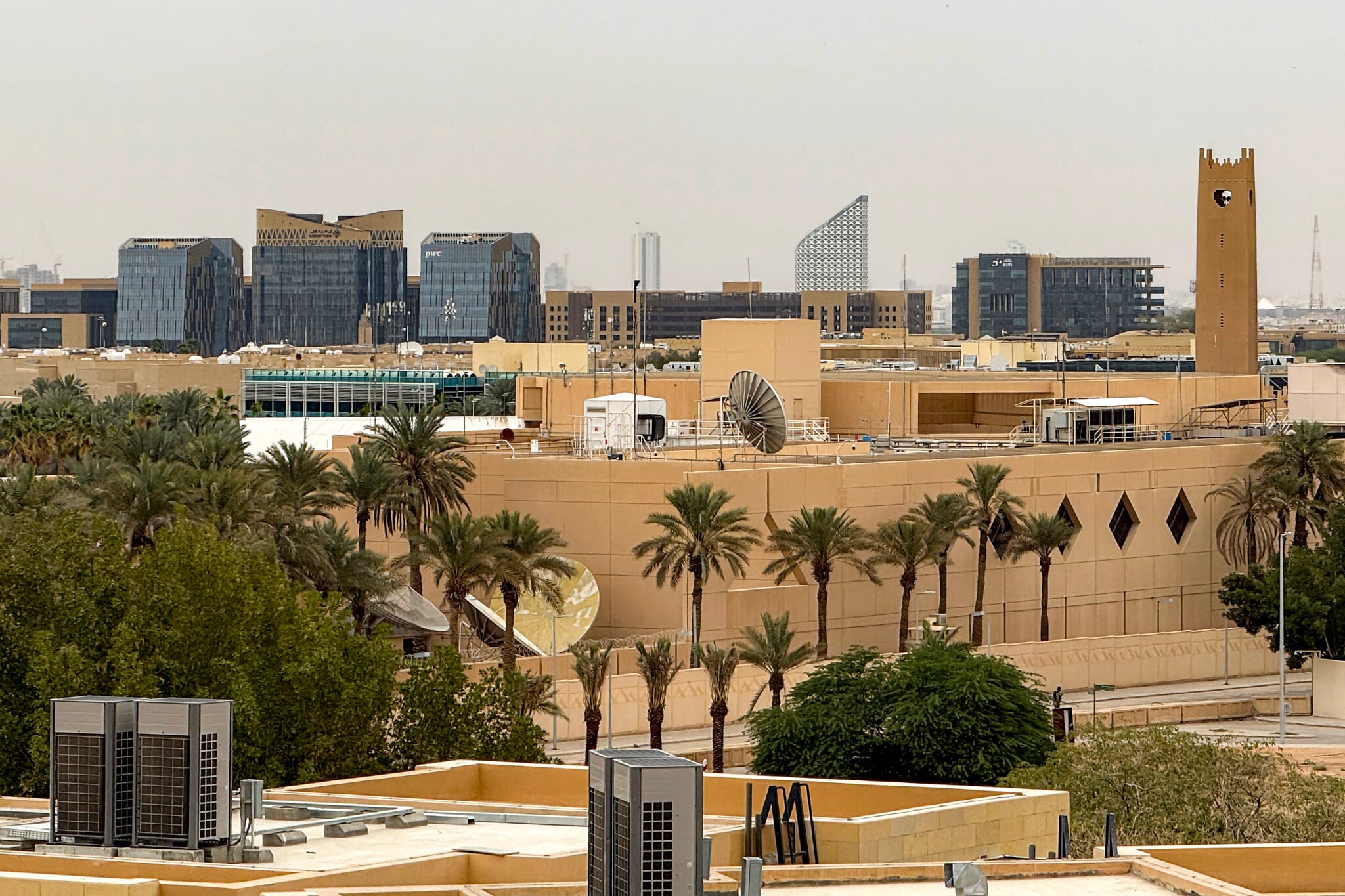
The US embassy headquarters in Riyadh is pictured on March 3, 2026, after it was hit by drone strikes earlier. (AFP)
Iranian drone attacks on CIA facilities in the Gulf have prompted US intelligence analysts to investigate whether Russia assisted by providing targeting information or advanced drone technology, say four people familiar with US intelligence.
These people, who spoke on condition of anonymity to discuss national security matters, say US intelligence officials have not yet reached firm conclusions about the possible Russian involvement in the attacks on CIA facilities. But they cite the strikes’ effectiveness and apparent precision, as well as Russia’s broader technical support for Iran, as possible evidence.
Reuters and other media have reported — and US officials have acknowledged — that Russia has provided targeting and other support for Iran in its strikes on US targets in the Gulf region generally, but the intelligence community’s investigation of possible Russian involvement in supporting the CIA facility attacks has not been previously disclosed.
At least two CIA sites were struck in March, Reuters and other outlets have reported. One of the facilities was the CIA station in Saudi Arabia, which is located in the US embassy in Riyadh, and a separate site was located in eastern Iraq. Some of the sources said additional CIA sites had been hit, but they did not disclose details.
CENTCOM completes its 12th consecutive night of strikes on Iranian military sites, while the IRGC declares the Strait of Hormuz closed and warns uncoordinated ships against transit.
Published: Jul 23, 2026, 1:15 AM (GMT+3)
Updated: 6:31
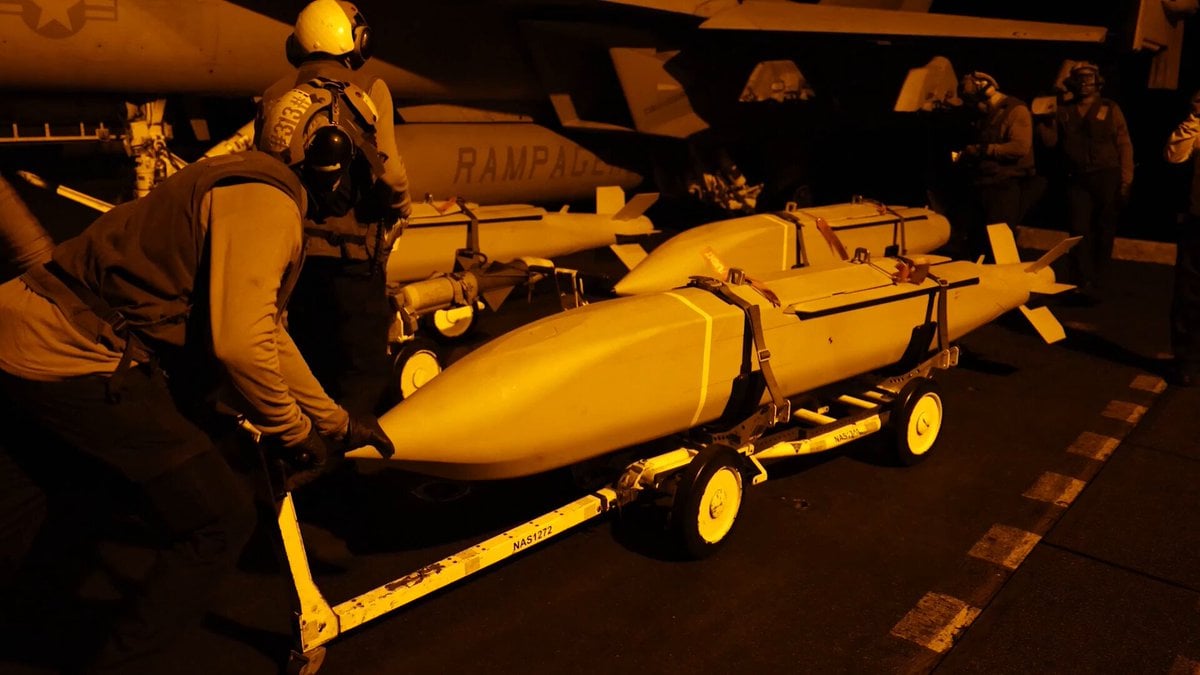
US Central Command (CENTCOM) announced early Thursday morning that US forces began launching more strikes against Iranian military targets, marking the twelfth night in a row of such strikes.
“The mission will continue to further degrade Iran’s ability to threaten civilian mariners and commercial vessels transiting regional waters,” it said.
Prior to the official announcement, explosions were reported in several areas across Iran, including in Bandar Mahshahr and Sirik.
Iran’s Islamic Revolutionary Guard Corps (IRGC) issued a direct threat to the United States, declaring that the Strait of Hormuz is under its full control and “completely closed” as long as American military operations in the region continue. In their statement, the IRGC clarified that no oil tankers will be permitted to pass, enter, or exit through the strait without prior coordination with Iranian authorities.
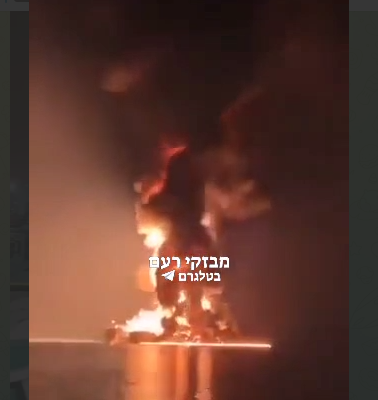
Additionally, the IRGC reported that an oil tanker caught fire following an explosion when it attempted to navigate a “mined channel” south of the Strait of Hormuz, and that two other oil tankers turned back and aborted their routes. The Iranian statement did not specify the names of the vessels involved or the exact timing of the incidents.
Later, Iran’s Fars news agency reported a new wave of US strikes targeting a military site in the city of Bushehr, located in southwestern Iran.
Iranian media also reported, citing a security source, that two people were killed in a strike conducted by US forces in the area of the Shalamcheh border crossing.
The crossing is located in southwestern Iran, on the border with Iraq, and serves as a strategic point in the region.
The US strikes came shortly after US President Donald Trump said that Iran wants to make a deal with Washington, but is not yet ready for one.
“They’re getting hit so hard, and they want to make a deal – but I say they’re not ready to make a deal because every time they make a deal they want to change it and everything. They’re not ready,” Trump told a rally in Marietta, Georgia, on Wednesday afternoon.
The President stated that the US is “winning in the Islamic Republic of Iran and we are ensuring that they will never ever be able to do to us what they have done to so many.”
“They’ve killed 52,000 plus protesters. People that were protesting have been killed over the last four months. Nobody wants to talk about it,” he added.
The President stated that the US is “winning in the Islamic Republic of Iran and we are ensuring that they will never ever be able to do to us what they have done to so many.”
Prior to the Georgia rally, Trump threatened a further escalation against Iran, warning that the US would begin blowing up Iranian bridges and power plants if Iran does not cease its attacks on international shipping.
Trump wrote on his Truth Social platform: “From this point forward, any time the Islamic Republic of Iran shoots at a ship in the Strait of Hormuz, whether it be by Missile, Rocket, Drone, or any other device or weapon, the United States will bomb and destroy ONE BRIDGE OR POWER PLANT, including those located next to, or in, the Capital City of Tehran. Thank you for your attention to this matter! President DONALD J. TRUMP.”
Explosions reported in several Iranian cities as IRGC claims it hit oil tankers trying to cross Hormuz, struck assets in Kuwait; Iran said to suspect US planning ground operation
Video footage shared by US Central Command on July 19, 2026, shows forces launching a ninth consecutive evening of strikes against Iran. (US Central Command video, screenshot via X)
US forces struck Iran for a ninth consecutive day on Monday as the number of confirmed American military deaths in the renewed fighting rose to three, and concerns grew over shipping through the Strait of Hormuz, which the Trump administration accused the Islamic Republic of seeking to control “as leverage against the world.”
In a statement, US Central Command said the strikes were aimed at “degrading” Iran’s ability to attack commercial vessels in the strait’s vital shipping lanes, targeting military command centers, air defense and coastal surveillance sites, maritime capabilities, missile and drone launch sites, and communications networks.
“The US military is holding Iran accountable at the commander in chief’s direction,” said Central Command. “CENTCOM forces remain highly vigilant, focused, lethal, and ready.”
Iran’s semi-official Tasnim news agency, citing its own reporters, said US missiles struck several Iranian cities early Monday, with explosions heard in Tabriz, Chabahar, Konarak, Bandar Mahshahr and Bandar Imam Khomeini. State media reported that strikes also hit several locations in Iran’s southern port city of Bushehr, home to the country’s only civilian nuclear plant.
Announcing the latest casualties in the war, the US military said on Sunday that a servicemember was killed on Saturday in northern Iraq, where the US has military bases, “during a controlled detonation” of a downed Iranian attack drone.
Earlier in the weekend, the US military said two of its service personnel died in Jordan and that a third was missing in action. On Sunday, Central Command said in a statement that “unidentified remains” had been found at the site of Friday’s attack and that “an examination process to verify the remains is ongoing.”
The casualty announcements brought the total number of US military personnel killed since the war began to 17, with more than 420 others wounded.
“We hit them very hard again tonight, and we did that in honor of the, probably three, it’s probably three great patriots,” Trump told reporters amid the latest strikes as he returned to Washington following the World Cup final.
Trump said “we feel very badly,” when asked about the military fatalities, adding that those who died were fighting so that “Iran cannot have a nuclear weapon.”
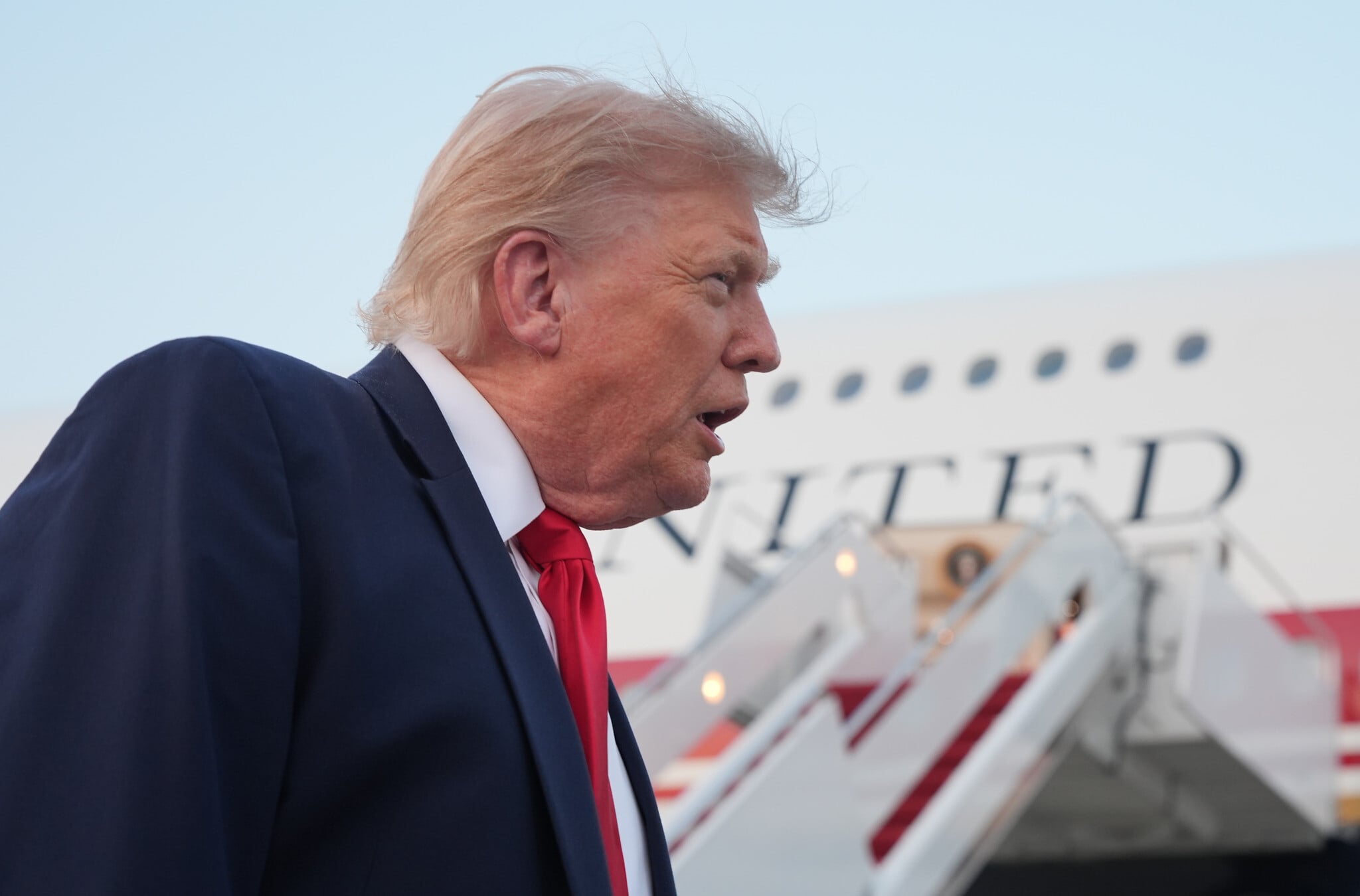
US President Donald Trump speaks to reporters as he exits Air Force One at Joint Base Andrews, Maryland, after attending the World Cup final soccer match, July 19, 2026. (AP Photo/Jacquelyn Martin)
Iran’s Islamic Revolutionary Guard Corps, meanwhile, claimed early Monday that it had hit and disabled two oil tankers trying to transit the Strait of Hormuz.
“Late last night, two non-compliant oil tankers… attempted to enter and exit through what was described as the unsafe and hazardous southern route of the Strait of Hormuz, exploded and were brought to a halt,” the Guards says in a statement, according to the Tasnim news agency.
The statement gave no details on the vessels’ names, flags, crews or any casualties.
The Guards said the waterway would remain unsafe as long as what it called US “aggression” in the region continued, warning that “this passage will not be safe for the transit of petrochemical products, nor even a single drop of oil and gas.”
Four vessels made the transit through Hormuz on Sunday, down from eight the previous day, LSEG data showed. At least three oil products tankers and one Very Large Crude Carrier have entered the strait since Friday to load oil, according to the data.
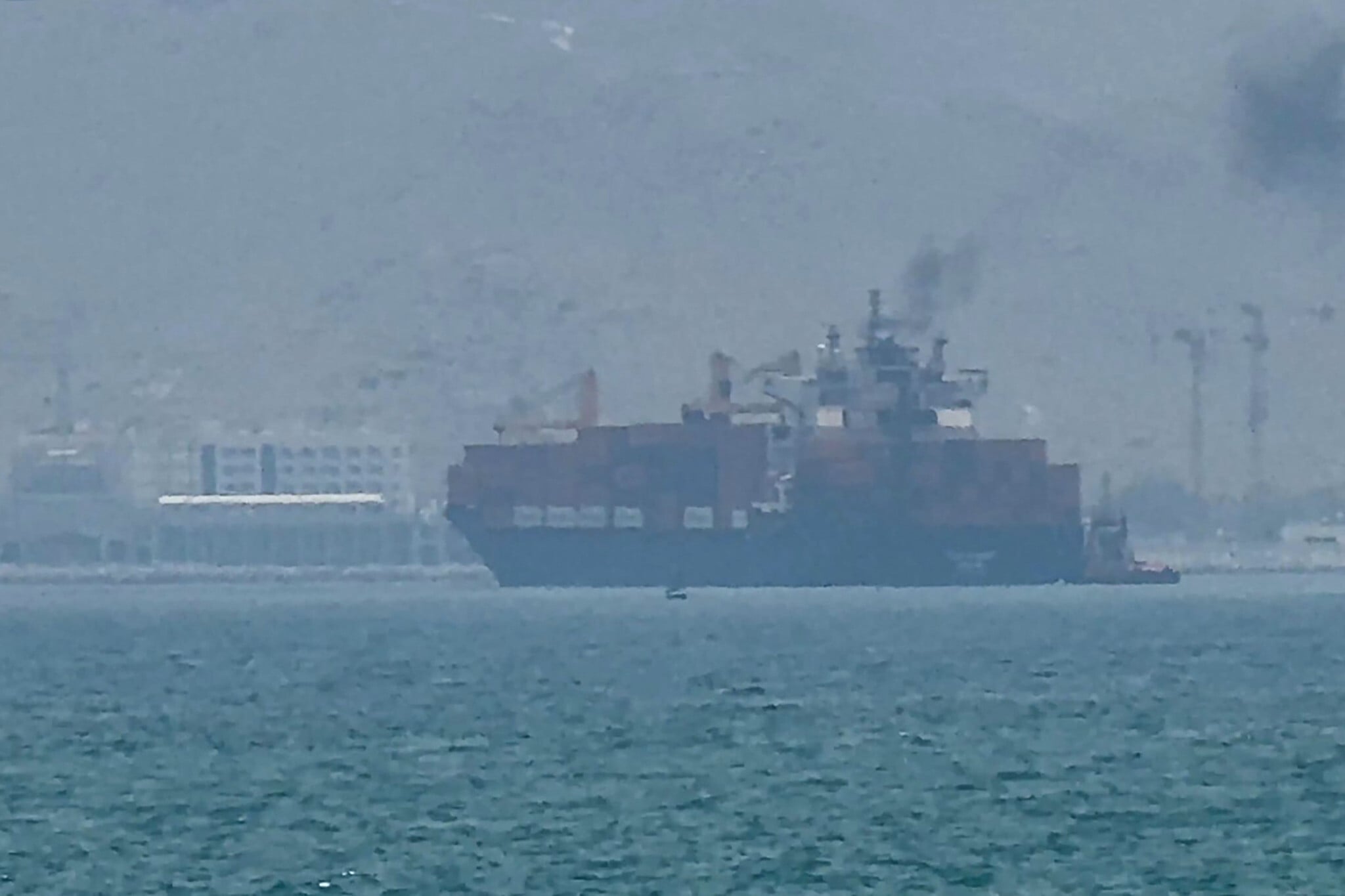
This frame grab taken from AFPTV video footage on July 12, 2026, shows a cargo ship anchoring near the Strait of Hormuz off the eastern coast of the United Arab Emirates at Khor Fakkan. (AFPTV/AFP)
The IRGC also announced an overnight surprise attack on “the enemy’s special operations headquarters in Syria’s Al-Tanf area,” as well as against Bahrain and Kuwait, the latter of which said it was “engaging hostile drone attacks following Iranian aggression.”
The Guards said that in Kuwait, a US early-warning radar system was “completely destroyed,” and that Iranian forces “struck an equipment and aircraft parts warehouse and an MQ-9 drone hangar at Ali Al Salem Air Base, setting several drones on fire.”
Additionally, the IRGC said it targeted US military aircraft stationed at Aqaba Airport in southern Jordan.
American heavy transport aircraft and command and control aircraft “were targeted with ballistic missiles, causing severe damage to a number of them,” the IRGC said in a statement carried by Iran’s state broadcaster.
Iran had also targeted Aqaba the day before in an attack that risked widening the conflict into Israel, which launched interceptors to down fragments from Iranian missiles.
Israel readying ‘immediate and strategic operational options’
During the recent exchanges of fire, now in their second week, Iran has focused attacks on US-allied Arab states rather than Israel, which launched the war with the United States on February 28.
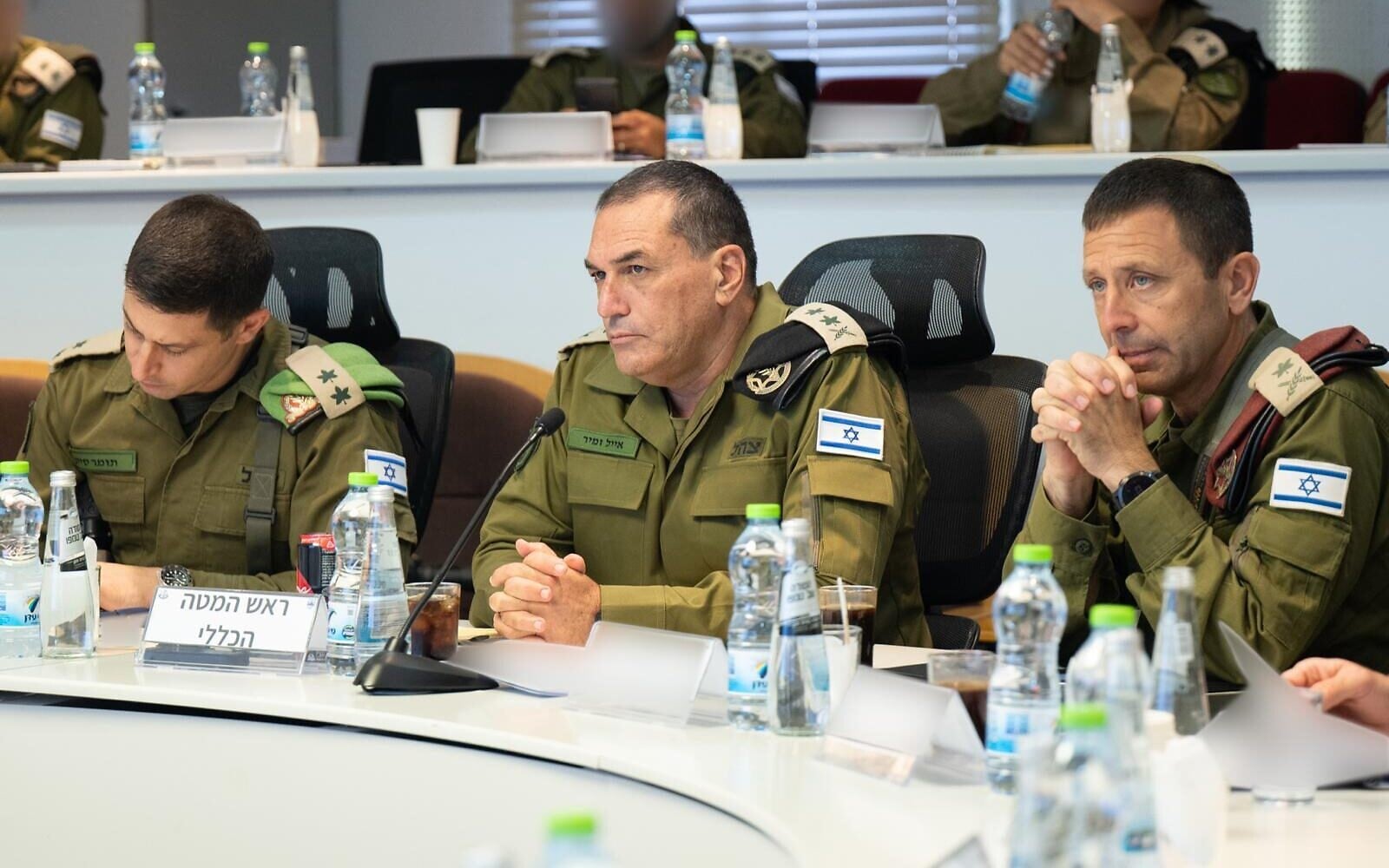
“We are prepared to immediately resume combat,” said IDF Chief of Staff Lt. Gen. Eyal Zamir.
IDF Chief of Staff Lt. Gen. Eyal Zamir (center) is seen with his office manager, Lt. Col. Tomer Sayag (left) and Central Command chief Maj. Gen. Avi Bluth at the Judea and Samaria Division headquarters near Beit El in the West Bank, July 19, 2026. (Israel Defense Forces)
Step by step, the US and Iran have returned closer to all-out war as last month’s interim deal meant to permanently end the fighting has crumbled and shipping traffic in the Strait of Hormuz has largely stalled.
A senior Israeli official told Channel 12 news on Sunday that Israel was preparing for the possibility of joining an expanded US military campaign against Iran, after the security establishment assessed at high-level government discussions that the likelihood of a significant escalation in the near future had greatly risen.
“We are in continuous dialogue with the Americans, but one thing is a fact: Trump is unpredictable,” the official told the network. “At the moment, it appears that [the US seeks] to step up the intensity of American strikes in Iran.”
However, the official noted that senior Trump envoys, primarily Steve Witkoff, as well as mediator Qatar, were continuing to try to bring the sides back to negotiations.
In light of that, Israel was “preparing for every possibility and building immediate and strategic operational options,” the official added, saying, “If the Americans decide to escalate or involve Israel, or if the Iranians carry out an unexpected and unwise move against us, we will be ready.”
The Haaretz daily also reported that Middle East diplomats were preparing for a possible escalation, with a regional source joking to the newspaper on Saturday: “Tomorrow is the World Cup final; the day after tomorrow is the Middle East final.”
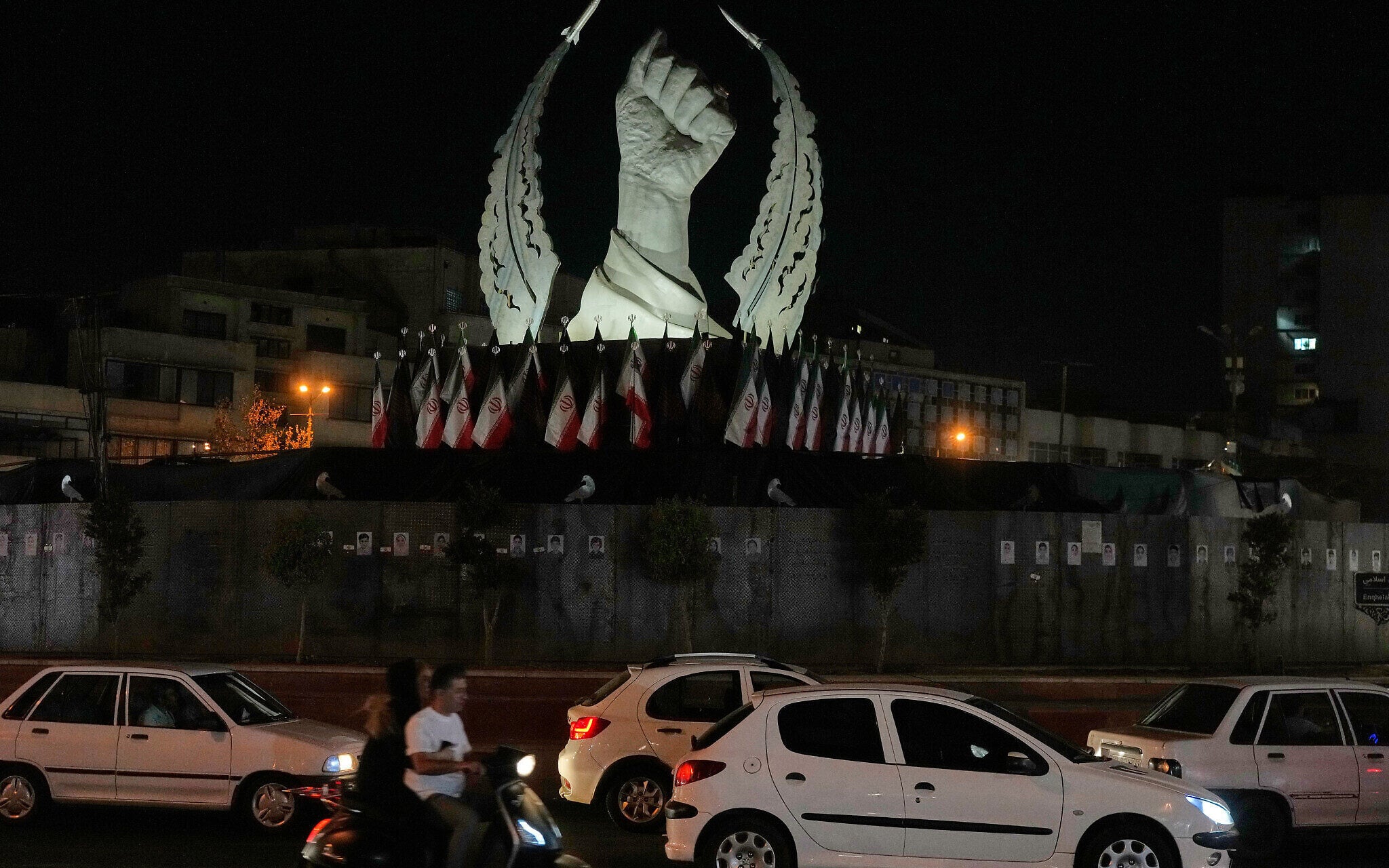
Vehicles drive past a monument depicting the clenched fist of the late Iranian supreme leader ayatollah Ali Khamenei, who was killed at the start of the US-Israel war with Iran, in Islamic Revolution Square in Tehran, July 19, 2026. (AP Photo/Vahid Salemi)
According to Haaretz, Iran is concerned that American strikes are a preparation for a ground operation to seize control of the Strait of Hormuz — though a Western source that spoke to the newspaper was skeptical that this would happen.
The report said mediators are still trying to de-escalate, with US Vice President JD Vance sending a message to Tehran via Pakistan that failed to quell the exchanges of fire.
Diplomats told Haaretz that Iraqi Prime Minister Ali al-Zaidi, fresh off a trip to Washington, is expected to deliver another message to Iran from the US, with a visit expected on July 23.
Diplomatic sources also assessed to the Hebrew daily that the United Arab Emirates, which was targeted more than any other country in the early weeks of the war, has now reached understandings with Iran, though it’s largely stopped its mediation efforts, and that Bahrain is now the Arab state taking the most hardline position against the Islamic Republic.
‘Other countries need to step up’
Concerns about the flow of energy supplies through the Strait of Hormuz have persisted since a fragile truce between Iran and the United States broke down over a week ago following attacks by Iran on ships in the Strait of Hormuz, the critical international waterway through which a fifth of the global oil and gas supply transited prior to the war.
The Royal Navy’s United Kingdom Maritime Operations Centre said late Sunday that it received a report that a vessel was on fire not far from the Omani coast, although it had not verified a cause.
Oil prices jumped 3% on Monday, with Brent crude futures surpassing $90 a barrel, the highest level since June 11.
“It’s clear that Iran, at least some people in Iran, want to control the straits and hold that as leverage against the world,” US Secretary of State Marco Rubio told reporters ahead of traveling to the Philippines for a meeting of foreign ministers with the Association of Southeast Asian Nations (ASEAN).
“The United States will do and continue to do what it needs to, to protect global shipping, but other countries need to begin to step up and provide, whether it’s hardware or finances, to help carry that burden,” he continued.
When asked if there was still a diplomatic off-ramp to the escalating conflict, Rubio said: “I think we’re always open to diplomacy. It has to be real. It has to be a deal that they’re willing to live by.”
“They can’t have an MOU that’s alive if they’re violating the terms of it,” Rubio said.
“What I will say is that the United States always remains open to a diplomatic solution. We’ve tried multiple times with Iran, and we’ll continue to try.”