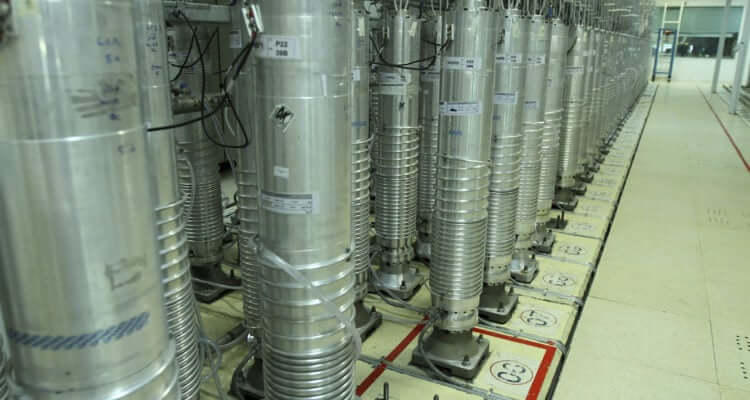
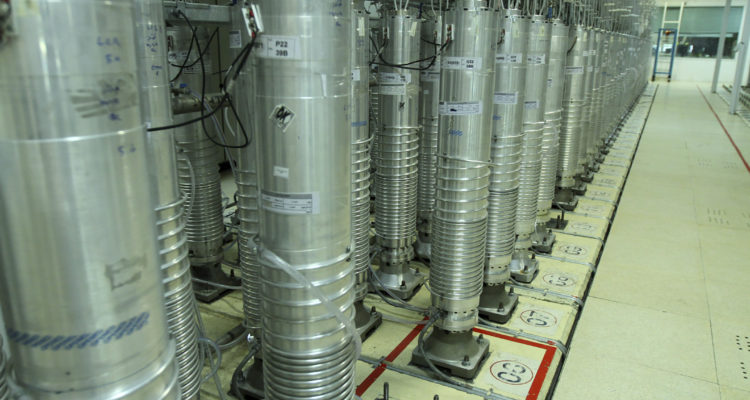
Iranian centrifuge machines in Natanz facility, Isfahan Province, in 2019. (Atomic Energy Organization of Iran via AP)
Despite Trump’s pledge that Iran would not be allowed to continue enriching uranium, Iran might join a uranium consortium under strict international monitoring.
By World Israel News Staff
Iran may accept a nuclear agreement that allows it to continue enriching uranium, albeit within the confines of an additional consortium that includes the U.S. and Gulf countries, an insider with knowledge of the talks told Axios on Wednesday.
The Islamic Republic has long stressed that a deal requiring the country to halt enriching uranium would not be acceptable, with Foreign Minister Abbas Araghchi stressing that Iran views the matter as its “right” and a “non-negotiable” issue.
But a deal in which Iran enriches uranium under the auspices of a regional consortium based in the country would likely be acceptable, a senior Iranian official told Axios
“If the consortium operates within the territory of Iran, it may warrant consideration. However, should it be based outside the borders of the country, it is certainly doomed to fail,” the official said.
According to the Axios report, the nuclear deal proposal recently submitted to Iran includes the possibility of Iran becoming part of a uranium enrichment consortium.
The consortium would provide nuclear fuel to countries seeking to develop civilian nuclear programs, under the supervision of International Atomic Energy Agency (IAEA) inspectors, Axios reported.
However, the proposal, spearheaded by U.S. Special Envoy to the Middle East Steve Witkoff, did not specify where the consortium would be physically located.
The prospect of allowing Iran to continue to enrich uranium comes after President Donald Trump vehemently denied that such a possibility would be permitted.
“Under our potential Agreement — WE WILL NOT ALLOW ANY ENRICHMENT OF URANIUM!” Trump wrote on his Truth Social platform on Tuesday.
Last week, Trump expressed optimism about a potential agreement that would curb Iran’s nuclear program.
“We’ve had some very, very good talks with Iran,” Trump told reporters. “And I don’t know if I’ll be telling you anything good or bad over the next two days, but I have a feeling I might be telling you something good.”
Tensions flare as rockets from Syria prompt Israeli airstrikes, despite Syria’s new government seeking stability and rejecting hostile acts.
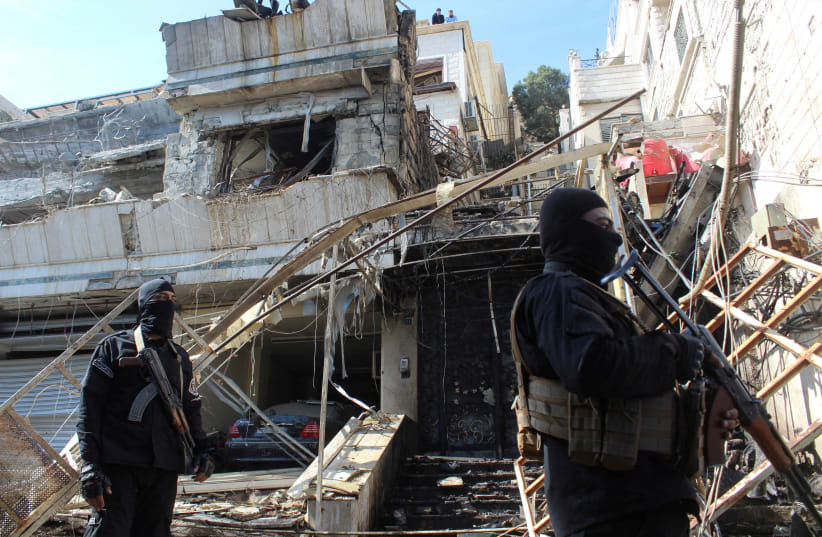
By SETH J. FRANTZMANUpdated: JUNE 4, 2025 11:20Members of Syrian security forces stand guard at a damaged site, after Israel carried out an air strike on the Syrian capital Damascus on Thursday, as reported by Syria’s state news agency, in Damascus, Syria March 13, 2025(photo credit: REUTERS/FIRAS MAKDESI)
Syria’s foreign ministry said on Wednesday that it could not confirm reports about rockets being fired from Syria toward Israel the previous evening.
The IDF said that “following the projectiles launched toward Israeli territory earlier today (Tuesday), IDF fighter jets struck weapons belonging to the Syrian regime in the area of Southern Syria.”
The IDF also said that “the Syrian regime is responsible for the current situation in Syria, and will continue to bear the consequences as long as hostile activity continues from its territory. The IDF will operate against every threat posed to the State of Israel.”
Syria’s new government in a complex spot
Syria’s new government is now in a complex spot. Since the overthrow of the Assad regime on December 8, the new government of Syria has attempted to get along with Israel. It has been clear that it is not a threat to Israel. It has also cracked down on Palestinian terrorist groups, detaining members of Palestinian Islamic Jihad and getting other groups to leave. The Assad regime was an ally of Iran and Hezbollah.
It enabled weapons smuggling to Hezbollah. The new government prevents smuggling. The new government is also a partner of Turkey and Qatar. Israel increasingly views Ankara as a potential challenge in Syria. US President Donald Trump met with Syria’s new president, Ahmed al-Shara’a, in May. Trump then appointed a new envoy, Tom Barrack, to reopen the ambassador’s residence in Syria and work to engage with Damascus.
Israel has not been as keen on Syria. Israel carried out thousands of airstrikes to deter Iranian entrenchment in Syria between 2013 and 2024. This was called the Campaign Between the Wars. When Assad fell, Israel shifted to being against the new government as well. Israeli officials have accused Shara’a of being a “jihadist.” However, the Shara’a government has attempted to show that it is not a threat. It has given up its extremist past and tried to unify Syria.
A view shows a damaged building in the aftermath of what Syrian state media reported was an Israeli strike in the Mezzah suburb, west of Damascus, Syria October 9, 2024. (credit: REUTERS/FIRAS MAKDESI)
Israel’s demands and actions
Israel has insisted that southern Syria be demilitarized and has threatened Shara’a and the new Syrian government with force. The IDF has carried out numerous strikes in southern Syria over the last six months. The IDF says this is aimed at threats, such as the former equipment of the Assad regime.
The Syrian government said, according to Syria’s Al-Ikhbariah, that “we believe that there are many parties that may seek to destabilize the region to achieve their own interests.” The Syrian government also said on June 4 that “we also affirm that Syria has not and will not pose a threat to any party in the region, and that the top priority in southern Syria lies in extending state authority and ending the presence of weapons outside official institutions, thus ensuring security and stability for all citizens.”
The Syrian government also condemned Israel’s airstrikes and bombardment of southern Syria that took place after the rocket attack on June 3. It’s not clear what was struck in southern Syria. However, it seems Israel struck Syrian government posts in response to rockets that a different group fired. The Syrian government can’t secure southern Syria because Israel wants the area demilitarized.
The effect of this is that the area has weak security, and threats can infiltrate this area. Israel then holds the Syrian government responsible for not stopping the threats, even though Israel also doesn’t want the Syrian government to deploy sufficient forces in southern Syria to stop the threats. This leaves a situation of possible chaos, similar to what happened in Gaza, the West Bank, and southern Lebanon.
Syria said on Wednesday that it “also strongly condemns the Israeli bombing that targeted villages and towns in Daraa Governorate, which resulted in massive human and material losses. This escalation represents a blatant violation of Syrian sovereignty and increases tensions in the region at a time when we are most in need of calm and peaceful solutions.
We call on the international community to shoulder its responsibilities in halting these attacks and to support efforts aimed at restoring security and stability to Syria and the region.” The report at Al-Ikhbariah said, “Israeli attacks resumed in southern Syria, with Israeli occupation forces shelling the Saham al-Golan area west of Daraa. This came after Israeli allegations that two rockets launched from southern Syria had fallen in the occupied Golan Heights.”
Al-Ain media in the UAE noted that “Syrian security sources told Reuters that Israel is launching a series of raids on targets in the south of the country.” The same report noted that Israel’s Defense Minister had said Israel holds the Syrian president responsible for any threats directed at Israel. “We will respond with all decisiveness as soon as possible. We will not allow a return to the reality of October 7, 2023,” Israel’s Defense Minister said.
Syria’s foreign ministry is clear that the country does not pose a threat to Israel or others. Al-In noted that the statement by the ministry added “that the top priority in southern Syria is to extend state authority and end the presence of weapons outside official institutions, ensuring security and stability for all citizens.” The reports went on to note that Israeli strikes targeted areas near Izraa in the eastern Daraa countryside, Tal Shaar in the Quneitra countryside, and the Saasaa and Kanaker areas in the Damascus countryside.
The incidents in southern Syria come as Syria tries to conduct outreach in the region. Syria’s foreign minister met with Qatari officials. Syria’s Minister of Defense, Major General Murhaf Abu Qasra, received the Chargé d’Affaires of the French Embassy in Syria, Jean-Baptiste Faivre, and Lieutenant-Colonel Henri Le Masne de Chermont on June 3. Syria’s SANA also discussed Syrian outreach to Turkey on labor relations and also Pakistan on scientific exchange. There were also talks in Qatar about energy cooperation and sports cooperation.
The last thing Syria’s new government wants is destabilization in southern Syria. It is not clear what group may be behind the rocket fire. Reports online mentioned an Iranian-linked group and a pro-Palestinian group.
These nefarious actors want to undermine the region and also sow chaos and conflict between Israel and Syria. Israel and Syria today have common interests in confronting Iranian smuggling and Iranian-backed militias. The Syrian civil war enabled Iran to hollow out Syria and infiltrate Syria more than in the past. Removing Assad presents an opportunity to stabilize this area.
However, weakening the Syrian government in southern Syria could lead to armed groups entering the area and threatening Israel, much as happened in Lebanon due to a weak state. Syria is saying it wants to go into the south and root out the weapons that are not in the hands of the state. The rocket fire could lead to a wake-up call that Israel and Syria could cooperate. The new US envoy in Damascus might play a role. The question now is whether the rhetoric can change and progress can be made; or whether more airstrikes and chaos are the future.
This is an important meeting because it shows Iran is seeking to redouble efforts to involve itself in Lebanon after it saw setbacks last year in Israel’s war on Hezbollah and the fall of Assad.
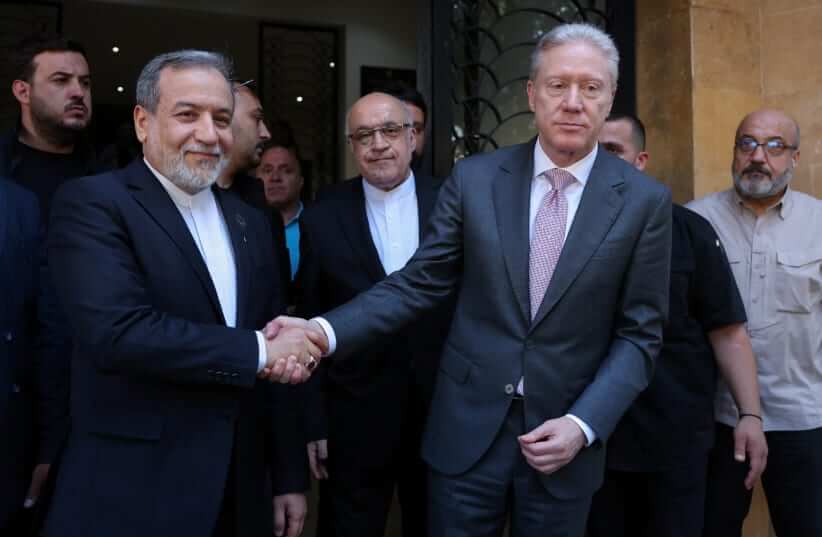
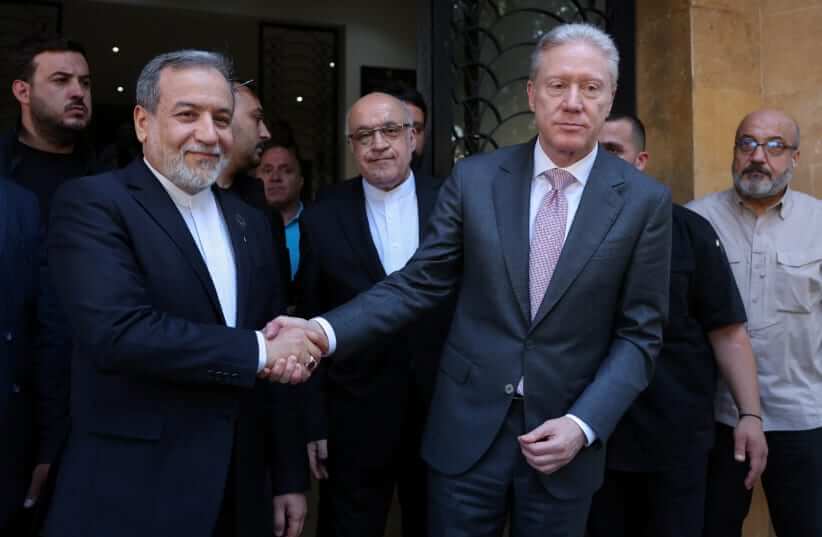
By SETH J. FRANTZMANUpdated: JUNE 4, 2025 10:41Iranian Foreign Minister Abbas Araghchi shakes hands with Lebanese Foreign Minister Youssef Rajji as he leaves the foreign ministry in Beirut, Lebanon June 3, 2025.(photo credit: REUTERS/MOHAMED AZAKIR)
Iran’s Foreign Minister Abbas Araghchi met with his Lebanese counterpart Youssef Rajji in Beirut this week. This is an important meeting because it shows Iran is seeking to redouble efforts to involve itself in Lebanon after it saw setbacks last year in Israel’s war on Hezbollah and the fall of the Assad regime.
Iran’s state media noted “upon his arrival at Beirut-Rafic Hariri International Airport on Tuesday morning, he told reporters that in its foreign policy, the Islamic Republic of Iran prioritizes its relations with neighboring states, West Asian nations, and friendly countries.”
The Iranian minister flew into Beirut after his meetings in Cairo. It should be clear that Iran is seeking to surround Israel on this trip, going to countries that border Israel. Egypt has ties to Israel. Lebanon does not. However, Israel has been carrying out strikes on Hezbollah since a ceasefire in November 2024.
Iran’s Foreign Minister said “that Iranian companies are ready to assist in Lebanon’s reconstruction, reaffirming Iran’s support for Lebanon’s sovereignty and unity against occupation.” IRNA noted that Iran is ready to take part in reconstruction efforts and to improve economic ties with Lebanon.
This comes after Lebanon’s president was in Iraq and after Lebanon’s prime minister has made comments about having arms in Lebanon be in the hands of the state. Lebanon appears to be trying to confront Hezbollah, slowly, bit-by-bit. Iran doesn’t want that to happen.
Iranian Foreign Minister Abbas Araqchi lays a wreath as he visits the burial site of former Hezbollah leader Hassan Nasrallah, on the outskirts of Beirut, Lebanon, June 3, 2025. (credit: REUTERS/MOHAMED AZAKIR)
“During a press conference in Beirut on Tuesday, Araghchi reiterated Iran’s strong backing for Lebanon’s independence, sovereignty, and territorial integrity, highlighting Iran’s commitment to fostering relations built on mutual respect, common interests, non-interference in domestic affairs, and regional stability,” IRNA noted.
Iran also slammed Israel for “occupation” of part of Lebanon. Iran says it gives “support for all efforts by Lebanon’s government and people to end the occupation through diplomatic or other means.”
Iranian companies are ready to help Lebanon rebuild
Iran’s foreign minister said that “Iranian companies are ready to engage in this reconstruction effort, and if the Lebanese administration wishes, it will be conducted through its government.” Iran’s top diplomat also met with Lebanese president Joseph Aoun.
“The Foreign Minister said that the final victory will belong to the Lebanese people and the resistance front, and that the defeat of the Israeli regime is certain and inevitable,” IRNA noted.
The Iranian also paid tribute to Hezbollah leader Hassan Nasrallah, who was killed in an Israeli airstrike. “He pointed out that the martyrdom of Sayyed Hassan Nasrallah will not only not disrupt the path of resistance, but will also further strengthen its power and determination,” the report said.
He also said that Iran’s late leader Ayatollah Khomeini had “taught us that blood triumphs over the sword.” He went on to say “accordingly, I believe that the final victory will belong to the Lebanese people and the resistance front, and the defeat of the Zionist regime is certain and inevitable.”