US Middle East envoy Steve Witkoff says nuclear talks with Iran are “moving in the right direction,” expresses hope for a breakthrough on a Gaza hostage deal ahead of President Trump’s regional visit.

Steve Witkoff

Steve WitkoffREUTERS/Evelyn Hockstein

US President Donald Trump’s Middle East envoy, Steve Witkoff, said on Monday that the United States is pushing for renewed diplomatic efforts with Iran and working tirelessly to secure the release of Israeli hostages held in Gaza—aiming for progress before President Donald Trump’s upcoming visit to the region.

Speaking to Axios’ Barak Ravid as he participated in the Israeli Embassy’s reception in honor of Israel’s Independence Day, Witkoff confirmed that Washington is looking to resume nuclear negotiations with Tehran imminently.

“The US is trying to schedule the fourth round of nuclear talks with Iran for this weekend. If it doesn’t happen it’s only because of the president’s trip to the Middle East,” Witkoff said.

Despite the sensitive timing, Witkoff remained cautiously optimistic about the direction of the talks.

“We are making some progress. I hope it is moving in the right direction. The president wants to see this solved diplomatically if possible, so we’re doing everything we can to get it going,” he added.

The US and Iran held three rounds of nuclear talks, in which Witkoff represented the US side. A planned fourth round of negotiations, which was to take place in Rome last weekend, was postponed without a new date announced.

On the pressing issue of Israeli hostages held by Hamas, Witkoff emphasized ongoing daily coordination with key regional players, including Egypt and Qatar, in hopes of reaching a ceasefire and hostage release agreement.

“I hope we make progress. I hope we get everyone out. I talk to Qatar, Egypt, and Israel almost every day. President Trump wants to get the hostages. Prime Minister Netanyahu wants to get the hostages. We are working in a concerted way,” he told Ravid.

Witkoff added that the US administration is hopeful a deal could be reached “before or during President Trump’s trip to the Middle East.”

Trump is scheduled to visit Saudi Arabia, Qatar, and the United Arab Emirates next week. Israel is not in his itinerary, but Secretary of Defense Pete Hegseth is reportedly planning to travel to Israel on May 12, before joining Trump in Saudi Arabia.

During his speech at the event, Witkoff described the occasion as “bittersweet while 59 hostages remain cruelly held by Hamas.”

“On behalf of President Trump, I pledge that we will work tirelessly this year so that next year’s Independence Day is not just a wish for happiness, but a reality of peace, prosperity and for Israel, unity,” he said.


“There are many efforts underway. Humanitarian aid initiatives for Gaza, which we applaud, the expansion of the Abraham peace accords,” Witkoff continued, adding there will be “a lot of announcements very, very shortly” on this front.

The US envoy urged Israelis “to choose unity over division, vision over disagreement, and hope over despair. When you do, Israel’s future will shine brighter than ever.”


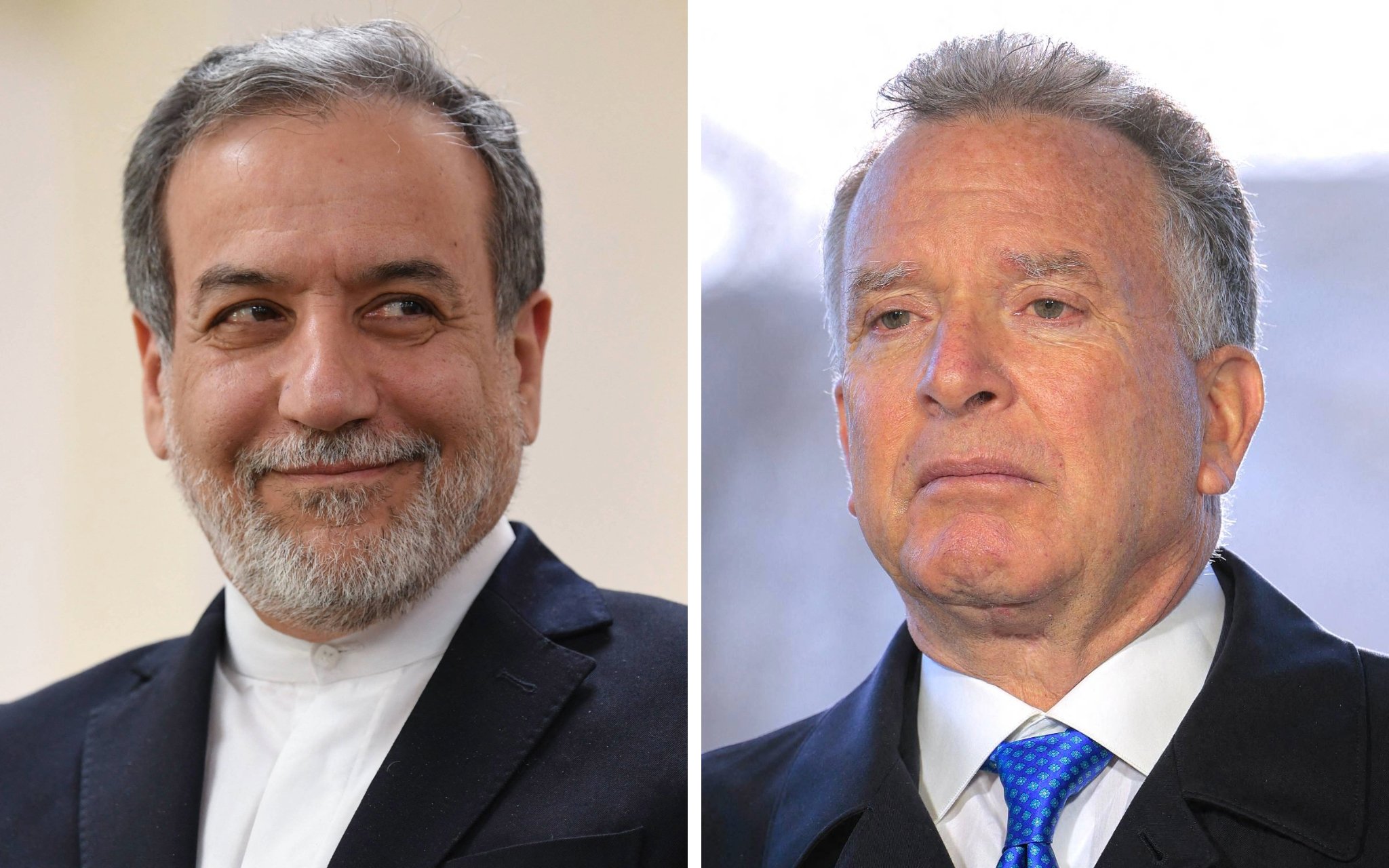
Iran’s Foreign Minister Abbas Araghchi says an agreement with the US is fully within reach provided it avoids “unrealistic and illogical positions”.

Abbas Araghchi

Abbas AraghchiREUTERS/Pedro Nunes

Iran’s Foreign Minister Abbas Araghchi on Monday urged the United States to avoid “unrealistic” positions in order to reach a deal on Tehran’s nuclear program.

Speaking with European Union (EU) foreign policy chief Kaja Kallas and quoted by AFP, Araghchi said Tehran is capable of addressing concerns “related to the possibility of Iran acquiring nuclear weapons”.

He added that “reaching an agreement is fully within reach” provided the US avoids “unrealistic and illogical positions”.

The Iranian Foreign Minister’s comments come as diplomatic efforts between the United States and Iran suffered another setback. A planned fourth round of negotiations, which was to take place in Rome over the weekend, was postponed without a new date announced.

The postponement came despite the fact that last week, after the third round of talks between the US and Iran, a US official told Axios that the talks “were positive and productive. There is still much to do, but further progress was made on getting to a deal.”

On Sunday, US President Donald Trump declared that only the complete dismantling of Iran’s nuclear program would be acceptable to him.

Speaking in a televised interview on NBC’s “Meet the Press,” Trump clarified, “Total dismantlement. Yes, that is all I would accept.”

He added, “I want Iran to be really successful, really great, really fantastic. The only thing they can’t have is a nuclear weapon.”

Trump has repeatedly said he prefers to solve the nuclear standoff with Iran through a deal, but has also not ruled out military action against Iran.

Last week, Trump expressed optimism that a deal could be reached between the US and Iran on the Islamic Republic’s nuclear program.


“On the Iran situation, I think we’re doing very well. I think a deal is going to be made there. That’s going to happen. Pretty soon it’s going to happen,” Trump told reporters.

“We’ll have something without having to start dropping bombs all over the place,” he added.


IDF strikes Lebanon’s South, North, and Syria

A drone attributed to Israel targeted Khallet al-Mahafer on the eastern outskirts of Aitaroun. In addition, the IAF carried out attacks in Syria.

A sign shows the border between Israel and Lebanon, with a map of IDF’s five outposts and an Israeli soldier (illustrative)
(photo credit: AYAL MARGOLIN/FLASH90, GOOGLE MAPS/THE JERUSALEM POST, IDF SPOKESPERSON’S UNIT)
The IDF confirmed on Monday evening that it had struck several Hezbollah terror infrastructure sites in Lebanon.

“A short while ago, the IDF struck terror infrastructure sites within a Hezbollah strategic weapons production and storage facility in the Beqaa area in Lebanon. The IDF identified Hezbollah’s attempts to reestablish presence and operations within the facility,” the handout statement read.

The military added that it had also struck Hezbollah sites in the Srifa area, which it said was ” a blatant violation of the understandings between Israel and Lebanon.”

The IDF’s confirmation came after several Arab media reports about strikes throughout Lebanon.

A drone carried out three consecutive strikes on an open area in the village of Aitaroun, in the eastern sector of southern Lebanon, Lebanon’s state-run news agency reported on Monday.

 Hezbollah flags flutter as protesters, mainly Houthi supporters, rally to show support to Palestinians in the Gaza Strip and Lebanon's Hezbollah, in Sanaa, Yemen September 27, 2024. (credit: REUTERS/KHALED ABDULLAH)Enlrage image
Hezbollah flags flutter as protesters, mainly Houthi supporters, rally to show support to Palestinians in the Gaza Strip and Lebanon’s Hezbollah, in Sanaa, Yemen September 27, 2024. (credit: REUTERS/KHALED ABDULLAH)

A drone attributed to Israel targeted Khallet al-Mahafer on the eastern outskirts of Aitaroun, Hezbollah-affiliated newspaper Al-Akhbar also reported.

Israel also reportedly struck the outskirts of the village of Janta, in the Al-Baqa’a district of eastern Lebanon, near the Syrian border, Hezbollah-affiliated Al Manar reported.

In parallel with reports of attacks in Lebanon, there were additional reports of attacks in Syria.

The previous week, three men, including two Syrian civilians and one Lebanese citizen, were killed in an Israeli strike when a pickup truck was bombed in the south of the country between the villages of Mis al-Jabal and Laida.

Lebanese army takes control of southern Lebanon

The IDF said that one of the men killed in Lebanon was a terrorist in Hezbollah’s ‘Radwan Force,’ and the other was also a Hezbollah terrorist. In addition, multiple strikes were carried out against military targets in the Hama area in western Syria on Saturday, Hezbollah-affiliated network Al-Manar reported. Al-Manar attributed the strikes to Israel.

Over 90% of Hezbollah’s infrastructure has been dismantled by the Lebanese army since the start of the November ceasefire, a security source said on Wednesday, according to French international news site, Agence France-Presse (AFP).

In an interview with Sky News Arabia, Lebanese President Joseph Aoun said that the army has taken over control of over 85% of the southern part of Lebanon.