Ankara on Wednesday issued a call for Israel to immediately halt its aerial operations in Syria, claiming such actions jeopardize fragile efforts toward national cohesion in the country, the Anadolu news agency reported.
In a message posted on the social media platform X, Turkish Foreign Ministry Spokesperson Öncü Keçeli addressed the deteriorating security situation in southern Syria, urging restraint and emphasizing diplomacy as the necessary course of action.
“Turkey fully believes that the violent incidents in southern Syria will be resolved through dialogue and common sense between the Syrian administration and local elements in the region, and those involved in the incidents will be brought to justice,” wrote Keçeli.
The Turkish official highlighted what he described as a particularly delicate phase for Syria, calling on the global community—and especially countries in the region—to take active steps in supporting peace and ensuring security.
“In this context, Israel needs to end its airstrikes that are damaging the efforts for unity and integrity in Syria,” he said, according to Anadolu. “Turkey will continue to support reconciliation and peace efforts among all elements that make up Syrian society.”
According to Israeli officials, recent Israeli airstrikes in Syria were intended to prevent a planned Turkish takeover of the targeted area.
A subsequent Reuters report said that Turkish forces had surveyed multiple air bases within Syrian territory as part of preliminary plans for a potential joint defense initiative. Those same installations were later targeted in Israeli airstrikes.
Turkish Foreign Minister Hakan Fidan later acknowledged that Ankara has been engaging in operational-level coordination with Israel in Syria to avoid unintended military incidents.
Despite the coordination, Turkey has upped its criticism of Israel’s counterterrorism operations.
Turkish President Recep Tayyip Erdogan has increased his verbal attacks on Israel since the start of the war in Gaza on October 7, 2023. The two countries had been on track to restore strained ties before Hamas’ October 7 attack on Israel.
In March, the Turkish President described Israel as a “terror state” after it launched surprise strikes on terrorist targets in the Gaza Strip.
US Defense Secretary Pete Hegseth warns Iran of consequences for backing Yemen’s Houthis, as the US military intensifies its air campaign. Over 1,000 Houthi targets have been hit since mid-March.
US Defense Secretary Pete Hegseth on Wednesday warned Iran that it would pay the consequences for its continued support for the Houthi rebels in Yemen.
“Message to IRAN: We see your LETHAL support to The Houthis. We know exactly what you are doing,” Hegseth wrote in a post on X.
“You know very well what the US Military is capable of — and you were warned. You will pay the CONSEQUENCE at the time and place of our choosing,” he added.
The US Army launched a military campaign against the Houthi rebels in mid-March.
On Tuesday, the Pentagon announced that the United States has conducted over a thousand airstrikes against Houthi targets in Yemen since the start of the campaign.
According to a statement from Pentagon spokesperson Sean Parnell, “USCENTCOM strikes have hit over 1,000 targets, killing Houthi fighters and leaders… and degrading their capabilities.”
Earlier this week, CENTCOM reported that the number of targets struck since March 15 stood at over 800, with hundreds of Houthi combatants killed during the operations.
President Donald Trump recently stated that the Houthis would be “completely annihilated” and added that Iranian support would only impede but not stop the Houthis’ destruction.
Trump later said that the Houthis now want peace because the US attacks on them have been very successful, while stressing that those strikes will continue for a very long time.
It has long been believed that Iran is planning to use the Houthis to take over Yemen and seize the key strategic port of Aden, which controls the entrance to the Red Sea and ultimately to the Israeli resort city of Eilat.
Iran has denied accusations that it provided the Houthi rebels with ballistic capabilities, even after the US Navy seized an Iranian weapons shipment bound for Houthi rebels in Yemen.
Hamas official also denies progress in Cairo, after report said negotiators reached tentative agreement on release of hostages in May, opening of three aid corridors in Gaza
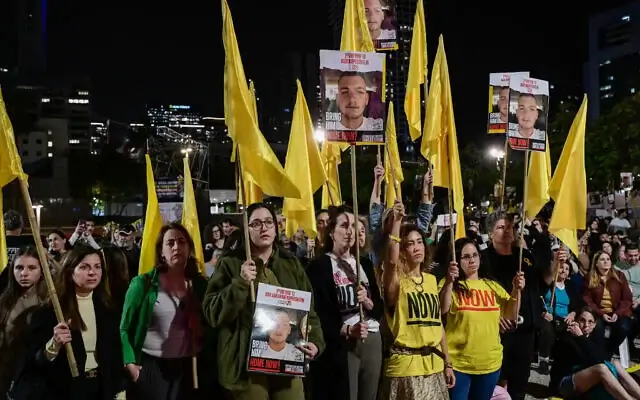
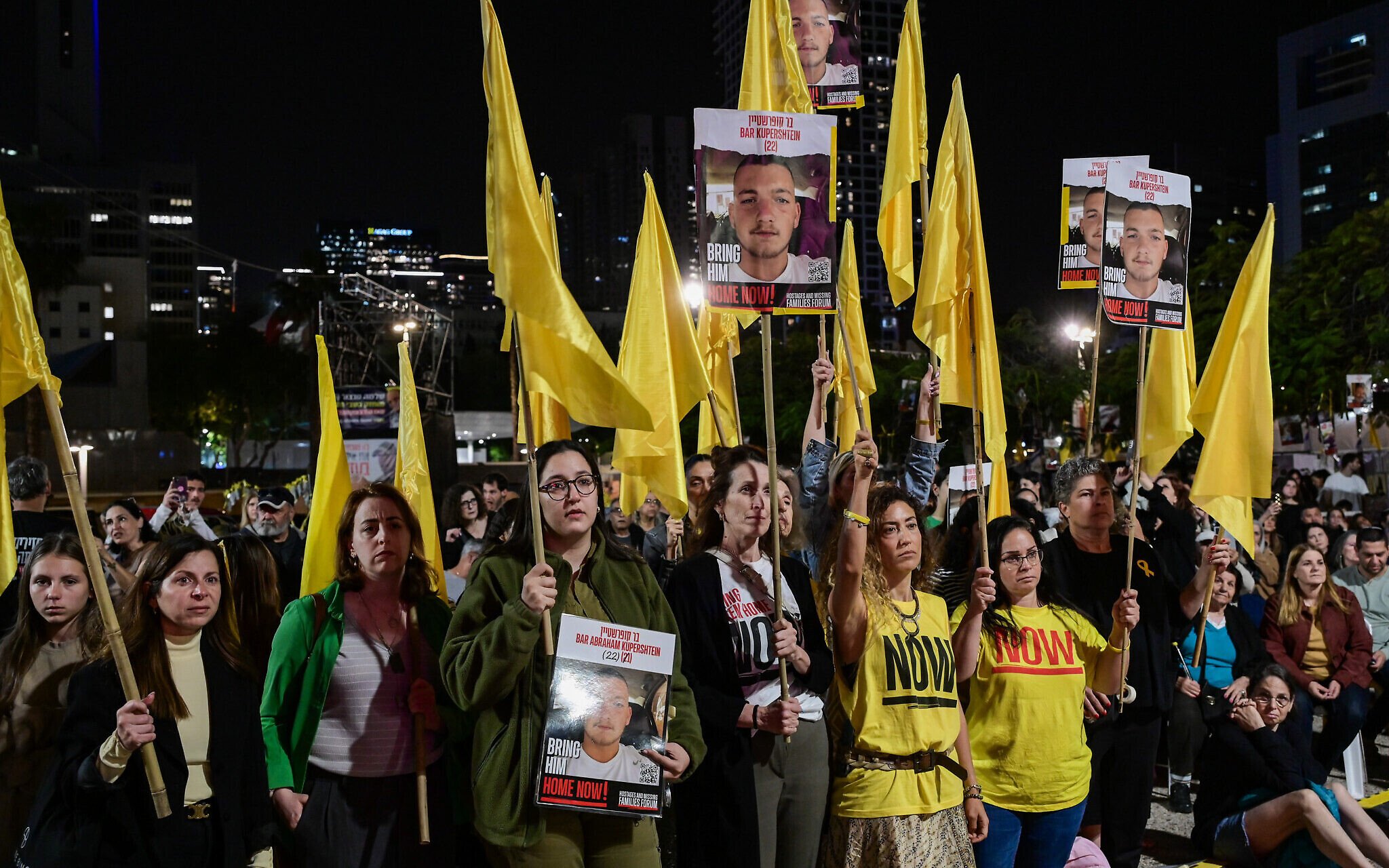
Family members of hostage Bar Kupershtein and Israelis celebrate his 2nd birthday in Hamas captivity at Hostage Square in Tel Aviv, April 1, 2025. (Avshalom Sassoni/Flash90)
An Israeli official on Tuesday pushed back on “inaccurate” overnight reports that there had been a breakthrough in Gaza ceasefire-hostage release talks with American, Egyptian and Qatari mediators in Cairo, as Arabic media indicated there was a preliminary deal to release some captives as soon as May.
“Israel is working tirelessly with the Americans and the mediators with the goal of advancing a deal to free our hostages, but as of now, no agreement has been reached,” said the Israeli official, reiterating comments carried on Hebrew media Sunday night by Israeli officials, also unnamed, denying reports of a breakthrough.
A senior Hamas official also denied there had been progress in the talks, telling the Palestinian Islamic Jihad-linked Palestine Al-Youm news channel on Tuesday that Hamas had yet to be shown new ideas for a Gaza truce. The Hamas official stressed that the terror group opposes partial or temporary truce proposals.
However, sources cited by Saudi-owned network Al-Arabiyah said negotiators had hammered out a tentative deal to free US-Israeli captive soldier Edan Alexander and an unspecified number of other unnamed hostages. The sources said negotiators had also agreed to establish in Gaza three humanitarian aid corridors that would be overseen by mediators
Israeli sources, including a negotiator, who were cited by the network, said Israel’s delegation to the talks was awaiting the political echelon’s response to the reported agreements. The sources said positive messages had been exchanged in the talks, even as the US was exerting pressure on Hamas both directly and through the other mediators. Israel did not immediately respond to the Al-Arabiyah report.
Two Egyptian security sources cited by Reuters Monday night had said there were “significant breakthroughs” in the Cairo talks. All five members of the Hamas executive council were in the Egyptian capital Saturday to meet with senior Egyptian officials, and Strategic Affairs Minister Ron Dermer, Israel’s lead negotiator, was reportedly set to meet there Monday with Egyptian intelligence chief Gen. Hassan Mahmoud Rashad, Cairo’s point man to the talks.
Strategic Affairs Minister Ron Dermer speaks at the Jewish News Syndicate conference in Jerusalem, April 28, 2025. (Chaim Goldberg/Flash90)
The sources cited by Reuters said negotiators had reached a consensus on a long-term Gaza ceasefire, but that some sticking points remained, including the question of Hamas’s arms, which Israel demands the terror group surrender.
An Israeli official told The Times of Israel on Tuesday that while there had been some progress in the talks, “not everything the Egyptians say is true.” The major sticking points remained, including the duration of a ceasefire and the future of Hamas, said the official.
On recent statements by Israeli officials expressing displeasure with Qatari mediation, the official said, “It’s nothing new.”
“Qatar is in the negotiations for its own benefit — so that world leaders will come to Doha — not to pressure Hamas,” said the official. “Egypt does pressure Hamas.”
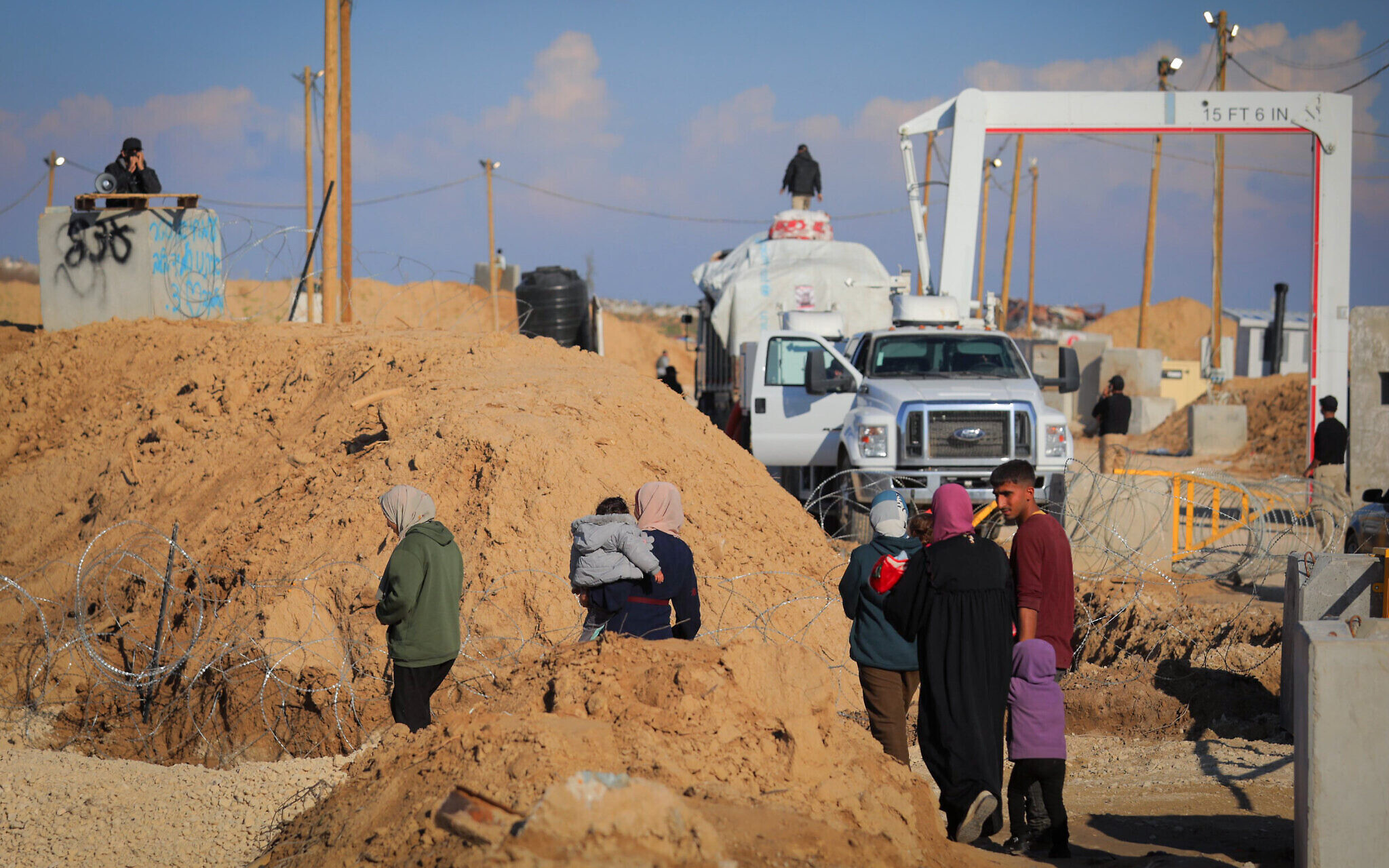
An Egyptian and Qatari committee inspect Palestinian vehicles at the Netzarim checkpoint as they return to northern Gaza, January 28, 2025. (Ali Hassan/Flash90)
On Monday, an Israeli official had said there was “no chance” Israel would accept a five-year truce proposal that Hamas was discussing with Arab mediators. The official added that Qatar has “recently had an influence that was not positive on negotiations,” echoing Hebrew media reports that the Gulf state was sabotaging talks by urging Hamas to reject a recent Egyptian ceasefire proposal.
A non-Qatari Arab official on Sunday denied those reports, telling The Times of Israel that they were being “manufactured” by Israeli officials seeking to deflect blame for the failure of the talks away from Prime Minister Benjamin Netanyahu.
Qatar, which plays host to the Hamas politburo, has been a key mediator in hostage-ceasefire negotiations between Israel and Hamas since the terror group sparked the war in Gaza on October 7, 2023, when thousands of Hamas-led terrorists invaded southern Israel, killed some 1,200 people and took 251 hostages.
The Gulf state helped secure two previous Gaza ceasefire-hostage deals, in November 2023 and in January this year. The more recent deal’s 42-day first phase expired on March 2 amid Netanyahu’s refusal to negotiate the second phase, which would have required a full Israeli withdrawal from Gaza — a red line for the premier’s far-right coalition partners. Israel halted the flow of humanitarian aid into Gaza hours after the ceasefire expired, and resumed hostilities in the Strip on March 18.
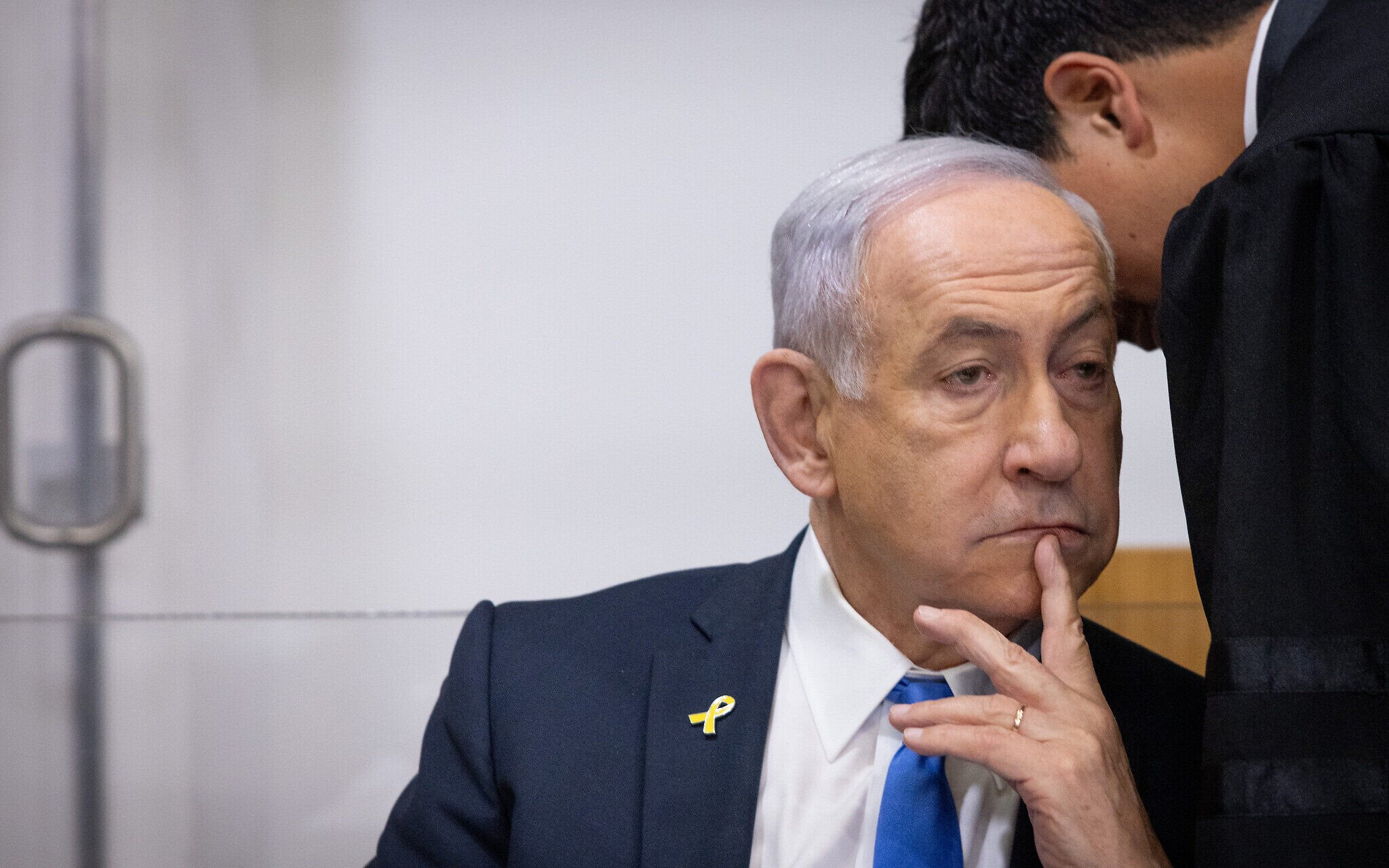
Prime Minister Benjamin Netanyahu is seen at the Tel Aviv District Court for the ongoing corruption trial against him, on April 22, 2025. (Miriam Alster/Flash90)
Top aides to Netanyahu are under investigation for allegedly receiving payments from Qatar by echoing statements favorable to the emirate, including the statement that Cairo was playing a negative role as a mediator compared to Doha. Netanyahu’s aides deny wrongdoing, and the premier has slammed the investigation as a “deep-state” witch hunt against a sitting right-wing leader.
For years before the Gaza war, Netanyahu oversaw a policy that let Qatar send millions of dollars in cash to Hamas each month, despite the warnings of security officials that the terror group was using the funds to rearm. Netanyahu has said the payments went exclusively to families in need and to pay government workers in the Strip.
In a probe of the Hamas onslaught, the Shin Bet earlier this year cited the Qatari cash transfers as one of the factors that had enabled the shock assault.