Turkish Foreign Minister Hakan Fidan reveals ongoing technical coordination with Israel to avoid direct conflict in Syrian airspace.
Turkish Foreign Minister Hakan Fidan

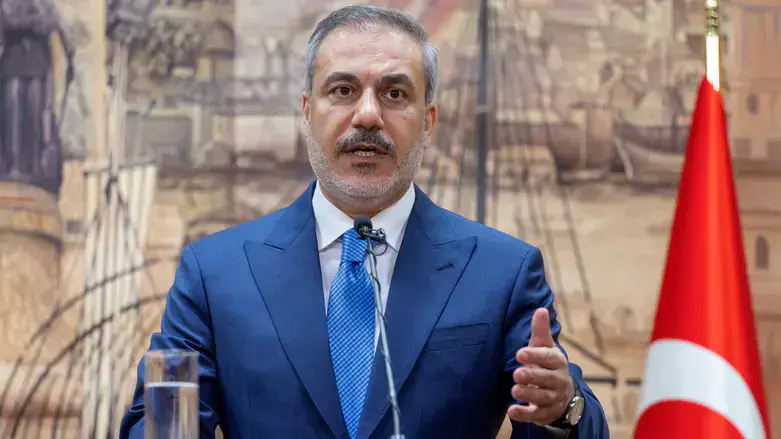
Turkish Foreign Minister Hakan FidanREUTERS/Murad Sezer

Turkish Foreign Minister Hakan Fidan acknowledged on Wednesday that Ankara has been engaging in operational-level coordination with Israel in Syria to avoid unintended military incidents, Reuters reported.

The comments follow a series of intensified Israeli airstrikes in Syria, which Israeli officials said were intended to prevent a planned Turkish takeover of the targeted area.

According to a Reuters report published last week, Turkish forces had surveyed multiple air bases within Syrian territory as part of preliminary plans for a potential joint defense initiative. Those same installations were later targeted in Israeli airstrikes.

“While we are conducting certain operations in Syria, there needs to be a deconfliction mechanism with Israel, which flies aircraft in that region, similar to mechanisms we have with the U.S. and Russia,” Fidan told CNN Turk on Wednesday.

He further explained that the dialogue is strictly technical. “There are technical contacts to prevent combat elements from misunderstanding each other,” he said, noting that teams on both sides engage “when needed.”

Fidan emphasized that the coordination does not reflect any broader diplomatic overtures toward normalization with Israel. “These talks are limited to deconfliction in Syria,” he stated.

Turkey has upped its criticism of Israel’s counterterrorism operations. Last week, the Turkish Foreign Ministry criticized Israel’s strikes against Hezbollah terrorist targets in Lebanon.

“These attacks have once again exposed Israel’s flagrant disregard for international law and its ongoing threat to the region’s security and stability. The international community must stand united against Israel’s efforts to create a perpetual state of conflict in the region,” it said.

In response, the Israeli Foreign Ministry said in a statement of its own, “While violently suppressing his own citizens and carrying out mass arrests of political opponents, [President Recep Tayyip] Erdogan presumes to preach lofty values to the international community.”

“In Erdogan’s Turkey, there is no justice, no law, and no freedom. Israel does not need Erdogan’s ridiculous moral sermons. Israel acts to defend itself and its citizens against real threats and actual attacks — and it will continue to do so,” it added.

Erdogan has increased his verbal attacks on Israel since the start of the war in Gaza on October 7, 2023. The two countries had been on track to restore strained ties before Hamas’ October 7 attack on Israel.

Last month, the Turkish President described Israel as a “terror state” after it launched surprise strikes on terrorist targets in the Gaza Strip.
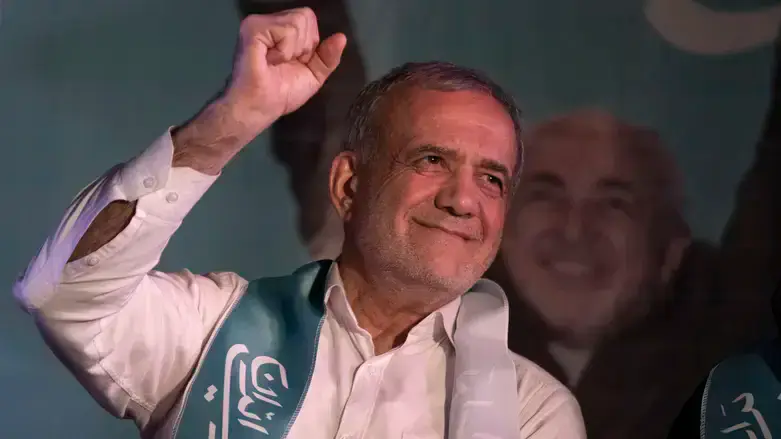

Iranian President Masoud Pezeshkian reiterates Tehran’s disinterest in nuclear weapons and invites American investment, signaling a potential policy shift.

Masoud Pezeshkian

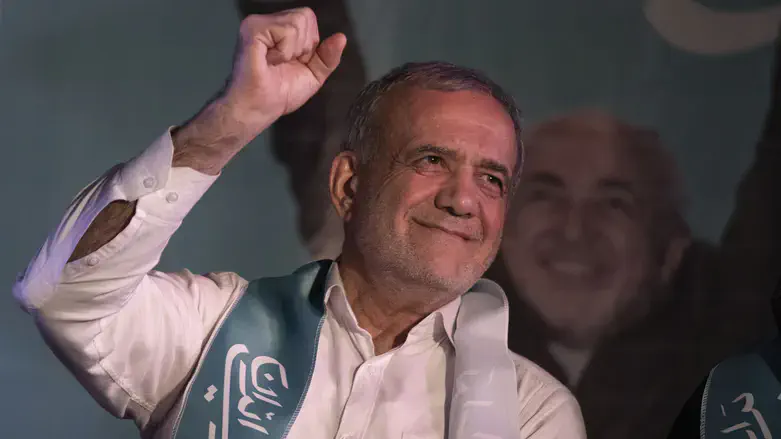
Masoud PezeshkianReuters/Morteza Nikoubazl/NurPhoto

Iranian President Masoud Pezeshkian on Wednesday reiterated that his country has no intention of pursuing nuclear weapons and extended an unexpected invitation to American investors—remarks made just days before renewed diplomatic engagement with the United States, The Associated Press reports.

“We are not after a nuclear bomb,” Pezeshkian said in a speech delivered in Tehran. “You (in the West) have verified it 100 times. Do it 1,000 times again.”

Pezeshkian emphasized that Iran’s Supreme Leader Ayatollah Ali Khamenei does not object to US economic participation in Iran. “His excellency has no opposition to investment by American investors in Iran,” he stated. “American investors: Come and invest.”

This tone contrasts sharply with Iran’s stance following the 2015 nuclear accord, when the country pursued deals such as the purchase of American aircraft but maintained tight restrictions on US corporate presence.

Iran has long insisted that its nuclear program is for peaceful purposes only and that it is not interested in a bomb, but has expanded its nuclear activities in recent years, following US President Trump’s decision to withdraw from the 2015 nuclear deal during his first term in office.

In its latest step to advance its nuclear program, Iran recently informed the IAEA of its intention to “significantly increase” its production of uranium enriched up to 60 percent.

Pezeshkian’s comments come ahead of scheduled indirect talks in Oman between Iran and the US this coming Saturday.

Despite the US President’s claims that the talks would be direct, Iranian officials said the encounter would involve indirect engagement rather than face-to-face talks.

Iran recently rejected Trump’s offer for direct talks, as outlined in a letter sent by the President to Khamenei.


Macron says France could recognize Palestinian state in June

French President said that France could recognize a Palestinian state in June, adding that in turn some countries in the Middle East could recognize Israel.

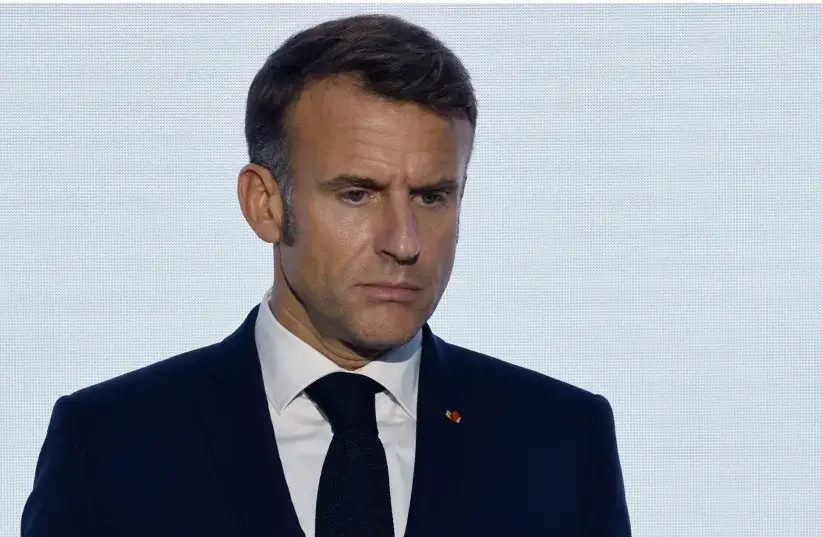
France's President Emmanuel Macron holds a press conference at the 19th Summit of the Francophonie at the Grand Palais, Paris, Oct. 5, 2024.  (photo credit: Ludovic Marin / AFP via Getty Images)
France’s President Emmanuel Macron holds a press conference at the 19th Summit of the Francophonie at the Grand Palais, Paris, Oct. 5, 2024.
(photo credit: Ludovic Marin / AFP via Getty Images)
French President Emmanuel Macron said on Wednesday France could recognize a Palestinian state in June, adding that in turn some countries in the Middle East could recognize the state of Israel.

“We need to move towards recognition (of a Palestinian state). And so over the next few months, we will. I’m not doing it to please anyone. I’ll do it because at some point it will be right,” he said during a interview on France 5 television.

“And because I also want to take part in a collective dynamic that should also enable those who defend Palestine to recognize Israel in their turn, something that many of them are not doing.”

Most major Wester powers don’t recognize Palestine as state

Even though Palestine has been recognized as a sovereign state by almost 150 countries, most major Western powers have not, including the United States, Britain, France, Germany and Japan.

French President Emmanuel Macron (R) and Palestinian President Mahmoud Abbas deliver a press statement after a meeting at the Elysee Palace in Paris, France, December 22, 2017. (credit: REUTERS)Enlrage image
French President Emmanuel Macron (R) and Palestinian President Mahmoud Abbas deliver a press statement after a meeting at the Elysee Palace in Paris, France, December 22, 2017. (credit: REUTERS)

Among countries that do not recognize Israel are Saudi Arabia, Iran, Iraq, Syria and Yemen.

“Our objective is somewhere in June, with Saudi Arabia, to chair this conference where we could finalize the movement towards reciprocal recognition by several countries,” Macron said.