As calls for Lebanon’s Hezbollah to disarm gain momentum, a senior Hezbollah official told Reuters the terror group is ready to hold talks with the Lebanese president about its weapons if Israel withdraws from south Lebanon and stops its strikes.
US-backed President Joseph Aoun, who vowed when he took office in January to establish a state monopoly on the control of arms, intends to open talks with Hezbollah over its arsenal soon, three Lebanese political sources said.
Discussion of disarmament has intensified since the power balance was upended by last year’s war with Israel and the ousting of Hezbollah’s Syrian ally, ex-president Bashar al-Assad.
Hezbollah emerged severely weakened from the 2024 conflict with Israel when its top leaders and thousands of its fighters were killed and much of its rocket arsenal destroyed.
The senior Hezbollah official said the group was ready to discuss its arms in the context of a national defense strategy but this hinged on Israel pulling out its troops from five hilltops in south Lebanon.
“Hezbollah is ready to discuss the matter of its arms if Israel withdraws from the five points, and halts its aggression against Lebanese,” the senior official told Reuters.
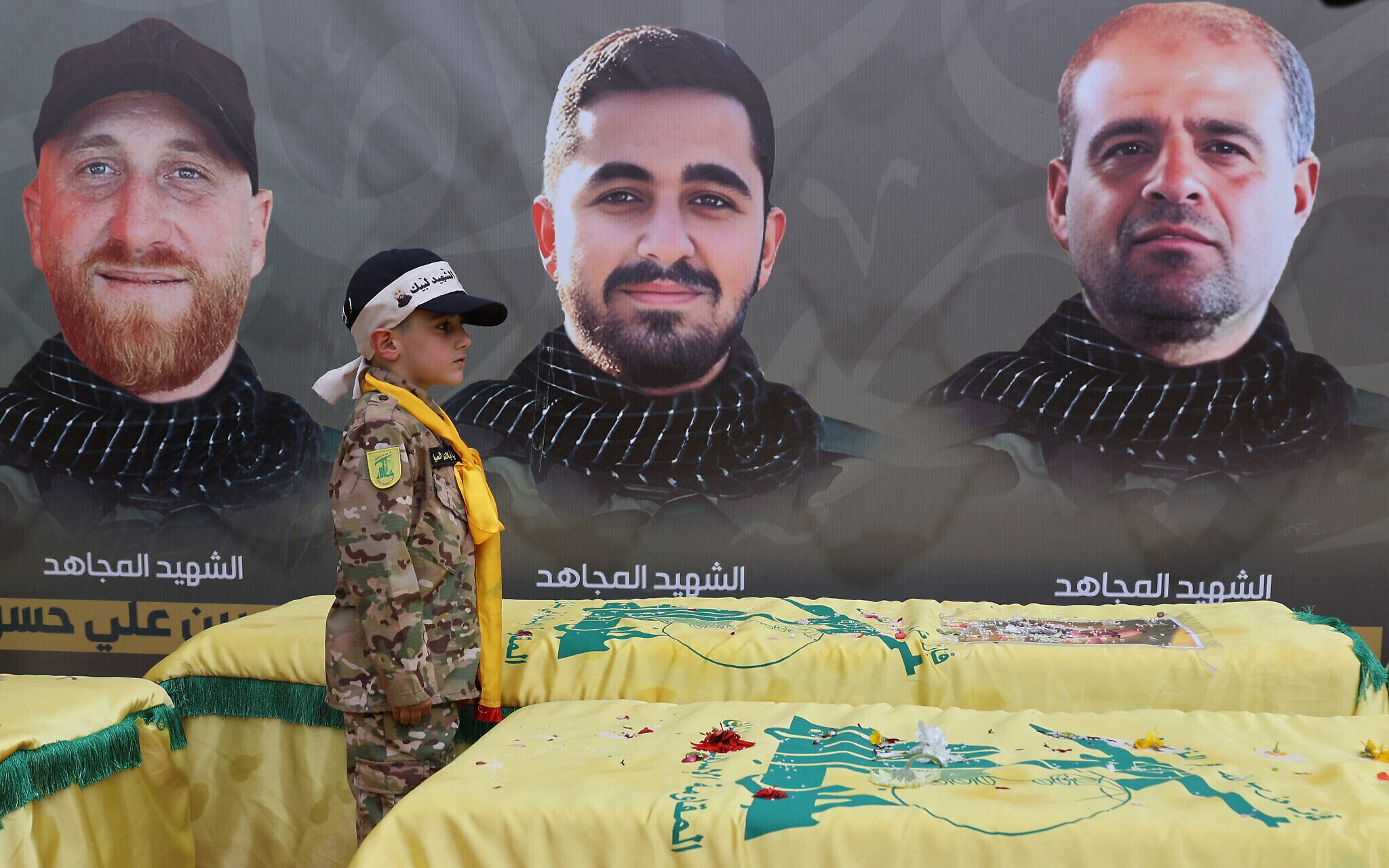
A boy attends the funeral of Hezbollah fighters, killed before the November ceasefire with Israel, in the southern Lebanese village of al-Taybeh, near the border with Israel on April 6, 2025. (Rabih Daher/AFP)
Hezbollah’s position on potential discussions about its arms has not been previously reported. The sources spoke on condition of anonymity due to political sensitivities.
Hezbollah’s media office did not immediately respond to a request for comment. The presidency declined to comment.
Israel, which sent ground troops into south Lebanon during the war, has largely withdrawn but decided in February not to leave the five hilltop positions. It said it intended eventually to hand them over to Lebanese troops once it was sure the security situation allowed.
Renewed focus on Hezbollah’s arms
Despite a ceasefire since November, Israeli airstrikes have kept pressure on the terror group while Washington has demanded Hezbollah disarm and is preparing for nuclear talks with Hezbollah’s Iranian backers.
Hezbollah has been the most powerful of the paramilitary groups Iran has backed across the region, but its supply lines to Iran via Syria have been cut by Assad’s ouster.
Reuters reported on Monday that several Iranian-backed militia groups in Iraq are prepared to disarm for the first time to avert the threat of an escalating conflict with the Trump administration in the US.
Hezbollah has long rejected calls from its critics in Lebanon to disarm, describing its weapons as vital to defending the country from Israel. Deep differences over its arsenal spilled into a short civil war in 2008.
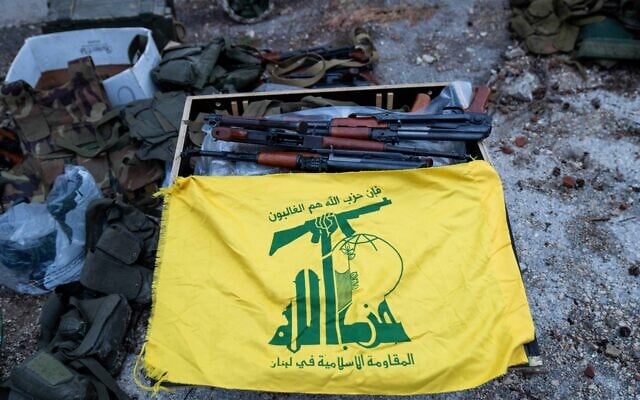
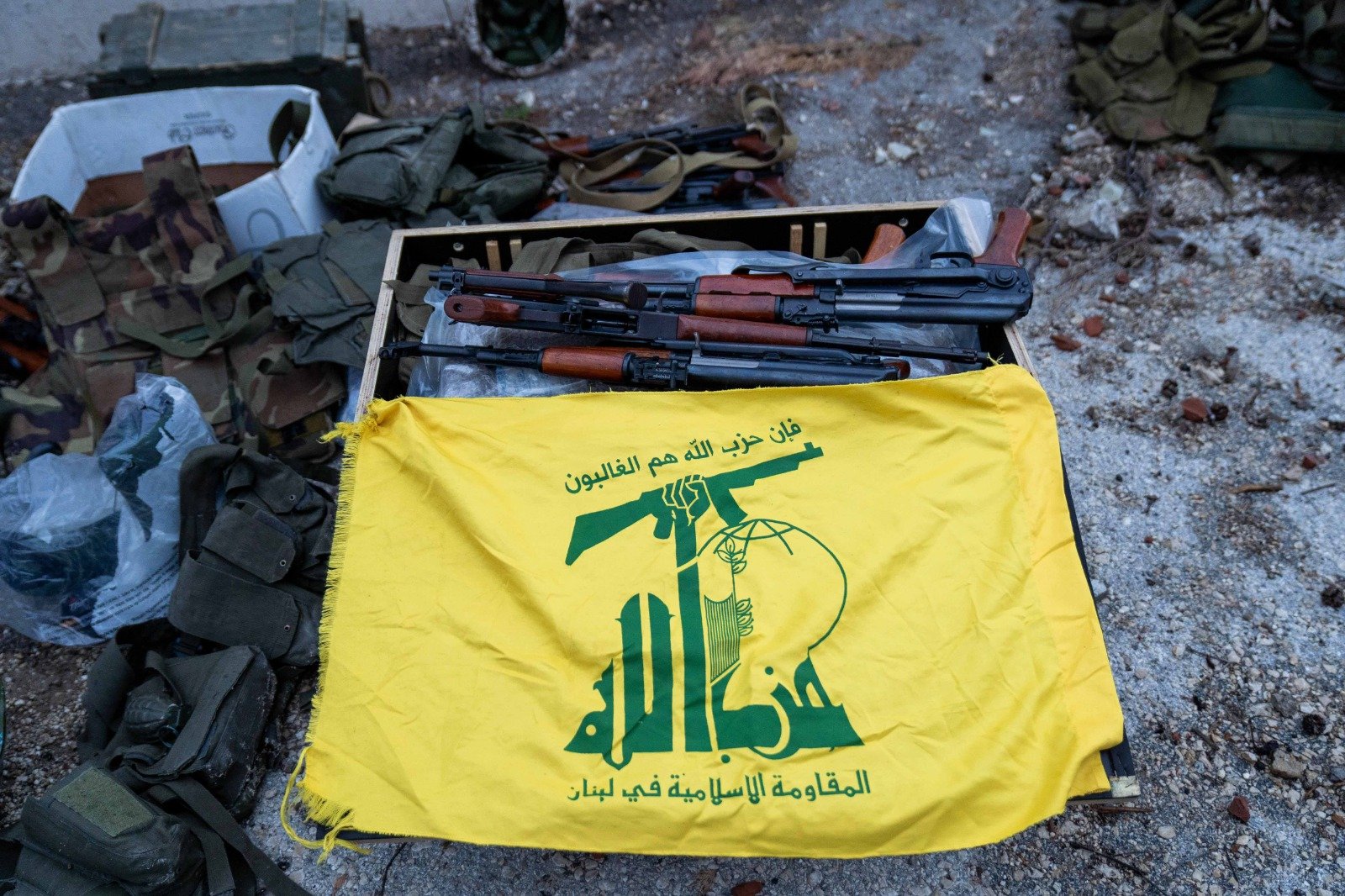
A cache of Hezbollah weapons found by troops in the Wadi Saluki area of southern Lebanon, in a handout photo issued on December 31, 2024. (Israel Defense Forces)
The group’s critics say the group has unilaterally dragged Lebanon into conflicts and the presence of its large arsenal outside of government control has undermined the state.
A US-brokered ceasefire with Israel requires the Lebanese army to dismantle all unauthorized military facilities and confiscate all arms, starting in areas south of the Litani River, which flows into the Mediterranean some 20 kilometers (12 miles) north of the Israeli border.
Two sources familiar with Hezbollah’s thinking said it is weighing handing to the army its most potent weapons north of the Litani, including drones and anti-tank missiles.
Call for a disarmament timetable
Aoun has said Hezbollah’s weaponry must be addressed through dialogue because any attempts to disarm the group by force would prompt conflict, the sources said.
Patriarch Bechara Boutros Al-Rai, the head of Lebanon’s Maronite church, said last week it was time for all weapons to be in state hands but this would need time and diplomacy because “Lebanon cannot bear a new war.”
Communication channels with relevant stakeholders are being opened to “begin studying the transfer of weapons” to state control, after the army and security services had extended state authority across Lebanon, a Lebanese official said, saying this was a move to implement Aoun’s policy.
The issue was also being discussed with Parliament Speaker Nabih Berri, an important Hezbollah ally, who plays a key role in narrowing differences, she said.
US envoy Morgan Ortagus, who visited Beirut at the weekend, repeated Washington’s position that Hezbollah and other armed groups should be disarmed as soon as possible and the Lebanese army was expected to do the job.
“It’s clear that Hezbollah has to be disarmed and it’s clear that Israel is not going to accept terrorists shooting at them, into their country, and that’s a position we understand,” Ortagus said in an April 6 interview with Lebanon’s LBCI television.
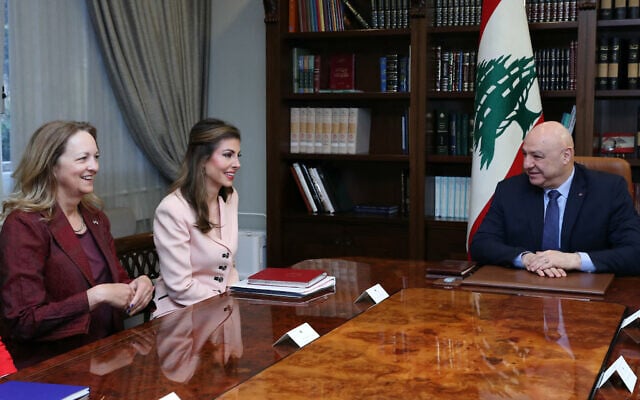
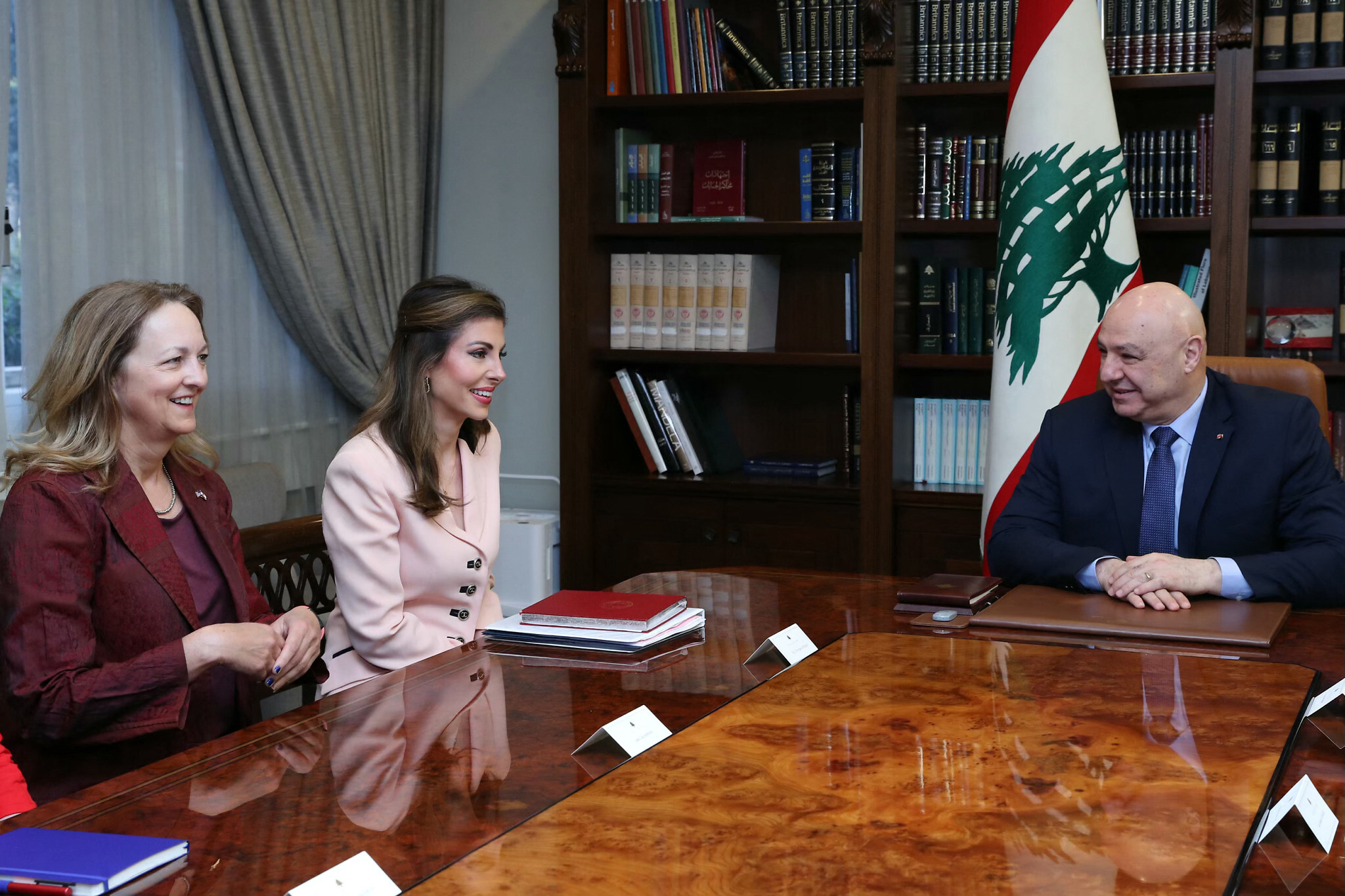
A handout photo provided by the Lebanese Presidency on April 5, 2025, shows Lebanon’s President Joseph Aoun (R) meeting with US Deputy Special Envoy for the Middle East Morgan Ortagus (C) at the Presidential Palace in Baabda, Lebanon. (Lebanese Presidency / AFP)
Several Lebanese government ministers want a disarmament timetable, said Kamal Shehadi, a minister affiliated with the anti-Hezbollah Lebanese Forces party. Shehadi told Reuters disarmament should take no more than six months, citing post-civil war militia disarmament as a precedent.
A timetable — which presumably would impose deadlines on the process — is, he said, the “only way to protect our fellow citizens from the recurring attacks that are costing lives, costing the economy and causing destruction.”
The most recent conflict began when Hezbollah began firing on northern communities and army posts in support of Hamas, a day after the Palestinian terror group’s October 7, 2023, invasion of southern Israel.
Hezbollah leader Naim Qassem in a March 29 speech said his group no longer has an armed presence south of the Litani, and had stuck to the ceasefire deal while Israel breached it “every day.” Israel has accused Hezbollah of maintaining military infrastructure in the south.
Hezbollah has put the onus on the Lebanese state to get Israel to withdraw and stop its attacks. Qassem said there was still time for diplomatic solutions. But he warned that the “resistance is present and ready” and indicated it could resort “to other options” if Israel doesn’t adhere to the deal.