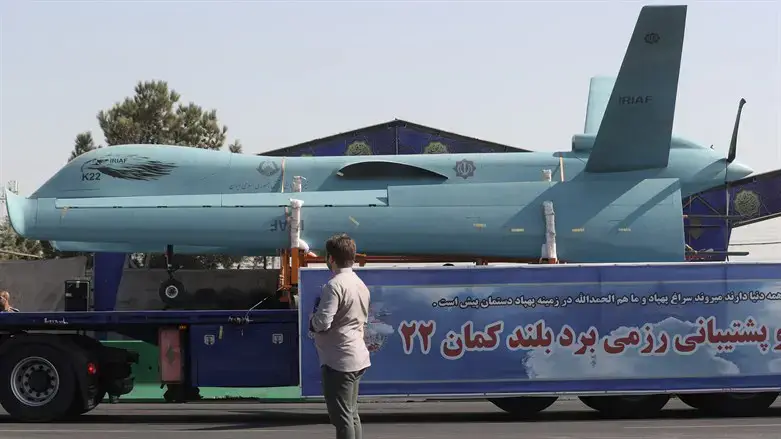
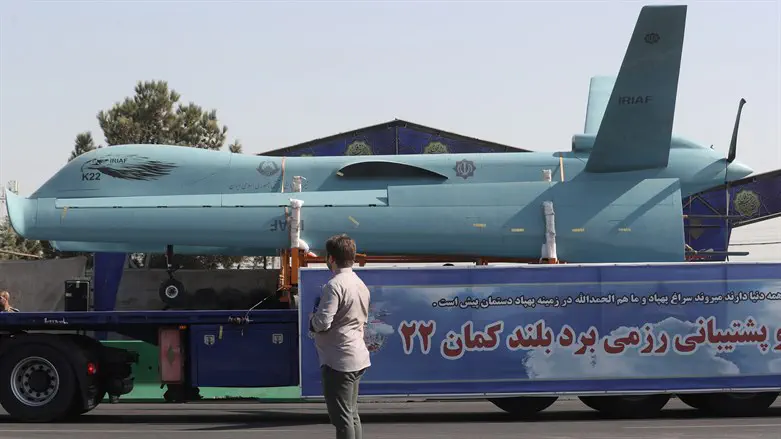
Iran continues to boast of its military achievements, this time claiming it has equipped its drones with domestically-produced missiles incorporating artificial intelligence technology.
Iran continues to boast of its military achievements, with an Iranian military leader announcing on Sunday that the country has equipped its drones with domestically-produced missiles incorporating artificial intelligence (AI) technology, Xinhua reported, citing state news agency IRNA.
Rear Admiral Alireza Tangsiri, Commander of the Navy of the Islamic Revolution Guards Corps (IRGC), shared the information during a press conference in Bushehr Province.
The announcement followed a two-day large-scale naval drill conducted by IRGC forces in Iran’s southern waters, according to Xinhua.
Tangsiri detailed that two Iranian combat drones, the Mohajer-6 and Ababil-5, have been armed with the “Qaem and Almas” missiles, both developed domestically and enhanced with AI technology.
He also revealed that the IRGC Navy, in collaboration with Iran’s Defense Ministry, is working on AI-powered cruise missiles. These advanced missiles are designed with an operational range exceeding 1,000 kilometers and can strike targets at varying altitudes, he claimed.
Iran often boasts of its military accomplishments, though it is not always possible to determine with certainty that it is telling the truth about those accomplishments.
The Islamic Republic has upped the frequency of these claims in recent weeks, coinciding with its recent military drills.
Earlier this month, the IRGC unveiled a new underground missile base, which was described as a “missile city” that is home to advanced Iranian missiles, including the “Emad, Qadr, and Qiam,” all of which are liquid-fueled.
Days later, the Iranian military introduced a sophisticated reconnaissance ship, named Zagros, claiming it is outfitted with “electronic sensors,” interceptors, and additional cyber and intelligence capabilities.
In 2017, the Islamic Republic claimed to have unveiled a domestically manufactured tank which “has the capability to fire missiles and precisely guide them.”
Previously, Iran’s Revolutionary Guard claimed it had successfully tested a Hormuz 2-type ballistic missile.
Israelis attend a rally calling for the release of captives held by Hamas terrorists in Gaza at “Hostage Square” in Tel Aviv, February 24, 2024. (Avshalom Sassoni/Flash90)
An Israeli diplomatic source verified that Hamas had provided details about the hostages included in the first phase of the deal, including who is alive and who is deceased.
By World Israel News Staff
Hamas is set to release three hostages—Arbel Yehoud, Agam Berger, and an additional male—on Thursday, the Prime Minister’s Office (PMO) confirmed following an announcement by Qatar’s Foreign Ministry on Sunday.
The Qatari ministry also noted that Hamas plans to release three more hostages on Saturday as part of the ongoing ceasefire agreement.
According to the PMO, mediators have received the full list of hostages slated for release during the initial phase of the agreement.
This list was initially expected last week. In exchange, Qatar’s Foreign Ministry announced that Israel will permit displaced Palestinians to return to northern Gaza starting Monday morning.
Discussions surrounding the timing of Arbel Yehoud’s release had been central to negotiations about allowing Gaza residents to return to the northern Strip via the Netzarim Corridor.
Negotiators had debated whether to permit the return of residents immediately after Arbel’s release or upon the agreement for her release.
Israel expects ‘dozens of corpses’ among first freed hostages
Sources from the negotiations told Israel’s public broadcaster, KAN, that Palestinian Islamic Jihad dropped its demand to label Yehoud as a member of the security forces, agreeing instead to recognize her as a civilian.
Arab media reports indicated that Yehoud could be released as early as Tuesday or Wednesday.
Qatar previously announced that Yehoud and two others would be released before Friday, linked to Israel’s decision to open the Netzarim Corridor.
However, earlier reports revealed complications when Islamic Jihad’s leader, Ziyad al-Nakhaleh, objected to Yehoud’s release without a higher price—such as the release of prisoners serving life sentences—due to claims about her security background.
An Israeli diplomatic source verified that Hamas had provided details about the hostages included in the first phase of the deal, including who is alive and who is deceased.
The Prime Minister emphasized Israel’s commitment to securing the return of all hostages and maintaining the ceasefire agreement’s terms.
An agreement with Saudi Arabia would strengthen the regional coalition against Iran. Saudi Arabia also serves as a crucial economic anchor for Egypt and Jordan.
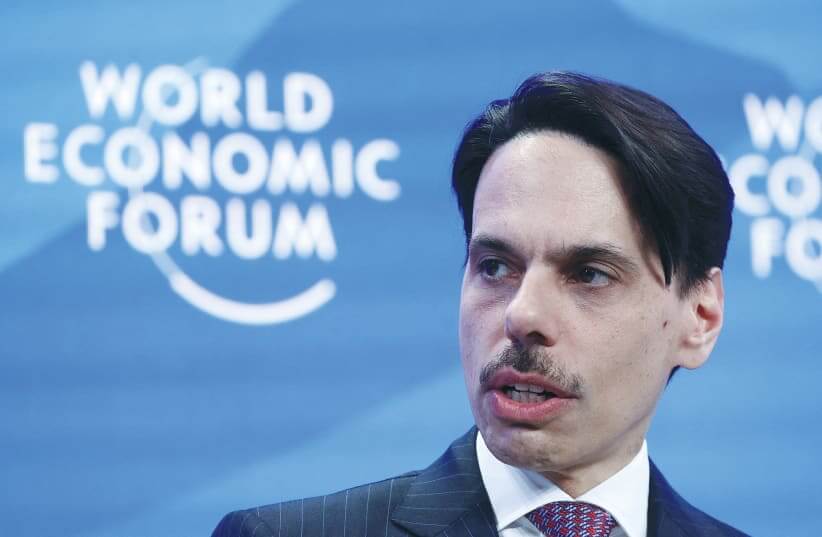
By ELIE PODEHSAUDI ARABIA’S Foreign Minister Faisal bin Farhan al-Saud looks on during the annual meeting of the World Economic Forum in Davos, Switzerland, this week. An Israeli agreement with Saudi Arabia would strengthen the regional coalition against Iran, says the writer.(photo credit: YVES HERMAN/REUTERS)
Immediately after the signing of the ceasefire agreement with Hamas, incoming US President Donald Trump announced that, after the return of the hostages, he intends to continue the implementation of the Abraham Accords – in other words, to secure an agreement with Saudi Arabia.
The normalization of the relations between Israel and Saudi Arabia was close before October 7, 2023 but was shelved after the attack by Hamas. Indeed, one of the goals of the attack was to torpedo it.
The end of the Israel-Hamas War and the agreement for the release of the hostages present a new opportunity to bring this initiative to fruition. We are witnessing an ideal moment, combining two essential elements required for success: first, a significant change; second, the presence of an appealing idea or plan ready to be implemented.
The major change is marked by two significant events. First, the end of the war. History shows that wars often create opportunities for large-scale change due to their tectonic impact. This war has caused significant damage to Iran and its proxies – Hezbollah, the Houthis, and Hamas – and has led to Syria’s removal from the Axis of Resistance.
However, such post-war opportunities are not always seized, often due to a lack of leadership or due to short-sightedness, stubbornness, or folly on the part of a country’s leaders.
(credit: Illustrative/Grok.ai)
The second major change is the new US administration, with Trump driven by personal ambition to leave a lasting legacy, possibly by securing a Nobel Peace Prize.
At the same time, there is an attractive proposal on the table: normalization with Saudi Arabia. For Israel, the appeal of this prospect lies in the fact that Saudi Arabia is a key player in the Gulf, the Arab and Muslim worlds, as well as the international stage.
An agreement with Saudi Arabia would strengthen the regional coalition against Iran. Moreover, given that all previous peace and normalization agreements between Israel and Arab states have withstood the test of war, such an agreement would further solidify Israel’s integration into the region.
Riyadh’s influence
SAUDI ARABIA’S influence is evident in three main arenas. Diplomatically, it plays a leading role in both regional and international processes. For instance, in 2002, Saudi Arabia introduced the peace initiative that evolved into the Arab Peace Initiative. It is still ratified annually by the Arab League summit, though it has never received an official response from Israel.
Similarly, during the recent Israel-Hamas War, Saudi Arabia, under the leadership of Crown Prince Mohammed bin Salman, hosted the 2023 Arab-Islamic Extraordinary Summit, bringing together in a joint meeting both the Arab League and the Organization of Islamic Cooperation for the first time.
In addition, Saudi Arabia, in partnership with the European Union, founded the Global Alliance for the Implementation of the Two-State Solution, an international coalition of approximately 90 member states.
Most recently, on January 12, 2025, Riyadh hosted the foreign ministers of the United States, Germany, France, Italy, Spain, and Turkey, along with representatives from 11 Arab states, to discuss the situation in Syria. This indicates that Saudi Arabia is not willing to cede the Syrian arena to Turkey, Qatar, or extremist Islamic groups.
Economically, Saudi Arabia is the largest economy in the Middle East, even surpassing Turkey. It holds the world’s largest oil reserves and has the capacity to increase production. This gives Saudi Arabia, along with the United Arab Emirates, the ability to swiftly compensate for any disruptions in the international oil supply – whether due to boycotts of countries like Iran or Russia, or natural disasters, such as those that have occurred in the Gulf of Mexico.
By doing so, Saudi Arabia can prevent a dramatic rise in oil prices, which otherwise would trigger shock waves throughout the global economy.
Saudi Arabia also serves as a crucial economic anchor for Egypt and Jordan. The tens of billions of dollars these countries have received over the past decade have been instrumental in maintaining the stability of their regimes.
This economic leverage is expected to play a significant role in Saudi Arabia’s efforts to exert influence in Syria following the formation of a new governing regime, as well as in Lebanon after the election of a new president not aligned with Hezbollah.
Moreover, Saudi Arabia holds considerable media influence in the Arab world, with its Al Arabiya network surpassing the popularity of the Qatari-owned Al Jazeera.
Finally, Saudi Arabia enjoys a unique status in Islam, as it is home to the two holiest cities, Mecca and Medina, which host the annual Hajj pilgrimage attended by over two million Muslims annually.
For these reasons, normalization with Saudi Arabia opens the door for Israel to the large Saudi market and perhaps also to other Muslim countries, such as Indonesia.
THE MAIN challenge, however, lies in resolving the Palestinian issue. Prior to the war, it seemed that Saudi Arabia might settle for a symbolic concession on Palestine as a condition for normalization. However, statements made by senior Saudi officials during the war indicate that the price of normalization has risen significantly and now includes the establishment of a Palestinian state.
On the other hand, former US secretary of state Antony Blinken stated that normalization “is ready to go,” but two conditions must be met: the end of the war in Gaza and a “credible pathway” to Palestinian statehood.
Assuming that the war will indeed end, the main bone of contention is the Palestinian issue, especially given that the war has brought about a decline in the willingness of the Jewish public in Israel to agree to a Palestinian state.
However, a survey conducted in early January 2025 found that more than 70% of the Jewish public supports the return of the hostages and the end of the war, normalization with Saudi Arabia, a “pathway to separation” from the Palestinians, and the formation of a regional security coalition against Iran.
The concept of a “pathway to separation” from the Palestinians may be constructively ambiguous, but it raises several important questions: Will it satisfy the Saudis? Will there be a Palestinian partner? Can a diplomatic and security arrangement be reached in Gaza, potentially in partnership with moderate Arab states, that satisfies both sides?
While the answers to these questions are complex and uncertain, one thing seems clear: An opportunity exists for realizing the normalization between Israel and Saudi Arabia. Will it be seized? As Winston Churchill once said, “The pessimist sees difficulty in every opportunity; the optimist sees the opportunity in every difficulty.”
The writer teaches in the Department of Islamic and Middle Eastern Studies at the Hebrew University of Jerusalem and is a board member of Mitvim – The Israeli Institute for Regional Foreign Policies.