The move would mark a significant change from previously established US policy on diplomacy and sanctions when dealing with Tehran.
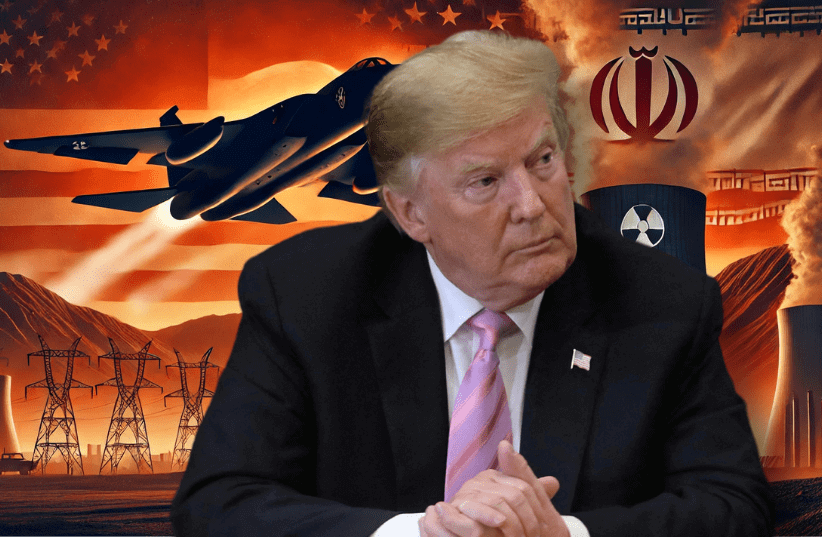
By JERUSALEM POST STAFFUpdated: DECEMBER 13, 2024 09:44Illustrative image of President-elect Donald Trump.(photo credit: Canva, Image created by OpenAI’s DALL·E 3 AI art generator based on a description provided by the author., REUTERS/JONATHAN ERNST/FILE PHOTO)
Ahead of his January 20 inauguration, President-elect Donald Trump is evaluating the possibility of preemptive strikes on Iran to stop their growing nuclear program, according to a Friday morning Wall Street Journal report.
According to the WSJ, this move would mark a significant change from previously established US policy on diplomacy and sanctions when dealing with Tehran.
The report outlines the evaluation of potential attacks on nuclear sites, indicating that members of Trump’s transition team are exploring this option.
The same team is reportedly reviewing the aftermath of the fall of the Assad regime, determining the possibility of American forces in the region.
Increased uranium
Transition team officials stated that the collapse of the Iranian axis and the sharp rise in enriched uranium pose significant risks and prompt critical questions about what factors could drive Iran’s rapid advancement, the WSJ added.
Iranian centrifuges are seen on display during a meeting between Iran’s Supreme Leader Ayatollah Ali Khamenei and nuclear scientists and personnel of the Atomic Energy Organization of Iran (AEOI), in Tehran, Iran June 11, 2023. (credit: VIA REUTERS)
Two sources familiar with the matter told the publication that Trump told Prime Minister Benjamin Netanyahu that he was concerned about Iran possibly going nuclear during his term and signaled that his team was examining military action that could prevent that.
Trump would like to avoid the breakout of an additional war, particularly involving US forces. The report noted that launching an attack on Iran’s nuclear sites could put the US and Iran at risk of formal escalation.
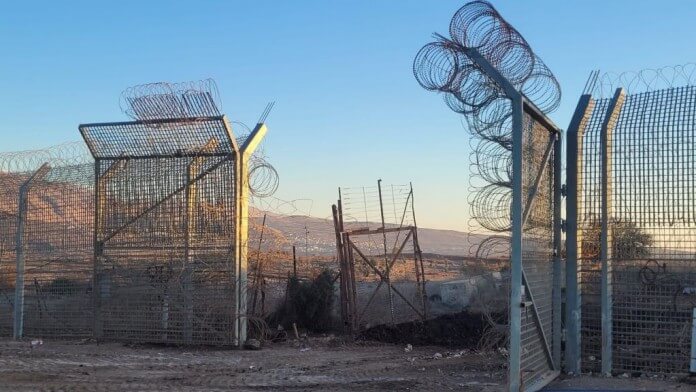
Inside the demilitarized zone between Syria and Israel on Dec. 9, 2024, one day after Syrian rebels toppled the government of former President Bashar al-Assad.
France is demanding that IDF forces leave the buffer zone between Israel and Syria, where troops are deployed to protect Israel’s border in the aftermath of a jihadist coup d’etat in Damascus.
At present, Syria is in total chaos, and several elements in the Islamist conglomerate led by Hayat Tahrir al-Shams (HTS), formerly Al Qaeda-linked Jabhat al-Nusra, are already claiming Jerusalem is next.
Nevertheless, a spokesperson for the French Foreign Ministry told reporters at a briefing Wednesday, “As stated by the UN, any military deployment in the buffer zone between Israel and Syria is a violation of the 1974 disengagement agreement which must be respected by its signatories, Israel and Syria.
“France calls on Israel to withdraw from this area.”
Russia and Saudi Arabia have likewise criticized Israel’s deployment in the buffer zone.
But the United States supported the defensive move, with State Department spokesperson Matt Miller noting in a briefing “the Syrian army abandoned its positions in the area . . . which potentially creates a vacuum that could have been filled by terrorist organizations.”
Miller added, however, “These are not permanent actions . . . We support all sides upholding the 1974 disengagement agreement.”
For the record: There has been no record to date of any jihadist organization upholding any agreement with Israel.
Israeli Prime Minister Benjamin Netanyahu said in remarks earlier this week that the above-referenced agreement is dead, given the elimination of a sovereign Syrian government by the jihadists.
“The collapse of the Assad regime, the tyranny in Damascus, offers great opportunity but also is fraught with significant dangers. . . we have to take action against possible threats. One of them is the collapse of the Separation of Forces Agreement from 1974 between Israel and Syria. This agreement held for 50 years. Last night, it collapsed. The Syrian army abandoned its positions.
“We gave the Israeli army the order to take over these positions to ensure that no hostile force embeds itself right next to the border of Israel. This is a temporary defensive position until a suitable arrangement is found,” the prime minister explained.
“If we can establish neighborly relations and peaceful relations with the new forces emerging in Syria, that’s our desire. But if we do not, we will do whatever it takes to defend the State of Israel and the border of Israel.”
On Tuesday, Netanyahu said in an address to the nation that “we all” understand the great importance of an Israeli presence on the Golan Heights, “and not at the base of the Golan Heights.
“Our control on the Golan Heights ensures our security; it ensures our sovereignty,” he said.
“With Defense Minister Israel Katz, and with the backing of all the members of the Security Cabinet, I ordered the IDF to seize the buffer zone between us and Syria, as well as the controlling positions close to it. This includes the summit of Mt. Hermon, what is called the Syrian Mt. Hermon,” he emphasized.
“We have no intention of interfering in Syria’s internal affairs; however, we do intend to do what is necessary for our security . . . We want to have relations with the new regime in Syria but if this regime allows Iran to re-establish itself in Syria, or allows the transfer of Iranian weapons, or weapons of any kind, to Hezbollah, or attacks us – we will respond forcefully and we will exact a heavy price. What happened to the previous regime will also happen to this one.”
The report added that Hamas handed over a list of hostages it would release in the deal, which included US citizens.
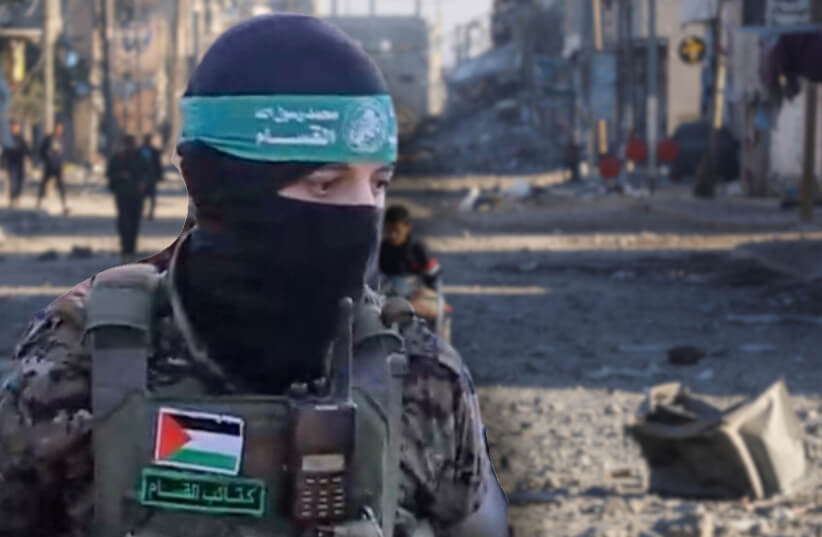
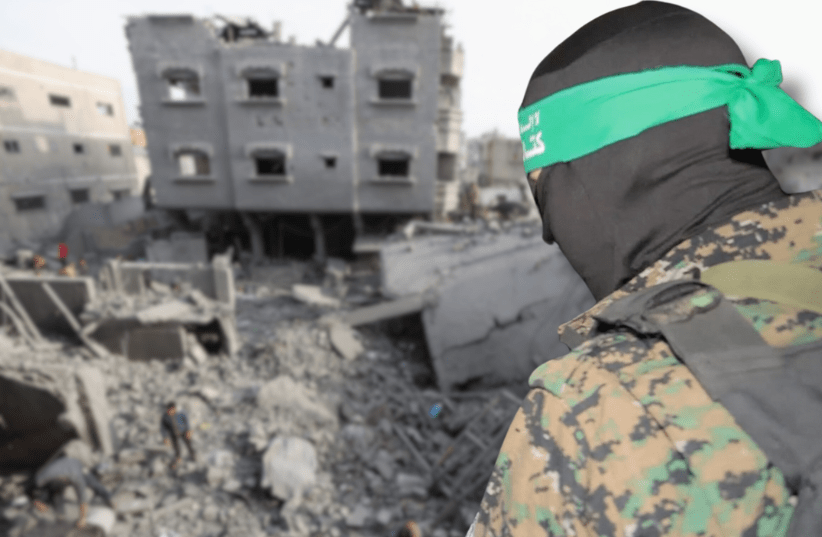
By JERUSALEM POST STAFFUpdated: DECEMBER 12, 2024 09:56Illustrative image of a Hamas terrorist.(photo credit: Canva, Hamas Military Wing/Handout via REUTERS, REUTERS/Ramadan Abed)
Hamas has agreed to yield to two of Israel’s “key demands” for a ceasefire deal in Gaza, the Wall Street Journal reported on Wednesday, citing Arab mediators.
According to the report, Hamas told the mediators for the first time that it would agree to a deal allowing the IDF to remain in Gaza temporarily during the pause in fighting.
It also added that Hamas handed over a list of hostages that included US citizens. The listed hostages would then reportedly be released under a “ceasefire pact.”
Hamas has not released hostages since November last year.
The new plan was reportedly proposed by Egypt and backed by the US. The WSJ added that the plan “seeks to build on the momentum generated by the cease-fire in Lebanon,” which was enacted last month.
Illustrative image of a Hamas terrorist. (credit: Canva, Hamas Military Wing/Handout via REUTERS, REUTERS/Ramadan Abed)
This comes as hostage deal talks have picked up in recent days.
On Wednesday, Mossad chief David Barnea met with Qatari Prime Minister Mohammed bin Abdulrahman al-Thani in Doha to discuss the Gaza hostage deal and the ceasefire negotiations, according to two sources familiar with the details.
Barnea’s visit to Qatar was part of efforts to achieve a breakthrough in negotiations for a deal and transition to direct talks between Israel and Hamas to finalize an agreement before US President-elect Donald Trump’s inauguration on January 20 of next year.