“There should be no doubt that what happened in Syria is the result of a joint American and Zionist plan.” Khamenei reportedly noted.

JERUSALEM POST STAFF

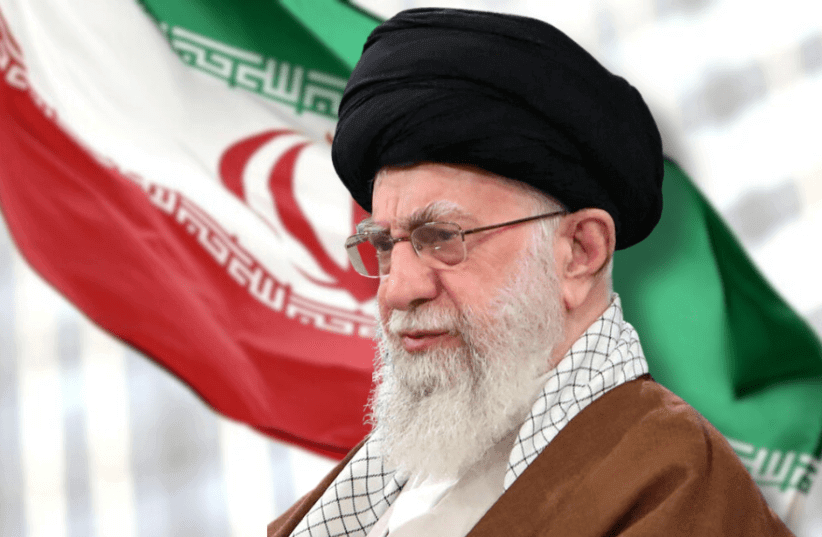
 Illustrative image of Iran's Supreme Leader Ayatollah Ali Khamenei (photo credit: LISI NIESNER/ REUTERS, Office of the Iranian Supreme Leader/WANA (West Asia News Agency)/Handout via REUTERS)

Tehran has evidence that the events that took place in Syria leading to the ousting of former Syrian president Bashar al-Assad were planned by the United States and Israel, Iranian Supreme Leader Ayatollah Ali Khamenei said, according to Iranian state news agency IRNA.

“There should be no doubt that what happened in Syria is the result of a joint American and Zionist plan.” Khamenei reportedly noted.

“Yes, the neighboring country of Syria has played a clear role in this matter and continues to do so—this is evident to all—but the primary conspirator, the main planner, and the central command room are in the United States and the Zionist regime. We have evidence. This evidence leaves no room for doubt.” the ayatollah continued.

Khamenei added that “resistance” would extend across the whole of the Middle East more that it has ever before.

“This is resistance. This is the front of resistance: the more pressure is applied, the stronger it becomes. The more atrocities are committed, the more motivated it becomes. The more it is fought, the more it expands. And I tell you that with the power of God, the scope of resistance will encompass the entire region more than before.”

 Assad poster burns in Syria (credit: SCREENSHOT/X)
Assad poster burns in Syria (credit: SCREENSHOT/X)

‘Iran is strong’

Khamenei went on to criticize observers who associated the weakening of Iran’s regional proxies and allies with the weakening of the Islamic Republic itself.

“That ignorant analyst, unaware of the meaning of resistance, imagines that if resistance weakens, Islamic Iran will also weaken,” the Iranian autocrat reportedly said. “And I say, with the help and strength of God, by His permission, Iran is strong, powerful, and will become even more powerful.”

Officials reportedly confirmed that hostage/ceasefire negotiations were privately progressing.

SAM HALPERN

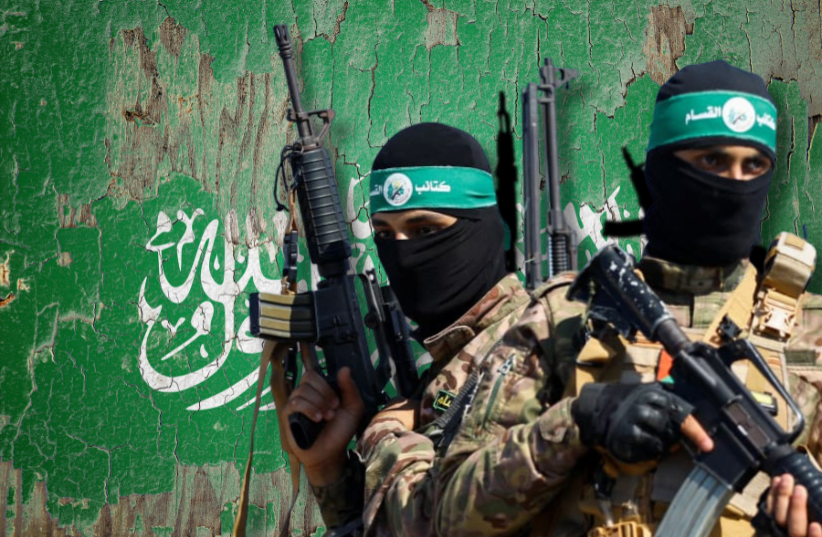
 Illustrative image of Palestinian fighters from the armed wing of Hamas. (photo credit: REUTERS/IBRAHEEM ABU MUSTAFA, zmotions/Shutterstock)
Illustrative image of Palestinian fighters from the armed wing of Hamas.
(photo credit: REUTERS/IBRAHEEM ABU MUSTAFA, zmotions/Shutterstock)

Hamas has given Egyptian mediators a list of Israeli hostages that are currently being held in captivity by the terror group, Saudi news channel Al Arabiya reported on Tuesday.

The update comes as the Saudi outlet reported that officials confirmed that negotiations were privately progressing and that secret communications were in the works to finalize a ceasefire deal in the Gaza Strip.

On Monday, London-based Qatari newspaper Al-Araby Al-Jadeed reported that Hamas had presented Egyptian mediators an initial list with the names of the hostages who would be included in a possible hostage deal.

The list reportedly included the names of four American hostages, as well as hostages who are elderly or suffer from medical conditions.

Hamas also submitted a list with the names of Palestinian prisoners it would like released from Israeli prisons in exchange for the hostages, according to Al-Araby Al-Jadeed.

 Visitors at Hostage Square in Tel Aviv. September 25, 2024. (credit: MIRIAM ALSTER/FLASH90)

On Wednesday, Hamas’s representative in Lebanon, Ahmed Abdel Hadi, poured cold water on the reports, telling the Hezbollah-affiliated Lebanese news outlet Al Mayadeen that the terror organization had neither received any ceasefire proposal nor submitted any lists.

‘There was no Zionist offer’

“There was no Zionist offer during the visit of the Hamas delegation to Cairo, nor were there any new ideas for us to consider,” Hadi reportedly told the Al Mayadeen.

According to the Lebanese report, Hadi said the reports that Hamas had presented lists of hostages were rumors and that American, European, and regional entities were trying to promote a positive narrative.

“They assume that the movement will succumb to the enemy’s conditions,” Hadi told the Lebanese outlet.

Earlier this month, two Israeli officials told Walla that Israel had given Hamas, through Egyptian mediators, an updated version of a ceasefire deal proposal that involves the release of the remaining 100 hostages.


Israeli security sources indicate that these actions have significantly expanded the Air Force’s operational freedom.

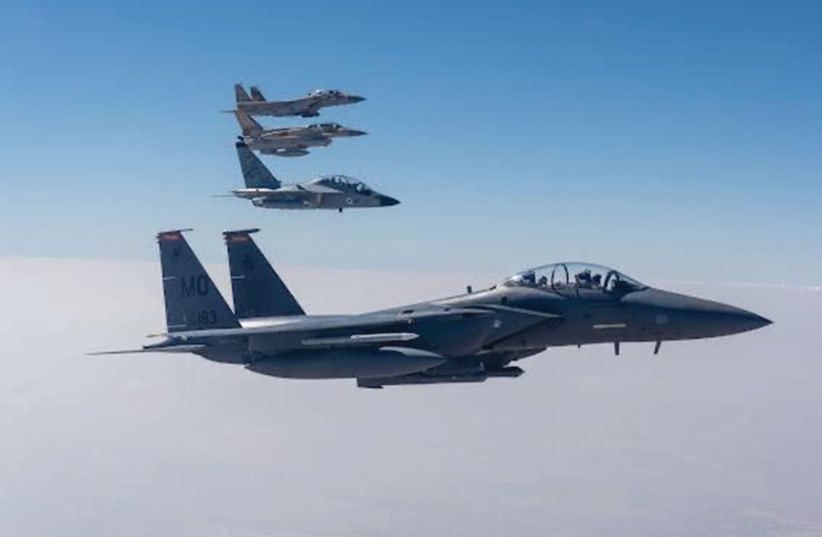
 PREPARING FOR a joint mission? US and Israeli fighter jets participate in the Juniper Oak drill over the Negev in January. (photo credit: IDF SPOKESPERSON'S UNIT)
PREPARING FOR a joint mission? US and Israeli fighter jets participate in the Juniper Oak drill over the Negev in January.
(photo credit: IDF SPOKESPERSON’S UNIT)
Israel’s air force carried out about 300 strikes in Syria in the early hours of Tuesday morning, according to Israeli security sources.

Most of the strikes were in southern Syria and around the city of Damascus, targeting Syrian army bases, with an emphasis on air defense systems and stores of surface-to-surface and surface-to-air missiles.

Israeli security sources indicate that these actions have significantly expanded the air force’s operational freedom.

Additionally, there have been attempts by Hezbollah to seize Syrian weaponry.

On Monday evening, two Syrian security sources told Reuters that IAF jets had struck at least three major Syrian army air bases that housed dozens of helicopters and jets.

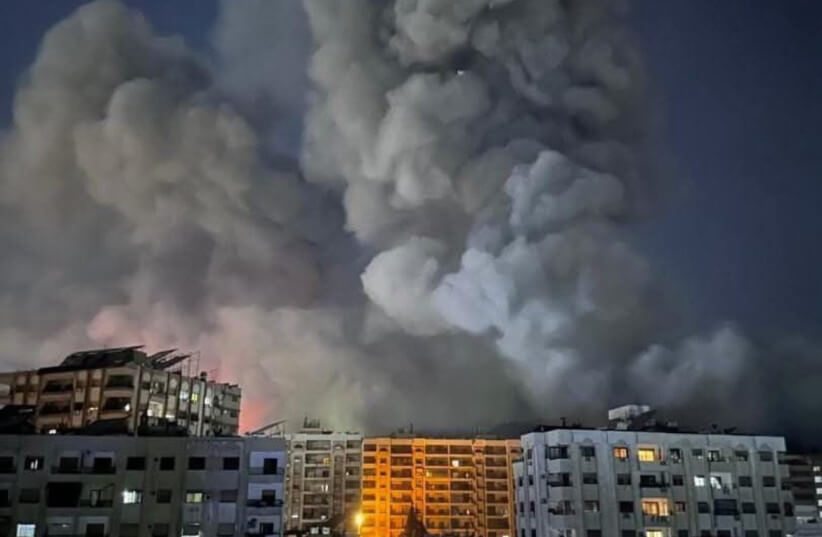
 Smoke rises from an Israeli airstrike in Syria. (credit: SCREENSHOT/X, SECTION 27A COPYRIGHT ACT)Enlrage image
Smoke rises from an Israeli airstrike in Syria. (credit: SCREENSHOT/X, SECTION 27A COPYRIGHT ACT)

The Qamishli air base in northeast Syria, the Shinshar base in the countryside of Homs, and the Aqrba airport southwest of the capital Damascus were all hit, the sources said.

The air force also reportedly struck several strikes on a research center on the outskirts of Damascus and a center for electronic warfare near the Sayeda Zainab area of the capital.

Israeli tanks spotted not far from Damascus

Also on Tuesday morning, citing Arab reports, Israeli media reported that IDF tanks were spotted approximately 20 km from Damascus.

According to Reuters, several Syrian military vessels were sunk in their home port by the IAF.

Israeli incursion into Syria reaches 25 km southwest of Damascus, security sources say

An Israeli military incursion into southern Syria has reached about 25 km. (16 miles) southwest of the capital, Damascus, two regional security sources and one Syrian security source said on Tuesday.

The Syrian security source said Israeli troops reached Qatana, which is 10 km. into Syrian territory east of a demilitarized zone separating Israeli-occupied Golan Heights from Syria.

The Israeli military declined to comment.

Necessary to address security threats

In a letter to the United Nations Security Council, Israeli Ambassador Danny Danon described the military actions as “limited and temporary” measures necessary to address immediate security threats.

“Israel does not intervene in the internal Syrian conflict,” Danon wrote, emphasizing that the strikes were specifically aimed at ensuring the safety of Israeli citizens, particularly those residing in the Golan Heights. He reaffirmed Israel’s commitment to the Disengagement agreement that was made on May 31, 1974, between Israel and Syria.

Israeli Defense Minister Israel Katz has instructed the IDF to intensify its activities along the Syrian border following the Syrian military’s recent occupation of Mount Hermon. The IDF has been directed to establish a security zone beyond the buffer area while fostering ties with local populations, including the Druze community, to enhance stability in the region.