At this point, Netanyahu has not sought private legal representation.
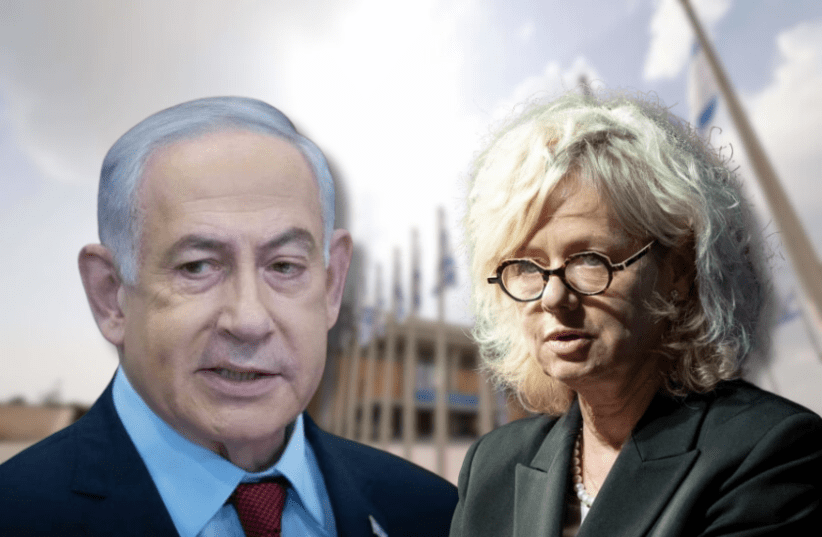
By BINI ASHKENAZI, AVRAHAM BLOCHUpdated: DECEMBER 1, 2024 12:55Illustrative photo of Prime Minister Benjamin Netanyahu and Attorney General Gali Baharav Miara in front of the Knesset building.(photo credit: TASOS KATOPODIS/REUTERS/MARC ISRAEL SELLEM/THE JERUSALEM POST, YONATAN SINDEL/FLASH90)
Attorney-General Gali Baharav-Miara is expected to present her position to Israel’s High Court on Sunday evening regarding whether Prime Minister Benjamin Netanyahu is to be deemed unable to serve as PM during his testimony.
At this point, Netanyahu has not sought private legal representation.
If the two do not reach a mutual agreement on the matter, the prime minister is expected to request separate representation to present his position.
It is highly likely that, as part of preparing the response to the petition, the attorney general will ask the judges for an extension to submit her response. The attorneys who filed the petition are expected to oppose this request.
Options being considered
Netanyahu’s office is examining the options available to him. Among them is the possibility that Netanyahu will temporarily step aside for a limited period during the hours of his testimony to allow him to focus solely on the testimony. During this time, Justice Minister Yariv Levin would serve as acting prime minister.
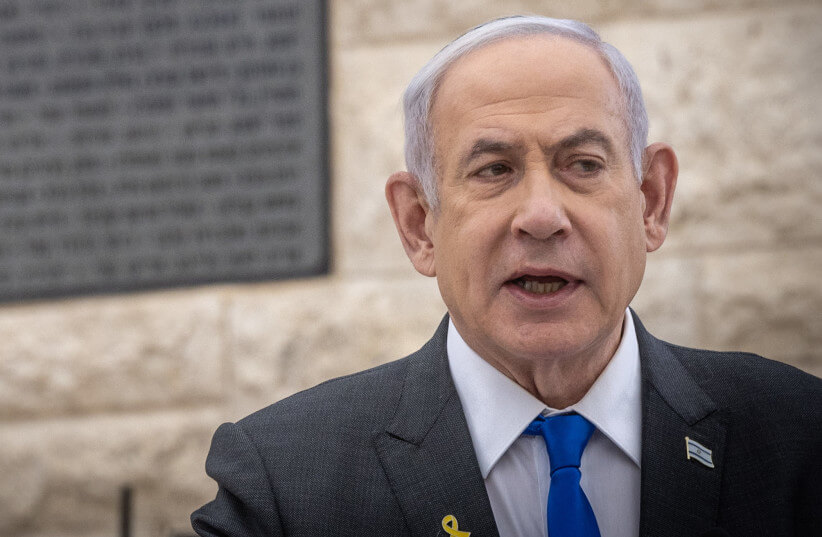
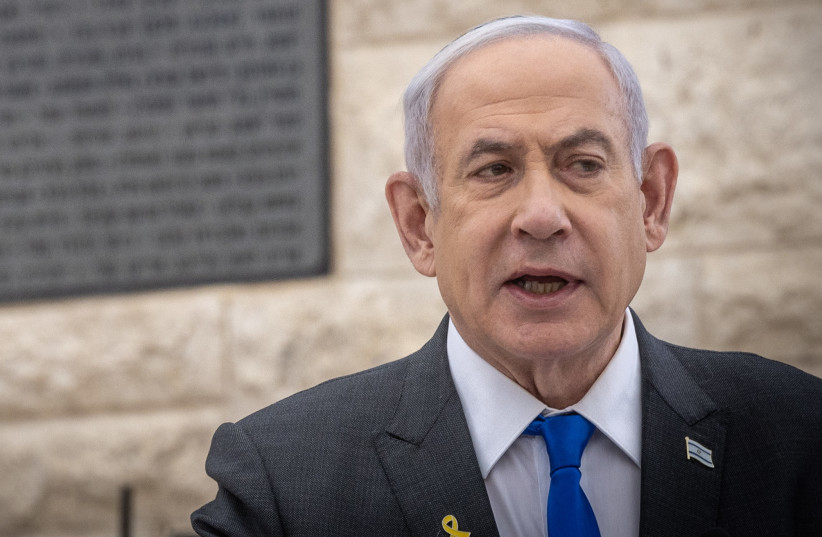
Israeli Prime Minister Benjamin Netanyahu attends a state memorial ceremony for victims of terror, at Mount Herzl military cemetery in Jerusalem, May 13, 2024. (credit: Chaim Goldberg/Flash90)
The government opposes Netanyahu stepping aside for the entire duration of his testimony. If his testimony extends for more than 100 days in total, the government would fall, and the Knesset would head to elections.
The only option currently being positively considered is for Netanyahu to step aside anew for a few hours each day of testimony—an approach that would not endanger the continuation of the government.
Now that Damascus has lost Aleppo, it is clear the regime is not stable. However, the regime will need all the help it can get from Iraq and the Gulf, as well as its allies in Iran and Russia.
By SETH J. FRANTZMANUpdated: DECEMBER 1, 2024 12:31SYRIAN PRESIDENT Bashar Assad addresses members of his country’s parliament in Damascus in August.(photo credit: SANA/REUTERS)
The Syrian regime is seeking to shore up support in the region as it faces a major advance of opposition groups in northern Syria. The regime lost the northern city of Aleppo over the weekend and is at risk of losing Hama, another important city.
The regime basically controls western Syria today, with eastern Syria controlled by the US-backed SDF and northern Syria controlled by Turkey. Idlib is controlled by Hayat Tahrir al-Sham, an opposition group that has led the attack on Aleppo.
Syrian support
The Syrian regime reached out to Russia, Iran, Iraq and the UAE in the last several days. Syrian regime leader Bashar al-Assad was in Russia when the HTS offensive began. Iran’s foreign minister is expected in Syria on Sunday, December 1.
Assad has also called the Iraqi leader and also the UAE. “Syrian President Bashar al-Assad and Iraqi Prime Minister Mohammed Shia’ Al Sudani have discussed the latest developments in Syria and the West Asia region,” Iranian media reported. The men spoke on Saturday night.
“Assad and Al Sudani also discussed Damascus-Baghdad ties, including cooperation on fighting terrorism, with the Iraqi premier stressing that his country is prepared to support Syria in fighting terror groups. Al Sudani also said that Iraq is committed to supporting Syria’s sovereignty and territorial integrity. The Syrian army has been engaged in fighting terrorist groups who launched a surprise attack on the northern city of Aleppo on Wednesday in violation of a 2020 ceasefire agreement,” Iranian state media noted.
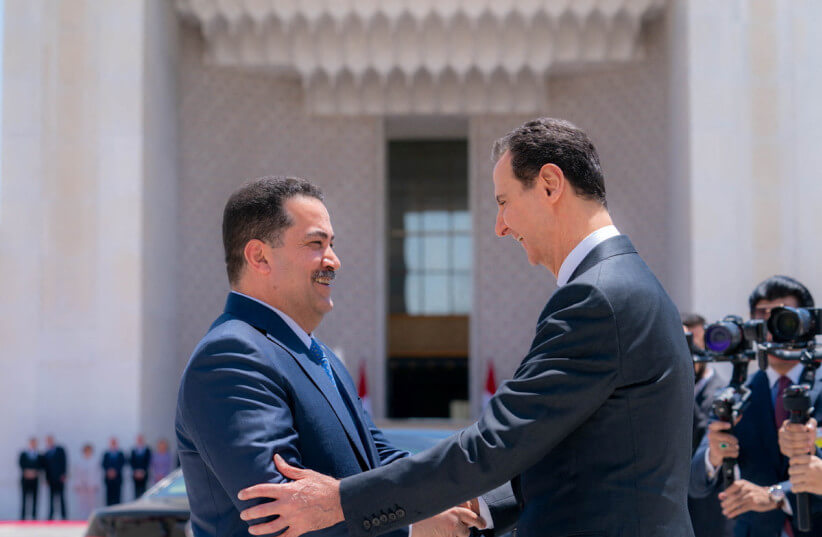
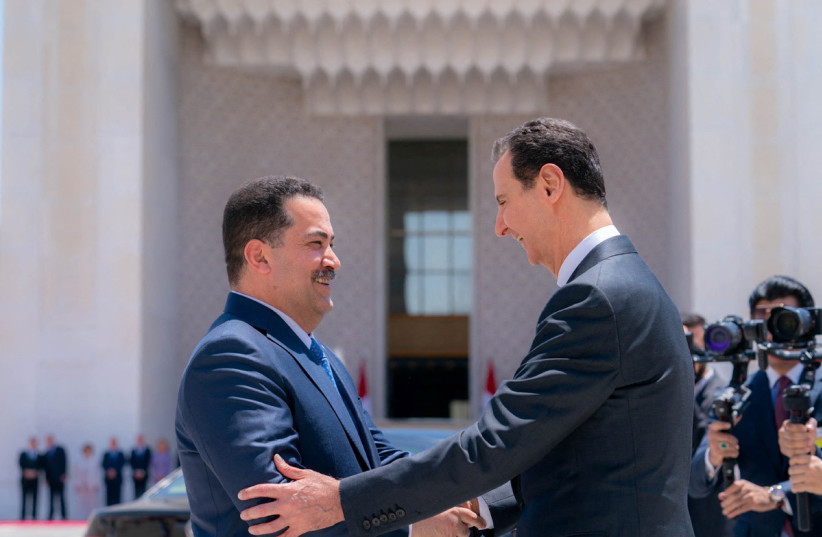
Syria’s President Bashar al-Assad greets Iraqi Prime Minister Mohammed Shia Al-Sudani in Damascus, Syria July 16, 2023. (credit: SANA/HANDOUT VIA REUTERS)
After the call with the Iraqis, Assad spoke with the UAE’s Sheikh Mohammed bin Zayed Al Nahyan. “President al-Assad stressed during the call that Syria will continue to defend its stability and territorial integrity in the face of all terrorists and their supporters, and that it is capable, with the help of its allies and friends, of defeating and eliminating them, no matter how intense their terrorist attacks are,” Assad’s office said in a statement on social media.
“During the call, Sheikh Mohammed bin Zayed affirmed his country’s support for the Syrian state and its fight against terrorism and the establishment of its sovereignty, territorial integrity and stability.”
UAE state media WAM noted that “President His Highness Sheikh Mohamed bin Zayed Al Nahyan held a phone call today with His Excellency Bashar Al-Assad, President of the Syrian Arab Republic. During the call, His Highness and President Bashar Al-Assad discussed the latest developments in Syria, as well as various issues and topics of mutual interest.”
UAE’s solidarity with Syria
Furthermore the UAE’s President “emphasised the UAE’s solidarity with Syria and its support in combating terrorism and extremism. He also reaffirmed the UAE’s stance supporting all efforts aimed at achieving a peaceful resolution to the Syrian crisis in a manner that meets the aspirations of the Syrian people for stability and development while preserving Syria’s unity and sovereignty over its entire territories.”
This is important because it shows who the Syrian regime is reaching out to for support. The regime has reconciled with the Gulf states in recent years. It sought to return to the Arab League.
Egypt was one of the first Arab states to seek to bring Assad back into the fold after the Syrian civil war began in 2011, and Assad became persona non-grata in the region. After Egypt moved to increase ties, more countries opened up to Assad. They began to think that the chaos of the Syrian civil war was more of a danger than the regime. They embraced what they saw as “stability” in Damascus.
Now that Damascus has lost Aleppo, it is clear the regime is not stable. However, the regime will need all the help it can get from Iraq and the Gulf; as well as its allies in Iran and Russia.
IDF soldiers also discovered hidden weapons in mosques in southern Lebanon.
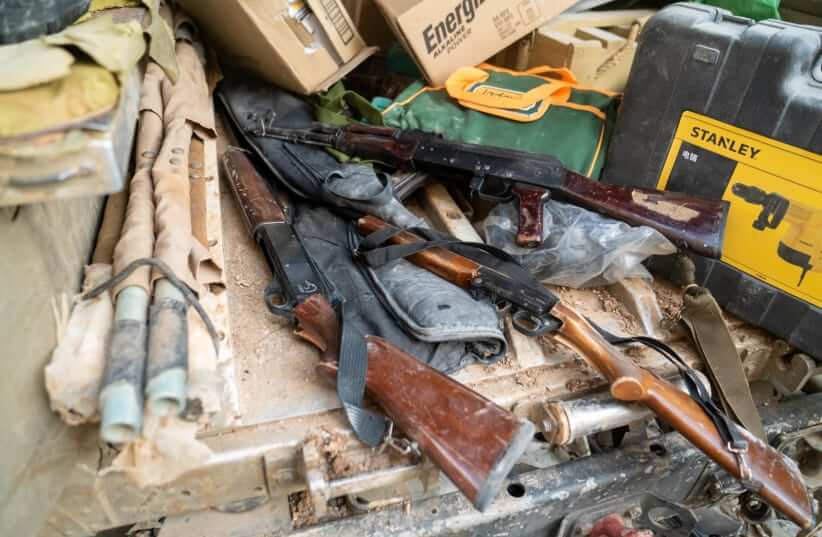
By JERUSALEM POST STAFFUpdated: NOVEMBER 30, 2024 11:20IDF soldiers discover Hezbollah weapons hidden in a mosque in southern Lebanon, November 30, 2024.(photo credit: IDF SPOKESPERSON’S UNIT)
Earlier today, the IAF conducted an intelligence-based strike on military infrastructure sites adjacent to border crossings between Syria and Lebanon that were actively used by Hezbollah to smuggle weapons from Syria into Lebanon, the military announced on Saturday.
The strike was conducted after identifying Hezbollah weapon smuggling from Syria into Lebanon after the ceasefire agreement went into effect, and as such, posing a threat to the State of Israel in violation of the ceasefire agreement.
The Hezbollah terrorist organization, backed by the Syrian regime, uses civilian infrastructure sites to conduct terrorist activities and smuggle weapons used against the residents of Israel, the military said.
Hidden weapons in mosques
During IDF searches in southern Lebanon, soldiers located and confiscated weapons that were concealed in a mosque by Hezbollah terrorists, the military announced on Saturday.
IDF soldiers discover Hezbollah weapons hidden in a mosque in southern Lebanon, November 30, 2024. (credit: IDF SPOKESPERSON’S UNIT)
Additionally, over the past day, IDF soldiers have been operating to distance suspects from prohibited areas in southern Lebanon.
The IDF is deployed in southern Lebanon and will actively enforce violations of the ceasefire agreement, the military said.