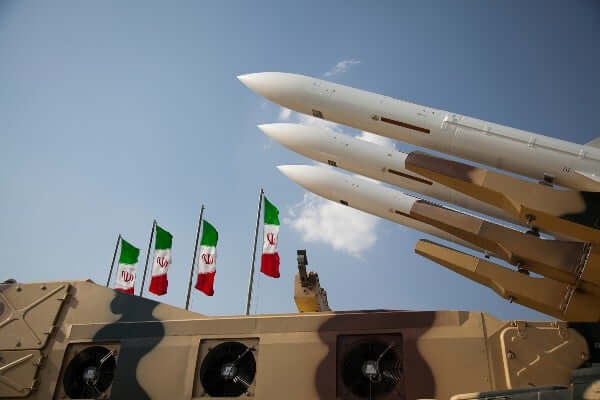
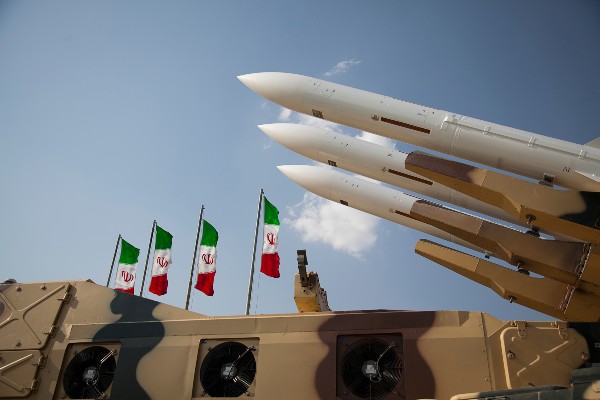
Iran on Sunday said it has “no red lines” in defending itself, as Israel is said to be zeroing in on a list of targets it could strike in retaliation for the missile attack from its arch-foe two weeks ago.
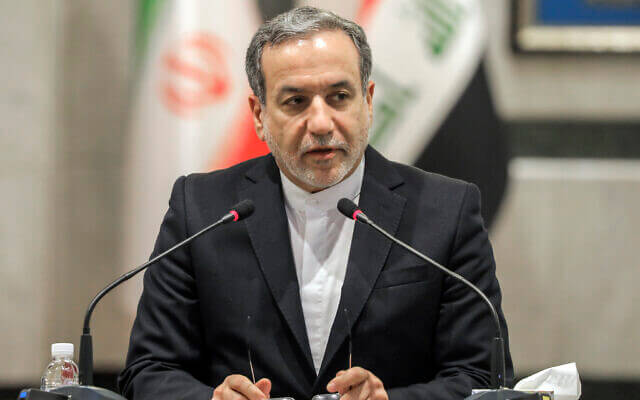
In a social media post, Iran’s Foreign Minister Abbas Araghchi also indirectly threatened United States forces potentially operating a complex missile defense system in Israel.
“The US has been delivering record amount of arms to Israel,” wrote Araghchi on X. “It is now also putting lives of its troops at risk by deploying them to operate US missile systems in Israel.”
“While we have made tremendous efforts in recent days to contain an all-out war in our region, I say it clearly that we have no red lines in defending our people and interests,” he added.
Iran’s Foreign Ministry did not respond to a request for comment over the remarks, which were carried by Iranian state media.
Araghchi, who helped reach Iran’s 2015 nuclear deal with world powers, was seemingly dispelling suggestions that Tehran would absorb an Israeli strike without a further response. Iran did not respond to an alleged Israeli retaliatory strike in April, days after the Islamic Republic’s first-ever direct attack on the Jewish state.

The remains of a missile fired from Iran into Israel days earlier, seen in the forest of Safed, northern Israel on October 6, 2024. (David Cohen/Flash90)
Hebrew media has reported that Israel is closely coordinating with the White House on its retaliation to Iran’s latest attack. US President Joe Biden has voiced opposition to an Israeli strike on Iran’s nuclear facilities or oil industry, both of which Israel was reportedly considering.
Amid preparations for the retaliation, Hebrew media reported over the weekend that the White House was considering sending its Terminal High Altitude Area Defense systems to Israel. The defensive system shoots down incoming ballistic missiles, like those fired by Iran in the attack two weeks ago.
Any move of one of those complex systems, known by the acronym THAAD, to Israel would involve the deployment of American soldiers to operate it.
Meanwhile, NBC reported Saturday that US officials believe Israel has narrowed down targets in its potential retaliation for the Iranian missile barrage, and would aim to hit military and energy infrastructure. The network said there was no indication Israel would target nuclear facilities or carry out assassinations in Iran.
Citing US officials, the report added that Israel had not made final decisions about how and when it would act. It also cited US and Israeli officials as saying a response could come on Yom Kippur. However, Judaism’s holiest day ended Saturday evening with no Israeli strike.

The US military deploys a THAAD missile defense system in Israel, March 2019. (US Army Europe)
Iran fired more than 180 ballistic missiles at Israel on October 1 amid an escalation in fighting between Israel and Tehran’s Lebanese proxy Hezbollah. Many were intercepted in flight, but some penetrated Israel’s missile defenses. Debris from the interceptions killed a Palestinian man in the West Bank and injured two people inside Israel.
Defense Minister Yoav Gallant has said Israel would hit Iran in a “lethal, precise and surprising” way.
The prospect of an all-out war between Israel and Iran has placed the region on edge. Iran supports a network of militias across the Middle East, tightening the belt around Israel, which has for over a year been locked in battle with Iran-backed terror groups Hamas in Gaza and Hezbollah in Lebanon.
Citing Hamas protocols seized by the IDF, The New York Times reported Saturday that Hamas had attempted to enlist Iran’s and Hezbollah’s support for its October 7, 2023, onslaught, when thousands of terrorists stormed southern Israel to kill nearly 1,200 people and take 251 hostages, sparking the war in Gaza. A day later, Hezbollah forces began attacking Israel from Lebanon.