Israelis block the Ayalon Highway and clash with police in Tel Aviv, during a protest calling for the release of Israelis held hostage by Hamas terrorists in Gaza on Sept. 1, 2024

Prime Minister Benjamin Netanyahu was busy on Wednesday parrying attacks against his government from leftist elements in Israel over the continuing failure to reach a hostage release and ceasefire deal with the Hamas terrorist organization.

Netanyahu was accused on a televised Israeli newscast Wednesday of consistently acting to “torpedo” any possible agreement since December 2023, when Hamas ended the only hostage release and temporary ceasefire deal reached since the start of the war.

That seven-day deal during November included the release of 81 Israeli hostages and 24 foreign nationals in a swap that freed three Palestinian Authority terrorists incarcerated in Israeli prisons for every hostage released by the terrorists. However, Hamas violated the terms and ended the agreement by offering to return the bodies of seven women and three living hostages, rather than the agreed-upon swap for 10 living hostages. Senior Israeli security officials told Channel 12 News they feared Hamas would simply shoot the seven women that intelligence agents knew to be alive, if Israel agreed to the change. Moreover, Hamas categorized all the young women as soldiers, rather than the civilians that most of them were. Hamas immediately resumed its attacks.

“The fact that Prime Minister Benjamin Netanyahu has acceded to every American proposal for releasing the hostages despite the ultimatum from elements in the coalition completely refutes the claim that he has ‘torpedoed’ any deal whatsoever due to political considerations,” the Prime Minister’s Office said in a statement after the report on Wednesday night.

“On April 27th, the prime minister conveyed to the mediator a framework for releasing the hostages, which Secretary of State Blinken defined as being a very generous proposal.

“On May 31st, the Prime Minister agreed to the US proposal, and on August 16th, he agreed to the American ‘final bridging proposal.’

“June 12th, Secretary of State Blinken said that Israel had agreed to the proposal while Hamas had not. On August 28th, the Deputy Director of the CIA said that Israel was showing a seriousness in the negotiations that the leader of Hamas would have to respond to.

“On September 9th, US Special Envoy to the Middle East McGurk said that there was no hostage release deal only because of Hamas’s refusal. Also on September 9th, even Benny Gantz admitted that, ‘Hamas has not accepted the framework for months and the world is expected to back Israel,’” the PMO pointed out.

“The false claims in the media against Prime Minister Netanyahu echo the propaganda of the Hamas terrorist organization and invert reality,” the PMO said, emphasizing that Netanyahu “has already brought about the release of 154 hostages, 117 of whom are alive,” and pledging to “continue to utilize all means” to release the remaining hostages.

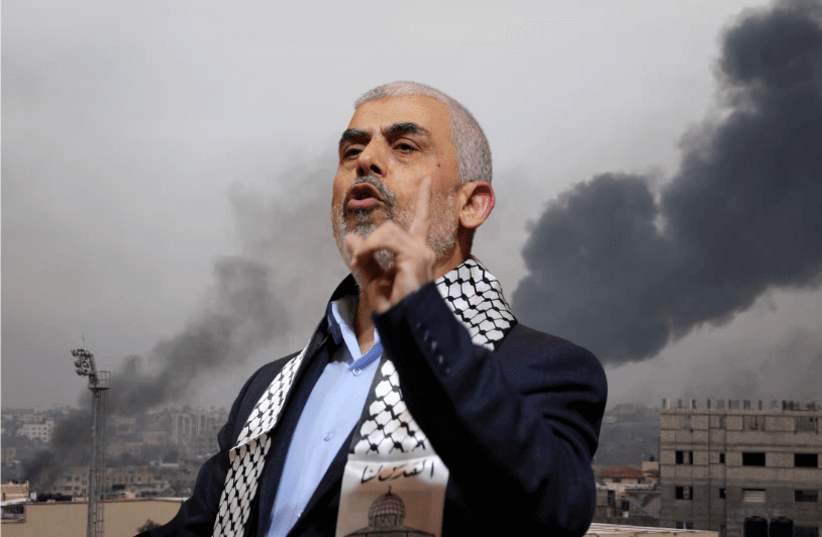
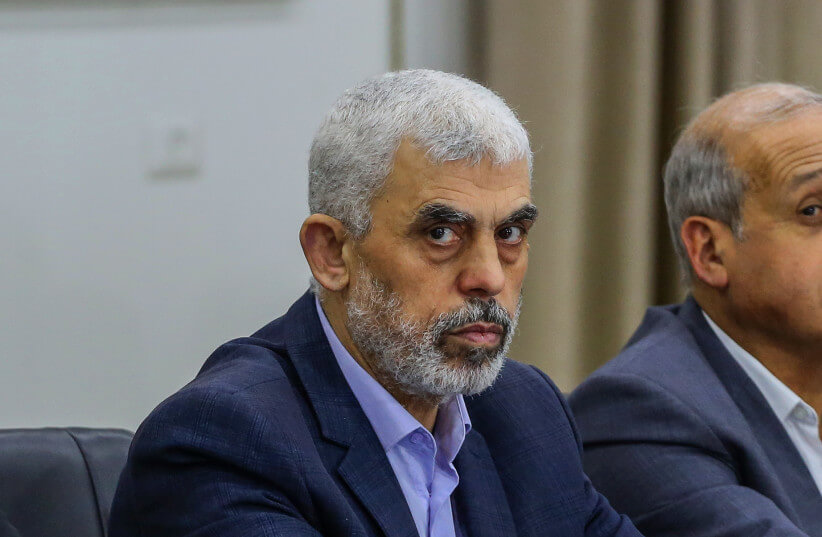
“Whoever wants to assist in the effort to release our hostages needs to pressure the murderer [Yahya] Sinwar and not the prime minister of Israel,” Netanyahu’s office urged.


Walkie-talkies blow up around country; one explosion witnessed at funeral for victim of Tuesday’s pager attack; some solar energy systems said to also detonate

A fresh wave of explosions ripped across Lebanon on Wednesday afternoon, appearing to mainly target hand-held radios used by Hezbollah members, a day after thousands were wounded when their pagers spontaneously exploded in a coordinated attack widely blamed on Israel after months of cross-border fire.

At least 20 people were killed and 450 were wounded in Wednesday’s second wave of blasts, according to Lebanese officials. An Israeli report said Jerusalem believes the death toll to be higher than reported, with Hezbollah’s elite Radwan unit hit hard by the two days of attacks.

Explosions were reported Wednesday in phones, solar energy systems and fingerprint reading devices used by the group.

At least one of the blasts took place at a funeral organized by Iran-backed Hezbollah for some of the 12 people killed in the pager explosion attack on Tuesday.

An AP photographer in the southern coastal city of Sidon saw a car and a mobile phone shop that were damaged by devices exploding inside of them.

“A number of walkie-talkies exploded in Beirut’s southern suburbs,” a source told Reuters, with Hezbollah-affiliated rescuers confirming devices had exploded inside two cars in the area.

People gather as firefighters put out the flames at the scene of a device explosion in Saida in southern Lebanon on September 18, 2024, a day after thousands of Hezbollah pagers exploded in an attack blamed on Israel. (Mahmoud ZAYYAT / AFP)

Hezbollah’s Al Manar TV reported explosions in multiple areas of Lebanon, and a Hezbollah official told The Associated Press that walkie-talkies used by the group exploded as part of blasts heard in Beirut. The official spoke on condition of anonymity because he was not authorized to speak to the media.

Images circulating online purported to show the devices, which appeared to be different and larger than the pagers that exploded Tuesday. The hand-held radios were purchased by Hezbollah five months ago, around the same time that the pagers were bought, said a security source.

A Reuters reporter in the southern suburbs of Beirut said he saw Hezbollah members frantically taking out the batteries of any walkie-talkies on them that had not exploded, tossing the parts in metal barrels around them.

Images of the exploded walkie-talkies examined by Reuters showed an inside panel labeled “ICOM” and “Made in Japan.” According to its website, ICOM is a Japan-based radio communications and telephone company.

A radio communications device that exploded in the city of Baalbek, Lebanon on September 18, 2024. (Suleiman Amhaz / Anadolu / Reuters)

Lebanon’s Red Cross said on X that it was responding with 30 ambulance teams to multiple explosions in different areas.

Lebanon’s official news agency reported that solar energy systems exploded in homes in several areas of Beirut and in southern Lebanon, wounding at least one girl. The reports of further electronic devices exploding suggested even greater infiltration into Hezbollah’s supply chain than was previously thought.

According to a Ynet report, Israel believes Hezbollah’s toll from the attacks over the last two days is much higher than the official numbers released so far.

“The estimation is that there are many dozens of dead, if not more,” veteran investigative reporter and analyst Ronen Bergman wrote, without naming his sources.

Bergman added that Israel believes the explosions caused “significant harm” to Hezbollah’s elite Radwan unit, with much of its leadership taken out of action.

The new round of explosions on Wednesday came as Lebanon and Hezbollah were still struggling to come to terms with the shock and scale of Tuesday’s attack. Israel has not commented on the pager explosions, although US officials have indicated to some foreign media outlets that Jerusalem was behind the attack.

The death toll from Tuesday’s blasts rose to 12, including two children, Lebanese Health Minister Firass Abiad said on Wednesday. Tuesday’s attack wounded nearly 3,000 people, including many of the terror group’s fighters and Iran’s envoy to Beirut.

Hezbollah said Israel was “fully responsible for this criminal aggression” and reiterated it would avenge the attack, while vowing to continue its fight against Israel in support of Hamas in the Gaza war.

Cross-border exchanges with Israeli forces were “ongoing and separate from the difficult reckoning that the criminal enemy must await for its massacre,” Hezbollah said.

Since October 8, Hezbollah and other Lebanon-based terror groups have been firing rockets and missiles at Israel’s north on a near-daily basis, killing at least 26 civilians in Israel and 20 IDF soldiers. Hezbollah has named more than 450 members killed by Israel during the ongoing skirmishes, mostly in Lebanon but some also in Syria. Another 79 operatives from other terror groups, a Lebanese soldier, and dozens of civilians have also been killed.

On Wednesday evening, Hezbollah fired a barrage of some 20 rockets at northern Israel, setting off sirens in Kiryat Shmona and a number of surrounding areas. The IDF said some of the rockets were intercepted, and there were no reports of injuries.

Hezbollah took responsibility for the attack, claiming to have targeted an Israeli military base.

Earlier in the day, a barrage of 10 rockets was fired from Lebanon at the Western Galilee, with all the missiles striking open areas, causing no injuries, according to the IDF.

Rockets fired from southern Lebanon are intercepted by Israel’s Iron Dome air defense system over the Upper Galilee region in northern Israel, on September 18, 2024. (Jalaa MAREY / AFP)

Meanwhile the IDF on Wednesday announced that it was redeploying its 98th Division to northern Israel after months of operations in the Gaza Strip under the Southern Command, given the backdrop of the heightened tensions with Hezbollah.

Defense Minister Yoav Gallant said Wednesday evening that Israel’s focus has moved to the northern front as a “new phase” of the war was beginning.

“The center of gravity is moving north. We are diverting forces, resources, and energy toward the north,” Gallant told Israeli Air Force personnel at the Ramat David Airbase, in remarks published by his office. “I believe that we are at the onset of a new phase in this war, and we need to adapt.”

The chief of the IDF’s Northern Command, Maj. Gen. Ori Gordin, said Wednesday that the military was determined to change the security situation on the Lebanese border as soon as possible.

“The mission is clear: We are determined to change the security reality as soon as possible. The commitment of the commanders and the troops here is complete, with peak readiness for any task that will be required,” Gordin said in remarks provided by the IDF.

Times of Israel staff contributed to this report.


Netanyahu digs in on North, US urges diplomacy after beeper attack

On the night before the attacks, Israel’s security cabinet expanded its war goals to include the return of over 60,000 residents of the northern border communities.

Prime Minister Benjamin Netanyahu in front of a fire cause by Hezbollah rockets. (photo credit: DAVID COHEN/FLASH 90, YONATAN SINDEL/FLASH90/CANVA)
Prime Minister Benjamin Netanyahu in front of a fire cause by Hezbollah rockets.
(photo credit: DAVID COHEN/FLASH 90, YONATAN SINDEL/FLASH90/CANVA)
Prime Minister Benjamin Netanyahu dug in Wednesday on his stance that the security situation in the North must change, amid global opposition to an unusual set of attacks in Lebanon that targeted radios and beepers belonging to the Iranian proxy group Hezbollah. Several members of the terrorist organization were killed in the attacks, and thousands were wounded.

Israel has not taken responsibility for the attacks but is widely presumed to be behind them.

On the night before the attacks, Israel’s security cabinet expanded its war goals to include the return of over 60,000 residents of the northern border communities. They were evacuated last October when the constrained IDF-Hezbollah cross-border war broke out, after Hezbollah launched attack at the North on October 8.

Netanyahu on Wednesday had only one brief public comment on the situation in the North, which has galvanized global attention.

“We will return the residents of the North securely to their homes,” he said in a video statement.

Israel and the US have been at odds over the best way to secure Israel’s northern border, with the Biden administration pushing for a diplomatic resolution to the conflict.

 Ambulance arrives to American University of Beirut Medical Center (AUBMC) in Beirut, Lebanon, September 18, 2024 (credit: REUTERS/MOHAMED AZAKIR)Enlrage image
Ambulance arrives to American University of Beirut Medical Center (AUBMC) in Beirut, Lebanon, September 18, 2024 (credit: REUTERS/MOHAMED AZAKIR)

In Cairo, US Secretary of State Antony Blinken called on all parties to refrain from taking any steps that would escalate the situation and detract from efforts to achieve a Gaza ceasefire, which he said he hoped would also lead to a diplomatic resolution between Israel and Hezbollah.

“It’s imperative that all parties refrain from any actions that could escalate the conflict, we are focused on getting this ceasefire over the finish line,” Blinken said.

Such a deal “would improve the prospects of defusing the situation in northern Israel and southern Lebanon,” he stressed.

US National Security Communications Adviser John Kirby underscored on Wednesday that the United States was not involved in the radio and beeper attacks.

“We want to see the war end, and everything we’ve been doing since the beginning has been designed to prevent the conflict from escalating,” he said.

Hand-held radios used by Hezbollah detonated on Wednesday across Lebanon’s south, in Beirut suburbs and the Bekaa Valley, further stoking tensions with Israel, one day after similar explosions by the group’s pagers.

Lebanon’s health ministry said that 14 people had been killed and 450 injured on Wednesday, while the death toll from Tuesday’s explosions rose to 12, including two children, and nearly 3,000 were injured.

At least one of Wednesday’s blasts took place near a funeral organized by Hezbollah for those killed the previous day, when thousands of pagers used by the group exploded across the country and wounded many of its fighters.

Defense Minister Yoav Gallant said on Wednesday that the “center of gravity” of IDF operations was moving northward. “We are at the start of a new phase in the war – it requires courage, determination, and perseverance on our part. It is critical that we operate in close cooperation between the [security] organizations, at all levels.

“Our task is clear – ensuring the safe return of Israel’s northern residents to their homes,” Gallant stated.

United Nations Secretary-General Antonio Guterres condemned on Wednesday the beeper and radio attacks, which he said appeared to have been prompted by fear that the explosive plans had been exposed.

“What has happened is particularly serious, not only because of the number of victims that it caused, but because of the indications that exist that this was triggered… because there was a risk of this being discovered,” he said.

“Obviously, the logic of making all these devices explode is to do it as a pre-emptive strike before a major military operation,” Guterres stated.

“This event confirms that there is a serious risk of a dramatic escalation in Lebanon, and everything must be done to avoid that escalation,” he added.

Kremlin issues warning

The Kremlin too warned that the attack could become a trigger for a wider regional conflict and called for its perpetrators to be identified in an investigation.

“What happened, whatever it was, certainly leads to an escalation of tension. The region (the Middle East) itself is in an explosive state, and certainly an incident like this, each one of them, has the potential to be a trigger for the situation to spiral out of control,” Kremlin spokesman Dmitry Peskov told reporters.

“Of course, we believe that a thorough investigation of this incident should be conducted, the causes and circumstances of what happened should be established, and of course, those behind these mass explosions of communications equipment should be identified,” he said.

The conclusions of such an investigation would allow specialists to eliminate the risk of something similar happening in Russia or elsewhere, added Peskov.

Russia’s Foreign Ministry said earlier on Wednesday that the attack was an act of hybrid war against Lebanon, in which it said thousands of innocent people had been hurt.

“It appears that the organizers of this hi-tech attack deliberately sought to foment a large-scale armed confrontation in order to provoke a major war in the Middle East,” Maria Zakharova, a spokeswoman for the Russian Foreign Ministry, said in a statement.

Reuters contributed to this report.