(June 23, 2024 / JNS)
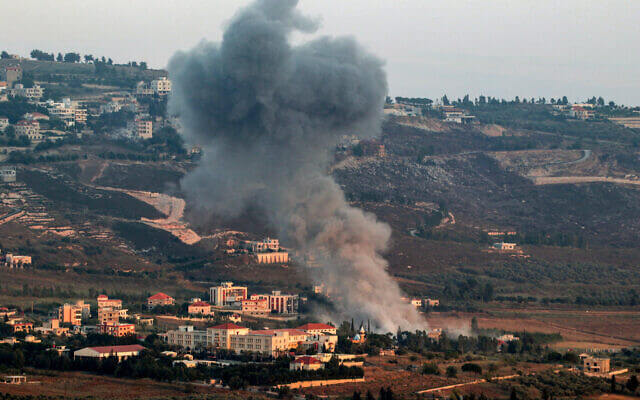
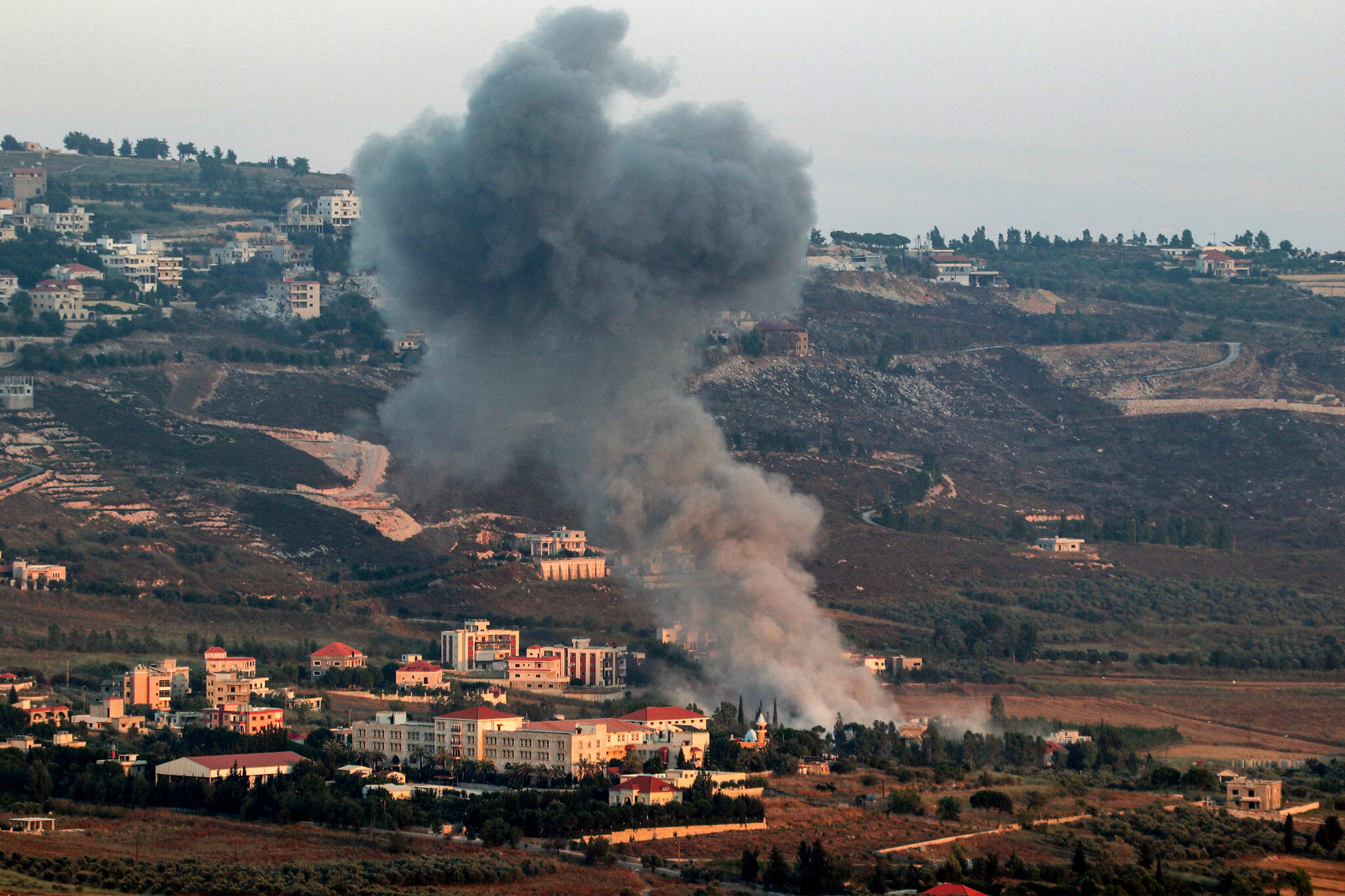
The top U.S.-Israel story of the week is the prospect of a massive ground war in Lebanon.
The main question dominating the discourse is whether the Biden administration intends to provide Israel with the munitions it requires to prosecute such a war successfully. The White House says it has Israel’s back. But recent U.S.-Israel backstories indicate that Israeli anxiety about the U.S. position on munitions is well founded.
Two back stories that have generated minor splashes signal clearly that contrary to President Joe Biden’s oft repeated “ironclad commitment to Israel’s security,” his administration is implementing a whole-of-government policy of criminalizing Israel and its citizens.
The first story relates to stepped-up U.S. sanctions against Israeli nationals and organizations. The second is the reported change in U.S. policy regarding visa and immigration applications from Israeli citizens.
Immediately after the Hamas-led Palestinian invasion and slaughter of Oct. 7, the Egyptian government announced that contrary to the binding requirements of international humanitarian law, Egypt would prohibit Gaza residents from transiting Gaza’s international border into Egypt to seek refuge either in Egypt or in third countries through Egypt.
Far from opposing Egypt’s unlawful action, the U.S. administration supported it. Egypt was not responsible for protecting the residents of Gaza from the war their regime opened against Israel. Israel was.
Days after Oct. 7, the administration began demanding that Israel provide a constant and ever-growing supply of food, water, medicine and other goods to the residents of Gaza. As the administration routinely ratcheted up its demands, it cited wholly unsupported, and now discredited, claims from the U.N. that Gaza was on the verge of famine.
Although the Netanyahu government quickly folded under the administration’s barely disguised threats to accuse Israel of war crimes, the Israeli public has been all but united in its opposition to the U.S. position.
Videos from Gaza have emerged daily since November showing Hamas gunmen seizing the aid trucks and shooting civilians who try to seize bags of flour and other goods from the trucks. Last week, former U.S. Middle East envoy Dennis Ross reported on his X account, “A UN official told me lately that 80 percent of the humanitarian assistance going into Gaza has been looted by criminal gangs or Hamas.”
After Israel began permitting hundreds of truckloads of supplies to enter Gaza directly from Israel in late January, a Direct Polls survey found that 82% of Israelis believed that the trucks should only be allowed to enter Gaza if Hamas released all the hostages.
A near consensus view in Israel throughout the past eight and a half months is that the humanitarian aid undermines the war effort by keeping Hamas fully supplied; maintains Hamas’s grip on power by enabling the terror regime to control who gets fed and cared for; and endangers IDF soldiers on the ground in Gaza.
Tzav 9 (aka “Emergency Orders”) is a protest group that a handful of concerned Israeli citizens formed in January to protest the truck convoys. With no funding or institutional backing, Tzav 9 called for citizens to show up at crossing points between Israel and Gaza to block the trucks from passing into Gaza. The call resonated so deeply with the public that within days of Tzav 9’s first call, Israelis from all walks of life were camping out in the field by the crossing points and walking for hours to arrive at the crossing points at dawn, day after day after day.
Hostages’ families, families of soldiers fighting in Gaza, and victims of the Oct. 7 slaughter led many of the protests. More than 15,000 Israelis from all sectors of society participated in the protest group’s actions in the intervening months. Tzav 9’s operations were legal, falling under the definition of protected speech. On occasions where protesters broke the law, they were physically removed from the protest sites by police and arrested.
The administration made no secret of its anger over these lawful political protests. U.S. officials from Biden down roundly condemned Tzav 9’s protests.
Rather than accept the right of Israelis to oppose the administration’s policies, on June 14, the State Department sanctioned Tzav 9. It ordered a freeze on whatever assets it may have, threatened sanctions against any organization or individual that supports Tzav 9’s work, and banned Tzav 9’s representatives from entering the U.S.
The basis for the sanctions was President Biden’s Executive Order 11415 from Feb. 1. That order makes Israelis liable for sanction if they “undermine the foreign policy objectives of the United States, including the viability of the two-state solution and ensuring Israelis and Palestinian can attain equal measures of security, prosperity, and freedom.”
Order 11415 relates only to action in Judea and Samaria, and is arguably irrelevant to Tzav 9, whose operations are directly solely against the resupply of Hamas in Gaza.
But no matter.
The fact that the administration is using Order 11415 against Tzav 9, a popular protest group whose positions are supported by the vast majority of Israelis, demonstrates that although the order was billed as targeting “extremist settler violence,” it was really conceived as a way to sanction the up to 80% of Israelis who oppose the administration’s positions on the war in Gaza, and more broadly, oppose its determination to establish a Palestinian state.
The administration’s move to sanction Tzav 9 set shock waves through Israel. It raised fears that consensus organizations including the Regavim Movement and government ministers, first and foremost Finance Minister Bezalel Smotrich, may soon be sanctioned by the U.S.
Regavim uses the legal system and public awareness campaigns to protect Israel’s state lands in Judea and Samaria, the Negev and the Galilee against illegal encroachment. Recently, Regavim published a massive report documenting the depth and breadth of the U.S.-funded, -armed and -trained Palestinian security forces’ engagement in terrorism.
Regavim has provided logistical support for Tzav 9’s lawful protests. Like its efforts on behalf of Tzav 9, Regavim’s other actions and campaigns enjoy the support of the majority of Israelis.
Smotrich has been widely condemned by progressives inside and outside the administration for refusing to transfer funds to the Palestinian Authority due to its support for terrorism. Smotrich has also be singled out for calumny for refusing the authorize the destruction of Israeli building projects that leftist NGOs supported by the U.S. and other foreign governments claim are unlawful.
Last Tuesday, Sen. Chris Van Hollen (D-Md.) raised the specter of sanctioning Smotrich during a Senate hearing with Assistant Secretary of State for Near Eastern Affairs Barbara Leaf. Van Hollen asked whether Smotrich’s actions place him in violation of Biden’s executive order, and Leaf said that indeed, they do.
In other words, as it has Tzav 9, the administration may sanction Regavim and Smotrich for their lawful actions—backed by a wide majority of Israelis—because the administration demands that Israel implement a policy of backing the establishment of a Palestinian state, a move rejected by 99 out of 120 members of Knesset.
This brings us to U.S. immigration policy regarding Israeli nationals.
Last Thursday, Yediot Achronot’s veteran reporter Itamar Eichner published a bombshell report titled “U.S. asks Israelis applying for green card whether they committed war crimes.”
Eichner reported a number of instances where IDF veterans and reservists applying for U.S. entry permits ranging from tourist visas to green cards have faced detailed interrogations—under oath—regarding their service in the IDF.
For instance, Yuval, an Israeli high-tech manager working in Silicon Valley, assumed everything was in order with his green card application and was stunned to receive a letter from the U.S. Citizenship and Immigration Services (USCIS) requiring him to submit a sworn affidavit describing his military service in granular detail.
Among other things, the letter inquired, “Did you participate as a combatant in battles during your military service? If so, please describe your activity/role in these battles; Did you command soldiers in the army? If yes, please describe the aspects of your command; Have you ever guarded (or commanded others to guard) detainees? Did you use explosives during your military service? If so, detail the types of weapons or explosives you were trained on.
“Have you ever actually used weapons or explosives? If so, what weapons or explosives did you use? How did you use weapons or explosives? On how many occasions did you use weapons or explosives? How often did you use weapons or explosives? Did you use a weapon and/or an explosive against another person? If so, the circumstances must be detailed, and explain why you used a weapon and/or an explosive against another person/people.”
Revital, a reserve combat soldier Eichner spoke to, related that she had traveled to Europe after completing reserve duty in Gaza and was hoping to continue on to the U.S.
A consular officer in a U.S. consulate in Western Europe questioned her for half an hour about the nature of her service in Gaza, and then informed her that she was barred from entering the U.S.
Until recently, Israelis were subjected to questioning about their IDF service that was little different from questioning citizens of other allied nations, like France or Britain, received. Interviewed by Eichner, Israeli immigration attorney Liam Schwartz said there is no question that the policy has changed.
“An investigation that seeks explanations about how, when and why weapons and/or explosives were used against another person is intended to understand if you have committed war crimes. A question regarding the custody of detainees is intended to ‘catch’ the military personnel and police officers who participated in the arrests in the West Bank. A demand for information regarding the active participation as a combatant in battles may also be used by the authorities for the purpose of formulating their position in relation to acts defined as genocide,” Schwartz said.
Conditions in the U.S. are currently not amenable to a government move to criminalize either the IDF or Israeli soldiers and officers. But those conditions may change. In the meantime, the Biden administration is amassing a large database of sworn statements from soldiers and officers that can be manipulated to be used against them and the country.
Since last Wednesday, when Prime Minister Benjamin Netanyahu revealed that the administration largely stopped providing Israel with vital munitions six months ago, the administration has been issuing breathless, infuriated, self-righteous non-denials every day.
Never mind that it was the administration, not Netanyahu, that began leaking its policy of “slow walking” munitions, including artillery and tank shells and JDAM kits and aerial bombs, in January.
Even if that weren’t the case, the administration’s whole-of government hostility towards Israel, a hostility exposed by its sanctions against law abiding Israelis advancing consensus positions, and its new immigration policies, both show that the smart money is on Netanyahu. Not only is the Israeli leader telling the truth. His decision to expose the administration’s dirty, double-game against the Jewish state was absolutely necessary.