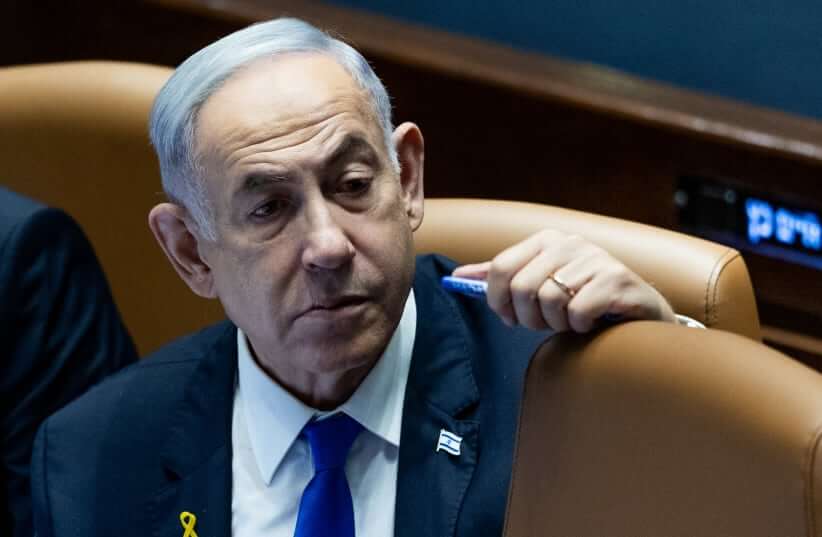
Netanyahu, while interviewing with Channel 14, said that Israel is open to diplomacy but stressed that any resolution would be on Israel’s terms.
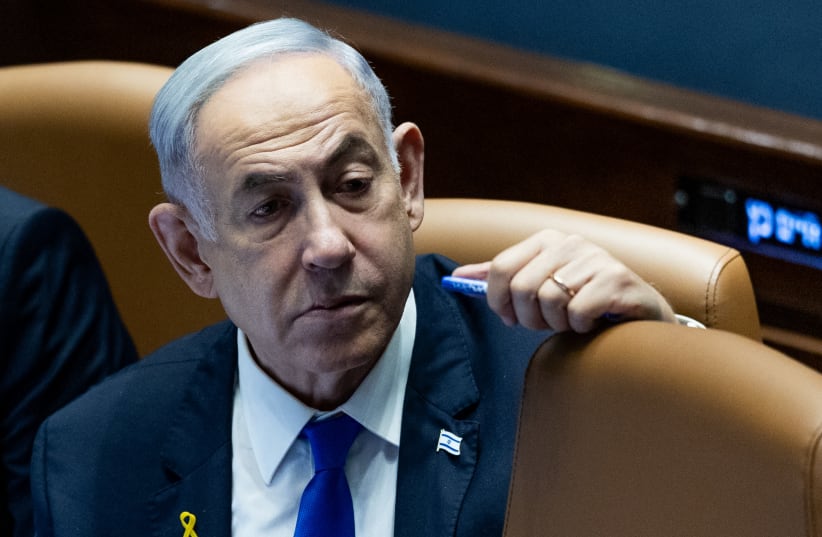
 Israeli Prime Minister Benjamin Netanyahu, Ministers and MK's at a 40 signatures debate, at the plenum hall of the Knesset, the Israeli parliament in Jerusalem, on May 27, 2024. (photo credit: YONATAN SINDEL/FLASH90)
Israeli Prime Minister Benjamin Netanyahu, Ministers and MK’s at a 40 signatures debate, at the plenum hall of the Knesset, the Israeli parliament in Jerusalem, on May 27, 2024.
(photo credit: YONATAN SINDEL/FLASH90)
The intense part of the military operation in Rafah is almost over, Prime Minister Benjamin Netanyahu said on Sunday night, explaining that the next goal is to bring an end to Hezbollah’s attacks along the country’s northern border.

“The intense phase of the war is about to end in Rafah,” after which the IDF will “continue mowing the grass all the time. We will not give up. We hit them hard,” Netanyahu said in a wide-ranging interview with Channel 14.

It marked the first time since the start of the Gaza war on October 7, that he had granted an interview to an Israeli television station.

Once the IDF completes its intense fighting in Rafah, “we will face north,” Netanyahu said, amid heightened expectation that the IDF is set to launch a military campaign in Lebanon to oust Hezbollah from the territory on Israel’s border to stop its persistent attacks.

Israel, he said, is open to a diplomatic resolution to the Hezbollah threat, but he stressed, “It must be on our terms.”
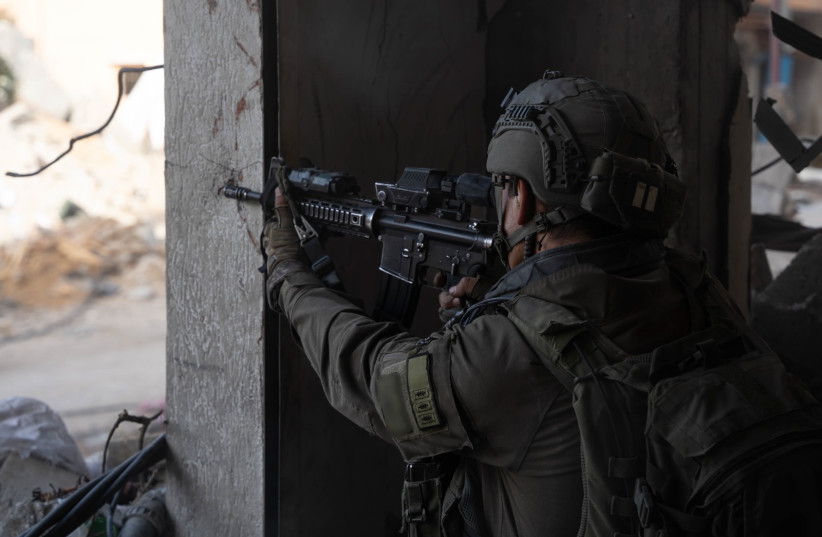
 IDF soldier operates in the Gaza Strip.  (credit: IDF SPOKESPERSON'S UNIT)Enlrage image
IDF soldier operates in the Gaza Strip. (credit: IDF SPOKESPERSON’S UNIT)

Any diplomatic resolution must involve a real solution, that includes the “physical removal of Hezbollah from the border,” Netanyahu stated.

Netanyahu speaks of returning residents of northern Israel home

“We will have to enforce it” because the residents of the North must be allowed to return home, Netanyahu said as he referred to the scores of thousands of citizens who fled their communities in the North on October 7 and have not been able to safely return.

“We are obligated to return the residents of the North to their homes,” Netanyahu stated.

He did not provide specifics with retard to the possibility of a third Lebanon war, but said, “We will do what is necessary. I can assure the citizens of Israel that if we are required to take on this challenge, we will do it. We can fight on several fronts, and we are also preparing for it.”  Netanyahu acknowledged that it was possible that Israeli electricity facilities could be damaged in the war, but did not elaborate further.
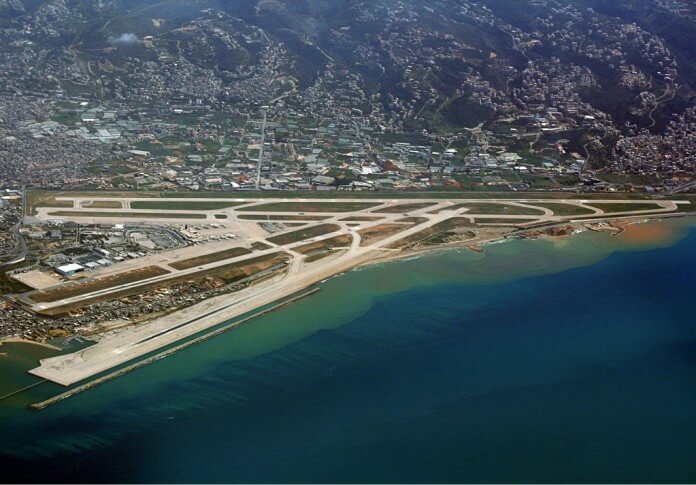
Iran has significantly increased supplying rockets to Hezbollah via Beirut’s airport, causing concerns among employees about Hezbollah’s influence and potential Israeli retaliation.

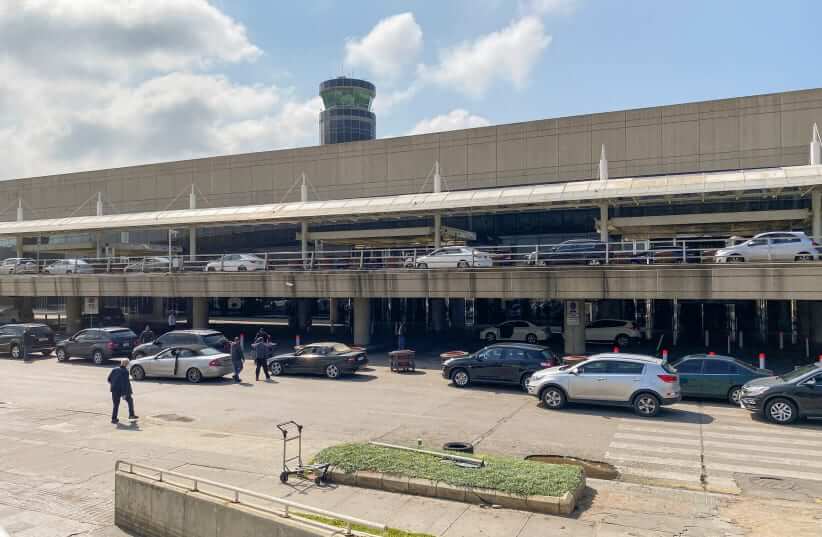
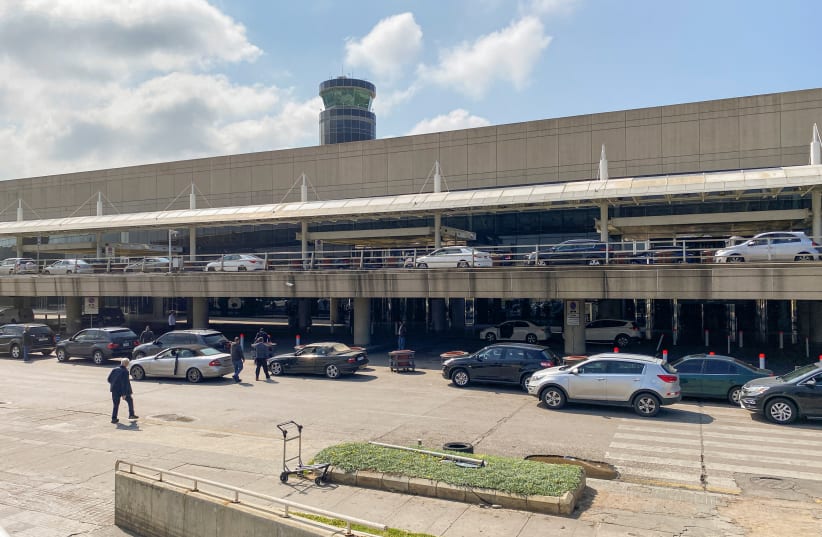
 People walk near the entrance of Beirut International Airport, amid a dispute between political and religious authorities over a decision to extend winter time, in Lebanon March 26, 2023. (photo credit: MOHAMED AZAKIR/REUTERS)
People walk near the entrance of Beirut International Airport, amid a dispute between political and religious authorities over a decision to extend winter time, in Lebanon March 26, 2023.
(photo credit: MOHAMED AZAKIR/REUTERS)
The pace at which Iran is supplying powerful rockets to Hezbollah through Beirut’s Rafic Al Hariri International Airport has spiked, London’s Sunday Telegraph reported Sunday.

Tehran has smuggled weapons to the Lebanese terrorist group by air in the past, and they were then stored in Lebanon’s only commercial airport.

But the Telegraph report, based on anonymous airport employees who are seething at Hezbollah for mixing warfare with their civilian airport, makes a clear case that recent months have seen a significant increase in using the airport for storing strategic weapons.

The idea of using the civilian airport as one of its major storage depots appears to be a lateral maneuver by Hezbollah after the 2020 disaster in which many of its strategic explosive weapons exploded inside their storage area at the Port of Beirut.

The explosion destroyed large portions of Beirut, killed nearly 220 people, and turned much of the Lebanese public against Hezbollah for a period of time. Hezbollah was responsible for the disaster because it kept the explosive materials nearby civilian areas.

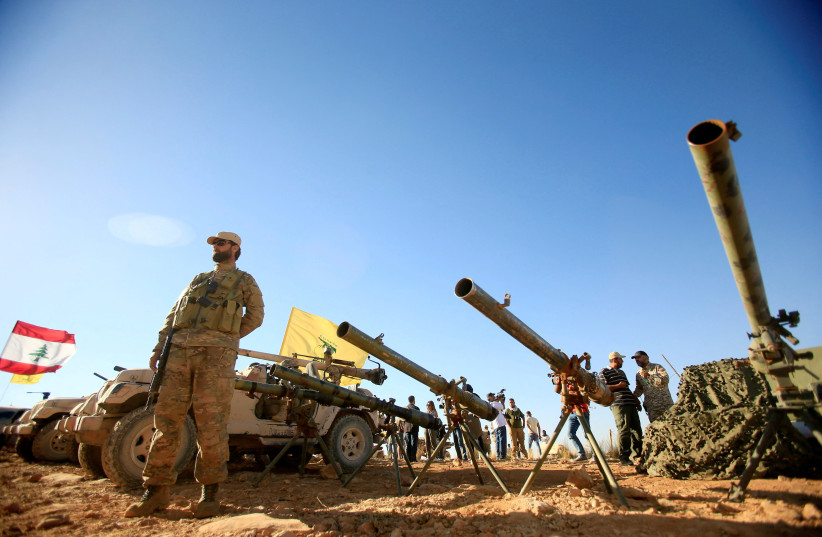
 A Hezbollah fighter stands in front of anti-tank artillery at Juroud Arsal (credit: REUTERS/ALI HASHISHO)Enlrage image
A Hezbollah fighter stands in front of anti-tank artillery at Juroud Arsal (credit: REUTERS/ALI HASHISHO)

Hezbollah managed to prevent a full investigation that could have proven it was at fault, however, and it appears that it merely moved its weapons storage to a different civilian location, the airport, so as to throw its accusers off its scent and activities.

Employees detail intimidation and sanctions evasion

“The cache allegedly includes Iranian-made Falaq unguided artillery rockets, Fateh-110 short-range missiles, road-mobile ballistic missiles and M-600 missiles with ranges of over 150 to 200 miles,” the report said.

The airport contains “AT-14 Kornet, laser-guided anti-tank guided missiles (ATGM), huge quantities of Burkan short-range ballistic missile and explosive RDX, a toxic white powder also known as cyclonite or hexagon,” it said.

Further, the report quoted airport employees describing strange, extra-large boxes that started arriving at the airport since the Gaza war started.

Despite sanctions, staff at the airport claim Wafiq Safa, Hezbollah’s second in command and the head of its security apparatus, has frequented the airport of late.

“Wafiq Safa is always showing up at customs,” one whistle-blower claimed, citing close relationships with the customs managers. “I feel like if we don’t do what they say, our families will be in danger.”

Lebanese airport employees described a situation in which they are practically held hostage by Hezbollah, which will kill anyone who gets in its way.

Only international intervention could force Hezbollah to return the airport to its purely civilian status, they said.Until that time, the Lebanese employees said they were worried about the Israeli military attacking the airport because weapons stored there would be used against Israel in the ongoing war.


Lebanon’s Iranian proxy, Hezbollah, is storing massive amounts of Iranian weapons at Rafic Hariri International Airport, Lebanon’s main civilian airport in Beirut, according to a report published Sunday by the British Telegraph news outlet.

Rafic Hariri International is located in the southern suburbs of Beirut about five and a half miles (nine kilometers) from the center of the Lebanese capital. At present, it is the only operational commercial airport in Lebanon and serves as the hub for Lebanon’s national carrier, Middle East Airlines (MEA).

Among the weapons being stored at the airport are a variety of missiles and explosives, including the Iranian Falaq unguided artillery rockets, Fateh-110 short-range missiles, road-mobile ballistic missiles and M-600 missiles with ranges from more than 150 to 200 miles, according to the report, which is based on leaks from airport whistleblowers.

In addition, Hezbollah has also reportedly stored laser-guided AT-14 Kornet anti-tank guided missiles (ATGMs), short-range Burkan ballistic missiles and RDX (Royal Demolition eXplosive), also known as cyclonite or hexagon, at the airport.

RDX is a white synthetic crystalline high explosive powder that is more powerful than TNT.

It is particularly dangerous because it affects the hematologic (blood forming), hepatic (liver) and neurological (nervous) systems, according to the Agency for Toxic Substances and Disease Registry, a division of the US Centers for Disease Control and Prevention (CDC).

When burned with other substances, it creates fumes which enables the explosive to be used also as a biological weapon.

RDX mainly affects the nervous system and can cause seizures when inhaled or ingested. The usual immediate health effects are seizures, muscle twitching, or vomiting from very high exposures, according to the CDC.

RDX is also the active ingredient in the C-4 plastic explosive and is used as a base charge for detonators. Because it remains stable in storage, it is also easier for personnel to handle, making it a very convenient weapon.

The Iranian weapons are being delivered to the airport via flights from Iran and are passed through inspection with bribes paid to Lebanese customs officials, according to the Telegraph.

The report has raised concerns that the Rafic Hariri International Airport could become a major military target, given its new use as a Hezbollah military weapons warehouse.

The airport is located just four miles from the center of Beirut.