
IDF: We’re ‘on the brink’ of major war with Hezbollah

IDF spokesman warns that Hezbollah is acting as a shield for Hamas, jeopardizing Lebanon and the region.

By World Israel News Staff

The Israeli army warned that a full-scale war with Hezbollah appears imminent, as the Lebanese terror group has escalated its attacks against Israel over the past week.

“Hezbollah’s increasing aggression is bringing us to the brink of what could be a wider escalation, one that could have devastating consequences for Lebanon and the entire region,” IDF Spokesman Rear Adm. Daniel Hagari said, speaking in English for a message that was intended for an international audience.

Hagari said that since the October 7th terror onslaught, Hezbollah has launched some “5,000 rockets, anti-tank missiles, and explosive UAVs from Lebanon at Israeli families, homes, and communities.”

Last week, following an Israeli airstrike that killed a prominent Hezbollah regional commander, the Shi’ite terror group fired its largest salvos at Israel since the beginning of the war.

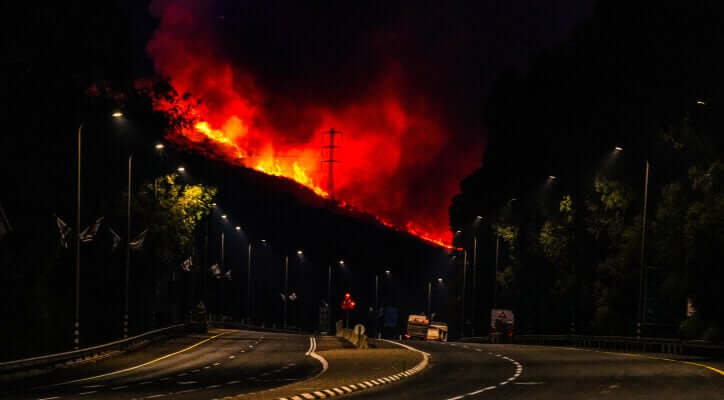
In one day, Hezbollah fired more than 200 missiles, rockets, and drones into Israeli territory, triggering alarms across the region and sparking massive fires.

Hezbollah has claimed that it is acting in solidarity with Hamas, and that it will continue attacking Israel until troops are withdrawn from the Gaza Strip.

Hagari said that Hezbollah is“ jeopardizing the future of Lebanon so that it can be a shield for Hamas. A shield for the Hamas terrorists who murdered the elderly, raped women, burned children, and kidnapped Jews, Muslims, and Christians, during their massacre on October 7th.”

International actors, including the Biden administration and French government, are pushing a diplomatic solution which would see Hezbollah retreat north of the Litani River and allow the some 80,000 residents of northern Israel displaced by the Hezbollah attacks to return home.

But regardless of whether a viable diplomatic solution is found, “one way or another we will ensure the safe and secure return of Israelis to their homes in northern Israel,” Hagari said.

“That is not up for negotiation.”

Notably, Israel and Hezbollah entered into a ceasefire agreement following the Second Lebanon War in 2006.

It’s unclear why, after unilaterally breaking that ceasefire and engaging in unprovoked aggression targeting Israel following October 7th, why Hezbollah would now agree to end the fighting once again.

Some displaced residents of northern Israel have told Hebrew-language media outlets that they will not return to their homes until Hezbollah’s military capabilities are destroyed, as they do not trust the terror group to abide by its word should a ceasefire be reached.

Hagari appeared to acknowledge these concerns in his speech.

“When we say that we will not let October 7th happen again on any one of our borders, we mean it,” he said.


Intensified cross-border fire from Lebanon’s Hezbollah movement into Israel could trigger serious escalation, the Israeli military said on Sunday.

“Hezbollah’s increasing aggression is bringing us to the brink of what could be a wider escalation, one that could have devastating consequences for Lebanon and the entire region,” Israeli military spokesman Rear Admiral Daniel Hagari said in a video statement in English.


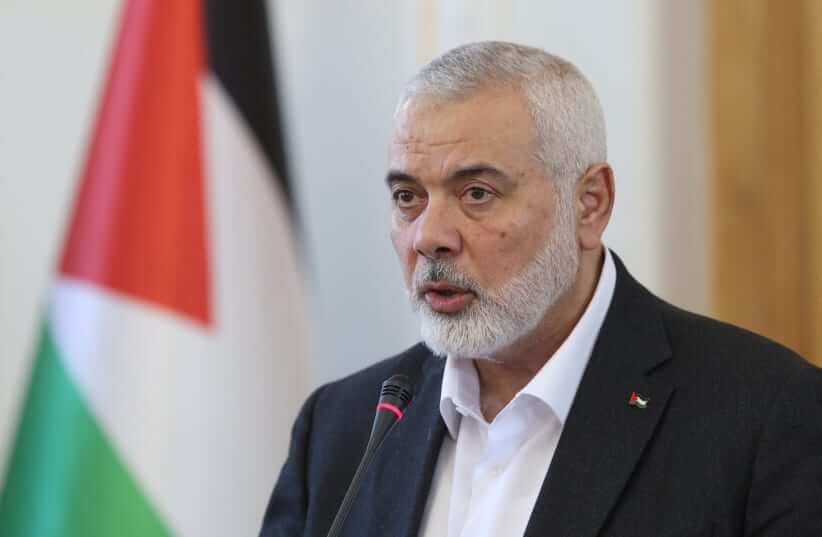
Hamas is “ready for a comprehensive deal which entails a ceasefire, withdrawal from the Strip, the reconstruction of what was destroyed, and a comprehensive swap deal,” Haniyeh said.

REUTERS TOVAH LAZAROFF

Hamas is ready for a hostage deal that includes a Gaza ceasefire and a withdrawal of the IDF, the group’s Qatar-based leader Ismail Haniyeh said in a televised speech on the occasion of the Islamic Eid al-Adha on Sunday.

‘Hamas ready for a comprehensive deal,’ says Haniyeh

“Hamas and the (Palestinian) groups are ready for a comprehensive deal which entails a ceasefire, withdrawal from the Strip, the reconstruction of what was destroyed, and a comprehensive swap deal,” Haniyeh said.

 US PRESIDENT Joe Biden speaks at the White House earlier this month. US policy toward Israel since its founding has been to prevent Israel from gaining as complete a victory as possible over its enemies, the writer maintains. (credit: Nathan Howard/Reuters)

US PRESIDENT Joe Biden speaks at the White House earlier this month. US policy toward Israel since its founding has been to prevent Israel from gaining as complete a victory as possible over its enemies, the writer maintains. (credit: Nathan Howard/Reuters)

His comments referred to renewed efforts to forge a deal for the remaining 120 hostages seized on October 7, based on a three-phased deal unveiled by US President Joe Biden May 31.

Egypt and Qatar, which along with the United States have been mediating between Hamas and Israel – said on June 11 that they received a response from the Palestinian groups to the US plan, without giving further details.

The US, however, has stated Hamas pushed for amendments, some of which were bridgeable and some of which did not appear to be. Israel has also found the amendments, including an upfront pledge to end the war, unworkable.

Israel has accepted the deal, which deals with the issue of a permanent ceasefire only once the deal is underway. It has insisted that any deal must allow for its military campaign to continue until such time as Hamas is ousted from Gaza.

US National Security Adviser Jake Sullivan said on Saturday that Qatar and Egypt planned to renew their efforts to close the deal.

Haniyeh said in his Saturday speech that Hamas’s response was consistent with the principles put forward by Biden on May 31.

A senior Hamas leader has told Reuters that the changes the group requested were “not significant.“

KAN reported on Sunday that Hezbollah advised Hamas to show flexibility. The report comes amid increased violence in the IDF-Hezbollah war along Israel’s northern border. The US believes that if a deal can be reached to return the hostages and end the Gaza war, it would be possible to also find a diplomatic solution for the violence in the North.