With framework risking drawn-out nuclear talks and questionable freedom of action, Jerusalem left with little to do but reach clear terms with DC on handling future threats

By Nava Freiberg 27 May 2026, 1:18 pm
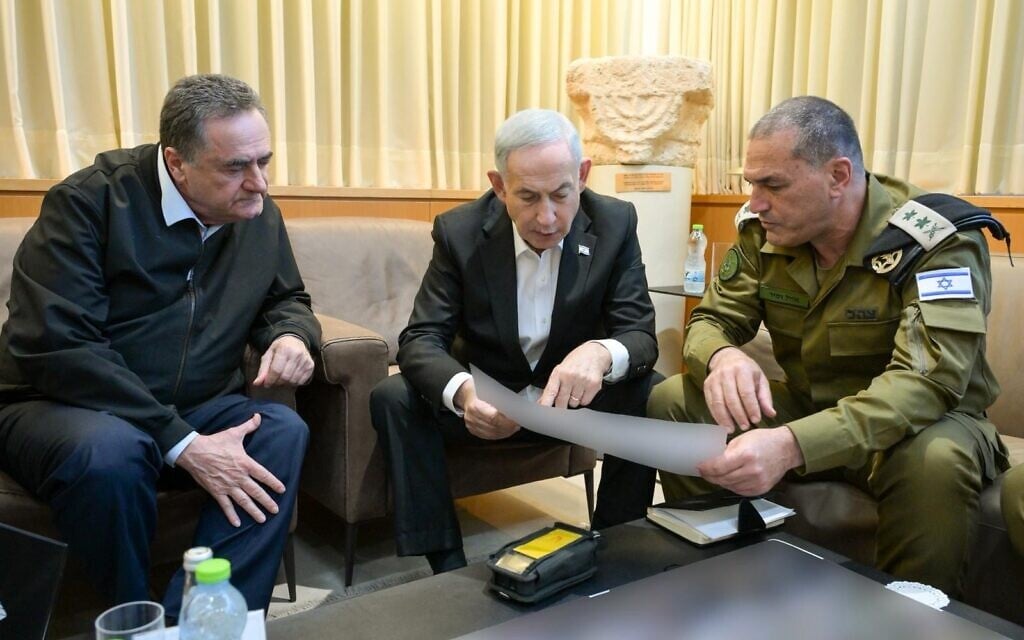
Prime Minister Benjamin Netanyahu (C) meets with Defense Minister Israel Katz (L) and IDF chief of staff Eyal Zamir at the Kiriya in Tel Aviv on May 26, 2026 (Maayan Toaf/GPO)

Prime Minister Benjamin Netanyahu (C) meets with Defense Minister Israel Katz (L) and IDF chief of staff Eyal Zamir at the Kiriya in Tel Aviv on May 26, 2026 (Maayan Toaf/GPO)

As Washington appeared closer than ever this weekend to an agreement with Iran — and as reported details of the emerging framework ricocheted through the media — Prime Minister Benjamin Netanyahu tried to reassure an increasingly uneasy public that Israel’s core interests would be protected no matter what happens at the negotiating table.

Half a day after Trump announced that an agreement had been “largely negotiated,” Netanyahu stated on X that the president assured him over the phone Saturday night that “any final agreement with Iran must eliminate the nuclear danger,” and that Trump “reaffirmed Israel’s right to defend itself against threats on every front, including Lebanon.”

Regardless of what Trump may have told the premier, however, the apparent contours of the agreement, understood mostly based on anonymous accounts from Washington, Tehran, and Jerusalem, raised Israeli concerns that Trump was preparing to settle for far less than the US-Israeli campaign against Iran originally set out to achieve.

While Trump and Netanyahu initially framed the campaign in sweeping strategic terms — seeking not only to degrade Iran’s nuclear program but also to weaken its missile infrastructure and regional proxy network and perhaps even create the conditions for regime change — the current framework bears no indication of meeting Israel’s concerns on those issues.

The plan is said to include a ceasefire in the ongoing conflict between Israel and Iran-backed Hezbollah in Lebanon, essentially shackling the Israel Defense Forces from dealing with a direct threat to the Israeli homefront initiated at the behest of Iran.

Yet despite the impact such a deal would have on Israel, negotiations until now have reportedly been held with the near-total exclusion of Jerusalem, raising fears that threats Netanyahu has long described as “existential” will not be adequately addressed.
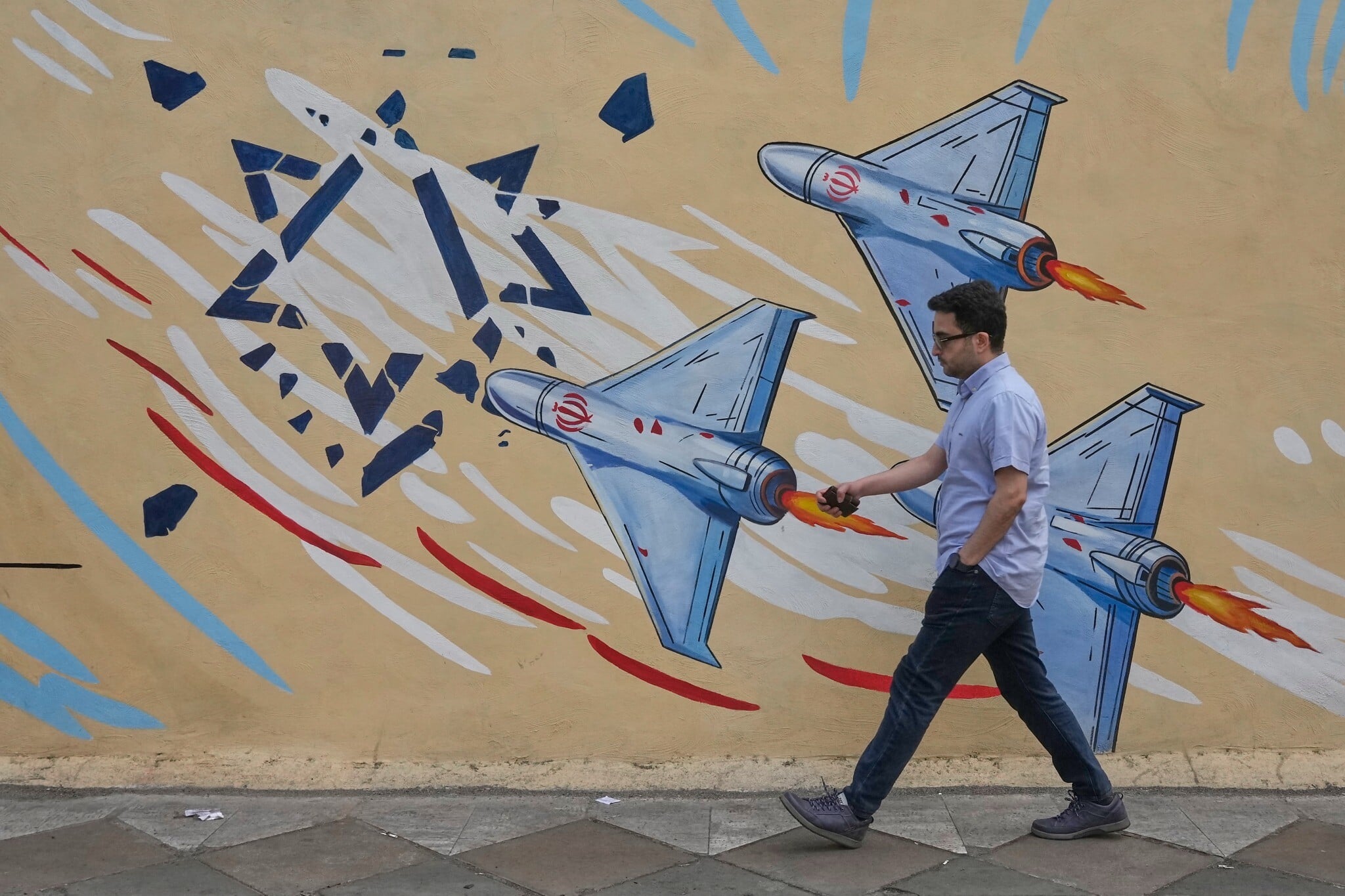
A man walks past an anti-Israel mural in downtown Tehran, Iran, Sunday, May 17, 2026. (AP Photo/Vahid Salemi)

While Israel won’t officially be party to whatever agreement emerges, it will effectively be bound by it. Israel is limited in what it can achieve militarily without the US’s participation and Netanyahu is highly unlikely to break with the Trump White House or be seen torpedoing the president’s deal-making, even on such weighty matters.

It’s unclear what steps Israel is taking beyond calls between Netanyahu and Trump to try to ensure its concerns are taken into account at the negotiating table. Whether Israel has sufficient leverage to pressure Trump is also unknown.

What does seem clear is that Trump is ready to end the fighting and get the Strait of Hormuz open, extending a temporary ceasefire that has now lasted as long as the war itself.
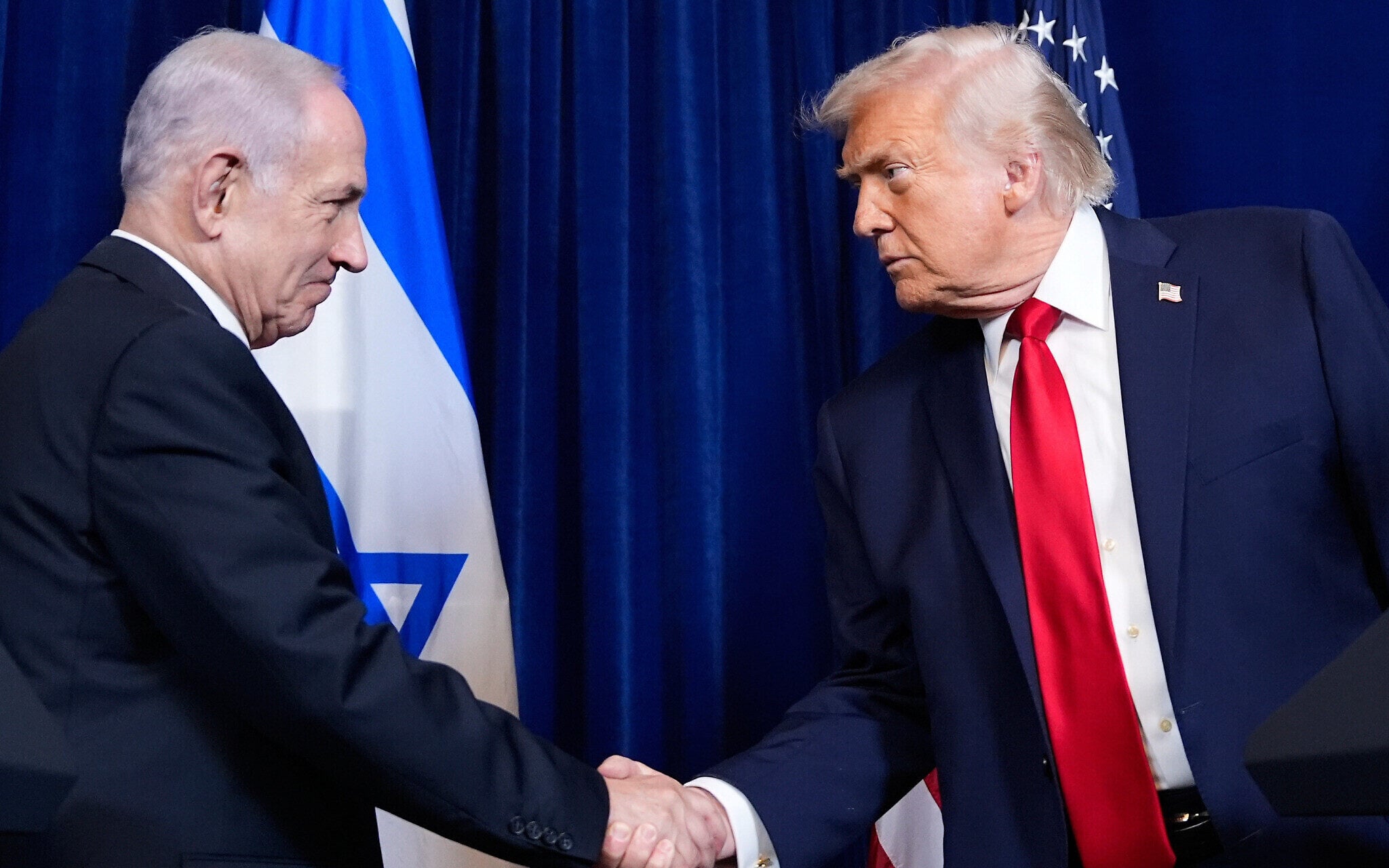
US President Donald Trump, right, shakes hands with Prime Minister Benjamin Netanyahu during a news conference at Mar-a-Lago, in Palm Beach, Florida, December 29, 2025. (Alex Brandon/AP)

With its planes idled and bombs packed away, the mission for Israel is now securing clear guarantees and operational understandings from Washington — not just verbal commitments in private calls — on core issues from nuclear enrichment to Hezbollah threats.

A narrower endgame

According to multiple reports, confirmed by Israeli officials, the sides are currently discussing a preliminary Memorandum of Understanding that would extend the current ceasefire for another 60 days and reopen the choked Strait of Hormuz, with the fate of Iran’s nuclear program relegated to discussions during that period, and no requirement for Iran to export its stockpile of highly enriched uranium.

Iranian officials have publicly denied agreeing to transfer enriched uranium abroad and stressed that nuclear issues remain outside the current memorandum talks, even as Washington insists those terms would be part of any final, permanent deal.
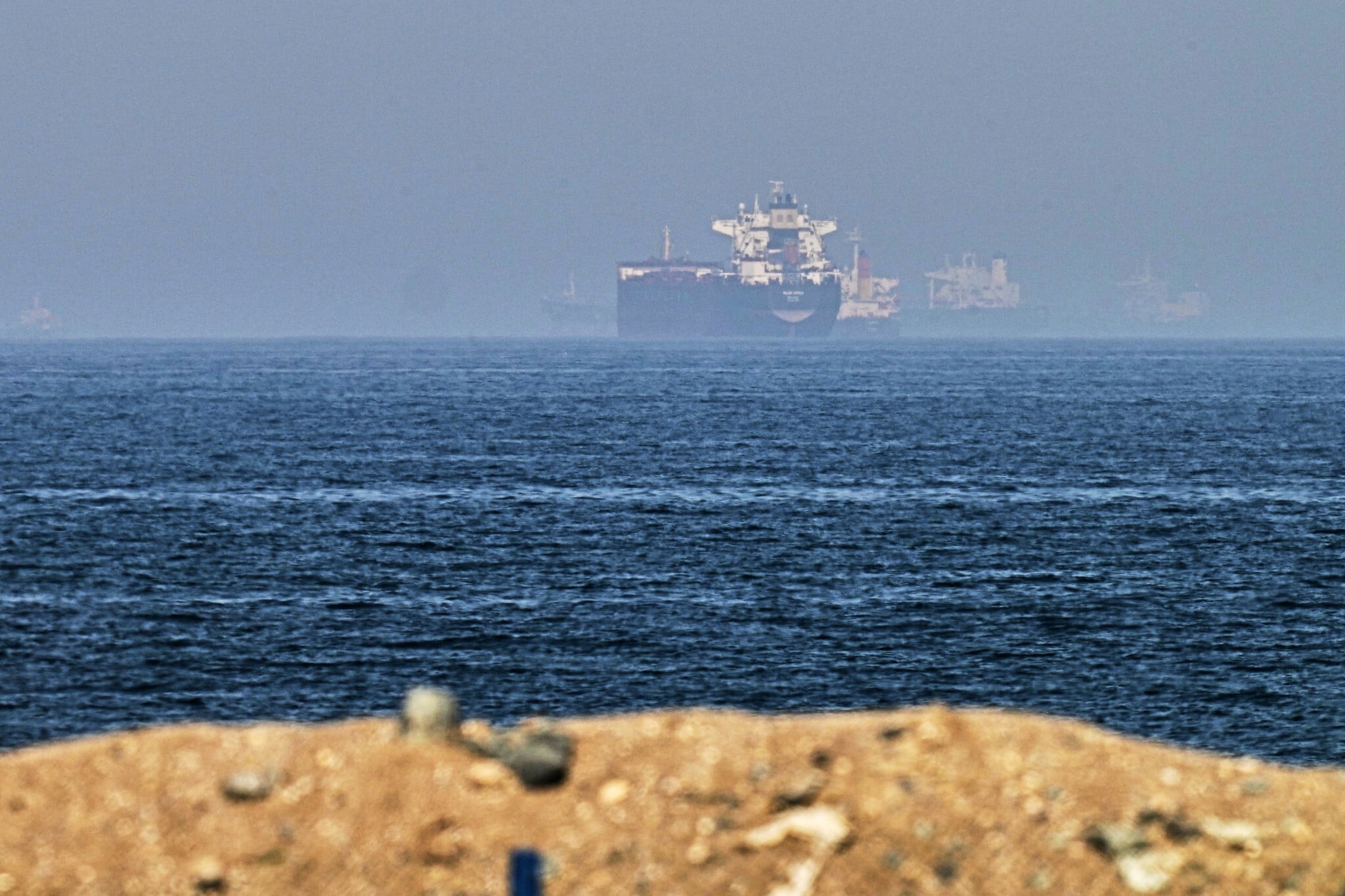
Cargo ships are seen at sea near the Strait of Hormuz, as viewed from a rocky shoreline near Khor Fakkan, United Arab Emirates, May 1, 2026. (AP/Fatima Shbair)

In return for allowing safe transit through Hormuz, the memorandum would reportedly enable Iran to trade oil and unfreeze some $25 billion in Iranian assets overseas, thereby easing what had been a key pressure tactic by Washington to push Iran into a nuclear deal. Even if a final agreement never materializes, the financial relief Iran stands to gain in the preliminary phase alone could assist its rearming itself ahead of a future conflict.

Despite being repeatedly presented by American and Israeli officials as key components of Iran’s military power, Iran’s missile and proxy programs have hardly been mentioned publicly by US, Iranian, or Israeli officials discussing the deal, or in any of its reported details — even amid reports that Iran is restocking its missile program faster than expected.

The nuclear question remains central, though the emerging deal seemingly defers the issue to a later stage of talks that Iran has every incentive to drag out, leaving numerous unresolved questions about the future of Iran’s enriched uranium stockpile, long-term enrichment restrictions and the scope of sanctions relief.
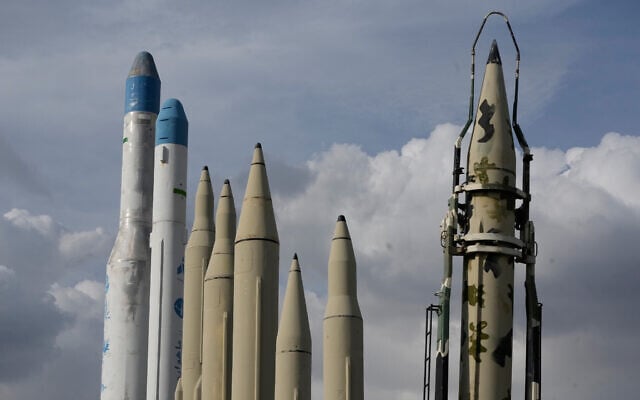
Iran’s domestically built missiles and satellite carriers are displayed in a permanent exhibition at a recreational area in northern Tehran, Iran, March 24, 2026. (AP Photo/Vahid Salemi)

Instead, what is being discussed is essentially a return to the status quo ante: reopening the Strait of Hormuz and stabilizing the global economic crisis — raising concerns that Tehran will simply revert to its pre-war stance of accepting only limited restrictions on enrichment and inspections in exchange for sanctions relief.

The Iranians appear to have “left open the possibility of discussing [the removal of their enriched uranium] — but once that discussion comes, they’ll be free to refuse as before, after much of the pressure system on them has already relaxed,” said Eran Lerman, former deputy director of Israel’s National Security Council and vice president of the Jerusalem Institute for Strategy and Security.

A boost to Iranian deterrence

The risks of the deal for Israel extend beyond material gains for Iran.

While Iran was significantly battered in the war, a major ceasefire extension with immediate financial reprieve — not to mention the long-term deal that could potentially follow — may significantly shift the regional balance of power and Iran’s own perception of its leverage within it.

The direction things appear headed in “enhances Iran’s leverage over its neighbors, particularly in the Gulf… They see that Iran took the United States and Israel’s best punch and survived,” said Dan Shapiro, former US ambassador to Israel and distinguished fellow at The Atlantic Council.

If Iran were to use the 60-day ceasefire to significantly rebuild its missile capabilities, Shapiro continued, Gulf states — who were heavily targeted by Iranian drones and missiles throughout the war — would likely begin shifting their thinking to focus on how to avoid another confrontation with Iran, rather than how to align further with the United States.
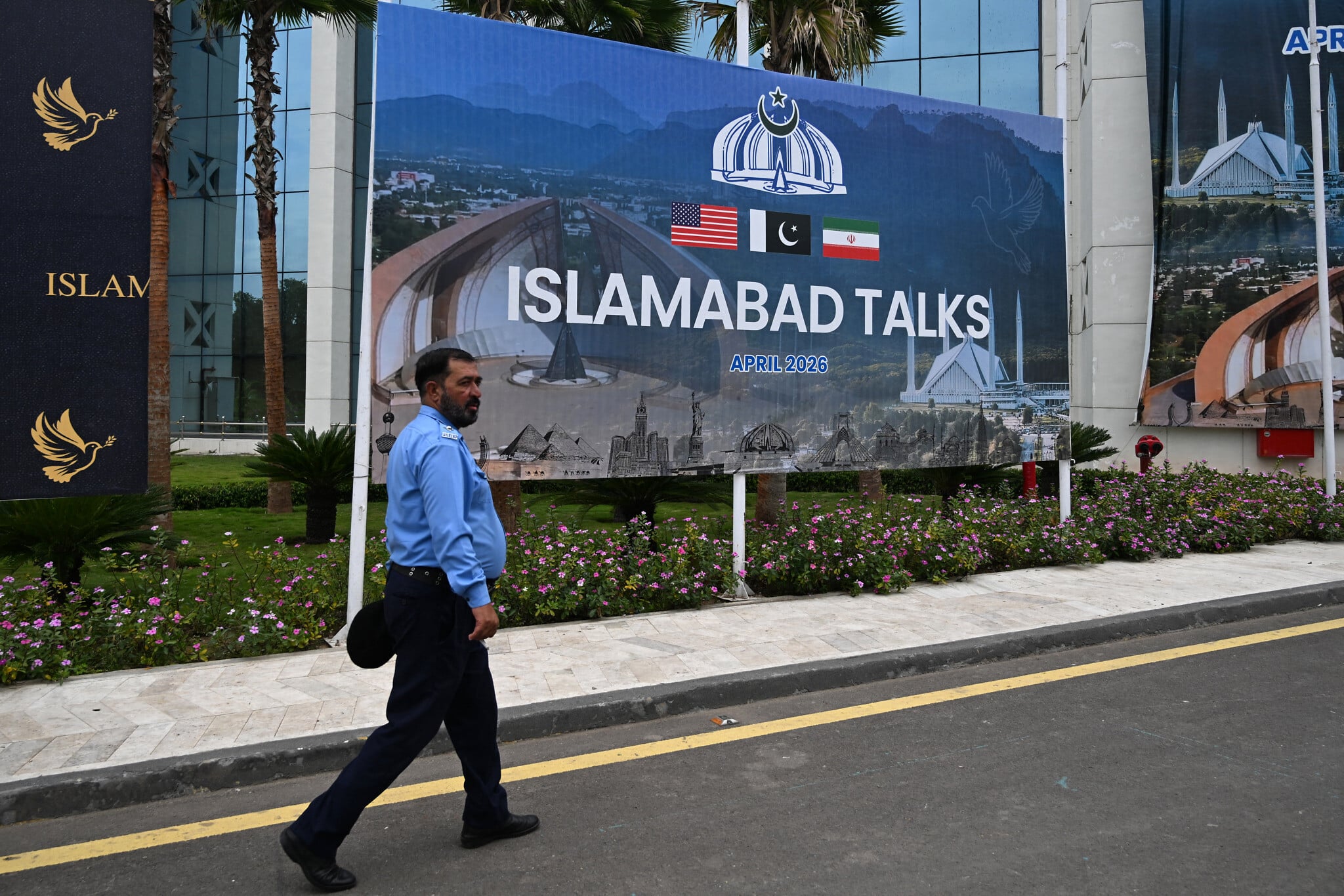
A police officer walks past a billboard for the US-Iran talks in Islamabad on April 11, 2026 (Aamir QURESHI / AFP)

“Iranian deterrence is working, and that is a very, very worrying thing,” Lerman said.

He added that Iran is still able to project power beyond its borders, pointing to its Hezbollah proxy terror group in Lebanon, which has recently stepped up drone attacks on Israeli forces in southern Lebanon and civilian targets inside Israel.

The recent surge signals that Hezbollah “feels quite confident about ignoring both [Israel] and the Americans, and also the Lebanese government, with the sense that the Iranians are still there for them.”

While Trump has repeatedly warned he would return to war if negotiations collapsed, and while the US carried out limited strikes on Iranian boats Monday in what it described as defensive action, those signals ring increasingly hollow after the US backed off aggressive action to reopen Hormuz in the face of renewed Iranian strikes on the United Arab Emirates.
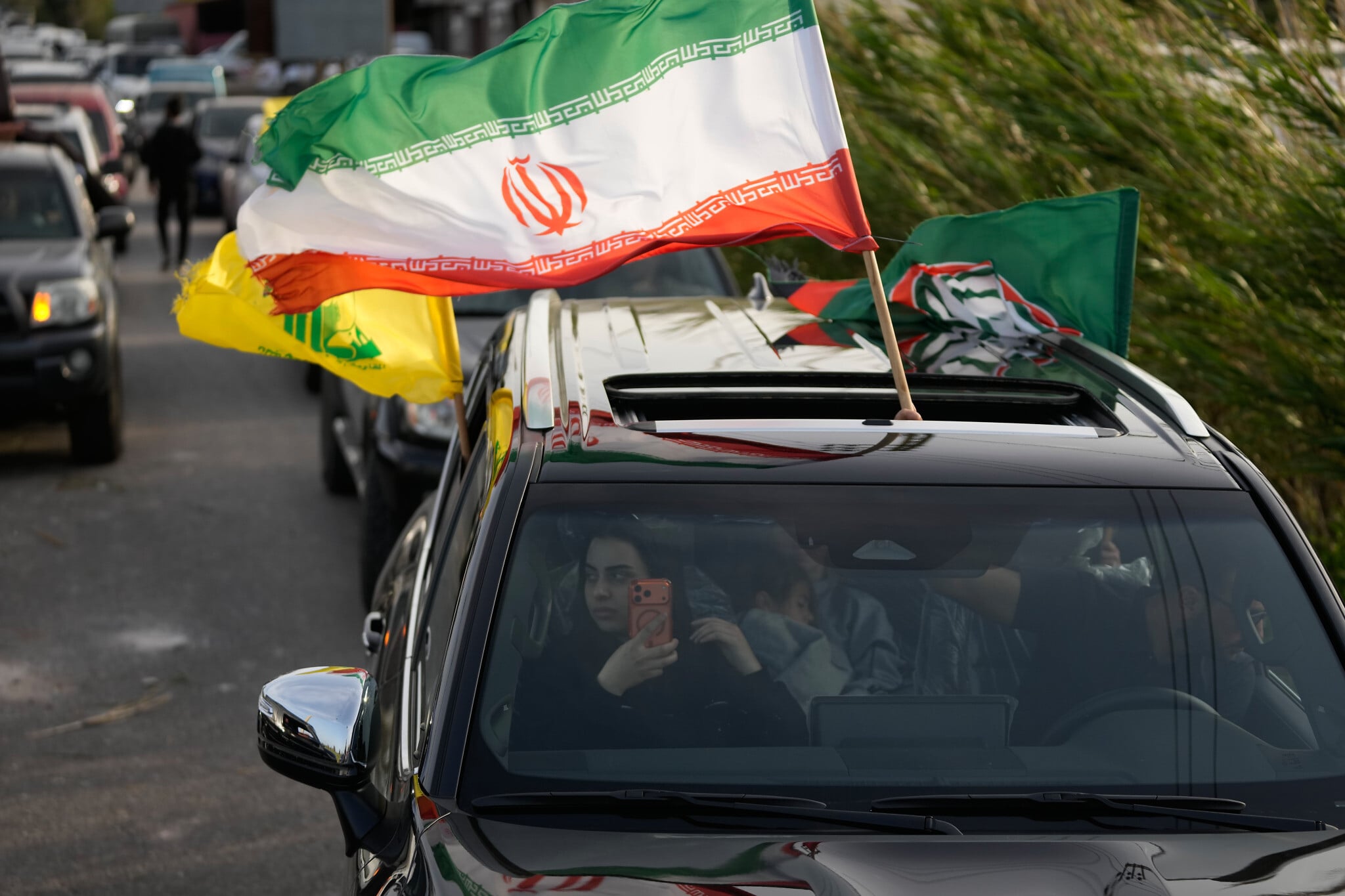
A displaced man waves the Iranian flag, as he returns with his family to their village following a ceasefire between Hezbollah and Israel, in Qasmiyeh near Tyre, south Lebanon, April 17, 2026. (AP/Mohammed Zaatari)

“The Americans did not exploit the military capabilities they could have deployed” on Hormuz, Lerman argued. “Acting systematically against Iran’s capacity to threaten shipping, and perhaps also taking control of some of the Iranian islands… could have changed the military balance. [But] at this stage, I don’t see Trump willing to do that.”

Shapiro, who has been critical of the decision to launch military action against Iran on February 28, maintained that an operation to reopen Hormuz would have caused “an already severe global economic crisis to go into overdrive. So President Trump needed an off-ramp, and this is what he was able to construct.”

Seeking compensation

While Israel has no part in the deal, it will seemingly be largely bound by its terms. Shaping the agreement to whatever extent possible and making sure it is at least granted compensatory benefits have thus become key strategic interests.

Considering that it appears the current draft “addresses none of our strategic concerns,” Jerusalem must make clear to Washington that “essential and even existential issues are at stake here, and we have to act according to those national interests,” said former Israeli ambassador to the US Michael Oren.
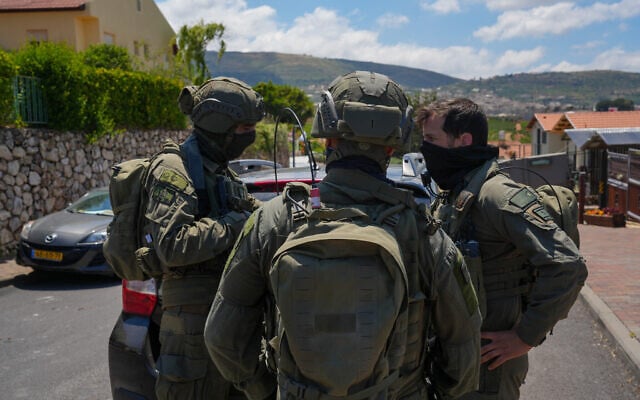
Israeli security forces are seen outside a home in Metula, near the Israel-Lebanon border, that was hit by a Hezbollah unmanned aerial vehicle on May 25, 2026. (Ayal Margolin/Flash90) 
 

Outside of the deal, it’s reasonable for Israel to use its tight alliance with the US, and the Trump administration specifically, to negotiate plans for how to respond — either jointly or independently — to developments that Jerusalem may feel necessitate action, such as Hezbollah threatening troops or citizens or Iran moving to reconstitute its nuclear program.

“We should be able to discuss things with Donald Trump that we wouldn’t be able to discuss with the previous administration,” said Oren.

He suggested that the US could also compensate Israel for aspects of the deal it opposes through military cooperation, such as offering the Israeli military access to B-2 bombers.
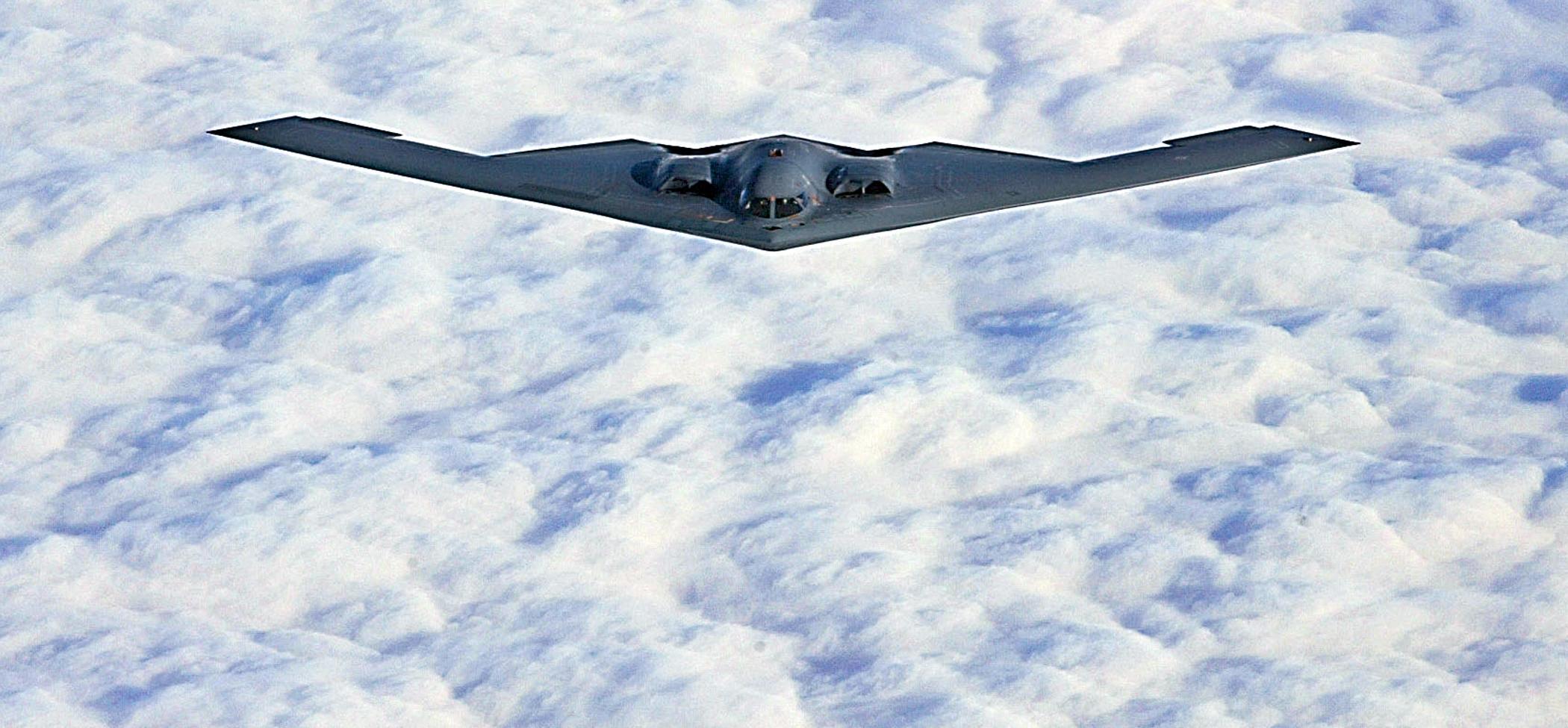
Illustrative: A B-2 Stealth Bomber flies somewhere over the state of Missouri, October 30, 2002. (TIM SLOAN / AFP)

Trump appeared to have a different form of compensation in mind Monday, demanding that six Muslim-majority and Middle Eastern countries join the Abraham Accords normalization agreements with Israel in exchange for the US negotiating with Iran rather than relaunching military action.

“We’re at a watershed moment,” said Oren.

But whatever diplomatic gains emerge in concert with the deal, guaranteeing that the agreement keeps Israel secure will remain a crucial priority.

Agencies and Times of Israel Staff contributed to this report.


Iran says it targeted base that enabled overnight US attack on Bandar Abbas airport * IDF says it launched strikes targeting Hezbollah infrastructure in Lebanese coastal town of Tyre By ToI StaffToday, 4:00 am
  A US Navy F/A-18E Super Hornet launches from the flight deck aboard Nimitz-class aircraft carrier USS George H.W. Bush (CVN 77) in the Middle East, in a photo released May 20, 2026. (US Navy photo)

IDF announces senior Hamas moneyman killed in Gaza strike this week

By Emanuel Fabian An airstrike in the southern Gaza Strip earlier this week killed a senior Hamas moneyman, the IDF announces. The Tuesday strike in Khan Younis killed Ihab Khrizim, who the military says headed a central network for transferring funds to Hamas. The strike also killed IDF Mohammed al-Habash, a commander in Hamas’s weapons production headquarters, according to the IDF. Khrizim was responsible for “managing the transfer of millions of dollars to Hamas’s military wing,” and recently, he “continued to violate the ceasefire agreement,” as his actions enabled Hamas to advance attacks on troops and Israeli civilians, the IDF says. The IDF says his killing “constitutes a significant blow to the rehabilitation and force-building efforts of the Hamas terror organization.”

IDF detains 7 Palestinian terror suspects across West Bank; some accused of planning imminent attacks

By Stav Levaton Troops from the IDF’s Duvdevan commando unit under the direction of the Shin Bet arrested five Palestinian terror suspects in a series of operations across the West Bank over the past two days, including one accused of planning an attack in the immediate future, the military says. According to the IDF, the suspect was detained in Jenin. In a separate raid in the village of Zeita, troops arrested a Hamas-affiliated suspect accused of “advancing terror activity.” The IDF says three additional suspects were arrested in the Qalandiya and Al-Bireh areas, including one armed operative accused of incitement and another involved in assembling explosive devices. Separately, undercover Border Police officers operating under Shin Bet direction arrested two additional Palestinian suspects overnight in Nablus who were also allegedly planning to carry out an attack imminently. According to the IDF, the undercover forces surrounded the building where the suspects were hiding and negotiated their surrender before arresting them. All of the suspects were transferred to security forces for further questioning, the military says.

At least 15 students dead after fire at girls’ school in Kenya, police say

By Reuters A fire tore through a dormitory at a girls’ school in a town in Kenya’s Rift Valley overnight, killing at least 15 students, police say. An unknown number of students were also injured at Utumishi Girls’ Academy Senior School in Gilgil in Nakuru County, the Gilgil Police Station says in a report seen by Reuters. The cause of the fire was not known, it says. Footage aired by Citizen Television shows broken window panes and smoke-stained walls. Kenya has a long history of school fires, with more than 60 cases of arson in public secondary schools recorded in 2018 alone, according to government data. Many of the fires have been set by students protesting harsh discipline and poor conditions, researchers have found. Masoud Mwinyi, a senior police commander, tells reporters at the school that 50 officers were combing areas around the school for students who may have fled when the fire broke out. “Of that shock and fear and anxiety, many people went out, and it was at night,” he says.Share 55min ago

Health ministry reports no current Ebola cases in Israel following outbreak in DRC

By Diana Bletter Following the outbreak of the Bundibugyo strain of Ebola virus in the Democratic Republic of Congo, with nearly 1,000 cases and over 200 deaths reported since May 5, the Health Ministry urges the public to avoid non-essential travel to areas where there is an outbreak. The ministry says that there has never been a case of Ebola in Israel as far as is known. There is also no known spread of the virus outside of Africa, except for patients who were flown securely to receive medical treatment in Europe and the US. Ebola is a lethal infectious disease with high fatality rates, transmitted primarily through direct contact with a symptomatic patient or with blood, secretions, and body fluids. The ministry says that travelers who have returned from areas with an Ebola outbreak and develop a fever or other unusual symptoms within 21 days of their return are asked to avoid contact with others and contact a medical professional immediately by phone.Share

AG calls on High Court to overturn appointment of Gofman as new Mossad chief

By Jeremy Sharon   From L to R: Attorney General Gali Baharav-Miara, at the Knesset, in Jerusalem, September 30, 2025. (Oren Ben Hakoon/Flash90); Incoming Mossad head Maj. Gen. Roman Gofman arrives at the Knesset, in Jerusalem on February 5, 2026. (Yonatan Sindel/Flash90) Attorney General Gali Baharav-Miara accuses the appointments committee that reapproved the selection of Maj. Gen. Roman Gofman as new Mossad chief of ignoring key facts in the case, asserting that Gofman’s actions in a controversial incident from 2022 constitute a “substantial blemish” on his ethical conduct and saying that the High Court of Justice should therefore annul his appointment. The Senior Appointments Advisory Committee reapproved Gofman’s appointment on Tuesday 3-1 after the High Court ordered the committee to hear and review new evidence and testimony that it failed to obtain when it first approved Gofman’s appointment in April. But in her response to the committee’s decision sent to the court this morning, Baharav-Miara states that the new evidence and testimony the committee reviewed shows Gofman was aware that the IDF’s 210th Division he commanded in 2022 had used blogger Ori Elmakayes in an influence operation, and that Gofman failed to intervene on Elmakayes’s behalf after he was wrongfully arrested and indicted on espionage charges as a result of his work with Gofman’s division. The attorney general says that the committee ignored the critical new evidence it reviewed after the court order, essentially accusing the committee majority of seeking to appoint Gofman regardless of the facts of the case. “Even after the majority of the committee members were given an opportunity to review the examination process it conducted, they failed,” writes Baharav-Miara. “The opinion of the committee majority ignores some of the real-time testimonies and documents, which have significant weight for understanding the matter, and includes ‘inaccuracies,’ as the committee chair said,” adds the attorney general in reference to retired Supreme Court president Asher Grunis who voted against immediately approving Gofman’s appointment and in favor of further clarifying the affair.Share

British Museum postpones Jewish Culture Month lecture on Ancient Israel and Judah due to security concerns

By Rossella Tercatin The British Museum in London has postponed a lecture on “Ancient Israel and Judah in the British Museum,” scheduled for today to celebrate Jewish Culture Month, due to security concerns, according to the museum’s statement. Paul Collins, Keeper of the Department of the Middle East, was supposed to give an hourlong talk on how “the histories of the kingdoms of Israel and Judah can be illuminated by the archaeology and art of the wider ancient Middle East,” focusing on the artifacts preserved in the museum. The museum says the event will take place at an unspecified later date. “In recent days, we were informed that a significant proportion of registered attendees were individuals intending to deliberately disrupt the event, preventing others from participating in good faith and undermining the purpose of the programme,” the statement reads. “The British Museum fully recognises the importance of lawful protest and freedom of expression in a democratic society,” it adds. “Equally, we have a responsibility to ensure that events hosted within the Museum can proceed safely, securely and without intimidation for speakers, staff and visitors alike.” The museum pledges to continue supporting Jewish Culture Month. In recent months, the British Museum has been at the center of a controversy regarding the use of the term Palestine and Palestinian in some of its displays.Share

Drone sirens sound in northern town near Lebanese border

By Stav Levaton Sirens sound in the northern community of Shtula near the Lebanese border, warning of a suspected Hezbollah drone infiltration. The IDF says the details are under review.Share

Australian police charge Melbourne woman accused of traveling to Syria to join Islamic State

By AP An Australian woman has been charged with traveling to Syria and joining the Islamic State group, Australian Federal police say. The 34-year-old woman was arrested at her Melbourne home eight months after she returned to Australia via Lebanon with another woman, Australia Federal Police Deputy Commissioner Hilda Sirec says. The arrest comes two days after seven women and 12 children linked to IS returned to Australia from a Syrian refugee camp against the wishes of the Australian government. Three weeks ago, four women and nine children in similar circumstances returned from the same Roj camp for displaced people, which is located near the area where the frontiers of Syria, Turkey and Iraq converge. Three of the four women were charged on arrival with slavery and terrorism offenses and remain in custody. All the women who returned from Syria this month remained under police investigation. Another woman, who accompanied the woman charged Thursday to Australia from Lebanon, also was under investigation, Sirec says. A period of time passing without charges does indicate investigations have ceased, Sirec notes. The woman most recently arrested in Melbourne is expected to appear today in the Melbourne Magistrates’ Court on a charge of entering and remaining in a declared conflict zone. She also has been charged with joining a terrorist organization, ISIS. Each charge carries a potential maximum sentence of 10 years in prison. Police allege she traveled to Syria between 2013 and 2014 to join ISIS. She was captured by Kurdish forces in March 2019 after IS fighters were defeated and placed in al-Hol camp for displaced people. She returned to Australia on Sept. 26, police allege.Share  

Israel reportedly cutting ties with UN chief Guterres over inclusion on sexual violence list

  United National Secretary-General Antonio Guterres attends an event to mark the end of the UN political mission in Baghdad, Iraq, December 13, 2025. (AP Photo/Hadi Mizban) Israel’s Ambassador to the United Nations Danny Danon says Jerusalem is freezing cooperation with the office of UN Secretary General Antonio Guterres over a decision to place Israel on a list of sexual violence in conflict zone offenders, the Ynet news site reports. In a tweet, Danon slams the alleged addition of Israel, which has not been announced by the UN, calling it a “political decision” and “disconnected from facts and from reality.” A UN report released by Gutteress’s office in July 2025 included Hamas on its list of “parties credibly suspected of committing or being responsible for patterns of rape or other forms of sexual violence in situations of armed conflict.” The move followed a finding by Special Representative Pramila Patten that the terror group engaged in systematic sexual violence during the October 7, 2023, attack and against hostages held in Gaza. According to Ynet, Israel believes the decision to include Hamas sparked pressure on Turtle Bay to also include Israel. The latest annual report on sexual violence in conflict zones has yet to be made public. “Anyone able to include Israel on the same list as the terrorists and rapists of Hamas has no moral standing to seek cooperation,” Danon says, according to Ynet. He adds that Israel “will wait for a professional and fair secretary general to enter office.” Guterres is slated to end his term at the end of the year.Share 4hr ago

IRGC says it targeted US base in retaliation for strikes, as ceasefire teeters

By AFP and ToI Staff Iran’s Islamic Revolutionary Guard Corps targeted an American base on Thursday in retaliation for US strikes on the country’s south, Iran’s state broadcaster IRIB reports. “Following this morning’s aggression by the invading US military against a location on the outskirts of Bandar Abbas Airport using aerial projectiles, the American air base that served as the source of the attack was targeted at 4:50 am (0120 GMT),” the IRGC says, according to IRIB. It does not provide details of the location of the base, though Kuwait, a US ally, said it was responding to missile and drone attacks on Thursday morning. The back-and-forth challenges the fragile ceasefire between the US and Iran, four days after US President Donald Trump claimed a deal extending the truce by 60 days was nearly complete.


US president urges Pakistan, Saudi Arabia and Qatar to normalize ties with Israel; Saudi source says not without ‘irreversible pathway’ to Palestinian state

US President Donald Trump arrives at the White House , May 22, 2026, in Washington. (AP Photo/Jose Luis Magana)

US President Donald Trump arrives at the White House , May 22, 2026, in Washington. (AP Photo/Jose Luis Magana)

US President Donald Trump insisted on Monday that six Muslim-majority countries join the Abraham Accords normalization agreements with Israel ahead of any deal between the US and Iran to end the war, negotiations on which he said were “proceeding nicely.”

The remarks were the second time in as many days that Trump tried to link the emerging deal with Iran to the accords, which were first signed in September 2020 by the United Arab Emirates and Bahrain, followed by Morocco and Sudan months later.

“Negotiations with the Islamic Republic of Iran are proceeding nicely! It will only be a Great Deal for all or, no Deal at all,” Trump announced on Truth Social on Monday, reiterating his oft-uttered threat that if no deal is reached, it will mean “Back to the Battlefront and shooting, but bigger and stronger than ever before.”

He said that during discussions with leaders of Muslim and Arab states, he told them that “after all the work done by the United States to try and pull this very complex puzzle together, it should be mandatory that all of these Countries, at a minimum, simultaneously, sign onto the Abraham Accords.”

He specified that the countries he wished to see sign onto the accords included Saudi Arabia, Qatar, Pakistan, Turkey, Egypt, and Jordan. He said he also spoke to the UAE and Bahrain about this possibility.

It was not clear why Egypt and Jordan would be required to sign the Abraham Accords, given that both have had peace treaties with Israel since 1979 and 1994, respectively. Turkey and Israel have had rocky relations almost since the founding of the State of Israel, with long periods of amicable ties, although those have nosedived in the past decade.

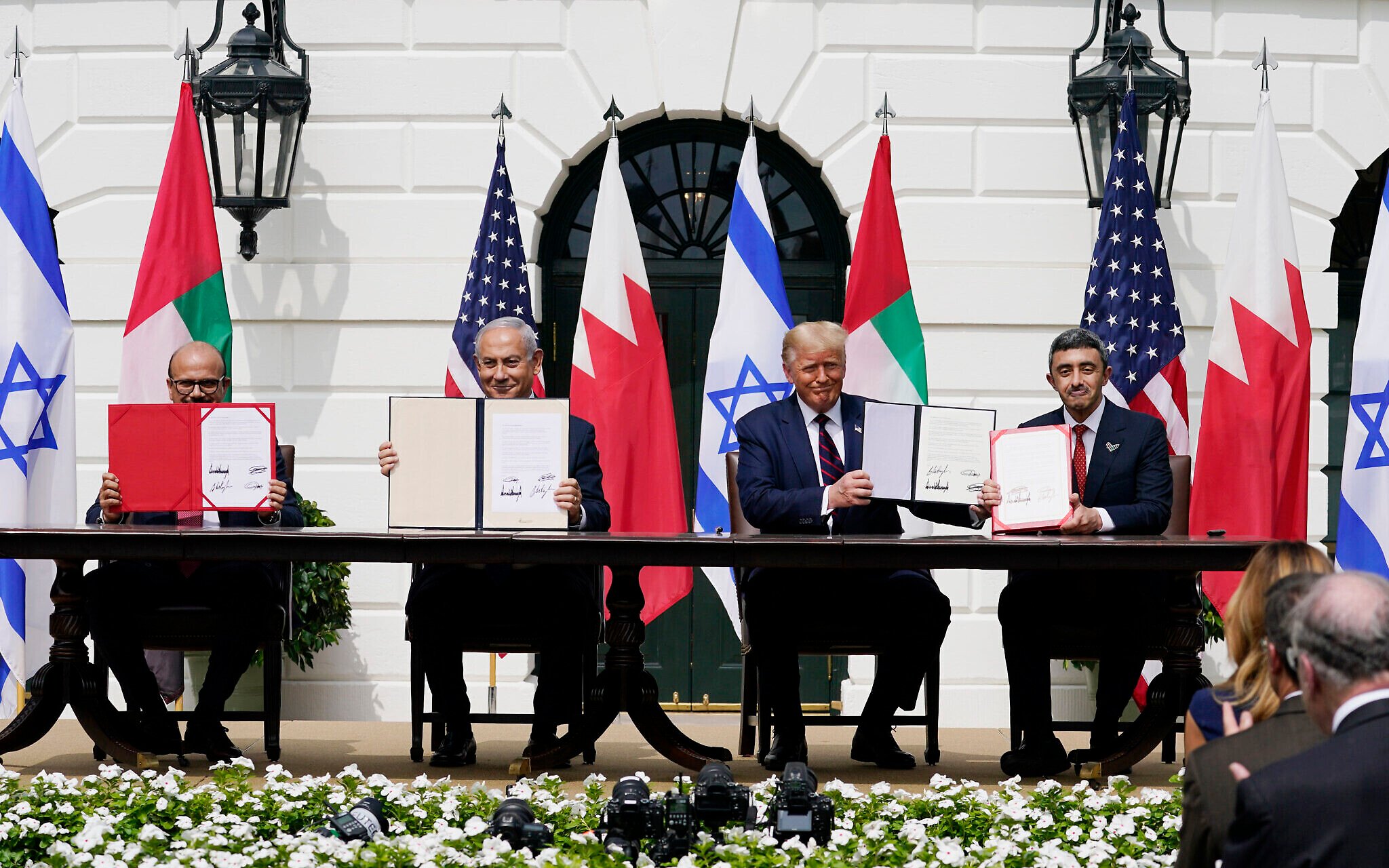
From left, Bahrain Foreign Minister Khalid bin Ahmed Al Khalifa, Prime Minister Benjamin Netanyahu, US president Donald Trump, and United Arab Emirates Foreign Minister Abdullah bin Zayed al-Nahyan, sit during the Abraham Accords signing ceremony on the South Lawn of the White House, in Washington, September 15, 2020. (AP Photo/Alex Brandon)

After the US leader’s comments, a Saudi source told international outlets that Riyadh will only normalize relations with Israel if an “irreversible pathway” to Palestinian statehood is established.

The Trump administration has long viewed Saudi-Israeli normalization as the crown jewel of the Abraham Accords, though efforts toward that end largely stalled during Israel’s war against Hamas in Gaza. Riyadh has since repeatedly insisted that such an agreement must follow meaningful movement on the Palestinian issue.

Trump’s request for the Muslim and Arab states to join the Abraham Accords was first reported by Axios on Sunday.

The US president did not mention Israel in Monday’s lengthy post, and it was not immediately clear whether he was envisioning traditional accession to the Abraham Accords — which were brokered during his first term — or envisioning the creation of a political framework built around broader aims.

He said the expansion of the accords “should start with the immediate signing by Saudi Arabia and Qatar, and everybody else should follow suit.”

If countries do not sign, he said, they should not be involved in any deal with Iran as “it shows bad intention.”

“It may be possible that one or two have a reason for not doing so, and that will be accepted, but most should be ready, willing, and able to make this Settlement with Iran a far more Historic Event than it would, otherwise, be,” he added.

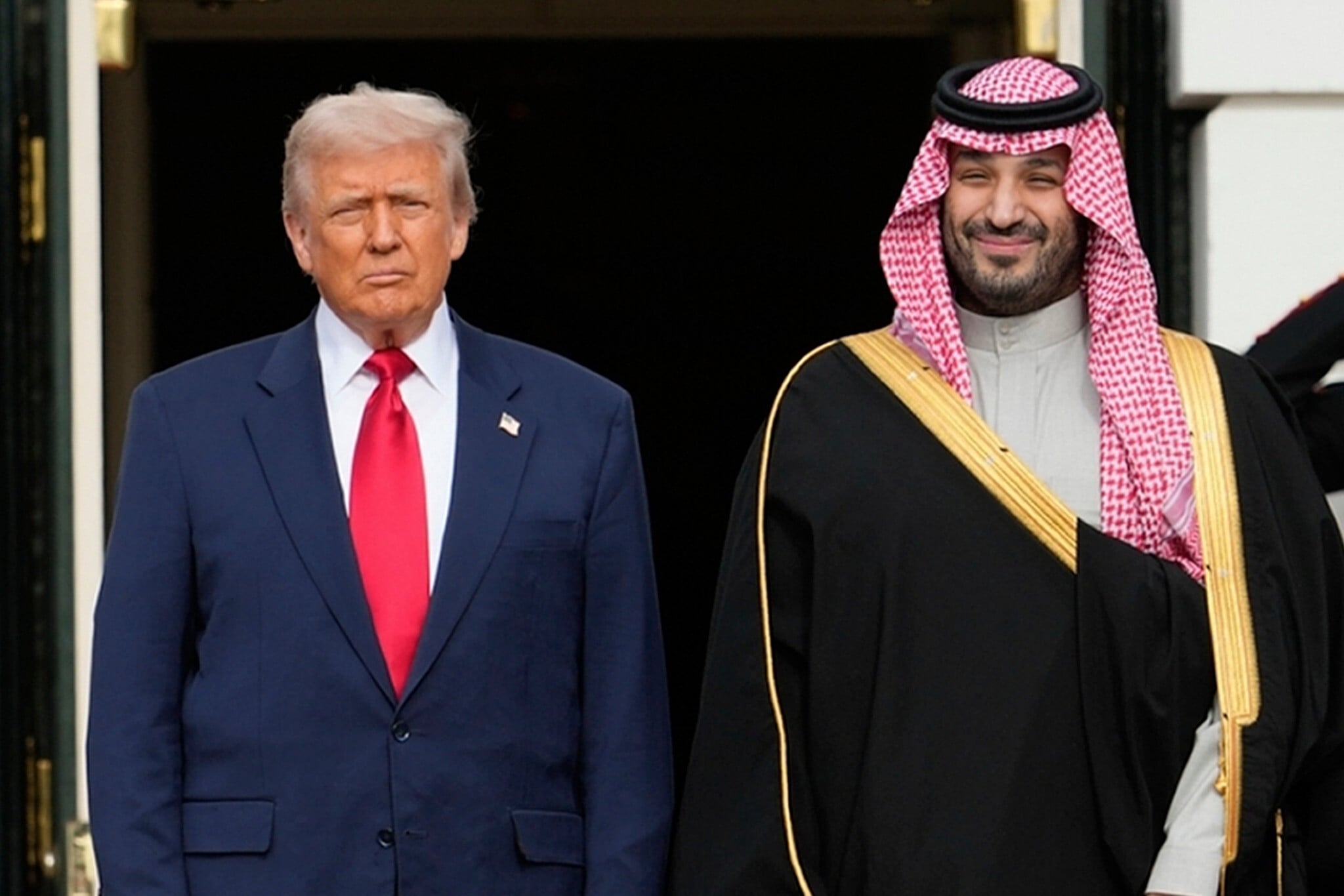
US President Donald Trump stands with Saudi Arabia’s Crown Prince Mohammed bin Salman on his visit to the White House, in Washington, November 18, 2025. (Mark Schiefelbein/AP)

Pakistan has said it will not recognize Israel until the establishment of an independent Palestinian state. Qatar, too, has no formal ties with Israel, although Doha is a key US ally and was a central mediator in negotiations between Israel and Hamas throughout the two-year Gaza war, sparked by the October 7, 2023, Hamas attack.

Axios, citing a US official, said the leaders of the countries Trump spoke to reacted to his normalization request with silence.

“There was silence on the line and Trump joked and asked if they are still there,” one of the officials was quoted as saying.

Apparently undeterred, the US president further claimed in his Truth Social post that “numerous” of the leaders he spoke to “would be honored,” as soon as a deal with Tehran is signed, “to have the Islamic Republic of Iran as part of the Abraham Accords.”

Trump suggested on Sunday that Iran, which is sworn to Israel’s destruction, could “perhaps” join the agreements after a deal is reached.

“The Abraham Accords have proven to be, for the Countries involved (The United Arab Emirates, Bahrain, Morocco, Sudan, and Kazakhstan), a Financial, Economic, and Social BOOM, even during this time of Conflict and War, with the current Members never even suggesting leaving, or taking so much as even a pause,” he continued.

Suggesting that he was indeed envisioning a vastly expanded Abraham Accords framework over simply establishing ties between Israel and its neighbors, Trump declared that “nothing in the past, or in the future, will surpass” it.

“Therefore, I am mandatorily requesting that all Countries immediately sign the Abraham Accords, and that, if Iran signs its Agreement with me, as President of the United States of America, it would be an Honor to have them also be part of this unparalleled World Coalition,” wrote the president.

Such a coalition, he said, would ensure the Middle East becomes “United, Powerful, and Economically Strong, like perhaps no other area, anywhere in the World!”

He added that he had asked his representatives — reportedly Steve Witkoff and Jared Kushner — to immediately “begin, and successfully complete, the process of signing these Countries into the already Historic Abraham Accords.”

Trump’s post suggested that he was seeking to offer Israel an upside in the nascent deal to end the war with Iran, whose reported terms have set off alarm bells in Jerusalem. Channel 12 reported on Sunday that senior Israeli officials have warned that, “As it seems, [the agreement] does not serve Israel’s interest.” Other officials have been quoted as calling it a bad deal and highly problematic for Israel.

Israeli officials are concerned that the deal, which would reportedly begin with a 60-day extension of the ceasefire, does not address Tehran’s nuclear and ballistic missile programs or its support for regional proxies, delaying negotiations on these and other key war goals. According to the report, officials fear the deal would grant Iran time for economic and military recovery, after which “it will be hard for the Americans and us to go back and fight.”