
US: Iran is a viable threat to Israel’s safety

Iran, Israel’s arch-nemesis, has sworn revenge for the killing of two of its generals along with five military advisers in an air strike on an Iranian diplomatic compound in Damascus.
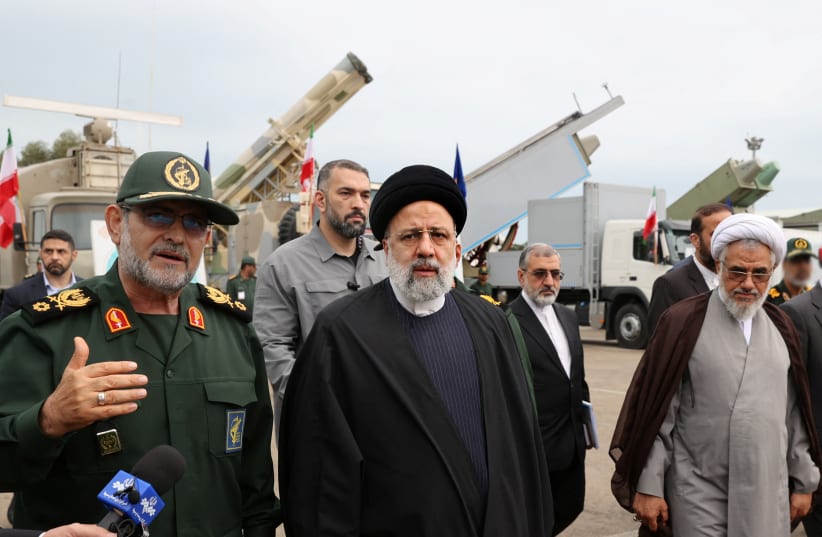
 Iranian President Ebrahim Raisi visits the military equipment of IRGC Navy in Bandar Abbas, Iran, February 2, 2024. (photo credit: IRAN'S PRESIDENCY/WANA (WEST ASIA NEWS AGENCY)/HANDOUT VIA REUTERS)
Iranian President Ebrahim Raisi visits the military equipment of IRGC Navy in Bandar Abbas, Iran, February 2, 2024.
(photo credit: IRAN’S PRESIDENCY/WANA (WEST ASIA NEWS AGENCY)/HANDOUT VIA REUTERS)
Tehran is posting a public and viable threat to Israel, the United States said on Thursday, as Israel braced for the possibility of a retaliatory attack after its suspected killing of Iranian generals in Damascus this week. Israel said it would respond forcefully, signaling it had stiffened its military preparedness.

US President Joe Biden and Prime Minister Benjamin Netanyahu discussed that threat during a short phone call they held on Thursday night.

“They did talk about a very public and very viable real threat by Iran to Israel security,” US National Security Communications Advisor John Kirby told reporters in Washington.

The White House, in a read-out of the calls, clarified that Biden “made clear that the US strongly supports Israel in the face of those threats.”

At the start of a security cabinet meeting on Thursday night, Netanyahu said “Iran has been acting against us for years, directly and through its proxies.

“Israel is acting against Iran and its proxies, both defensively and offensively,” Netanyahu stated. “We will know how to defend ourselves, and we will act based on the principle that we will harm those who attack us or intend to attack us.”
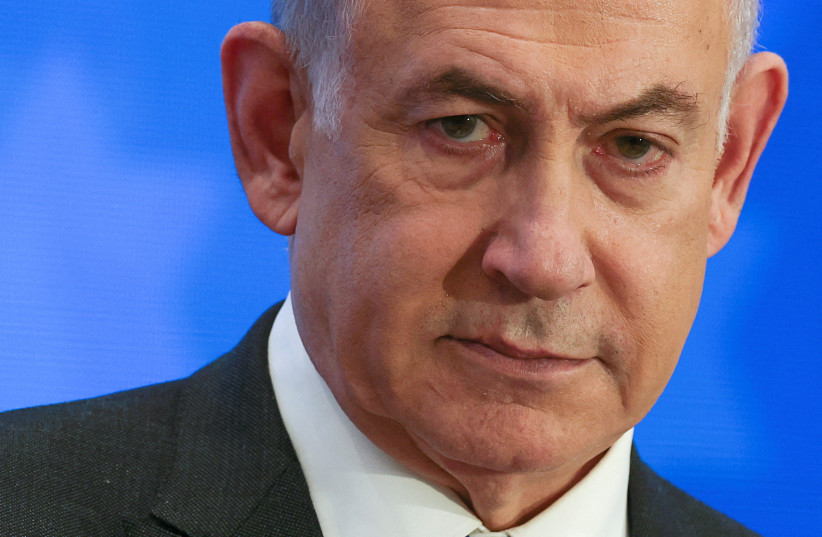
 Israeli Prime Minister Benjamin Netanyahu addresses the Conference of Presidents of Major American Jewish Organizations, amid the ongoing conflict between Israel and Hamas, in Jerusalem, February 18, 2024. (credit: REUTERS/RONEN ZVULUN/FILE PHOTO)Enlrage image
Israeli Prime Minister Benjamin Netanyahu addresses the Conference of Presidents of Major American Jewish Organizations, amid the ongoing conflict between Israel and Hamas, in Jerusalem, February 18, 2024. (credit: REUTERS/RONEN ZVULUN/FILE PHOTO)

Israel’s armed forces – stretched by nearly six months of the war in the Gaza Strip and on the Northern front – announced they were suspending leave for all combat units a day after they said they were mobilizing more troops for air defense units.

The possibility of Iran retaliating for Monday’s alleged Israeli air strike on Iran’s embassy compound in Damascus has raised the specter of a wider war, though two Iranian sources said Tehran’s response would be calibrated to avoid escalation.

Reuters journalists and residents of Israel’s commercial hub, Tel Aviv, said GPS services had been disrupted, an apparent measure to help ward off guided missiles.

Iran swears revenge

Iran, Israel’s arch-nemesis, has sworn revenge for the killing of two of its generals along with five military advisers in an air strike on an Iranian diplomatic compound in the Syrian capital on Monday.

Israel is believed to have carried out the strike, among the most significant yet on Iranian interests in Tehran’s close ally Syria. Israel has neither confirmed nor denied involvement.

Since then, investors have been on edge. The Tel Aviv Stock Exchange’s main TA-125 share index fell another 2.2% on Thursday to extend losses this week to around 4%. The shekel was 0.6% weaker versus the dollar at a 3.73 rate and government bond prices were down as much as 0.4%.

“In accordance with the situational assessment, it has been decided that leave will be temporarily paused for all IDF combat units,” the military said in a statement. “The IDF is at war and the deployment of forces is under continuous assessment according to requirements.”

With Israelis anxious about a possible escalation, the military later issued a statement clarifying that no changes had been made in its guidelines for the home front and that there was no need to gather food, cash, or generators.

Israel has been pressing its war on Hamas in Gaza since the terrorist group led a cross-border killing and kidnapping spree on October 7 and has also been trading fire almost daily with Iran-backed Hezbollah in Lebanon.

Yemen’s Houthi rebels, who are aligned with Tehran, have launched occasional long-range rockets at Israel’s Eilat Port.

Earlier in the evening, Netanyahu met with a Republican US Congressional Delegation organized by the American Israel Policy Affairs Committee (AIPAC).

He told them that US support for Israel has never been more vital, as he explained that Israel was battling forces that were also hostile to the United States, including the Iranian proxy groups Hamas and Hezbollah.

“Our battle is your battle. Our victory is your victory. And if we don’t have a victory, this will have enormous implications for American security, for our common future,” he said.

Passage of the supplemental bill offering military aid to Israel and Ukraine would help Jerusalem secure a faster victory, Netanyahu stressed.

”Give us the tools, and we’ll do the job. Give us the tools faster, and we’ll finish the job faster. I’m talking about the supplemental. I hope you find a way to give it as fast as you can,” he stated.

Reuters contributed to this report. 


by Algemeiner Staff

US President Joe Biden, left, pauses during a meeting with Israeli Prime Minister Benjamin Netanyahu, right, to discuss the war between Israel and Hamas, in Tel Aviv, Israel, Oct. 18, 2023. Photo: Miriam Alster/Pool via REUTERS

The United States on Thursday issued its toughest public rebuke of Israel since its war against Hamas began in the fall, warning that US policy toward Gaza moving forward will be determined by whether Israel takes certain actions to address the humanitarian situation in the Palestinian enclave.

US President Joe Biden told Israeli Prime Minister Benjamin Netanyahu in a phone call that the humanitarian situation in Gaza was “unacceptable” and demanded Jerusalem take significant steps to alleviate the problem, according to a White House readout of the conversation.

Biden “made clear the need for Israel to announce and implement a series of specific, concrete, and measurable steps to address civilian harm, humanitarian suffering, and the safety of aid workers,” the statement said.

The White House also appeared to threaten to pull back US support for Israel in its war against the Hamas terrorist group if the Jewish state’s humanitarian measures are deemed insufficient by Washington.

“He [Biden] made clear that US policy with respect to Gaza will be determined by our assessment of Israel’s immediate action on these steps,” the readout said.

White House spokesperson John Kirby declined at a briefing after the call to elaborate on any specific changes the US would make in its policy toward Israel and Gaza.

Asked about possible changes in US policy, a spokesperson for Netanyahu told Fox News: “I think it’s something that Washington will have to explain.”

The call between the two leaders came after an accidental Israeli military strike on a World Central Kitchen convoy on Monday killed seven aid workers. The White House had described Biden as outraged by the attack. Israeli officials described the incident as a misidentification, saying they would adjust tactics and publicize the findings of a probe into the strike.

In his call, Biden pushed for Israel to agree to an “immediate ceasefire” in Gaza.

“He underscored that an immediate ceasefire is essential to stabilize and improve the humanitarian situation and protect innocent civilians, and he urged the prime minister to empower his negotiators to conclude a deal without delay to bring the hostages home,” the White House said.

Israel has maintained that any ceasefire agreement must include the release of all its remaining hostages in Gaza. Israeli officials have also cautioned that any long-term truce would allow Hamas to regroup and strengthen its position to continue attacking the Jewish state.

Hamas, which rules Gaza, launched the current war with its invasion of southern Israel on Oct. 7, when the terrorist group murdered 1,200 people and took 253 others as hostages. Over 100 of those kidnapped were released as part of a temporary ceasefire agreement in November.

Israel responded to the invasion with a military offensive in neighboring Gaza aimed at freeing all the hostages and incapacitating Hamas to the point that it could no longer pose a major threat to the Israeli people. Hamas leaders have pledged to carry out massacres against Israel like the one on Oct. 7 “again and again.”

Biden expressed strong support for Israel following the Oct. 7 onslaught, and since then the US has sent significant amounts of munitions to the Jewish state for its war effort against Hamas. However, as the humanitarian situation in Gaza has worsened and civilian casualties have increased, Democrats have increasingly pressured Biden to distance the US from Israel and withhold military aid.

Some prominent observers have suggested that the Biden administration’s changing position on Israel and the war, which has taken place over the last several weeks, may be influenced by domestic political fears of losing electoral support from anti-Israel voters.

In Michigan, for example, a key battleground state and home to America’s largest Arab population, a campaign to vote “uncommitted” during the state’s primary rather than for Biden gained significant support.

Biden was not the only major US official to threaten a change in US policy toward Israel and Gaza on Thursday.

US Secretary of State Antony Blinken said in Brussels that Israel “must meet this moment” by increasing humanitarian assistance and ensuring the security of those who provide aid.

“If we don’t see the changes that we need to see, there’ll be changes in our policy,” Blinken told reporters.

Israel on Wednesday revealed detailed information about the significant amount of humanitarian aid it has provided to Gaza since mid-October. According to the data, Israel authorized the entry of nearly 3,000 trucks into Gaza, carrying a total of 40,475 tons of humanitarian aid such as food, water, medicine, and shelter equipment. An additional 447 tons of material were transported by sea.

Meanwhile, analyses of casualty figures coming out of Gaza suggests the Hamas-controlled health authorities there systematically overcount civilian casualties and undercount terrorist combatants who were killed.

 Also on Thursday’s call between Biden and Netanyahu, the two leaders discussed recent public threats by Iranian officials against Israel. Iran is the main international sponsor of Hamas, providing the Palestinian terrorist group with arms, funding, and training.

“President Biden made clear that the United States strongly supports Israel in the face of those threats,” the White House readout concluded.


‘With God’s help we will make the Zionists repent of their crime of aggression against the Iranian consulate in Damascus,’ said Iranian Supreme Leader’s post on X

i24NEWS
latest revision 
Supreme Leader Ayatollah Ali Khamenei attends a meeting with officials in Tehran, Iran, Wednesday, April 3, 2024.
Supreme Leader Ayatollah Ali Khamenei attends a meeting with officials in Tehran, Iran, Wednesday, April 3, 2024.Office of the Iranian Supreme Leader via AP

Iran’s Supreme Leader Ali Khamenei overnight posted threats in Hebrew on his X (formerly Twitter) account. He said: “With God’s help we will make the Zionists repent of their crime of aggression against the Iranian consulate in Damascus,” referring to the strike that killed eight.

“This year’s QudsDay will be an international outcry against the usurping Zionist regime,” added Khamenei in a separate post raising security concerns on last Friday of Ramadan.

(AP Photo/Omar Sanadiki)
Emergency services work at a building hit by an air strike in Damascus, Syria.(AP Photo/Omar Sanadiki)

Israeli security pundits believe that Hezbollah on Friday could open the front. Increased security is reported in Israel’s north as the Israel Defense Forces (IDF) called up air defense reservists.

This is not the first threat Iran has expressed since the strike on its consulate in Syrian capital. Earlier on Wednesday, the spokesperson of the Iranian Revolutionary Guards Corps (IRGC) said: “We will soon witness further deadly attacks against Israel, and the resistance front will fulfil its duty.”