
Hezbollah Launches 100-Rocket Barrage at Northern Israel

Smoke from rockets fired from Lebanon and from Israel’s Iron Dome anti-missile system, near Mount Hermon, March 10, 2024.

(JNS) Lebanese terrorist group Hezbollah fired more than 100 rockets at the northern Golan Heights and Galilee Panhandle on Tuesday morning, according to the Israel Defense Forces.

The Iranian terror proxy fired a 70-rocket barrage at the northern Golan and Galilee Panhandle at approximately 7 a.m., marking one of the heaviest barrages since the start of the war. Just over an hour afterwards, another 30 rockets were fired at the northern Golan.

No sirens were triggered by the second barrage.


No casualties or damage were reported from either barrage, with Israeli media reporting most of the rockets were intercepted or fell in open areas.

In response, the IDF said that fighter jets struck three launchers used to fire rockets at the Golan Heights.

Also following the rocket attacks, the Israeli Air Force engaged in a series of attacks on Hezbollah targets inside Lebanon, according to reports. The terrorist group’s Beirut-based Al-Manar TV station reported strikes in the Hasbiyeh and Khola areas and artillery fire directed towards Hula and Merkaba in Southern Lebanon.
IDF strikes Hezbollah compounds deep in Lebanese territory

Late on Monday, Israeli fighter jets struck Hezbollah compounds deep inside Lebanese territory in the eastern Bekaa Valley region, according to the IDF.

“The sites belong to Hezbollah’s aerial forces that planned and carried out various attacks against the State of Israel,” the IDF said, adding that the attacks were in retaliation for Hezbollah sending explosives-laden suicide drones into the Golan Heights in recent days.

The IDF said on Monday that two suspected drones from Lebanon hit open areas in the northern Golan Heights, with no reports of casualties or damage. Hezbollah in a statement said that the terrorist group had launched four explosive-laden drones at an IDF base in the area.

On Sunday, Hezbollah fired some 80 rockets at northern Israel.

“On the northern border, we are aware of the complex reality of the residents of the north. In the last two days, we struck a large number of targets and eliminated several terrorist cells,” IDF Spokesperson Rear Adm. Daniel Hagari said on Tuesday morning.

“All this, alongside continuing to strengthen our readiness for war in the north.”

Nasrallah meets Hamas delegation

Hezbollah Secretary-General Hassan Nasrallah met recently with a Hamas delegation led by senior Hamas official Khalil al-Hiya, according to Ynet. Hezbollah said that the meeting dealt with “developments in Gaza and the West Bank, the supporting fronts and negotiations to stop the aggression in Gaza.”

Hezbollah has been launching near-daily attacks across the Israel-Lebanon border since Oct. 7, killing 17 people and causing extensive property damage. Some 62,000 Israelis have been evacuated from communities along the border.

The radical Shi’ite organization is part of the so-called Iran-led “Axis of Resistance,” that also includes Hamas, Palestinian Islamic Jihad, the Houthis and other Iranian-backed terrorist groups in the Middle East.

Gallant warns of wider war in Lebanon

Israeli Defense Minister Yoav Gallant told senior White House envoy Amos Hochstein during a meeting in Tel Aviv last week that Hezbollah’s ongoing aggression was pushing Israel to a “critical point.”

His remarks echoed his warning back in November that Hezbollah was dragging Lebanon into a war, and that Lebanon’s civilian population would end up paying the price.

“I am telling the citizens of Lebanon: The residents of Gaza are already walking with white flags and moving south. Hezbollah is dragging Lebanon into a possible war, and it is close to making a grave mistake,” said Gallant.

“The ones who will pay the price are the Lebanese people. What we are doing in Gaza we know how to do in Beirut,” added the minister.

“Our pilots are sitting in their cockpits, planes pointing north, and the air force’s power is huge,” he said.

Biden may set conditions on aid to Israel if IDF operates in Gaza

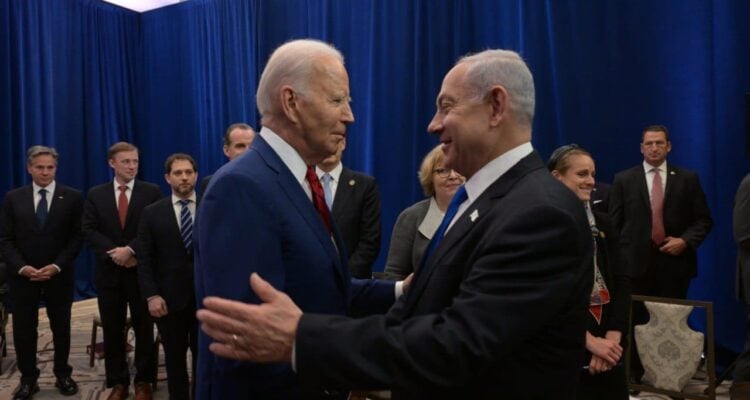
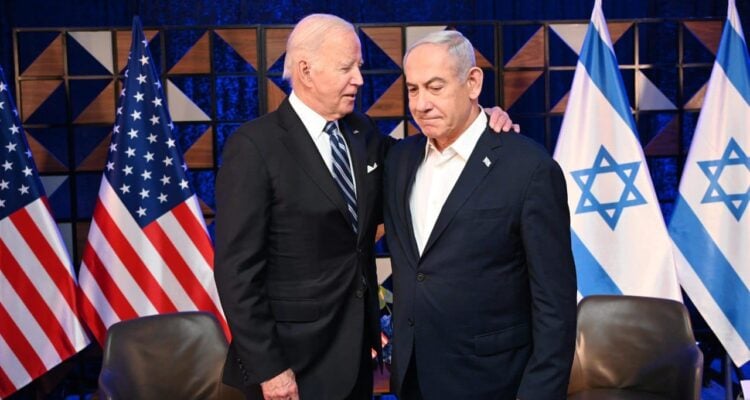
The relationship between Biden and Netanyahu has been deteriorating since the beginning of the war, particularly over the issue of an IDF operation in Rafah.

By Vered Weiss, World Israel News

According to an anonymous White House official, US President Joe Biden may consider a policy of making certain conditions for aid to Israel if the IDF operates in Rafah, according to a report from Politico. 

Despite President Biden’s strong support for Israel in the immediate aftermath of October 7th, the relationship between the White House and Israeli Prime Minister Benjamin Netanyahu has been deteriorating, and Biden has staunchly opposed the proposed operation in Rafah to destroy the remainder of Hamas’s headquarters.

Although President Biden hasn’t spoken openly about making aid to Israel dependent on conditions, a policy advocated by progressive senator Bernie Sanders, the source told Politico, “It’s something he’s definitely thought about.”

Responding to a reporter asking about conditioning aid to Israel last year, Biden said briefly it was a “worthwhile thought” although White House officials clarified that President Biden was not considering such a policy.

In an interview with MSNBC over the weekend, President Biden said he would continue sending military aid to Israel, particularly for the Iron Dome defense system, but added that the number of civilian casualties in Gaza are a “red line.”

  NETANYAHU: US RESPONSE TO HAMAS WOULD HAVE BEEN ‘AT LEAST AS STRONG’ AS ISRAEL’S

He added, “You cannot have 30,000 more Palestinians dead.”

Hamas Health Ministry has said that more then 30,000 Palestinians have been killed without independent verification of the numbers or making a distinction between terrorists and civilian casualties.

National Security Council spokesperson Adrienne Watson said in a statement that “we are not going to comment on speculation by anonymous sources or add to what the president said this weekend.”

However, in an apparent attempt to walk back President Biden’s language during the interview, White House deputy press secretary Olivia Dalton told reporters,“ I don’t think that it’s productive to assign a ‘red line’ sort of terminology to what is a very complex set of policies.’

“You’ve seen the president be very vocal and forthright about what we think about the situation on the ground and what needs to happen from here,” she added.

“He thinks that there are other approaches which we have taken and are taking that are more effective,” Dalton concluded.

– report


U.S. officials asked “which demands” would see Netanyahu’s coalition break apart.

By World Israel News Staff

The Biden administration sought out advice from an Israeli political strategy expert as part of an active effort to topple the Netanyahu government, according to a new report.

“I have been asked by a serious administration figure what it is that will force the Netanyahu coalition to collapse,” the source told New York Magazine.

“They were interested in the mechanics, what can we demand which will collapse his coalition.”

While ties between the Biden administration and Netanyahu have been strained for some time, the ongoing conflict in Gaza has created an even deeper rupture, said an expert on Israeli-American relations.

“In my view, they’re even angrier [now] and they are sharpening the tone. Biden is not coming at him personally, but off the record and in closed meetings, the sentiment is clear,” Itamar Rabinovich, a former Israeli ambassador to the U.S., told the Magazine.

Netanyahu and the Biden administration “disagree on many things: on Gaza the day after the war; on the Palestinian Authority; on a return to Israeli-Palestinian negotiations; all very significant issues.”

The claim that the Biden administration is actively seeking to oust Netanyahu from power, if accurate, would mark a serious escalation in the level that the U.S. government interferes with Israeli policies.

In 2023, the Biden administration made it clear that it was against the judicial reform legislation, angering numerous Israeli lawmakers who urged the U.S. to stay out of the country’s internal affairs.

“Like many strong supporters of Israel, I am very concerned. I am concerned that they get this straight. They can not continue down this road. I have sort of made that clear,” Biden said during a media conference, speaking about judicial reform.

Public Security Minister Itamar Ben-Gvir responded by saying that “while we appreciate [U.S.] democracy, they need to understand that Israel is an independent country and not another star on the American flag.”