Despite hardening of Israeli and Hamas positions and a setback over the deadly north Gaza aid stampede, US and Egypt express cautious optimism deal still possible
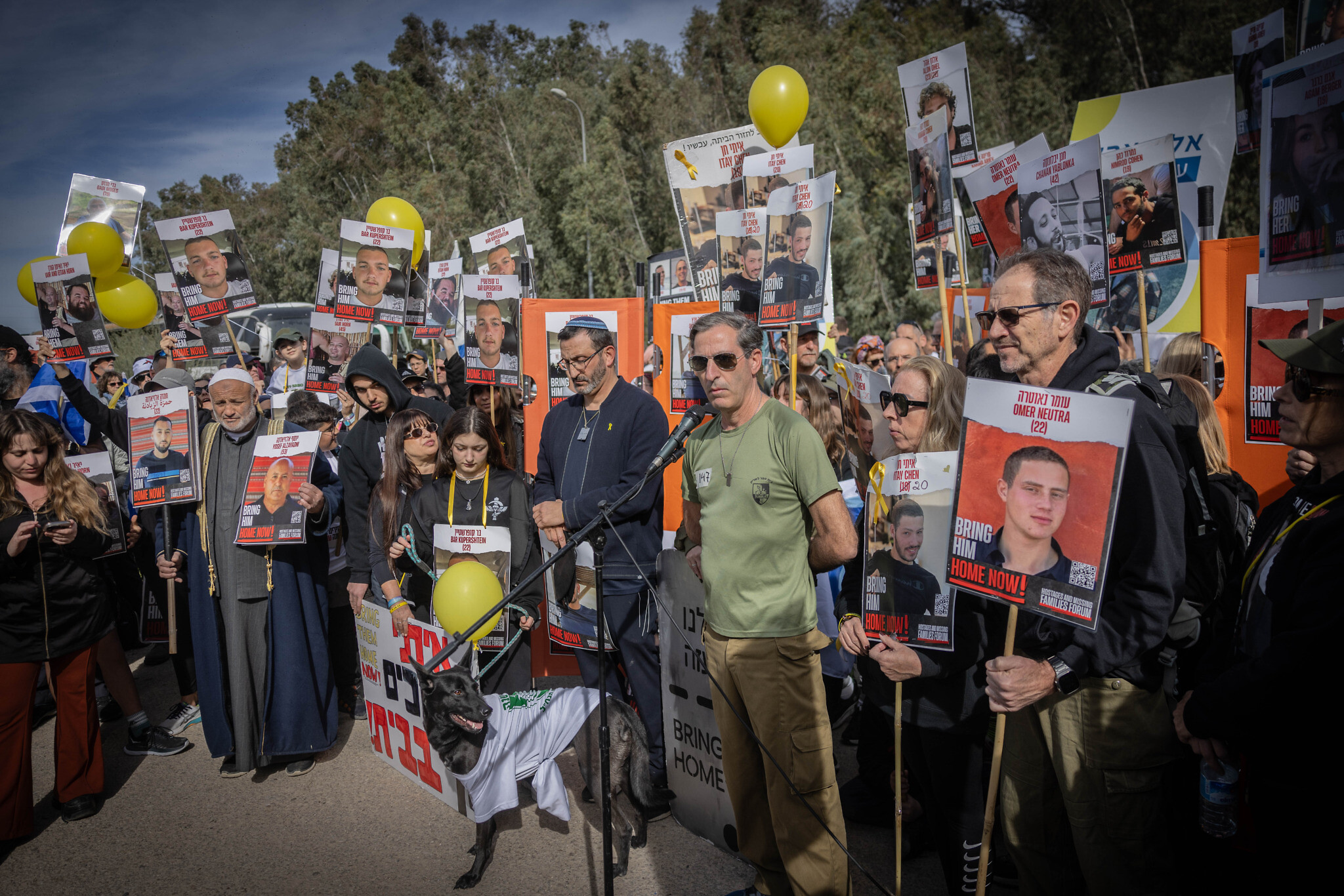
Israel will not participate in further talks aimed at achieving a temporary ceasefire and prisoner swap until it receives a list of living hostages still held by Hamas, the Axios news site reported Friday, as Hebrew-language media indicated that the Palestinian terror group had adopted an increasingly intransigent stance in the negotiations.
According to the Axios report, Qatar and Egypt, who mediate between Israel and Hamas, had coaxed Israel to take part in talks over the past week in Doha by guaranteeing that if an Israeli delegation were sent, Egypt and Qatar would secure a list of living hostages, and pressure Hamas to come down from its demands regarding the number of Palestinian prisoners to be released in return for each Israeli hostage.
But after three days of talks in Doha, the Israeli delegation returned home without any answers on either issue. “The mediators promised that Hamas would give numbers and that didn’t happen,” Axios quoted an unnamed Israeli official as saying.
On Thursday, Qatari and Egyptian officials proposed another round of talks in Cairo to take place over the coming week, but Israel refused the offer due to the mediators’ failure to receive from Hamas the promised list of hostages.
“There is no point in starting another round of talks until we receive the lists of which of the hostages are alive and until Hamas gives its answer regarding the ‘ratio’ that defines how many prisoners will be released for each hostage,” the official said.
In a televised press conference Thursday night, Prime Minister Benjamin Netanyahu emphasized that he is “demanding to know in advance the names” of all the hostages Israel is supposed to see released within the current proposed framework, and added that it is “too early” to know if the planned deal will come to fruition in the coming days.

In any case, “we won’t capitulate to Hamas’s delusional demands,” Netanyahu said, noting that “if we capitulate, we simply won’t be here.”
“We are determined” to return all the hostages, “with or without a framework,” the premier added.
Senior Israeli officials told Axios they were waiting to see whether American pressure exerted during US President Joe Biden’s calls with Egyptian and Qatari leaders on Thursday will bear fruit, breaking the impasse with Hamas.
However, the Ynet news site reported Friday that in a security cabinet briefing on the prisoner swap negotiations Thursday night, those present were informed that Hamas was doubling down on its demands.
Israel, meanwhile, was reported by Channel 12 to have given the Egyptian government a list of security prisoners that it would not release even if a deal is reached with Hamas. According to the report, the Israeli delegation will participate in the Cairo talks next week.

Biden said earlier this week that he was optimistic that a deal could be reached by early next week. But he acknowledged that a prospective deal may have been set back after dozens of Palestinians were killed in a stampede around an aid convoy in northern Gaza on Thursday. Israeli troops fired at several of them who were endangering the soldiers.
Biden on Friday expressed cautious optimism that a deal can still be struck.
“We’ve been working and hopefully we’ll know shortly,” Biden said.
Egypt also said it believed a deal could still be done.
“We are hopeful that we can reach a cessation of hostilities and exchange of hostages. Everyone recognizes that we have a time limit to be successful before the start of Ramadan,” said Egyptian Foreign Minister Sameh Shoukry at the Antalya Diplomacy Forum in Turkey on Friday.
Over 250 hostages were taken during Hamas’s brutal October 7 onslaught, which saw thousands of gunmen led by the Palestinian terror group storm southern Israel to kill nearly 1,200 people, mainly civilians.
It is believed that 130 hostages abducted by Hamas on October 7 remain in Gaza — not all of them alive — after 105 civilians were released from Hamas captivity during a weeklong truce in late November, and four hostages were released prior to that. Three hostages have been rescued by troops alive, and the bodies of 11 hostages have also been recovered, including three mistakenly killed by the military.
The IDF has confirmed the deaths of 31 of those still held by Hamas, citing new intelligence and findings obtained by troops operating in Gaza. One more person is listed as missing since October 7, and their fate is still unknown.
Hamas is also holding the bodies of fallen IDF soldiers Oron Shaul and Hadar Goldin since 2014, as well as two Israeli civilians, Avera Mengistu and Hisham al-Sayed, who are both thought to be alive after entering the Strip of their own accord in 2014 and 2015 respectively.
Vowing to dismantle Hamas and release the hostages, Israel launched an air and ground campaign.
The Hamas-run Gaza health ministry says that more than 30,000 Palestinians have been killed so far. The figures cannot be independently verified, and are believed to include both civilians and Hamas members killed in Gaza, including as a consequence of terror groups’ own rocket misfires.
The IDF says it has killed more than 13,000 Hamas operatives in addition to another 1,000 killed inside Israel on October 7.
Agencies contributed to this report.