The hearing will begin this month on the request submitted by the UN, and the decision could be published as early as this year.

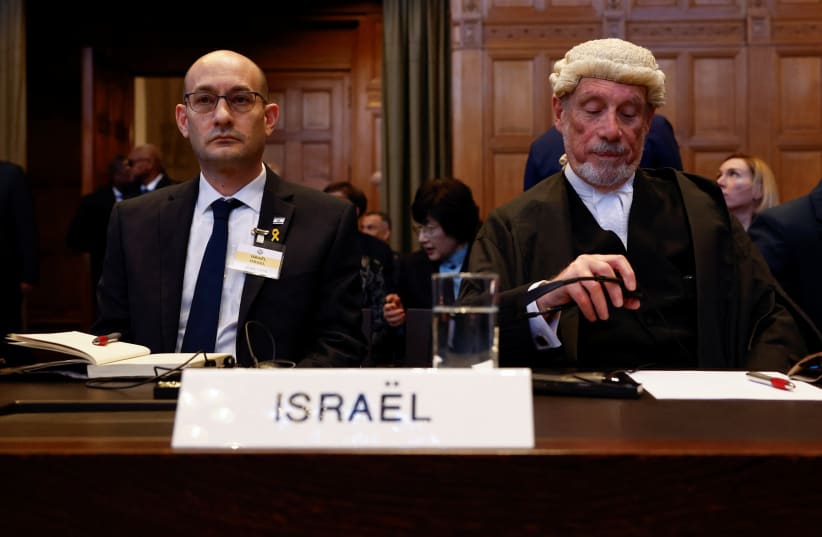
 Israel's deputy Attorney-General for International Law Gilad Noam and British jurist Malcolm Shaw sit in International Court of Justice, The Hague, January 26, 2024 (photo credit: PIROSCHKA VAN DE WOUW/REUTERS)
Israel’s deputy Attorney-General for International Law Gilad Noam and British jurist Malcolm Shaw sit in International Court of Justice, The Hague, January 26, 2024
(photo credit: PIROSCHKA VAN DE WOUW/REUTERS)
After the decision last month in South Africa’s lawsuit, which threatened the continuation of fighting against Hamas, Israel is now facing its next legal battle at the International Court of Justice in The Hague – a hearing on the UN’s request will review the “legality of the occupation of the West Bank.”

The hearing on the request, submitted at the initiative of Palestinians, will be held in two weeks. The request is expected to be published towards the end of the year.

Dr. Roy Scheindorf, former deputy Attorney General, explained to Walla! about such a procedure and its implications for Israel, stating that “Unlike a lawsuit between countries, as was the case when South Africa filed a lawsuit against Israel, in an advisory opinion all countries are invited to express their opinion.

“A large number of countries expected to show up”

“It’s expected there will be a large number of countries that will show up there – and most of them are expected to argue against us. Even those who are in our favor will probably focus on the claim that the tribunal should not deal with the issue, and not on the arguments that justify our way of operating in the West Bank.”

Scheindorf explains that the assessment among experts is that “in the best case it will be written that Israel is seriously violating the laws of occupation, and in the worst case that Israel is guilty of apartheid or that Israel must immediately vacate the territories.” In his estimation, “The UN will adopt it, and then the Palestinians or various countries will try to promote practical steps to implement it.”

“It’s expected there will be a large number of countries that will show up there – and most of them are expected to argue against us. Even those who are in our favor will probably focus on the claim that the tribunal should not deal with the issue, and not on the arguments that justify our way of operating in the West Bank.”

Dr. Roy Scheindorf

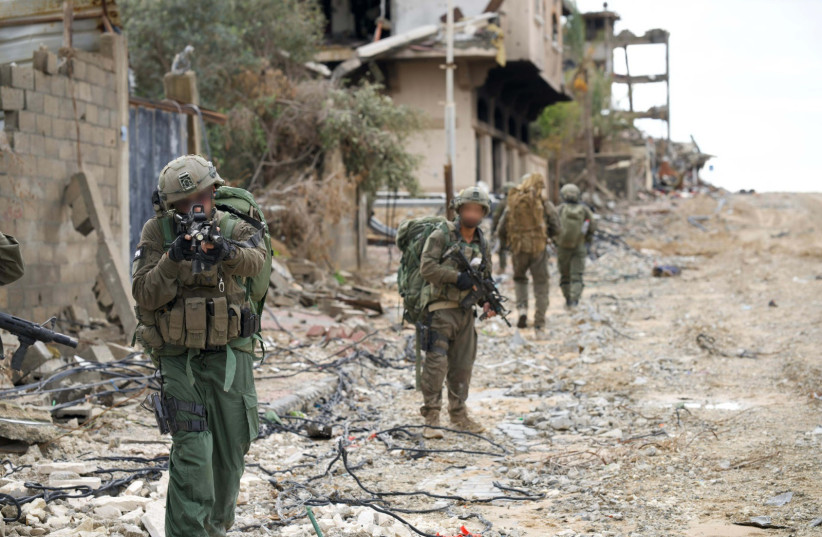
 IDF troops operate in the Gaza Strip. February 3, 2024. (credit: IDF SPOKESPERSON'S UNIT)Enlrage image
IDF troops operate in the Gaza Strip. February 3, 2024. (credit: IDF SPOKESPERSON’S UNIT)

These steps, according to him, can be far-reaching: “States can act according to it, and take economic and other measures against the State of Israel. The precedent that the Palestinians are trying to push for is the type of actions that were taken against South Africa during the apartheid era,” Scheindorf clarifies. “It is likely that there will be attempts to pass resolutions in the UN General Assembly and the Security Council. In addition, the opinion can influence the policy regarding the activity in Israel of international companies and international investment entities.”

While Scheindorf avoids openly detailing the paths that the Israeli defense can take in the lawsuit, Walla reports, he points out that alongside the legal need, as last time – the informational and political battle can play a key role. “In my view, a significant Israeli initiative is required that will lead to a change in the trend and the discourse. At the moment, the discourse is focused on criticism of Israel and its blame for serious acts. It is necessary to change this either through a significant political move or through legal activity against the parties responsible for the Hamas massacre, such as Iran for example.”


Terror group yet to respond to Paris proposal for longer truce, release of hostages in exchange for Palestinian security prisoners; Likud ministers spar over terms


Israelis attend a rally calling for the release of Israelis kidnapped and held by Hamas terrorists in Gaza, at Hostages Square in Tel Aviv, February 3, 2024. (Miriam Alster/ Flash90)

Israelis attend a rally calling for the release of Israelis kidnapped and held by Hamas terrorists in Gaza, at Hostages Square in Tel Aviv, February 3, 2024. (Miriam Alster/ Flash90)

Hamas on Sunday night appeared set to rebuff a deal that would free Israeli hostages without bringing a full halt to the nearly four-month war in Gaza, with a senior official from the terror group telling Al-Jazeera that internal discussions over a proposed agreement were continuing.

“Consultations with other factions regarding the proposal are ongoing,” the Hamas official was quoted as saying, adding that a response would be sent “soon.”

Several Hebrew media outlets reported that, contrary to earlier speculation, Hamas was unlikely to offer an immediate response to the proposal, which was thrashed out by top officials from Israel, Qatar, Egypt, and the United States during talks in Paris last week.

The reports said Hamas’s Gaza leader, Yahya Sinwar, would demand solid guarantees for an end to the war and the withdrawal of Israeli troops before releasing any more hostages taken captive in the terror group’s brutal October 7 onslaught — which Israel has said it will not do.

A source close to Hamas told the Palestinian Quds News Network that the sides were not close to agreement and confirmed that Hamas would demand an end to the war.

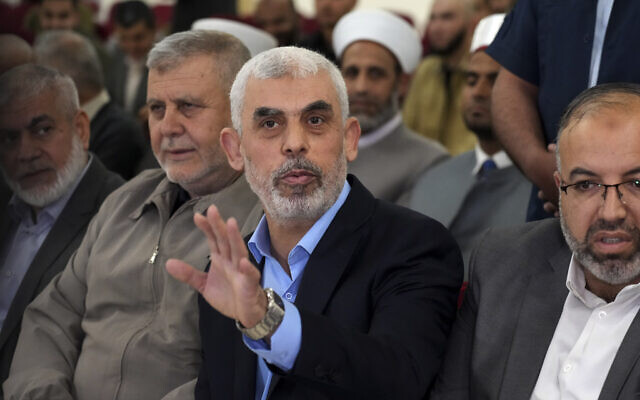
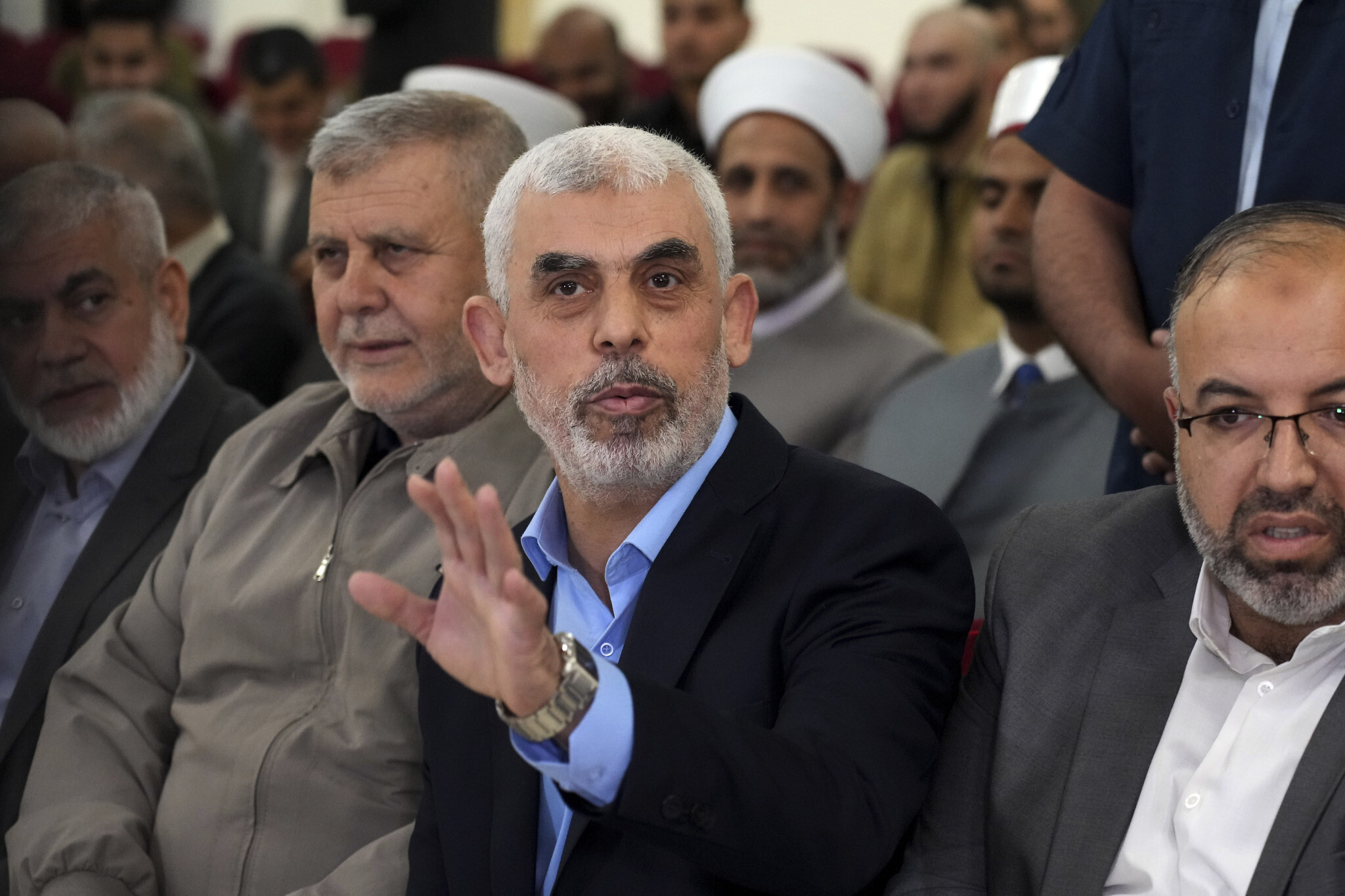
Yahya Sinwar, head of Hamas in Gaza, greets his supporters upon his arrival at a meeting in a hall on the sea side of Gaza City, on April 30, 2022. (AP Photo/Adel Hana, File)

In Israel, meanwhile, the war cabinet was meeting on Sunday evening, with ministers said to be discussing, among other matters: whether it would be possible to return to full combat operations after a lengthy pause; the imperative that any agreement include all of the 132 hostages abducted on October 7 who are still held in Gaza; and the identity of the terrorists who could be released from Israeli prisons under the deal.

During Sunday morning’s cabinet meeting, Likud’s Justice Minister Yariv Levin, Education Minister Yoav Kisch, Transportation Minister Miri Regev, Foreign Minister Israel Katz, and Diaspora Minister Amichai Chikli reportedly insisted that any substantive decisions regarding a hostage deal would have to be approved by the full cabinet, an Israeli official told The Times of Israel. The demand included full cabinet approval for any further meetings abroad by Mossad chief David Barnea with international intermediaries.

During the meeting, Prime Minister Benjamin Netanyahu told ministers that the ratio of three Palestinian security prisoners released for every hostage freed — as was the case with the November hostage deal — should be the reference point for any further agreements. The weeklong November truce saw 105 Israeli and foreign hostages freed, but only 80 of them within the provisions of the deal, and the release of 240 women and underage Palestinian security prisoners.

“We’re making a tremendous effort and working with many means to free our hostages, but not at any cost,” the prime minister said, according to leaks from the meeting.

The war cabinet meets at the IDF’s Kirya military headquarters on January 25, 2024. (Amos Ben-Gershom/GPO)

He emphasized that Israel would not end the war until all its aims are accomplished — “the elimination of Hamas, bringing back all our hostages, and ensuring that Gaza will never again represent a threat to Israel.”

He also denied media reports that Israel had agreed to release large numbers of terrorists.

A Hamas source has said the current three-stage truce proposal under discussion includes an initial six-week pause in fighting that would see some hostages released in exchange for Palestinian prisoners, with potential extensions of the temporary ceasefire. However, there have been numerous reports suggesting the agreement would include different terms.

According to Channel 12, Economy Minister Nir Barkat, also of Likud, demanded that the deal include the release of all of the hostages in a single phase, rather than stages contingent on certain terms. He also called for the cessation of humanitarian aid to Palestinians in Gaza while the war is ongoing.

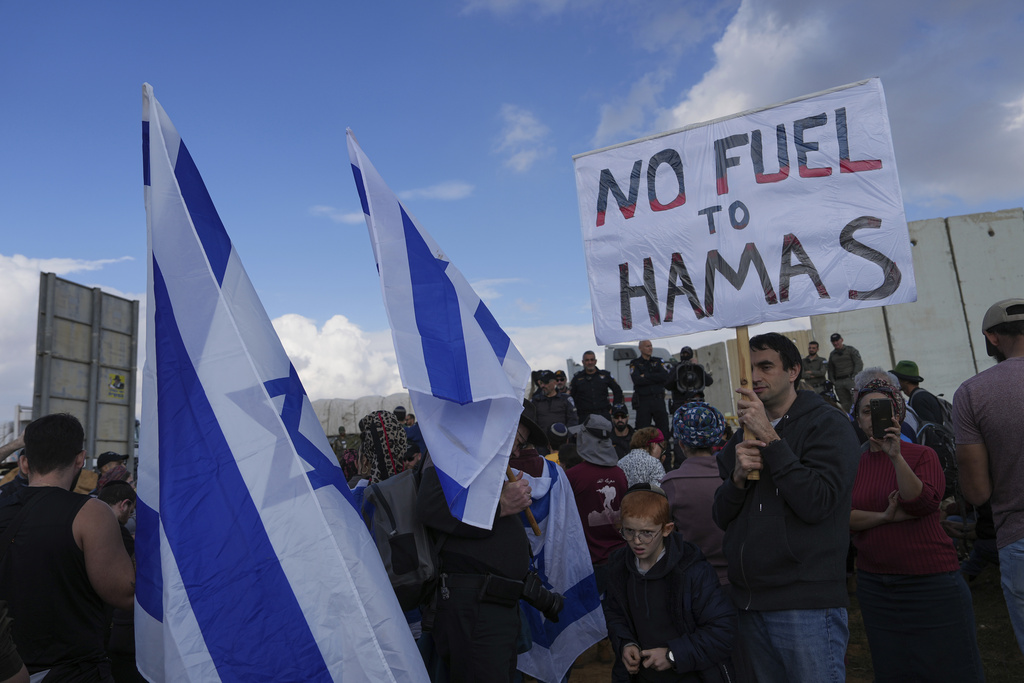
In recent weeks, protesters and some far-right lawmakers and activists have gathered at border crossings and at the Ashdod port in an attempt to block trucks heading to Gaza, claiming that moves to alleviate pressure on Gazan civilians, including through the delivery of humanitarian assistance, serve Hamas’s interests.
Police prevent activists from blocking trucks carrying humanitarian aid into the Gaza Strip at the Kerem Shalom border crossing between Israel and Gaza, in southern Israel, January 29, 2024. (AP/Tsafrir Abayov)

“You give gifts to Hamas — and Sinwar celebrates,” Barkat was quoted as saying.

Also speaking against the phased plan in Sunday’s cabinet meeting, Diaspora Minister Chikli said, “We have to look at the war as a marathon. The real challenge is not at the start, but from the 36th kilometer.”

“That’s where we are. The big test is now, and if we now stop the fighting for a month… we won’t finish the marathon and we won’t be able to fight with such force,” Chikli was quoted as saying.

According to other cabinet members, quoted by Ynet, Netanyahu orchestrated the opposition to the terms of the hostage deal voiced during the cabinet meeting in order to signal that his hands were tied.

“If it’s what I hear in the media, I won’t be able to support the deal,” Education Minister Kisch was quoted as saying.

War broke out following Hamas’s devastating October 7 massacres, which saw some 3,000 terrorists burst across the border into Israel from Gaza by land, air and sea, killing some 1,200 people and seizing 253 hostages, mostly civilians, under the cover of a deluge of thousands of rockets fired at Israeli towns and cities.

Burnt cars are left behind at the site of the attack three days earlier by Palestinian terrorists on the Supernova desert music festival, near Kibbutz Re’im in the Negev Desert in southern Israel, on October 10, 2023. (JACK GUEZ / AFP)

In response, Israel launched an offensive aimed at removing Hamas from power in Gaza and releasing the hostages.

On Saturday night, thousands of people gathered again in Tel Aviv for protests criticizing Netanyahu’s handling of the war and the plight of the hostages. Family members of the hostages, with wide public support, are calling on Israel to reach an agreement with Hamas to bring them home.

It is believed that 132 hostages abducted by Hamas on October 7 remain in Gaza — not all of them alive. Four hostages were released prior to that, and one was rescued by troops. The bodies of eight hostages have also been recovered and three hostages were mistakenly killed by the military.

The IDF has confirmed the deaths of 29 of those still held by Hamas, citing intelligence and findings obtained by troops operating in Gaza. One more person is listed as missing since October 7, and their fate is still unknown.

Agencies and Lazar Berman contributed to this report. 


Riyadh wants declaration on Palestinian state for Israel ties

The kingdom is seeking to forge a defense pact with Washington amid intensifying threats from Iran, and is reportedly mulling a deal before the U.S. election.

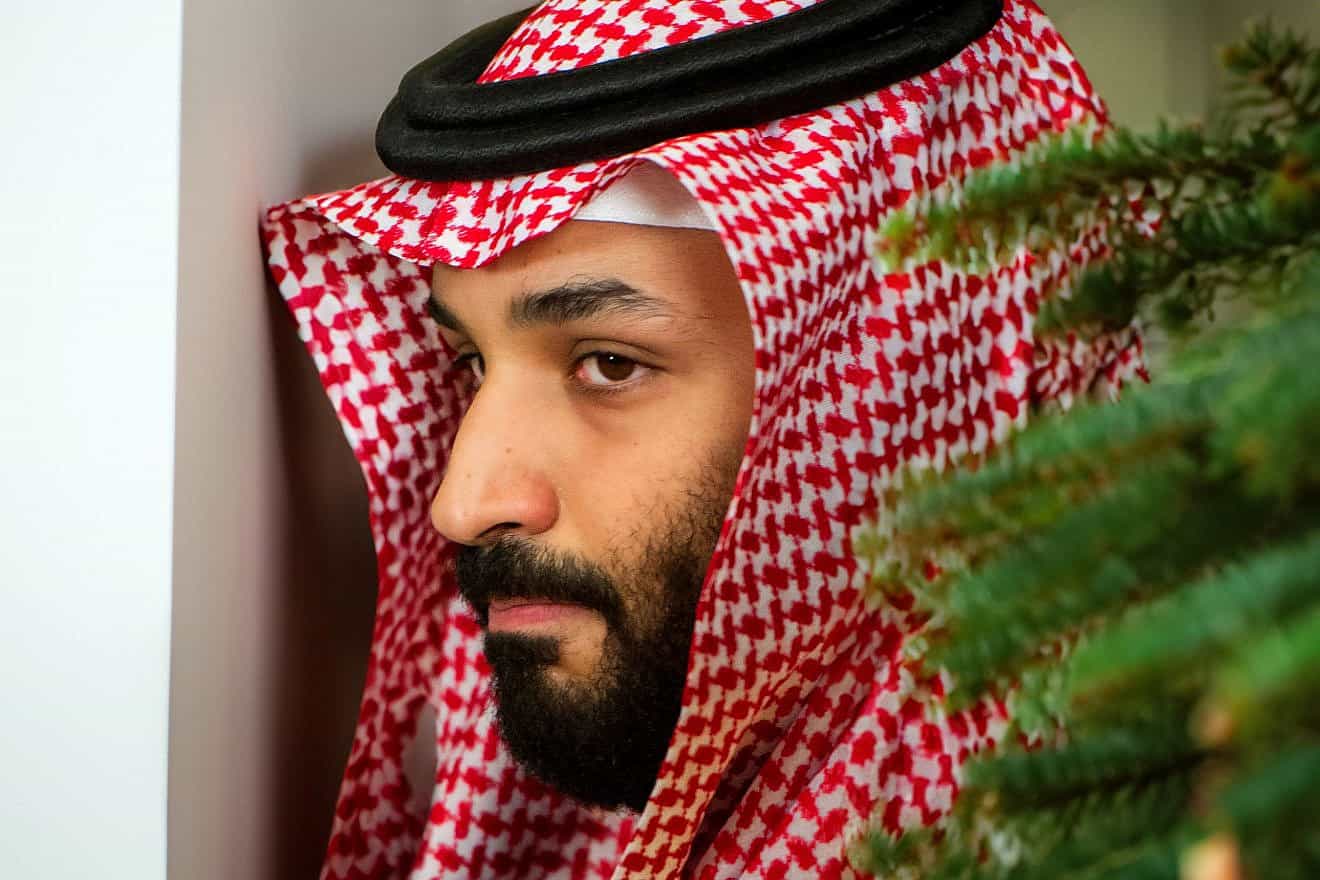
Saudi Arabia Crown Prince Mohammed bin Salman in Riyadh on March 7, 2022. Credit: Murathakan Art/Shutterstock.

Saudi Arabia Crown Prince Mohammed bin Salman in Riyadh on March 7, 2022. Credit: Murathakan Art/Shutterstock.

Saudi Arabia would suffice with a declared Israeli commitment to the two-state solution in order to normalize ties with Jerusalem as part of a broad agreement including a defense pact with the United States.

Citing three unnamed sources, Reuters reported that the Saudis are eyeing a deal before the U.S. presidential election in November, and that Israel’s war against Hamas had not entirely derailed diplomatic efforts.

According to the report, Riyadh’s primary goals are to shore up its security due to intensifying threats from Iran and forge ahead with diversifying its oil-based economy by attracting foreign investment.

In order to achieve this goal, the Saudi monarchy is willing to accept a political commitment by Jerusalem to the two-state solution. To this end, Riyadh has been urging Washington to apply pressure on Israel to end the war against Hamas and agree to a “political horizon” for establishing a Palestinian state.

While the Saudis have not defined what an acceptable “pathway” to a Palestinian state would entail, the report said one step could be for Israeli Prime Minister Benjamin Netanyahu to drop his opposition to the Palestinian Authority playing a significant role in post-war Gaza.

Earlier this month, NBC News reported that Netanyahu had rejected a Saudi offer to normalize relations in exchange for a Palestinian state. U.S. Secretary of State Antony Blinken reportedly delivered the proposal to the Israeli leader during his trip to the Jewish state in January.

Blinken had visited several Arab countries, including Saudi Arabia, before arriving in Israel, and officials said that he secured a commitment from Saudi Crown Prince Mohammed bin Salman and four other Arab leaders to help rebuild Gaza after the Israel-Hamas war. The Arab leaders also agreed to support “a new, reformed Palestinian government to secure Gaza.” MBS also agreed to normalize relations with Israel as part of the Gaza reconstruction agreement, but only if a path to Palestinian statehood was provided.

Prior to Hamas’s bloody Oct. 7, 2023 assault on southern Israel, the Biden administration was working on brokering a deal for Riyadh to join the Abraham Accords. The Trump administration-brokered accords normalized relations between Israel and four Arab nations without the requirement of a Palestinian state: The United Arab Emirates, Bahrain, Morocco and Sudan.

In an hour-long September interview with Fox News chief political correspondent Bret Baier—MBS’s first ever interview completely in English and the first with a major American network since 2019—the crown prince said that peace with Jerusalem was “getting closer every day.”

A week and a day before the Oct. 7 massacre, U.S. National Security Council spokesman John Kirby announced that Jerusalem and Riyadh had “hammered out” the contours of a possible American-mediated normalization agreement.

“All sides have hammered out, I think, a basic framework for what, you know, what we might be able to drive at,” he said.

Reuters reported at the time that Saudi Arabia was not conditioning a peace deal with Israel on the establishment of a Palestinian state.

In December, Netanyahu presented three conditions for peace between Israel and the Palestinians: The destruction of Hamas, the demilitarization of Gaza and the deradicalization of Palestinian society.

“These are the three prerequisites for peace between Israel and its Palestinian neighbors in Gaza,” he wrote in an op-ed in The Wall Street Journal.

He argued that because Hamas has promised to repeat Oct. 7 “again and again” the only proportional response was to completely eliminate it.

He warned that “unjustly blaming” Israel for civilian casualties “will only encourage Hamas and other terror organizations around the world to use human shields. To render this cruel and cynical strategy ineffective, the international community must place the blame for these casualties squarely on Hamas. It must recognize that Israel is fighting the bigger battle of the civilized world against barbarism.”

Secondly, Gaza must be demilitarized so that it can’t again become a terror base from which to attack Israel, he said, calling for the establishment of a temporary security zone between Israel and Gaza and an inspection mechanism between Gaza and Egypt.

The Palestinian Authority, he said, could not accomplish this goal.

“The expectation that the Palestinian Authority will demilitarize Gaza is a pipe dream. It currently funds and glorifies terrorism in Judea and Samaria and educates Palestinian children to seek the destruction of Israel,” he wrote. “Not surprisingly it has shown neither the capability nor the will to demilitarize Gaza. It failed to do so before Hamas booted it out of the territory in 2007, and it has failed to do so in the territories under its control today. For the foreseeable future Israel will have to retain overriding security responsibility over Gaza.”

Third, Gaza will have to be deradicalized, he said, noting that the school system will have to be reformed so that children are taught to “cherish life rather than death.” Preaching death to Jews from mosques must cease and Palestinian civil society transformed, he continued.

“Successful deradicalization took place in Germany and Japan after the Allied victory in World War II. Today, both nations are great allies of the United States and promote peace, stability and prosperity in Europe and Asia,” wrote Netanyahu.

Also in December, Israeli President Isaac Herzog added his name to the ranks of officials speaking out against a two-state solution following the war in Gaza.

“What I want to urge is against just saying two-state solution. Why? Because there is an emotional chapter here that must be dealt with. My nation is grieving. My nation is in trauma,” Herzog told the Associated Press in an interview.

“In order to get back to the idea of dividing the land, of negotiating peace or talking to the Palestinians, etc., one has to deal first and foremost with the emotional trauma that we are going through and the need and demand for [a] full sense of security for all people,” he said.