Mujahid clarified that the Taliban would show sympathy and possibly cooperate with Iran if requested, but the group is not committing to joining a retaliatory war against the US.

Taliban spokesman Zabihullah Mujahid speaks during a news conference in Kabul, Afghanistan November 10, 2021.
(photo credit: REUTERS/Ali Khara/File Photo)
The Taliban will aid and assist the Islamic Republic of Iran in the event of US strikes on the country, the group’s spokesperson Zabihullah Mujahid told Radio Iran’s Pashto-language service on Sunday.

Afghanistan’s people would show sympathy and possibly cooperate with Iran if requested, Mujahid clarified, noting that this would not automatically pull the Sunni group into joining a retaliatory war against the US.

Additionally, the Taliban’s message is that they do not want conflict between the US and Iran, and would prefer to pursue diplomatic measures and continued negotiations over Iran’s nuclear program.

Further, Iran “won” the 12-day war with Israel and the US in June, Mujahid affirmed, and will “win again” if the US attacks.

Iran will be able to “win again” as it “has the capability, is in the right, and has the right to defend itself,” he stated.

The head of the Taliban government, Mullah Mohammad Hassan Akhund meets with Iranian Foreign Minister Abbas Araghchi in Kabul, Afghanistan January 26, 2025. (credit: IRANIAN MINISTRY OF FOREIGN AFFAIRS/WANA
The head of the Taliban government, Mullah Mohammad Hassan Akhund meets with Iranian Foreign Minister Abbas Araghchi in Kabul, Afghanistan January 26, 2025. (credit: IRANIAN MINISTRY OF FOREIGN AFFAIRS/WANA (WEST ASIA NEWS AGENCY)/HANDOUT VIA REUTERS)
The Taliban, at the time, condemned Israel’s strikes on the Islamic Regime’s nuclear enrichment facilities, military leadership, and other strategic locations.

Iran, Taliban relations remain tense due to Shia-Sunni split

Tensions have existed between the respective Islamic Regimes of Iran and Afghanistan, largely following fault lines splitting Shia and Sunni, with Iran following Twelver Shia and the Taliban following a militant form of Sunnism.

However, the two governments have cooperated since the Taliban reclaimed leadership over the country.
In January 2025, the Taliban’s Foreign Minister, Mawlawi Amir Khan Muttaqi, hosted a delegation in Kabul led by Iranian Foreign Minister Abbas Araghchi to discuss multiple issues, including water resources, Afghan migrants, and security of the shared borders.

Araghchi also met with the head of the Taliban government, Mohammad Hassan Akhund, during his visit.

Nevertheless, Iran has hosted several million Afghan refugees who fled over the past 25 years, particularly since the Taliban regained control in August 2021.

Some of these were accused of being Israeli spies, with Tehran alleging that they aided Mossad in gathering information for the Israeli operations in June.

Reuters contributed to this report.


Deputy FM tells BBC ‘ball is in America’s court,’ says talks have been ‘positive’; Iran won’t give up missiles, senior diplomat says, calling them ‘defensive capabilities’

Screengrab of Majid Takht-Ravanchi, Iran's deputy foreign minister for political affairs, in an interview with the BBC, aired February 2026. (BBC)

Screengrab of Majid Takht-Ravanchi, Iran’s deputy foreign minister for political affairs, in an interview with the BBC, aired February 2026. (BBC)

Iran is ready to consider compromises to reach a nuclear deal with the United States if Washington is willing to discuss lifting sanctions, Iran’s Deputy Foreign Minister Majid Takht-Ravanchi told the BBC in an interview broadcast on Sunday.

Iran has said it is prepared to discuss curbs on its nuclear program in return for the lifting of sanctions, but has repeatedly ruled out linking the issue to other questions including its missile arsenal.

“The ball is in America’s court,” he said, “to prove that they want to do a deal.”

“Sanctions have to also be on the table,” Takht-Ravanchi said, referring to the crippling international sanctions that his country faces, which have contributed to the near-collapse of the Iranian economy.

Takht-Ravanchi confirmed that a second round of nuclear talks would take place on Tuesday in Geneva, after Tehran and Washington resumed discussions in Oman earlier this month.

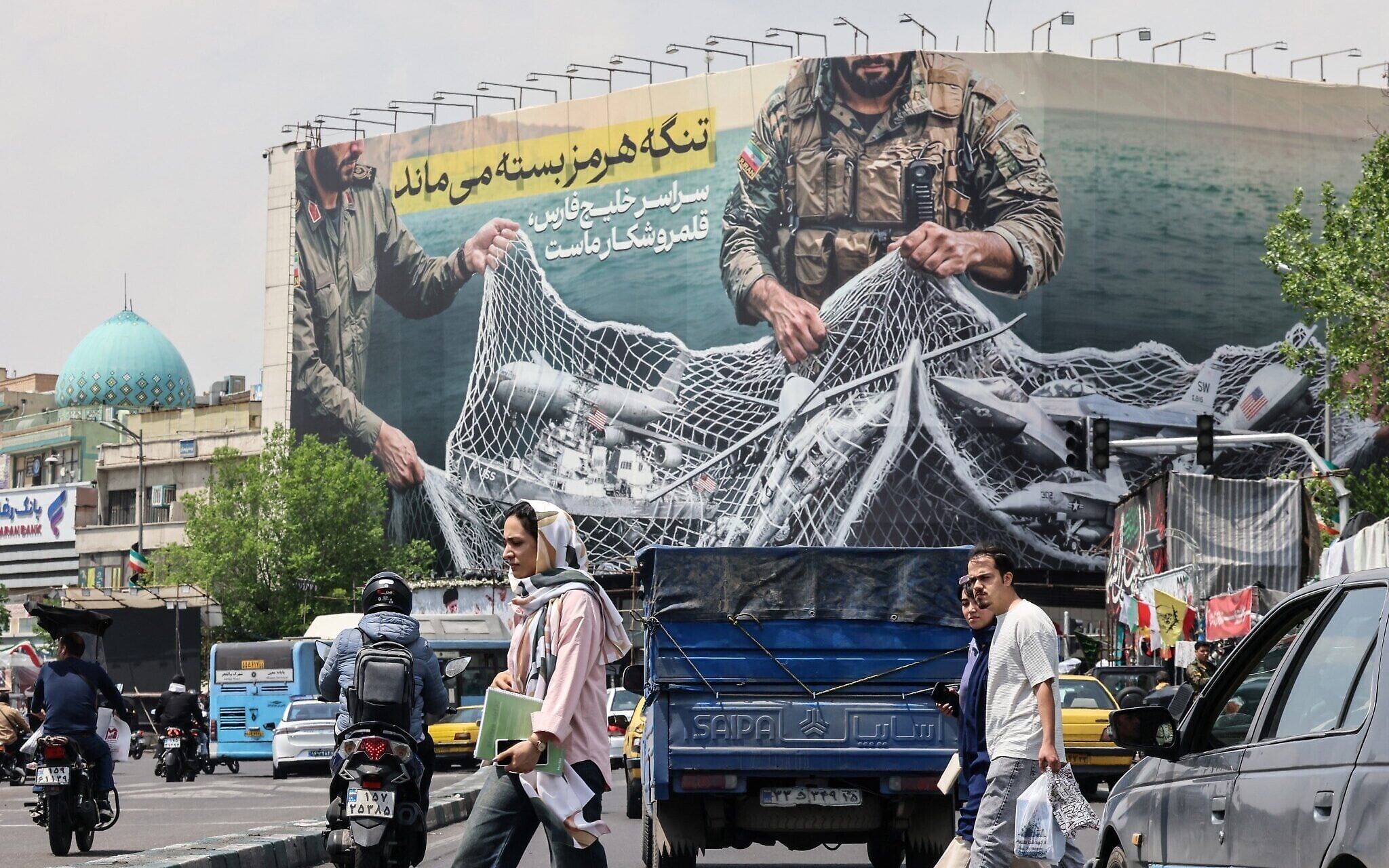
People walk across a large banner on the street depicting the US and Israeli flags defaced with footprints during a rally marking the 47th anniversary of the 1979 Islamic revolution, in Tehran on February 11, 2026 (AFP)

Asked if his country was willing to transfer its stockpile of enriched uranium to a third country, the diplomat said “it was too early to say what will happen in the course of negotiations.”

Iran’s atomic chief said on Monday the country could agree to dilute its most highly enriched uranium in exchange for all financial sanctions being lifted. Takht-Ravanchi used this example in the BBC interview to highlight Iran’s flexibility, though he pushed back on the idea that Tehran would fully give up its ability to enrich. The “issue of zero enrichment is not an issue anymore and as far as Iran is concerned, it is not on the table anymore,” he said.

The diplomat also pushed back on the idea of giving up Iran’s ballistic missile arsenal, which Israel seeks to include in any deal between the Washington and Tehran.

“When we were attacked by Israelis and Americans, our missiles came to our rescue so how can we accept depriving ourselves of our defensive capabilities?” Takht-Ravanchi said, referring to last year’s 12-day war with Israel, during which Iran launched hundreds of missiles at Israel, which killed nearly three dozen Israeli civilians and wounded thousands.

“We are hearing that they are interested in negotiations,” the senior diplomat said, though he lamented the mixed messages from the US, noting that what Trump says publicly is different from the messages Iran receives in private. “They have said it publicly; they have said it in private conversations through Oman that they are interested to have these matters resolved peacefully.”

Women walk past a ballistic missile launch vehicle in Tehran on February 11, 2026, during a rally marking the 47th anniversary of the 1979 Islamic revolution (AFP)

Trump has repeatedly threated to use military force against Iran if the talks fail, and said Friday that regime change “seems like that would be the best thing that could happen.”

“We are not hearing that in the private messages,” Takht-Ravanchi said, adding: “If we feel this is an existential threat, we will respond accordingly.”

“It is not wise to even think about such a very dangerous scenario because the whole region will be in a mess,” he added.

“We see an almost unanimous agreement in the region against war,” he continued. “We are hopeful we can do this through diplomacy, although we can’t be 100 percent sure.”

“We will do our best but the other side also has to prove that they are also sincere,” Takht-Ravanchi said.

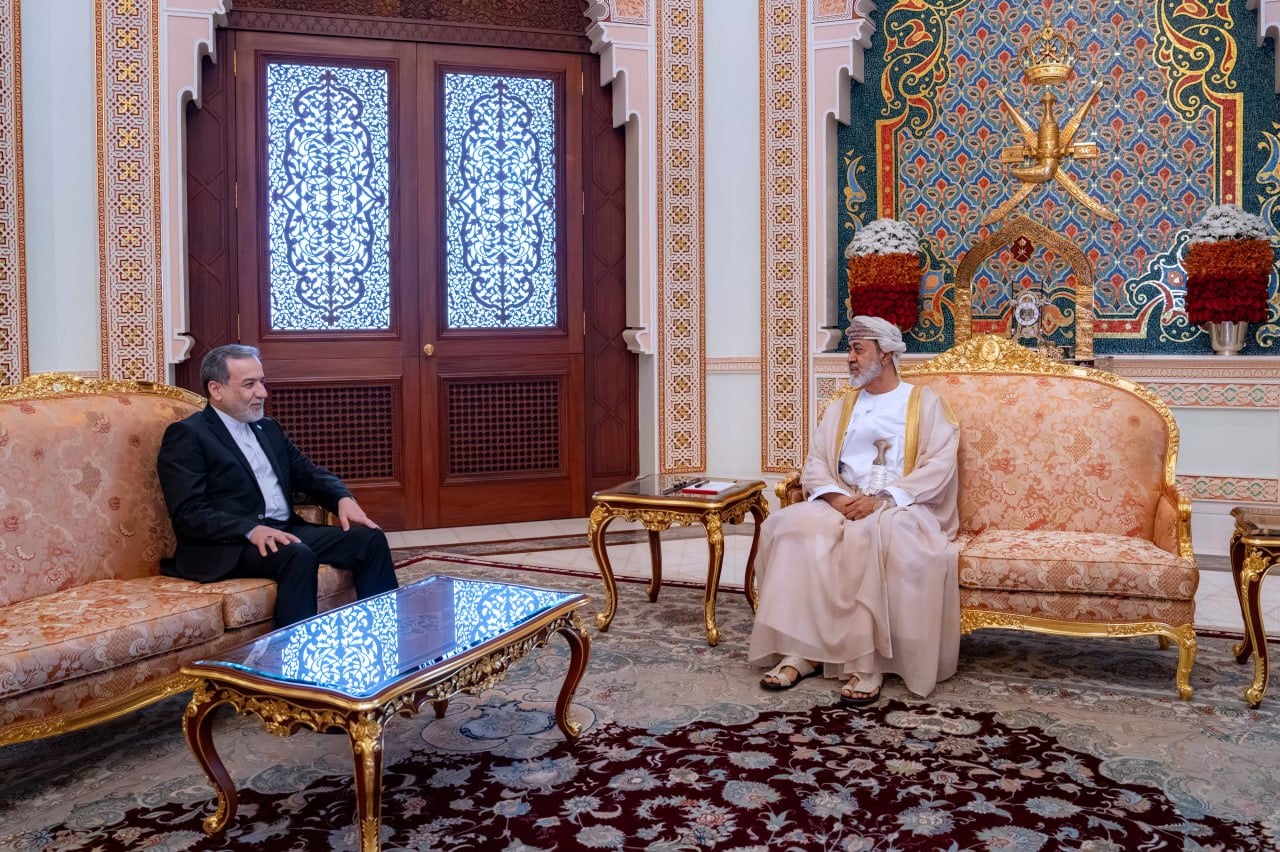
A US delegation, including envoys Steve Witkoff and Jared Kushner, will meet with the Iranians on Tuesday morning, a source had told Reuters on Friday, with Omani representatives mediating the US-Iran contacts.

In this handout photo released by the Omani Ministry of Foreign Affairs on February 6, 2026, US special envoy Steve Witkoff (C), Jared Kushner and Oman’s Foreign Minister Badr bin Hamad al-Busaidi pose for a photo during a meeting in Muscat. (Handout/Omani Foreign Ministry/AFP)

Iran, whose leaders are sworn to destroy Israel, denies seeking to acquire nuclear weapons, but has enriched uranium to levels that have no peaceful application, obstructed international inspectors from checking its nuclear facilities, and expanded its ballistic missile capabilities.

The Islamic Republic has refused to expand the scope of the negotiations to include its ballistic missile program and support for regional proxy forces, which Israel is demanding be included in any deal.

Prime Minister Benjamin Netanyahu, returning from a meeting with Trump at the White House, on Thursday said any agreement with Iran must cover “not only the nuclear issue, but also ballistic missiles and Iran’s regional proxies.”

The premier expressed “general skepticism about the possibility of reaching any agreement with Iran,” but said Trump believes the Iranians could be forced into “a good deal.”


An estimated 250,000 people rallied in Munich against Iran’s Islamist regime as part of a global day of action called by Reza Pahlavi during the Munich Security Conference.

People protesting for human rights in Iran demonstrate at Theresienwiese during the 62nd Munich Security Conference on February 14, 2026 in Munich, Germany.
(photo credit: Hannes Magerstaedt/Getty Images)

Some 250,000 people demonstrated against Iran’s Islamic regime in Munich’s Theresienwiese on Saturday afternoon, according to local police.

The demonstration was part of a global day of action called for by Reza Pahlavi, the son of the last Shah of Persia. Pahlavi was in Germany to attend the Munich Security Conference over the weekend.

The demonstration’s slogan was “Human rights and freedom for Iran. International solidarity with the Iranian people.”

Chants calling for the end of the mullahs in Iran were heard repeatedly, and flags of the USA and Israel were visible, according to reports from the German public broadcaster Bayerischer Rundfunk (BR).

Pahalvi, who spoke at the rally after attending the Munich Security Conference, said he wanted to lead the “transition” in Iran and enable a democratic future for the country, BR reported.

Reza Pahlavi speaks to people protesting for human rights in Iran at Theresienwiese during the 62nd Munich Security Conference on February 14, 2026 in Munich, Germany.
Reza Pahlavi speaks to people protesting for human rights in Iran at Theresienwiese during the 62nd Munich Security Conference on February 14, 2026 in Munich, Germany. (credit: Hannes Magerstaedt/Getty Images)

At the conference, he told journalists that Iran’s future was a critical test for global security and asserted that the Iranian regime had been exporting instability for nearly fifty years, undermining the sovereignty of its neighbors, fueling conflicts in various regions, and advancing its nuclear ambitions.

In his speech at the Theresienwiese, Pahlavi urged the international community to support the freedom of the Iranian people, according to BR.

“Above all, the free nations of this world and their governments should place themselves on the right side of history,” he said.

‘I have chosen the Iranian people over the ayatollah’

US Senator Lindsey Graham also spoke at the Munich rally and commented on his participation in a post on X/twitter.

“I have chosen the Iranian people over the ayatollah. I believe they could be good allies of the United States and would march the region toward the light.” Senator Graham wrote.

“I believe the ayatollah is a religious Nazi, who would keep the region and the world in turmoil. He’s a religious fanatic who wants to purify Islam, destroy the Jewish people, and come after the United States, which he refers to as the Great Satan.”

International protests

Munich was not the only gathering for those eager to respond to Pahlavi’s call that weekend.

Large demonstrations took place in cities around the world, including Toronto, Melbourne, Athens, Tokyo, and London.

CBC News reported that people marched down Yonge Street in Toronto, accompanied by the beat of drums and chants of “King Reza Pahlavi.”

Tens of thousands potentially killed in Iran protests

In Iran, conservative estimates amid the Islamic regime’s deadly crackdown on protesters suggest that the death toll could be between 40,000 and 50,000. The US-based Iranian rights group HRANA has confirmed just over 7,000 deaths, and the organization is currently reviewing an additional 11,730 cases.

In addition to the large number of casualties, a campaign of mass arrests and intimidation has led to the detention of thousands, as Iranian authorities attempt to prevent further protests following last month’s crackdown, which was the bloodiest unrest since 1979.

The protests began on December 28 as a small demonstration in Tehran’s Grand Bazaar, fueled by economic hardship, and quickly spread across the country.

Reuters contributed to this report.