This is a developing story.

This is a developing story.
Saudi Arabian ambassador to the UK said to the BBC on Tuesday that his country is interested in normalization with Israel after the war, with one condition – the creation of a Palestinian State.
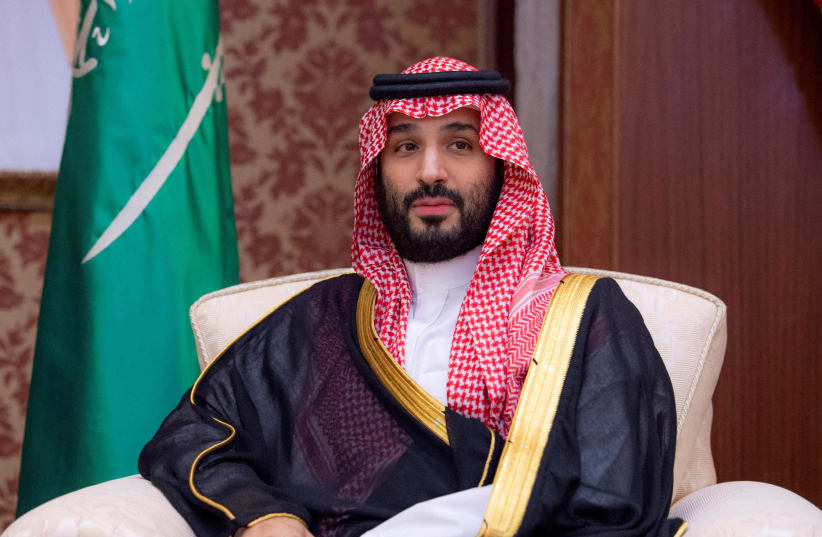
According to the ambassador, prior to the October 7 massacre, both countries were close to reaching an agreement.
He explained, “For us, the final endpoint definitely included nothing less than an independent state of Palestine. So, while we still – going forward after 7 October – believe in normalization, it does not come at the cost of the Palestinian people,” adding as a final note, “One doesn’t come without the other.”
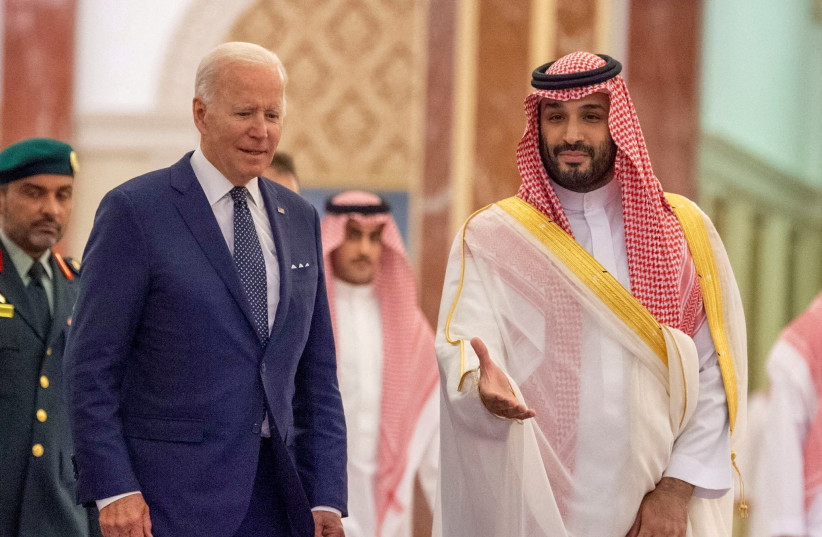

The ambassador voiced his disapproval at the reaction of the international community to the situation in Gaza, saying its efforts at ending the fighting and sending humanitarian aid to the Strip were insufficient.
With regard to the UK, Prince Khalid stated it should “treat Israel the same way it treats everyone else.” “The blind spot towards Israel is a real problem because it provides a blind spot to peace,” he continued.
In November, despite reports that Saudi Arabia had desisted from any normalization plan due to the war, the White House confirmed that the Kingdom of Saudi Arabia was still committed to a normalization deal.
In September, Mohammed bin Salman, the de facto leader of Saudi Arabia, said that his country was getting closer to a deal with the Jewish State “every day.”
Tovah Lazaroff contributed to this article.
https://www.jpost.com/israel-news/article-781454
Wissam al-Tawil is most senior member of the Lebanese terror group to be killed amid border clashes with Israel; was close with former terror chief Mughniyeh, Iran’s Soleimani

The elite Hezbollah commander who was killed in an alleged Israeli airstrike in southern Lebanon Monday played a central role in some of the terror group’s most high-profile attacks, including a deadly 2006 cross-border raid that triggered the Second Lebanon War.
Wissam al-Tawil was described by the Iran-backed terror group as a “commander,” while a senior source in Lebanon told the Reuters news agency that he was a commander of Hezbollah’s elite Radwan forces and the most senior Hezbollah officer killed so far in the recent fighting along the border.
In Israel, unsourced reports in Hebrew media claimed that Tawil had recently become leader of the Radwan force, an elite unit within Hezbollah thought responsible for a number of skirmishes on the Israel-Lebanon border. However, Lebanon’s al-Meyadeen news outlet, considered closely linked to Hezbollah, said reports that Tawil was the commander of Radwan were false, without elaborating.
A security source told AFP that Tawil “had a leading role in managing Hezbollah’s operations in the south,” near the Israeli border.
In a statement posted to Telegram, Hezbollah said that Tawil had “led” operations against Israeli forces along the restive frontier, which since the Hamas-led terror onslaught on October 7 has seen near-daily skirmishes and cross-border strikes from both sides.
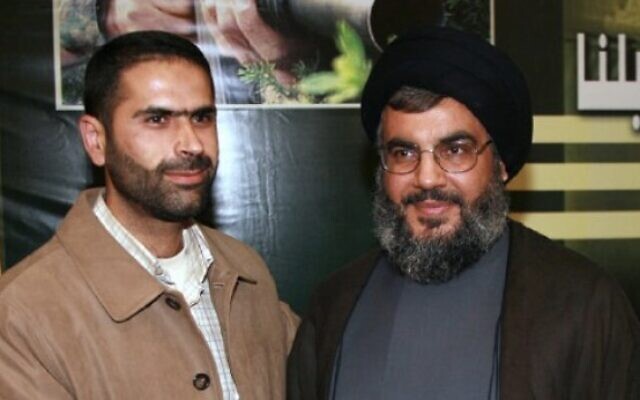
On Monday, Tawil was killed when an airstrike hit a car he was in, near his hometown of Khirbet Selm, some 10 kilometers (6 miles) from northern Israel.
The terror group said he joined Hezbollah in 1989, when he was 14 years old, rising through their ranks.
Tawil, whose two brothers were killed fighting with Hezbollah, participated in dozens of attacks against Israeli forces and their Lebanese allies during Israel’s 18-year occupation of southern Lebanon until it withdrew in 2000.
In 1999 he was injured in the neck during what Hezbollah called a “special operation” on an Israeli military post.
Seven years later, Tawil was a member of a special Hezbollah unit that crossed into northern Israel on July 12, 2006, captured two Israeli soldiers and killed others, triggering the monthlong Second Lebanon War, a Hezbollah official said, speaking on condition of anonymity in line with regulations.
Years later, when Hezbollah joined the civil war in Syria in 2013, Tawil was in charge of coordinating between the Lebanese organization and the Syrian army in the battles against the Islamic State group, according to the Hezbollah official. Tawil was a close aide to Hezbollah’s chief commander in Syria Mustafa Badreddine, who was killed in 2016, the official added.

During his long years with the Lebanese terror group, Tawil was close to Imad Mughniyeh, Hezbollah’s military chief from its founding in 1982 until he was killed in a bombing in the Syrian capital in 2008 attributed to Israel.

Additionally, Tawil had close links with Gen. Qassem Soleimani, head of Iran’s Quds Force, who was killed in a US drone strike in Baghdad in 2020. Soleimani led the foreign operations of the Islamic Revolutionary Guard Corps and played a key role coordinating between Iran-backed groups such as Hezbollah and Hamas.

Hamas in a statement expressed “our most sincere condolences for the martyrdom of commander Wissam Tawil, killed… while fulfilling his jihadist duty in support of Gaza.”
“The escalation in the Zionist enemy’s (Israel’s) aggression and the targeting of leaders of the resistance… will not deter the resistance forces,” added the Gaza-ruling Palestinian terror group.
Iran’s foreign ministry spokesman, Nasser Kanani, strongly condemned the attack and warned against the “efforts of the Zionist regime (Israel) to expand the scope of conflict and war in the region.”
Kanani described Israel’s actions as “blatant terrorist operations,” which he claimed were due to “painful blows inflicted on its false hegemony in field battles, including in the Gaza Strip.”
A senior source in Lebanon said Tawil’s death marked a big blow, given his experience including deployments with Hezbollah in Syria and Iraq.
https://www.timesofisrael.com/assassinated-hezbollah-commander-had-role-in-raid-that-sparked-2006-war-fought-in-syria/

Scofield Biblical Institute and Theological Seminary Copyright 2010 – 2020