Secretary of State Antony Blinken discusses Saudi-Israel normalization during meeting with Saudi Crown Prince.

Blinken meets Saudi Crown Prince

Blinken meets Saudi Crown PrinceReuters

US Secretary of State Antony Blinken said on Monday there was “clear interest” on the part of Saudi Arabia in pursuing relations with Israel, AFP reported.

Blinken was speaking after meeting Saudi Crown Prince Mohammed bin Salman in a tent outside Al Ula, a historic oasis town. Blinken is in Saudi Arabia as part of a regional visit that saw him arrive in Israel late on Monday night.

“We talked about (Israeli normalization) actually on every stop, including of course here in Saudi Arabia,” he told reporters before flying to Tel Aviv, adding, “And I can tell you this, there’s a clear interest here in pursuing that.”

Israel and Saudi Arabia appeared to be on track towards normalization before Hamas’ October 7 attack against Israel and the war in Gaza which followed.

Shortly after the start of the war in Gaza, sources told Reuters that Saudi Arabia is putting the US-backed plans to normalize ties with Israel on ice.
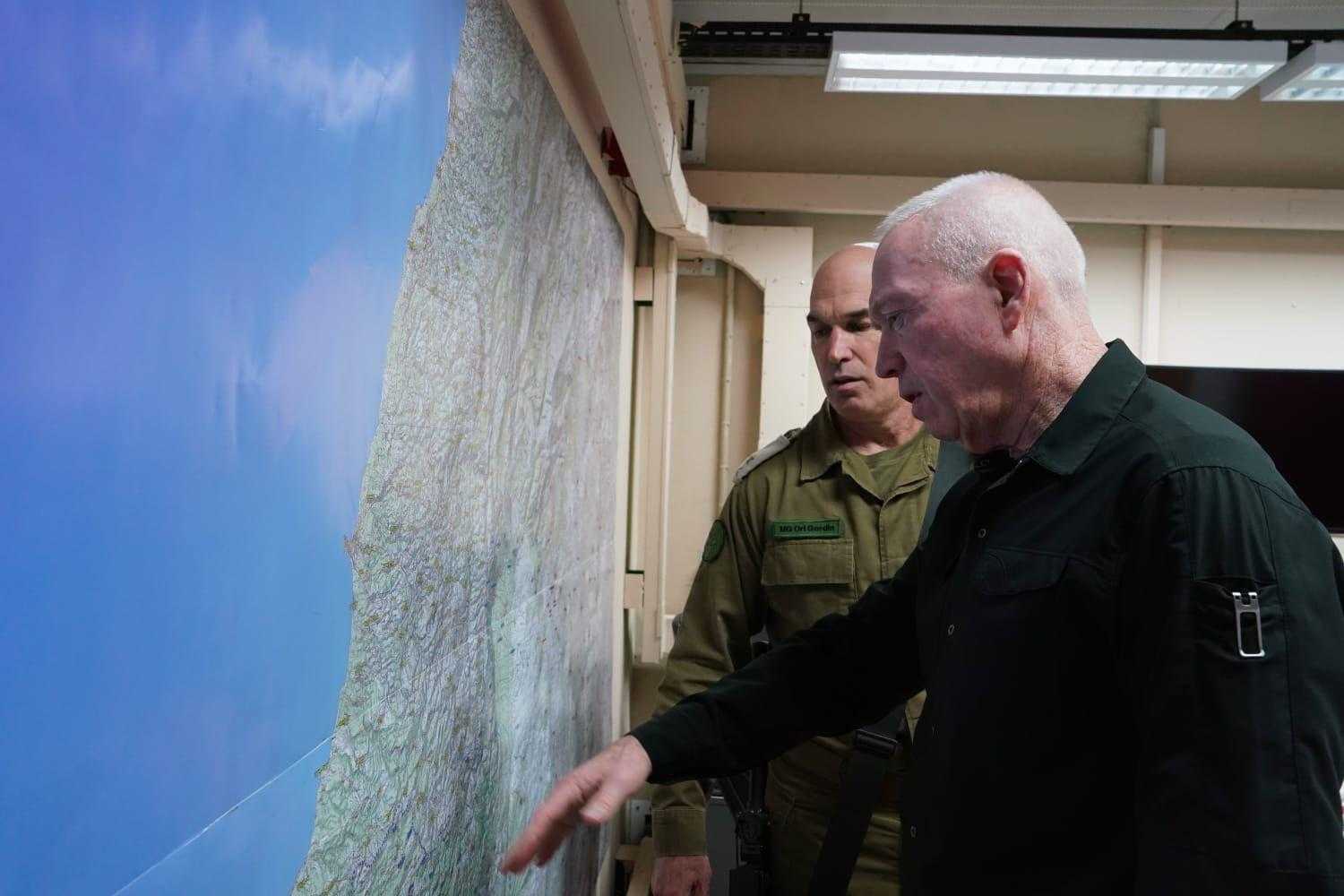


Defense Minister Yoav Gallant receives a situational assessment at the IDF's Northern Command base on January 5, 2024. (Ariel Hermoni/Defense Ministry)

Defense Minister Yoav Gallant receives a situational assessment at the IDF’s Northern Command base on January 5, 2024. (Ariel Hermoni/Defense Ministry)

Israel isn’t afraid to go to war with the Hezbollah terror group in Lebanon, Defense Minister Yoav Gallant tells the Wall Street Journal and warns the Iran-backed group that the destruction in Gaza can be “copy-pasted” to  Beirut.

Since October 8, Hezbollah and allied Palestinian terror factions have engaged in daily border clashes with Israeli troops, targeting civilian communities with drone, rocket and missile attacks and forcing tens of thousands of Israelis to evacuate.

While Israel’s priority isn’t to get entangled in a war with Hezbollah, Gallant says that “80,000 people need to be able to go back to their homes safely,” and so if all else fails, “we are willing to sacrifice.”

“They see what is happening in Gaza,” he says. “They know we can copy-paste to Beirut.”


Maritime threat: IRGC unveils new missile cruiser

Iran’s Revolutionary Guards Corps announces addition of the Abu Mahdi al-Muhandis, which can sail 2000 nautical miles.

Iran

IraniStock

A new missile cruiser joined the fleet of Iran’s Revolutionary Guards Corps (IRGC) on Saturday.

The new cruiser is named the Abu Mahdi al-Muhandis, after the commander of the popular militia in Iraq who was eliminated several years ago in an US drone strike along with Qassem Soleimani, commander of the Quds Force of the IRGC.

The cruiser was built on the basis of Iranian know-how, and the manufacturing company is able to supply the fleet with three new ships within a year.

It reportedly has four engines, a cruising speed of over 37 knots, high maneuverability, the ability to launch cruise missiles up to a range of 750 km, 20- and 30-mm cannons to deal with hostile aerial targets, the ability to launch UAVs day and night, detection and interception systems, the ability to sail for a range of 2000 nautical miles and continuous activity for 14 days in a row.

The commander of the IRGC, Hossein Salami, stated that the equipping of the new ship is in accordance with the need to secure Iran’s shipping lines with ships capable of long-range sailing and which are equipped with cruise missiles.

Iran often boasts of its military accomplishments, though it is not always possible to determine with certainty that it is telling the truth about those accomplishments.

In 2017, the Islamic Republic claimed to have unveiled a domestically manufactured tank which “has the capability to fire missiles and precisely guide them.”

Previously, Iran’s Revolutionary Guard claimed it had successfully tested a Hormuz 2-type ballistic missile.

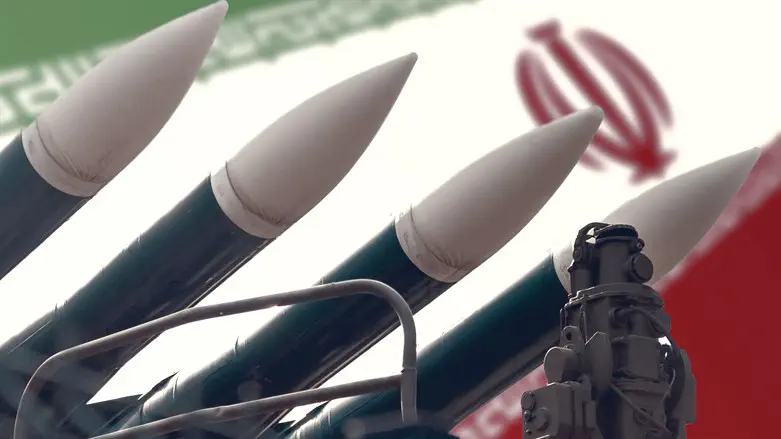
In September, the spokesman for Iran’s Defense Ministry claimed the Islamic Republic has missiles that can hit Israel.

In December, Iran’s navy stated it had added domestically produced sophisticated cruise missiles to its arsenal.