Terror group’s leader endorses ‘political path’ to Palestinian state, makes no mention of coexistence with Israel; senior official Abu Marzouk suggests recognition, in line with PLO
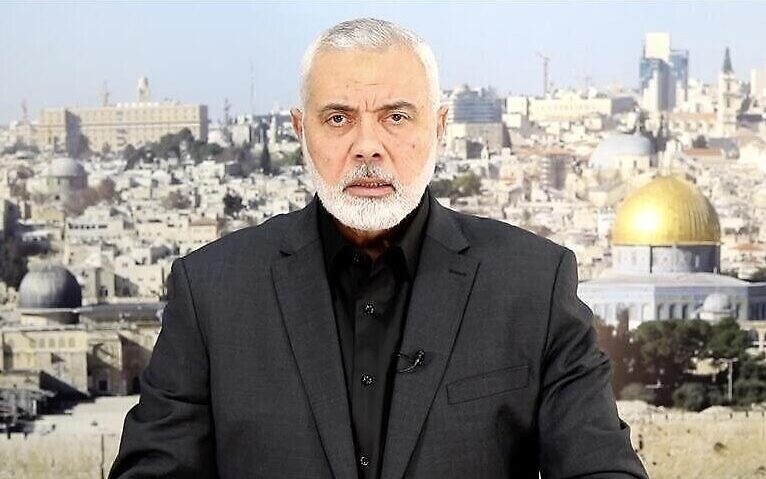
 

Hamas politburo chief Ismail Haniyeh makes a televised address on December 13, 2023. (Screenshot: X; used in accordance with Clause 27a of the Copyright Law)

Hamas politburo chief Ismail Haniyeh makes a televised address on December 13, 2023. (Screenshot: X; used in accordance with Clause 27a of the Copyright Law)

Hamas politburo chief Ismail Haniyeh said Wednesday that the group was open to negotiations to end the ongoing war with Israel, but added that any plan for postwar Gaza that does not involve the Palestinian terror group is just a “delusion.”

“Any arrangement in Gaza or in the Palestinian cause without Hamas or the resistance factions is a delusion,” Haniyeh said in a televised speech aired on Hamas-affiliated Al-Aqsa TV.

Haniyeh said he is open to talks for ending the ongoing war and “putting the Palestinian house in order both in the West Bank and the Gaza Strip.”

He said Hamas is ready for talks that could lead to a “political path that secures the right of the Palestinian people to their independent state with Jerusalem as its capital.”

He made no mention of an Israeli state living alongside this Palestinian state. Hamas openly seeks Israel’s destruction and has vowed to carry out repeated deadly onslaughts like the one it carried out on October 7 until this is achieved.

Also on Wednesday, however, Moussa Abu Marzouk, a prominent member of Hamas’s political bureau, told Al-Monitor that the group would be opening to recognizing Israel in order to fall into line with the position of the Palestinian Liberation Organization.
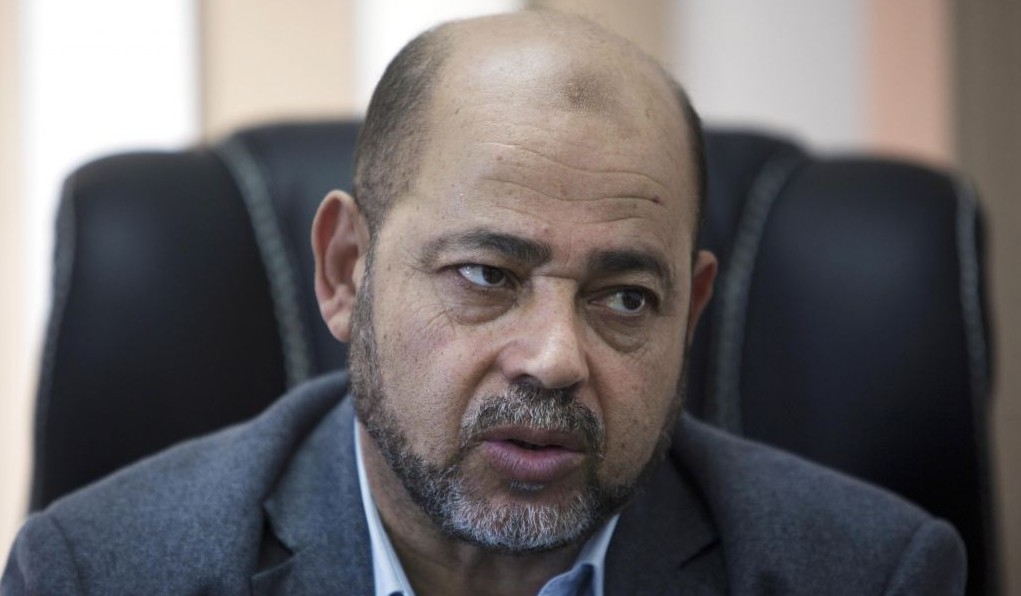
File: Hamas official Moussa Abu Marzouk, September 18, 2014. (AP/Khalil Hamra)

“You should follow the official stance,” he said, referencing the position adopted in 1993 under the Oslo Accords, in exchange for Israel’s recognition of the group as the legitimate representatives of the Palestinian people. “The official stance is that the PLO has recognized the State of Israel.”

It was not immediately clear if Abu Marzouk’s position had backing from any other Hamas figures, as the group’s charter has always called for the elimination of Israel.

Negotiations with Hamas are a nonstarter for Israel, which since October 7 has been waging war on the terror group with the intention of toppling its regime in the Gaza Strip. On that day, Hamas gunmen burst through the border in a shock onslaught and rampaged through southern Israel, massacring 1,200 people, mostly civilians, and taking some 240 people hostage.

The October 7 massacre, which came under cover of a massive barrage of rockets fired at Israel, saw terrorists overrun communities and engage in mass slaughter of civilians of all ages. Families were murdered as they huddled together in their homes or were burned to death. Victims, including children, were raped, tortured or mutilated. At an outdoor music festival, over 360 people were massacred.

It remains unclear who will govern Gaza in the long term after the war, but Prime Minister Benjamin Netanyahu has said that the Palestinian Authority, which governs parts of the West Bank, is not a suitable option as it glorifies violence against Israelis and pays stipends to convicted Palestinian terrorists in Israeli prisons. The US has advocated a central role for a “revitalized” PA.

Despite growing international calls for a ceasefire — including a non-binding resolution at the UN General Assembly — Netanyahu and Foreign Minister Eli Cohen both vowed Wednesday that the military offensive against the Hamas terror group will continue until the goal of the operation is achieved.

During a visit to a southern military facility, the prime minister told soldiers that “we are continuing until the end, until victory, until the elimination of Hamas” — even in the face of international pressure. “Nothing will stop us.”

Echoing the prime minister’s sentiments, Cohen told visiting Australian Deputy Foreign Minister Tim Watts that the war against Hamas will continue “with or without international support.”

The Hamas-run health ministry in Gaza has claimed that, since the start of the war, more than 18,600 people have been killed, mostly civilians. These figures cannot be independently verified and are believed to include some 7,000 Hamas terrorists, according to Israel, as well as civilians killed by misfired Palestinian rockets. Another estimated 1,000 terrorists were killed in Israel during the October 7 onslaught.

Iran warns against proposed US-backed Red Sea force – ISNA

American and French navies have strengthened their presence in the Red Sea to protect vessels from the risk of seizure or attack by the Houthis.

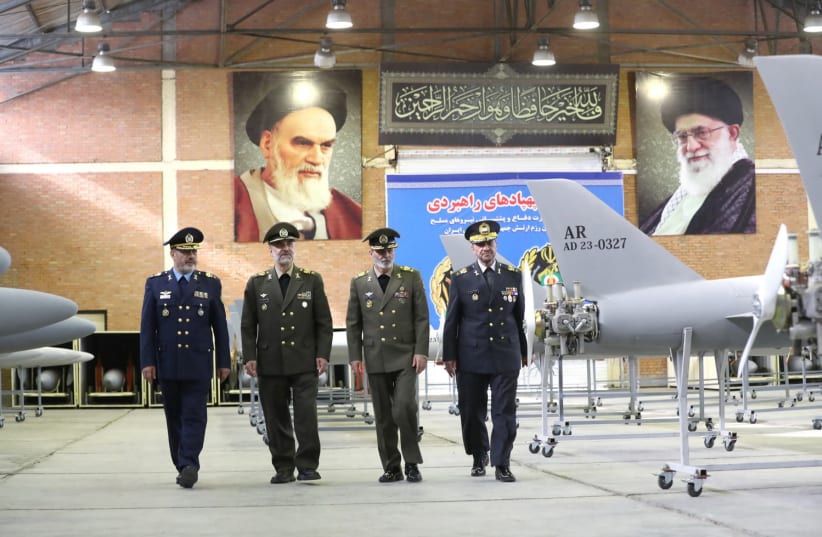
 Iran's Army chief Major General Abdolrahim Mousavi and Defense Minister Brigadier General Mohammad-Reza Ashtiani visit a drone site at an undisclosed location in Iran, in this handout image obtained on April 20, 2023. (photo credit: IRANIAN ARMY/WANA/REUTERS)
Iran’s Army chief Major General Abdolrahim Mousavi and Defense Minister Brigadier General Mohammad-Reza Ashtiani visit a drone site at an undisclosed location in Iran, in this handout image obtained on April 20, 2023.
(photo credit: IRANIAN ARMY/WANA/REUTERS)
Iran’s Defense Minister Mohammad Reza Ashtiani warned that a proposed US-backed multinational task force to protect shipping in the Red Sea would face “extraordinary problems,” official Iranian media reported on Thursday.

Ashtiani’s comments came after the United States said last week it was in talks with other countries to set up a task force following a spate of attacks by the Iran-backed Houthis in Yemen on ships in the Red Sea.

“If they make such an irrational move, they will be faced with extraordinary problems,” Ashtiani told the official Iranian Student News Agency (ISNA) in comments it published on Thursday.

“Nobody can make a move in a region where we have predominance,” he said, referring to the Red Sea.

Ashtiani did not specify what measures Iran was prepared to take in response to the setting up of a US-backed Red Sea task force.

Talks regarding the Maritime Taskforce are underway


 An American Navy ship seen in the red sea port of Eilat on June 8, 2021. (credit: FLASH90)
An American Navy ship seen in the red sea port of Eilat on June 8, 2021. (credit: FLASH90)

US National Security Advisor Jake Sullivan told reporters last week that Washington was in talks with “other countries” over forming a “maritime task force … to ensure safe passage of ships in the Red Sea,” but did not give further details.

Advertisement

Yemen’s Houthis, which are aligned with Iran, have waded into the Israel-Hamas conflict by attacking vessels in vital shipping lanes and firing drones and missiles at Israel more than 1,000 miles from their seat of power in the Yemeni capital of Sanaa.

American and French navies have strengthened their presence in the Red Sea to protect vessels from the risk of seizure or attack by the Houthis.


Jews are still much safer in Israel – opinion

Now more than ever, Jews need a home where they can defend themselves. The nation is united and highly motivated to protect its families and homes.

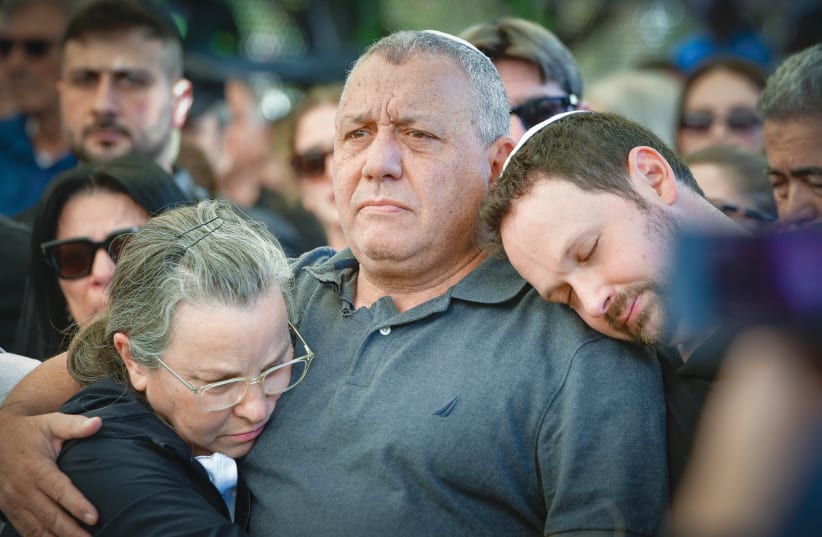
 WAR CABINET MINISTER Gadi Eisenkot, family, and friends attend the funeral of Sgt.-Maj. (res.) Gal Meir Eisenkot in Herzliya, last Friday. (photo credit: AVSHALOM SASSONI/FLASH90)
WAR CABINET MINISTER Gadi Eisenkot, family, and friends attend the funeral of Sgt.-Maj. (res.) Gal Meir Eisenkot in Herzliya, last Friday.
(photo credit: AVSHALOM SASSONI/FLASH90)
On Sunday this week, I walked to the military cemetery atop Jerusalem’s Mount Herzl, which is rapidly filling up in a new Gaza War section with many graves.

I didn’t have to go far because I live a stone’s throw from the grave of Theodor (Binyamin Ze’ev) Herzl – the visionary Viennese Jewish journalist and the father of modern political Zionism who was awakened to antisemitism at the turn of the 20th century when covering the Dreyfus trial – whose remains are buried at the highest point.

Nearby are the graves of other Zionist leaders who followed, including many of Israel’s presidents, prime ministers, and other great (and some not-so-great) political leaders. On the north side is the military cemetery, which 10 years ago had 3,400 graves of heroic fallen soldiers, policemen, and other security personnel. Who knows how many have been buried since then?

It’s the Israeli equivalent to Virginia’s Arlington National Cemetery, which is the final resting place for many of that country’s greatest heroes, including more than 300,000 veterans of every American conflict from the Revolutionary War to Iraq and Afghanistan.

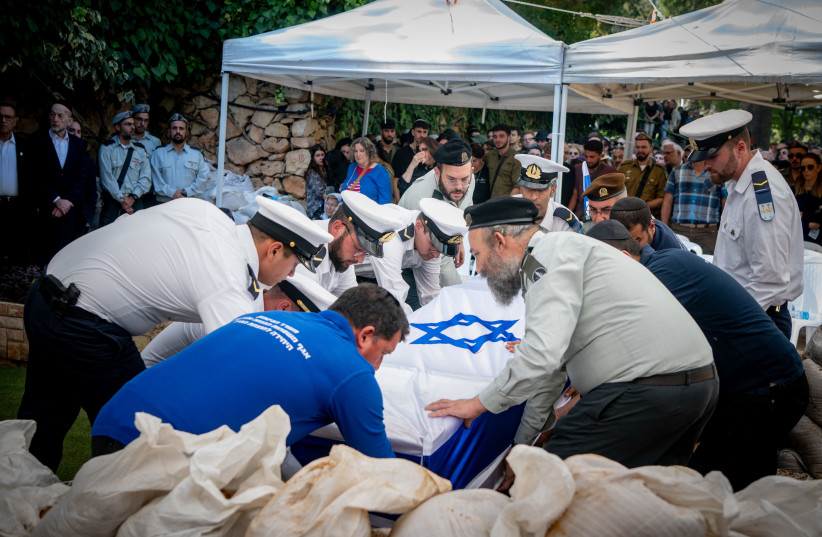
 Family and friends of First Class (res.) Ben Zussman mourn at his funeral at the Mount Herzl Military Cemetery in Jerusalem on December 4, 2023, he was killed during a ground operation in the Gaza Strip. (credit: ARIE LIEB ABRAMS/FLASH90)
Family and friends of First Class (res.) Ben Zussman mourn at his funeral at the Mount Herzl Military Cemetery in Jerusalem on December 4, 2023, he was killed during a ground operation in the Gaza Strip. (credit: ARIE LIEB ABRAMS/FLASH90)

The Jerusalem funeral of 32-year-old Israel Defense Forces reservist Naftali Yona Gordon – whom I had never met but who is a cousin of my daughter-in-law, was held in honor of an Israeli hero who had been called up to fight in his tank in Gaza.

A country in mourning

More than 100 Israeli officers and soldiers in active service and the reserves have died since the IDF launched a large-scale invasion into the Gaza Strip on the evening of October 27.

He was a devoted physiotherapist working for a Jerusalem health fund. He was also the loving husband of Pessie, beloved son of American-born Beatrice and Daniel Gordon, grandson of American-born Dr. Esther Offenbacher and the late Dr. Elmer Offenbacher, and father of two little girls, Libi and Gefen.

Advertisement

Before the weekend, his loved ones were informed that he had fallen in action in a tank in Gaza.

Some 1,000 people – bereaved relatives and friends, employers, colleagues, Israel Defense Forces officers, and even people who didn’t know him but wanted to salute him – stood silently under a large tent as his grave was filled with earth. Their eyes were tear-stained, and his widow and other relatives wept from anguish during the 90-minute ceremony.

THEY SAID that Naftali had treated with devotion and relieved the pain not only of Jewish but also many Arab and other patients – and he was an affectionate husband and father, brother, son, and grandson, trying to be with his family as much as he could.

Naftali and all the thousands of others are gone not only due to Hamas but also due to an incompetent, arrogant, divisive, and deceitful national leader who insists he will remain in his job – and others in the military who at least admitted responsibility for ignoring early signs of the impending incursion due to their misconceptions of Hamas.

It is the worst intelligence and military failure since the founding of the State of Israel that makes the even-now-traumatic Yom Kippur War 50 years ago seem like a picnic.

Those who are responsible for it will be judged for what they have done. But from the following day, IDF generals and those under their command have performed bravely and brilliantly to complete their mission of wiping out one of the worst terrorist armies in history.

Unlike most countries, in Israel, generals and their relatives do not remain behind computer screens or just grant interviews on the safe side of the battlefront. IDF generals have entered deep into Gaza to see events for themselves and raise the morale of the troops even more.

Retired IDF chief of staff and current war cabinet observer minister Gadi Eisenkot lost his son, 25-year-old Master-Sgt. (res.) Gal Meir Eisenkot, who was killed in the Gaza fighting, and soon after, his 19-year-old nephew, Sgt. Maor Cohen Eisenkot, 19, was killed by explosives inside the Khan Yunis mosque.

Since then, another of Eisenkot’s nephews has been seriously injured. As some 360,000 IDF reservists were called up after the war started, there are large families with numerous sons – even eight or nine – and daughters serving simultaneously in the battle.

Within just 48 hours of the barbaric incursion of kibbutzim and other places hugging the Gaza Strip by thousands of crazed Hamas terrorists and the kidnapping of some 240 Israelis and foreigners into Gaza, 50 Israel Defense Forces (IDF) soldiers were buried on Mount Herzl. From my balcony, I hear, via the public address system, each heart-rending funeral.

A homeland for the Jews

BUT EVEN during this war, it is still safer to live here than abroad. We can defend ourselves; we are united and highly motivated to protect our families and homes, and we know we have no other country.

From now on, growing antisemitism and anti-Israeli sentiment have put Diaspora Jews, who identify as Jews, in far greater peril than Israelis. According to the latest poll, 40% of ultra-Orthodox (haredi) Jews in the US are seriously considering aliyah. The men are very visible in their garb, beards, and sidecurls. The women are also easily identified by the way they dress. British Jews are also very worried and many are thinking of leaving the UK.

There are currently 5,000 Chabad (Lubavitch) centers, including Jewish schools, in 100 countries around the world. As they always welcome outsiders, they are now at the highest risk of being threatened by terrorists. In 2008, their emissaries in Mumbai, India – 29-year-old Rabbi Gavriel Noach Holtzberg and his 26-year-old wife Rivkah – were murdered in cold blood at the Chabad Center by members of Lashkar-e-Taiba, an Islamic terrorist organization based in Pakistan. Their baby son Moshe survived, saved by his Indian nanny, Sandra Samuel, and they both live in Jerusalem.

Chabad emissaries teach, run prayer services, and provide kosher meals for local Jews and visitors. They provide a very convenient service for their guests. But now, more than ever, they are needed in Israel. Some of them, at least those in New York and other US locations, should move back to Israel or make aliyah. This would electrify Diaspora Jews and encourage them to make aliyah too.

As Chabadniks feel comfortable interacting with secular as well as religious Jews, they could help to rehabilitate the Israeli families who lost loved ones, homes, and property on October 7 and who now suffer severe emotional trauma.

This holy mission will take years, even decades, to carry out, and they will be safer in Israel.

The writer is health and science reporter of The Jerusalem Post.