Resolution, which passes in fifth attempt, uses watered down language, does not mention ceasefire, calls for ‘immediate and unconditional release of all hostages’ held by Hamas
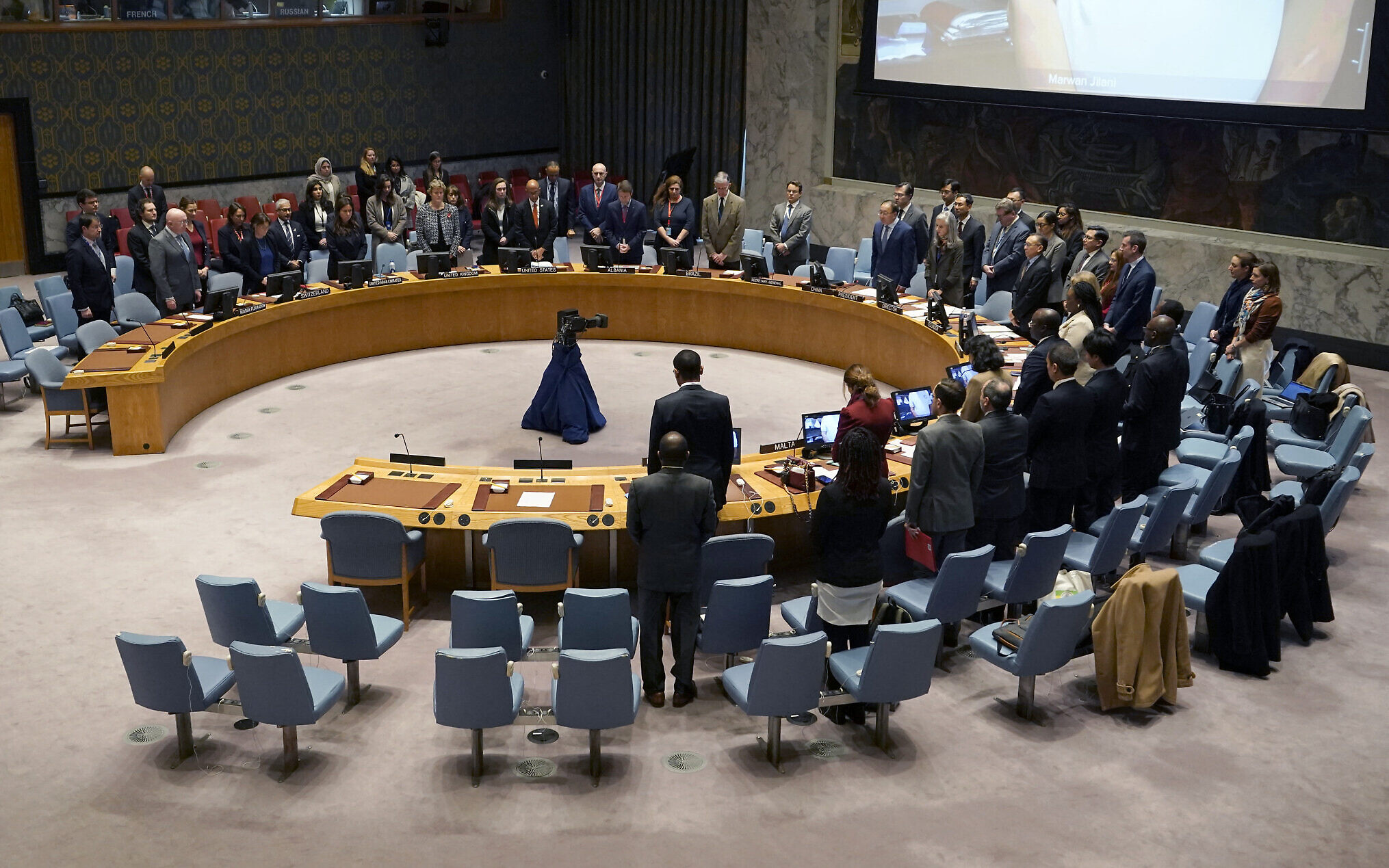
File: The UN Security Council holds a moment of silence before meeting on the Israel-Hamas war, at UN Headquarters in New York City, on November 10, 2023. (TIMOTHY A. CLARY / AFP)

File: The UN Security Council holds a moment of silence before meeting on the Israel-Hamas war, at UN Headquarters in New York City, on November 10, 2023. (TIMOTHY A. CLARY / AFP)

The UN Security Council approved a resolution Wednesday calling for “urgent and extended humanitarian pauses and corridors throughout the Gaza Strip” after four failed attempts to respond to the Israel-Hamas war.

The vote was 12-0 with the United States, United Kingdom, and Russia abstaining.

The final draft watered down language from a “demand” to a “call” for humanitarian pauses. It also watered down a demand for “the immediate and unconditional release of all hostages held by Hamas and other groups.”

The resolution makes no mention of a ceasefire. It also doesn’t refer to Hamas’s devastating October 7 onslaught on Israel, in which terrorists rampaged through southern communities, killing over 1,200 people, mostly civilians butchered in their homes and at a music festival, and kidnapping some 240 people. Israel then declared war with the aim of toppling the terror group’s regime in Gaza, which it has ruled since 2007.

The Hamas-run Gaza health ministry said Tuesday that 11,500 people had been killed in Gaza since the start of the war, in figures that cannot be independently verified, do not distinguish between civilians and terror operatives, and also include those killed in hundreds of failed Palestinian rocket launches.

Palestinians in the Gaza Strip displaced by the Israel-Hamas war prepare bread in a UNDP-provided tent camp in Khan Younis, November 15, 2023. (AP Photo/Fatima Shbair)

But the resolution, sponsored by Malta, did bring the 15 members of the UN’s most powerful body together in a first response to the ongoing war that is having catastrophic humanitarian consequences in Gaza.

The resolution asks that “all parties comply with their obligations under international law, notably with regard to the protection of civilians, especially children.”

Responding to the vote, Israel’s Foreign Ministry demanded that the Security Council work to free the hostages held in the Strip.

In a statement, the Foreign Ministry said there is “no room for extended humanitarian pauses as long as 239 hostages are still in the hands of Hamas terrorists.”

Several reports Wednesday indicated that there is a potential deal in the works to free a number of captives in exchange for a several-day pause in fighting.

Malta’s UN envoy Vanessa Frazier said before the vote that “the Security Council members are united in wanting a voice.”

While recognizing the “nuances” between their positions, she said all 15 members have “the desire to save life and provide respite” to civilians.

UN Security Council resolutions are legally binding, but in practice, many parties choose to ignore the council’s requests for action.

Richard Gowan, UN director for the International Crisis Group, said the Security Council has called for ceasefires in wars from the Balkans to Syria “with little or no impact.”

The Security Council, which has the responsibility for maintaining international peace and security, has been paralyzed since the war began by its internal divisions. This is especially the case between China and Russia, which want an immediate ceasefire, and the United States, which has called for humanitarian pauses but objects to any mention of a ceasefire, which its close ally Israel strongly opposes.

“I know we are all disappointed about the inaction of the Council in the past 40 days,” China’s UN ambassador Jun Zhang said earlier Wednesday.

The resolution calls for humanitarian pauses and corridors throughout the Gaza Strip for a “sufficient number of days” for unhindered access by the UN, Red Cross, and other aid groups to get water, electricity, fuel, food, and medical supplies to all those in need. It says the pauses also should allow for the repair of essential infrastructure and enable urgent rescue and recovery efforts.

An Egyptian fuel truck waits on the Egyptian side of the Rafah border crossing with the southern Gaza Strip, November 15, 2023 (AFP)

In the four previous tries for Security Council approval, a Brazil-drafted resolution was vetoed by the United States, a US-drafted resolution was vetoed by Russia and China and two Russian-drafted resolutions failed to get the minimum “yes” votes.

After the fourth failure, frustrated Arab nations turned to the 193-member General Assembly and succeeded in getting wide approval for a resolution calling for a “humanitarian truce” in Gaza meant to lead to a cessation of hostilities between Israel and Hamas.

It was the first United Nations response to the war. But unlike Security Council resolutions, General Assembly resolutions are not legally binding, though they are a barometer of world opinion.

The vote was 120-14 with 45 abstentions. Of the five veto-holding Security Council members, Russia, China, and France voted in favor, the United States voted against and Britain abstained.

The General Assembly resolution was adopted on October 27, and Israel agreed on November 9 to four-hour pauses. But only limited aid has been delivered to Gaza through the Rafah crossing from Egypt, and a humanitarian crisis has been brewing.

The Crisis Group’s Gowan said US opposition to a ceasefire “is a gift that keeps on giving for Russia diplomatically.” He said that while many diplomats think Russia is demanding a cease-fire “for largely cynical reasons to make the Americans look bad,” Moscow’s position “is closer to the mainstream of council thinking, and the US looks isolated.”

“A UN cease-fire call would embarrass but not really constrain the Israelis,” he told the AP. “But the US clearly feels that even such a symbolic move is too much of a political risk.”
Iran does not recognize Israel’s existence, while Israel has long threatened military action against Iran if diplomacy fails to curb its disputed nuclear activity.

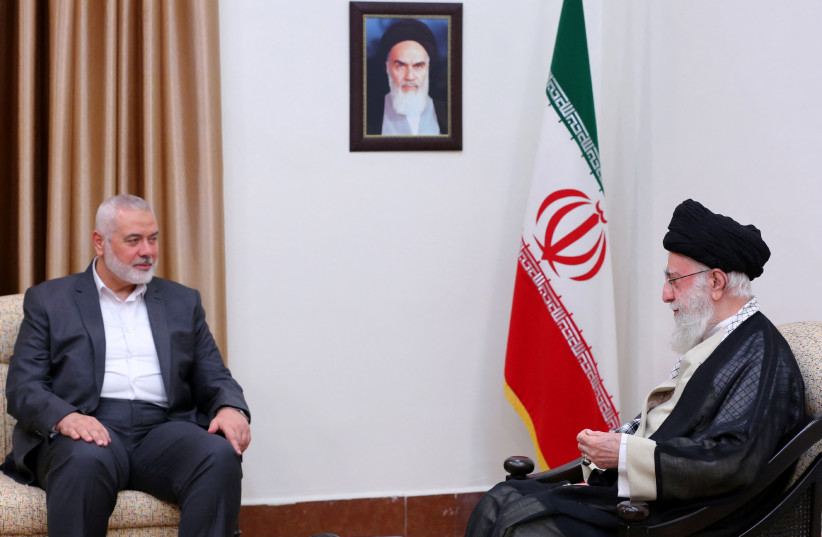
 Iran's Supreme Leader Ayatollah Ali Khamenei meets with Palestinian group Hamas' top leader, Ismail Haniyeh, in Tehran, Iran June 21, 2023. (photo credit: Office of the Iranian Supreme Leader/WANA (West Asia News Agency) via REUTERS)
Iran’s Supreme Leader Ayatollah Ali Khamenei meets with Palestinian group Hamas’ top leader, Ismail Haniyeh, in Tehran, Iran June 21, 2023.
(photo credit: Office of the Iranian Supreme Leader/WANA (West Asia News Agency) via REUTERS)
Iran’s supreme leader delivered a clear message to the head of Hamas when they met in Tehran in early November, according to three senior officials: You gave us no warning of your Oct. 7 attack on Israel and we will not enter the war on your behalf.

Ayatollah Ali Khamenei told Ismail Haniyeh that Iran – a longtime backer of Hamas – would continue to lend the group its political and moral support, but wouldn’t intervene directly, said the Iranian and Hamas officials with knowledge of the discussions who asked to remain anonymous to speak freely.

The supreme leader pressed Haniyeh to silence those voices in the terror group publicly calling for Iran and its powerful Lebanese ally Hezbollah to join the battle against Israel in full force, a Hamas official told Reuters.

Hezbollah, too, was taken by surprise by Hamas‘ devastating assault last month that killed 1,200 Israelis; its fighters were not even on alert in villages near the border that were frontlines in its 2006 war with Israel, and had to be rapidly called up, three sources close to the Lebanese group said.

“We woke up to a war,” said a Hezbollah commander.

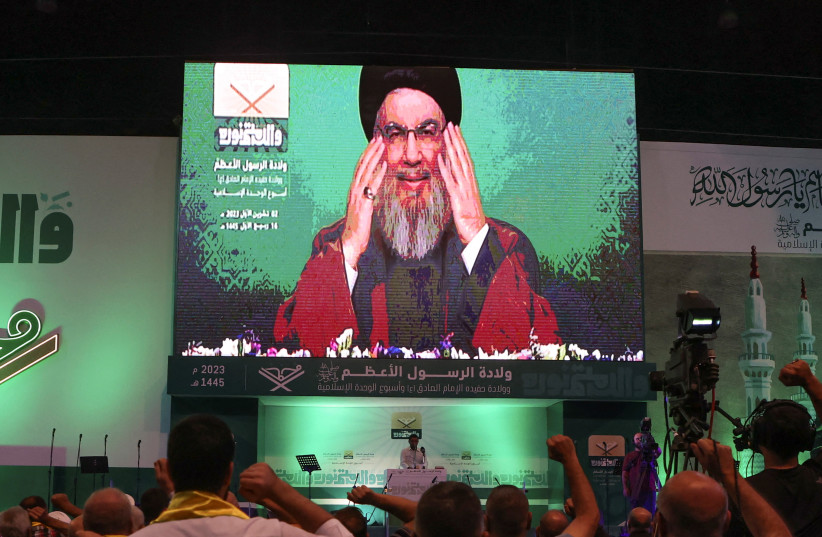
 Lebanon's Hezbollah leader Sayyed Hassan Nasrallah addresses his supporters via a screen during a rally marking Prophet Mohammed's birthday, in Beirut suburbs, Lebanon October 2, 2023. (credit: MOHAMED AZAKIR/REUTERS)
Lebanon’s Hezbollah leader Sayyed Hassan Nasrallah addresses his supporters via a screen during a rally marking Prophet Mohammed’s birthday, in Beirut suburbs, Lebanon October 2, 2023. (credit: MOHAMED AZAKIR/REUTERS)

The unfolding crisis marks the first time that the so-called Axis of Resistance – a military alliance built by Iran over four decades to oppose Israeli and American power in the Middle East – has mobilized on multiple fronts at the same time.

Hezbollah has engaged in the heaviest clashes with Israel for almost 20 years. Iran-backed terror groups have targeted US forces in Iraq and Syria. Yemen’s Houthis have launched missiles and drones at Israel.

Advertisement

The conflict is also testing the limits of the regional coalition whose members – which include the Syrian government, Hezbollah, Hamas and other militant groups from Iraq to Yemen – have differing priorities and domestic challenges.

Mohanad Hage Ali, an expert on Hezbollah at the Carnegie Middle East Center think-tank in Beirut, said Hamas’ Oct. 7 assault on Israel had left its axis partners facing tough choices in confronting an adversary with far superior firepower.

“When you wake up the bear with such an attack, it’s quite difficult for your allies to stand in the same position as you.”

Hamas pleas for help from axis

Hamas, the ruling group of Gaza, is fighting for its survival against an avenging Israel, which vows to wipe it out and has launched a retaliatory onslaught on the tiny enclave that’s killed more than 11,000 Palestinians.

On Oct. 7, Hamas’ military commander Mohammed Deif called on its axis allies to join the struggle. “Our brothers in the Islamic resistance in Lebanon, Iran, Yemen, Iraq and Syria, this is the day when your resistance unites with your people in Palestine,” he said in an audio message.

Hints of frustration surfaced in subsequent public statements by Hamas leaders including Khaled Meshaal, who in an Oct. 16 TV interview thanked Hezbollah for its actions thus far but said “the battle requires more” .

Nonetheless, alliance leader Iran won’t directly intervene in the conflict unless it is itself attacked by Israel or the United States, according to six officials with direct knowledge of Tehran’s thinking who declined to named due to the sensitive nature of the matter.

Instead, Iran’s clerical rulers plan to continue using their axis network of armed allies, including Hezbollah, to launch rocket and drone attacks on Israeli and American targets across the Middle East, the officials said.

The strategy is a calibrated effort to demonstrate solidarity for Hamas in Gaza and stretch Israeli forces without becoming engaged in a direct confrontation with Israel that could draw in the United States, they added.

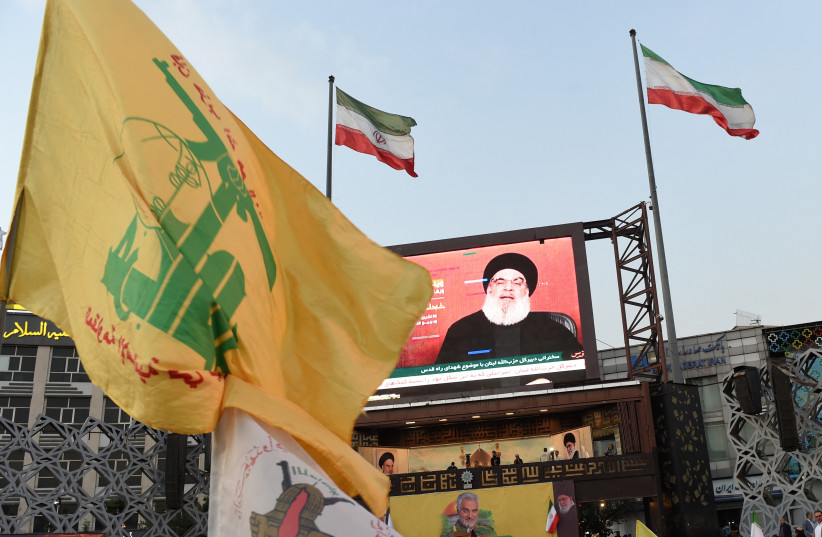
People listen to Hezbollah leader Sayyed Hassan Nasrallah's speech through a screen during a gathering in support of Palestinians, amid the ongoing conflict between Israel and Hamas, in Tehran, Iran, November 3, 2023. (credit: WANA VIA REUTERS)
People listen to Hezbollah leader Sayyed Hassan Nasrallah’s speech through a screen during a gathering in support of Palestinians, amid the ongoing conflict between Israel and Hamas, in Tehran, Iran, November 3, 2023. (credit: WANA VIA REUTERS)

“This is their way of trying to create deterrence,” said Dennis Ross, a former senior US diplomat specializing in the Middle East who now works at the Washington Institute for Near East Policy think-tank. “A way of saying: ‘Look as long as you don’t attack us, this is the way it will remain. But if you attack us, everything changes’.”

Iran has repeatedly said that all members of the alliance make their own decisions independently.

The Iranian foreign ministry didn’t respond to a request for comment about its response to the crisis and the role of the Axis of Resistance, a term of disputed origin that has been used by Iranian officials to describe the coalition.

Hamas didn’t immediately respond to questions sent to Haniyeh’s media adviser, while Hezbollah also didn’t immediately respond to a request for comment.

Issues in Lebanon for Hezbollah

Hezbollah, the most powerful group in the axis, boasting 100,000 fighters, has exchanged fire with Israeli forces across the Lebanon-Israel border on an almost daily basis since Hamas went to war with Israel and more than 70 of its fighters have been killed.

Yet, like its backer Iran, Hezbollah has avoided an all-out confrontation.

The group has calibrated its attacks in a way that has kept the violence largely contained to a narrow strip of territory at the border, even as it has escalated those strikes in recent days, according to the people familiar with its thinking.

One of the sources said Hamas wanted Hezbollah to strike deeper into Israel with its massive arsenal of rockets but that Hezbollah believed this would lead Israel to lay waste to Lebanon without halting its attack on Gaza.

Hezbollah, which is also a political movement deeply involved in Lebanese government affairs, knows Lebanon can ill afford another war with Israel, more than four years into a financial crisis that has driven up poverty and hollowed out the country’s governing institutions.

Lebanon took years to rebuild from the 2006 war, during which Israeli bombardment pounded the Hezbollah-controlled south of the country and destroyed swathes of its stronghold in the southern suburbs of the capital Beirut.

Hezbollah leader Sayyed Hassan Nasrallah said in a Nov. 3 speech that Hamas had kept its attack on Israel a secret from its allies and this had ensured its success and not “upset anyone” in the axis. Hezbollah attacks at the Israeli border were unprecedented and amounted to “a real battle,” he said.

America under fire

The United States, too, is keen to avoid the war spiraling beyond Gaza. Having fought two costly and ill-fated wars in Iraq and Afghanistan over the past two decades, it now finds itself bankrolling Ukraine’s defense against Russia’s invasion.

President Joe Biden has so far sought to limit the US role in the Gaza crisis mostly to ensuring military aid to Israel. He has also moved two aircraft carriers and fighter jets to the eastern Mediterranean, partly as a warning to Tehran.

The temperature is rising; at least 40 drone and rocket attacks have been launched at US forces by axis militias in Iraq and Syria since the Gaza war began in response to American support for Israel, according to the Pentagon. US officials say America has conducted three sets of retaliatory strikes against facilities in Syria used by militias linked to Iran.

On Monday, US Defense Secretary Lloyd Austin stressed the risk of another major front being opened in the conflict.

“What we’ve seen throughout this conflict, throughout this crisis, is tit-for-tat exchanges between Lebanese Hezbollah and Israeli forces,” he told a news conference in Seoul. “No one wants to see another conflict break out in the north.”

Israel looks north

Austin emphasized the need to avoid any regional escalation when he spoke to his Israeli counterpart Yoav Gallant over the weekend, according to a readout of the call.

The Israeli prime minister’s office didn’t immediately respond to a request for comment for this article.

Two Israeli security sources, who declined to be identified, said that Israel didn’t seek any spread of hostilities but added that the country was prepared to fight on new fronts if needed to protect itself. They said security officials deemed the most potent immediate threat to Israel came from Hezbollah.

Enmity runs deep between Israel and Iran.

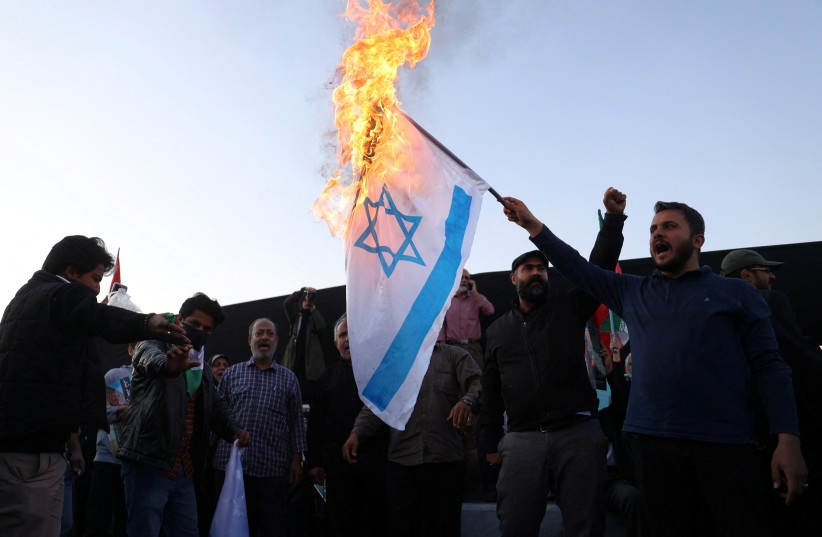
  Protesters burn the Israeli flag during an anti-Israel protest in Tehran, Iran, October 18, 2023 (credit: MAJID ASGARIPOUR/WANA/REUTERS)
Protesters burn the Israeli flag during an anti-Israel protest in Tehran, Iran, October 18, 2023 (credit: MAJID ASGARIPOUR/WANA/REUTERS)

Iran does not recognize Israel’s existence, while Israel has long threatened military action against Iran if diplomacy fails to curb its disputed nuclear activity.

In the current crisis, real politik may prevail for Tehran, according to Karim Sadjadpour, an Iran specialist at the Carnegie Endowment for International Peace think-tank.

“Iran has shown a four-decade commitment to fighting America and Israel without entering into direct conflict. The regime’s revolutionary ideology is based on opposition to America and Israel, but its leaders are not suicidal, they want to stay in power.”


Army says raid is ‘a precise, targeted operation,’ soldiers said avoiding ‘friction’ with civilians; IDF calls on gunmen to surrender, says it delivered medical supplies to staff


Palestinians at Shifa Hospital in Gaza City, November 10, 2023. (Flash90)

Palestinians at Shifa Hospital in Gaza City, November 10, 2023. (Flash90)

Israeli special forces backed by additional troops entered Gaza City’s Shifa Hospital overnight Tuesday to carry out a “precise and targeted operation” against Hamas terror infrastructure at the site.

The operation continued into the morning, with the Israel Defense Forces finding weapons and Hamas assets inside. At least five Hamas gunmen were killed by troops during a gun battle outside the hospital. No soldiers were hurt.

The Times of Israel was told there had been no “friction” between troops and patients and medical staff. Incubators for newborns, baby food, and medical supplies were brought by IDF tanks from Israel and delivered to Shifa, the military said.

“Medical teams and Arabic-speaking soldiers are on the ground to ensure that these supplies reach those in need” and that civilians are kept out of harm’s way, it added.

“We call upon all Hamas terrorists present in the hospital to surrender,” the military said.

News agency AFP cited a source inside the hospital as reporting that forces raced through the corridors and fired warning shots as they moved from room to room looking for gunmen. The army did not confirm the report.

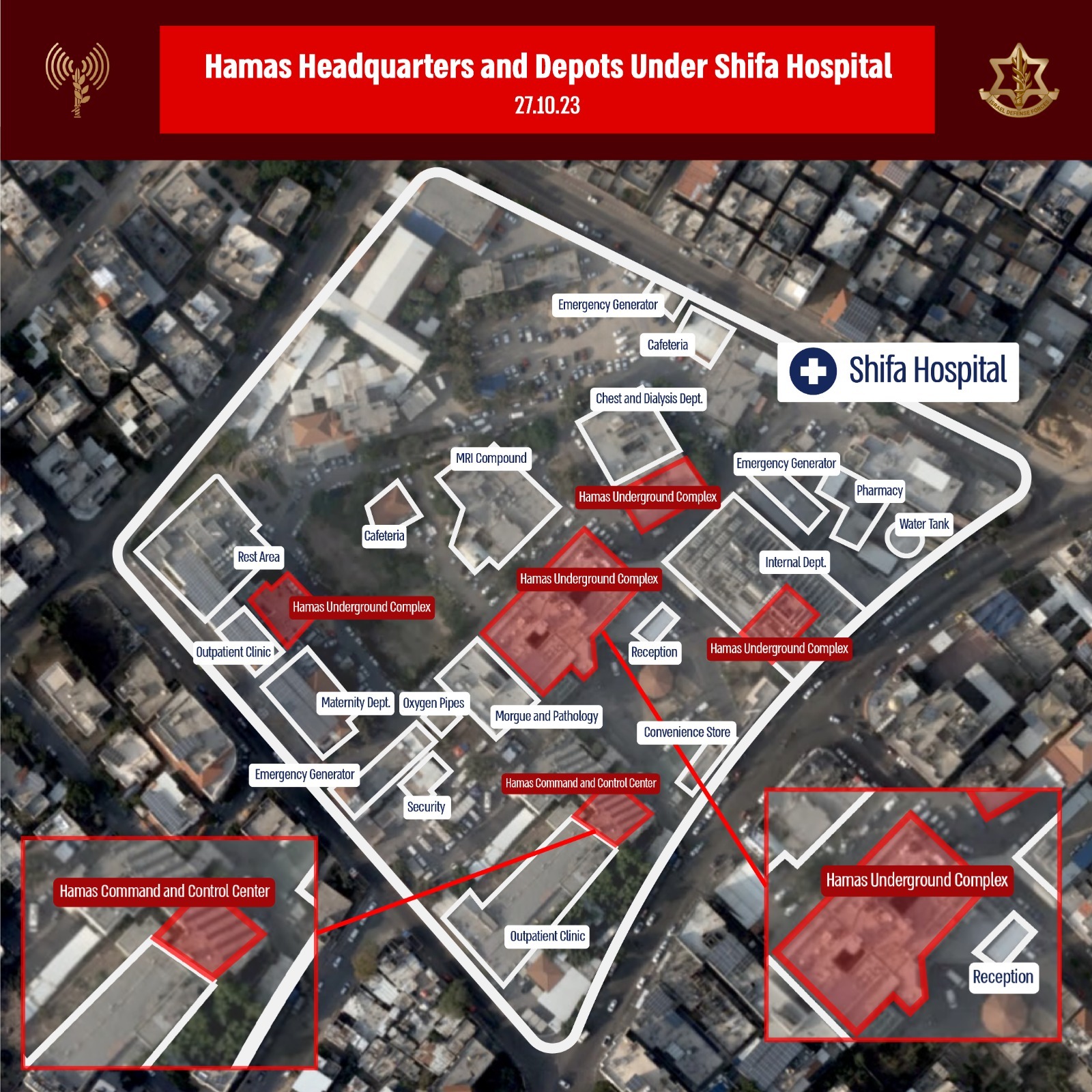
The IDF has said the hospital serves as cover for the terror group’s fortified underground command center — though it is unclear what or who remains there since the military launched its ground offensive in northern Gaza. Hamas leadership is thought to have largely moved to the Strip’s south.

Witnesses have described conditions inside the hospital as dire, with medical procedures performed without anesthetic, families with scant food or water living in corridors, and the stench of decomposing corpses filling the air.

The army stressed that the military was “not overrunning” the hospital, asserting troops were conducting a “focused” operation “in a defined area” of the hospital.

Though Israel believes some of the 240 hostages captured by Gaza terrorists were housed at the hospital at one time, there is no indication of hostages currently being held there. However, the IDF believes the operation may bring intelligence information on the captives.

“Our goal is to bring [hostages] home. Our goal is to seek out Hamas wherever they are hiding,” Lt. Col. (res.) Peter Lerner told CNN.

Youssef Abul Reesh, an official from the Hamas-run health ministry inside the hospital, said he saw Israeli tanks inside the complex and “dozens of soldiers and commandos inside the emergency and reception buildings.”

Israel troops operating in the northern Gaza Strip in this handout photo released on November 15, 2023. (IDF)

An unnamed security official told Army Radio that the Israeli operation at the hospital will be widened if necessary, and implied that the military knows what it is going to find there.

“We are starting small, and the operation will expand as necessary,” the official said. “The entry of troops into Shifa is more of a media (optics) challenge than an operational one.”

The IDF has been urging the hospital to evacuate since the start of the war, but authorities refused. Israel has also tried to coordinate the evacuation of the more seriously wounded patients and premature babies.

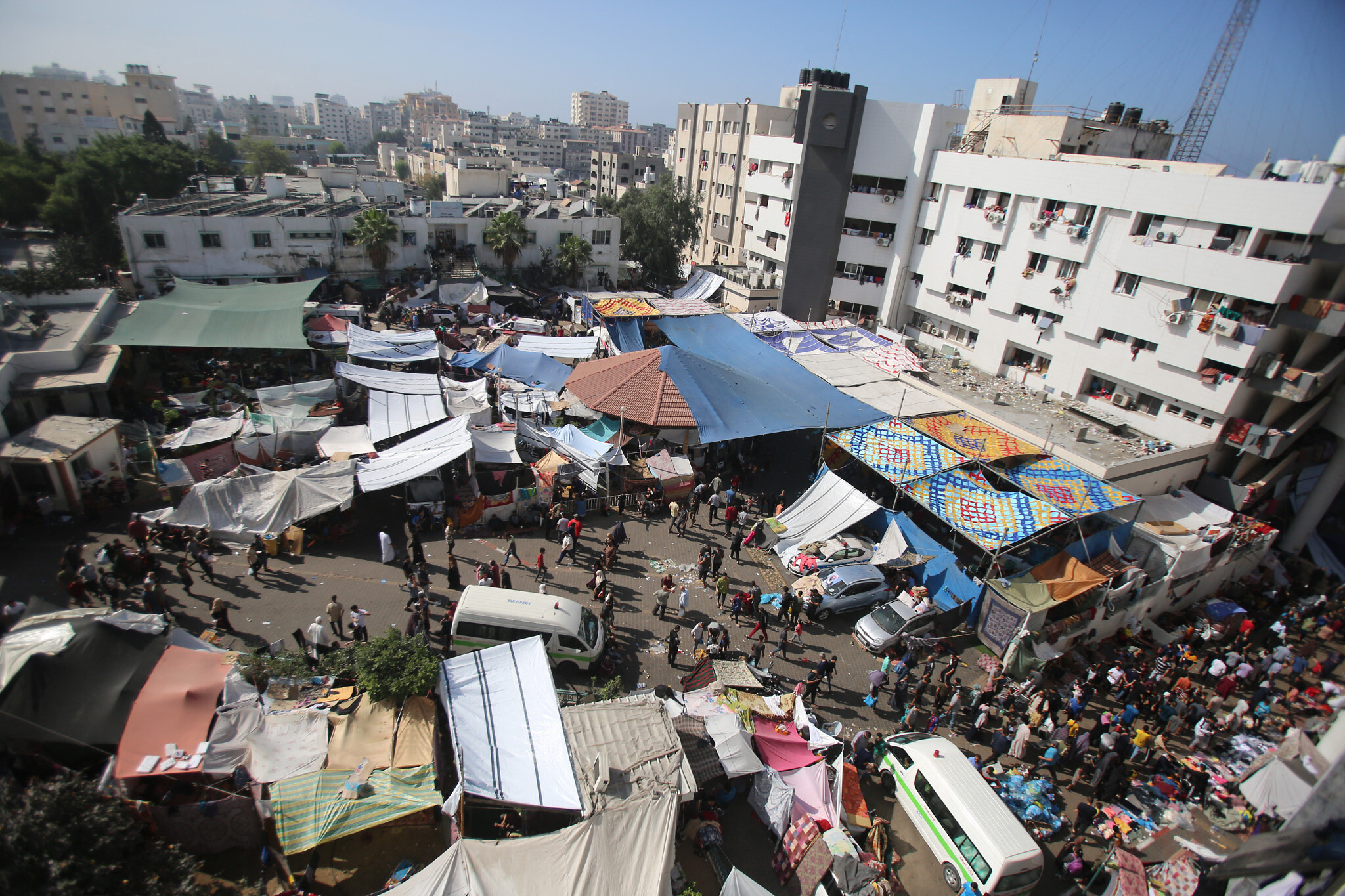
An aerial view shows the compound of Shifa Hospital in Gaza City on November 7, 2023. (Bashar Taleb/AFP)

In recent days, as Israeli forces closed in on the compound amid gunfights with gunmen, thousands of the displaced people who had taken shelter in the hospital grounds took advantage of daily safe routes to evacuate to southern Gaza. Many patients who were able to also left, as did some medical staff.

The United Nations has estimated that at least 2,300 people — patients, staff, and displaced civilians — remain inside and may be unable to escape because of the fierce fighting in the area.

The IDF also announced early Wednesday that two officers had been killed in fighting Tuesday in northern Gaza, bringing the death toll in the ground offensive against Hamas to 48.

They were named as Cpt. Omri Yosef David, 27, from Carmiel, a deputy company commander in the Negev Brigade’s 9217 Battalion, and Cpt. Yedidya Asher Lev, 26, from Tal Menashe, a deputy company commander in the Givati Brigade’s Shaked Battalion.

This composite photo shows Cpt. Omri Yosef David (L) and Cpt. Yedidya Asher Lev, who were killed fighting against Hamas terrorists in the Gaza Strip on November 14, 2023. (Israel Defense Forces)

Additionally, the IDF said four soldiers and officers were seriously wounded during fighting in Gaza on Tuesday.

Also Wednesday, the army said troops raided a Hamas training base in northern Gaza the previous day, locating a tunnel shaft and dozens of weapons.

Separately, the IDF said it carried out an overnight drone strike against two Hamas operatives who exited a building that housed an anti-tank missile launch position and placed “bags suspected of being explosive devices” on a road used by Israeli troops.

Hospitals in focus

Ahead of the raid on Shifa, Prime Minister Benjamin Netanyahu held a lengthy phone conversation with US President Joe Biden, which the White House said focused on efforts to release the hostages.

The Biden administration on Tuesday confirmed long-held Israeli assertions that Hamas is using medical facilities for military purposes.

“We have information that Hamas and the Palestinian Islamic Jihad use some hospitals in the Gaza Strip, including al-Shifa, and tunnels underneath them to conceal and to support their military operations and to hold hostages,” White House National Security Council spokesperson John Kirby told reporters during a briefing.

“Hamas and the Palestinian Islamic Jihad members operate a command and control [center] from al-Shifa in Gaza City. They have stored weapons there and they’re prepared to respond to an Israeli military operation against that facility,” Kirby said, citing US intelligence assessments.

He clarified that the US does not support Israel striking the medical center from the air.

“Hospitals and patients must be protected,” the White House spokesperson said, noting that innocent people are sheltering inside and do not “deserve not to be caught in the crossfire.”

The scenario highlighted the challenging military operation that Israel is trying to pull off, as Hamas embeds itself within civilian populations, Kirby said.

File: US National Security Council Coordinator for Strategic Communications John Kirby speaks during the daily briefing in the Brady Briefing Room of the White House in Washington, DC, on November 8, 2023. (ANDREW CABALLERO-REYNOLDS / AFP)

He asserted that Hamas’s actions do not lessen Israel’s responsibility to protect civilians.

In response, Hamas lashed out at the White House, saying Kirby’s remarks gave a “green light” to Israel to commit “brutal massacres” targeting hospitals in Gaza.

“The United States bears direct responsibility for enabling Israel’s genocidal war on Gaza,” the group added.

The focus on Shifa and other hospitals, which have complained of dwindling supplies and patient deaths due to the fighting, has ratcheted up pressure on Israel to do more to protect Gazan civilians caught in the crossfire. US and European officials have called on Israel to protect the medical complex, as the IDF continues to produce evidence showing that Hamas operates within and underneath hospitals as a matter of policy.

A satellite image issued by the IDF shows what the military says are Hamas command centers located underneath Shifa Hospital in Gaza, October 27, 2023 (IDF)

In his Tuesday evening press conference, IDF Spokesman Rear Adm. Daniel Hagari said hospitals in the Strip risk losing their protected status under international law due to Hamas’s use of the sites for military activities.

“We are forced to operate in a focused and careful manner against Hamas’s terror infrastructure in the hospitals,” he said. “We call on the Hamas operatives who are hiding in the hospitals to surrender so as not to endanger those in the hospitals.”

Hagari also said Al-Quds Hospital in Gaza City had completed its evacuation on Tuesday. The Palestinian Red Crescent confirmed the evacuation was completed and said the wounded were transported for care in hospitals in the south of Gaza.

Several days ago, Hamas operatives fired RPGs and opened fire at troops from that hospital.

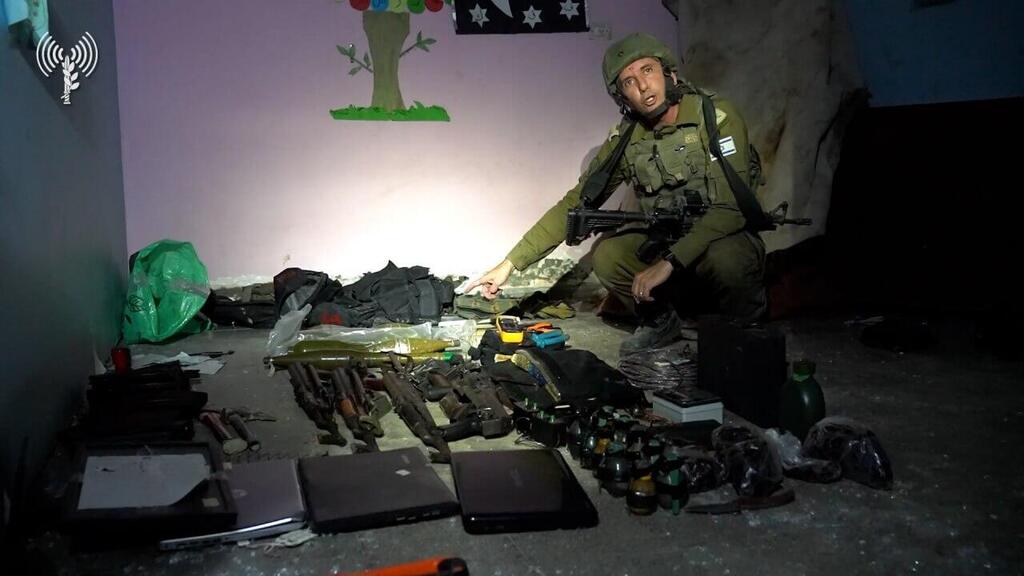
IDF Spokesman Daniel Hagari with weapons found by IDF forces in a Hamas command center underneath Gaza City’s Rantisi Hospital, in a photo released by the military on November 13, 2023. (Israel Defense Forces)

In addition to its use of Shifa Hospital, the military believes Hamas held hostages under Rantisi Hospital; the terror group has a tunnel network under the Indonesian Hospital; and opened fire at troops from Sheikh Hamad Hospital.

“Hamas uses [hospitals] as a human shield for terror. The world must know what it does in the hospitals, and we will continue to expose its crimes,” Hagari said.

The military shared on Tuesday a recording of a conversation between an IDF liaison officer and the director of the Shifa Hospital regarding the transfer of the incubators along with four breathing machines and other critical medical equipment.

On Sunday, the IDF said it had supplied 300 liters of fuel to Shifa Hospital, in coordination with its staff, but that Hamas had prevented the embattled medical center from accepting it.

War erupted after Hamas-led terrorists launched a devastating onslaught on October 7, in which they rampaged through southern communities, killing over 1,200 people, mostly civilians butchered in their homes and at a music festival, and kidnapping some 240 people. Israel then declared war with the aim of toppling the terror group’s regime in Gaza, which it has ruled since 2007.

The Hamas-run Gaza health ministry said Tuesday that 11,240 people had been killed in Gaza since the start of the war, in figures that cannot be independently verified, do not distinguish between civilians and terror operatives, and also include those killed in hundreds of failed Palestinian rocket launches.