
Biden, Saudi crown prince discuss Israel-Hamas war diplomacy

Biden and the Saudi crown prince affirmed the importance of working towards “sustainable peace” between Israelis and Palestinians as soon as the crisis subsides.
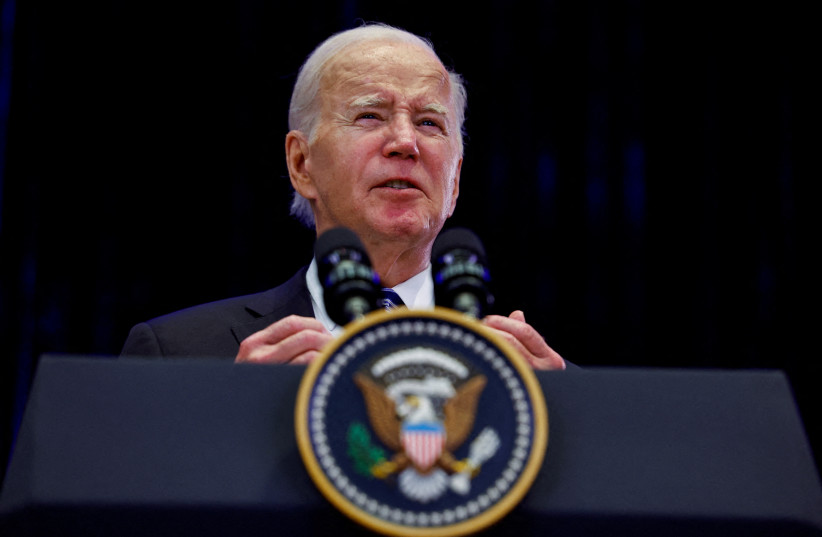
 U.S. President Joe Biden delivers remarks as he visits Israel amid the ongoing conflict between Israel and Hamas, in Tel Aviv, Israel, October 18, 2023.  (photo credit: REUTERS/EVELYN HOCKSTEIN)
U.S. President Joe Biden delivers remarks as he visits Israel amid the ongoing conflict between Israel and Hamas, in Tel Aviv, Israel, October 18, 2023.
(photo credit: REUTERS/EVELYN HOCKSTEIN)
US President Joe Biden and Saudi Arabian Crown Prince Mohamed bin Salman on Tuesday discussedefforts to prevent the Israel-Hamas conflict from widening, the White House said.

They agreed in a call to pursue broader diplomatic efforts “to maintain stability across the region and prevent the conflict from expanding,” the White House said, adding the two leaders will remain in close coordination.

Biden and the Saudi crown prince welcomed the delivery of humanitarian assistance from Egypt into Gaza and recognized that “much more is needed for civilians” to have sustained access to food, water and medical assistance, according to the White House.

They both welcomed ongoing efforts to secure the release of hostages held by Hamas and called for their immediate release, the White House added.

Working towards “sustainable peace”

Biden and the Saudi crown prince affirmed the importance of working towards “sustainable peace” between Israelis and Palestinians as soon as the crisis subsides, the White House said, adding they will be “building on the work that was already underway between Saudi Arabia and the United States over recent months.”
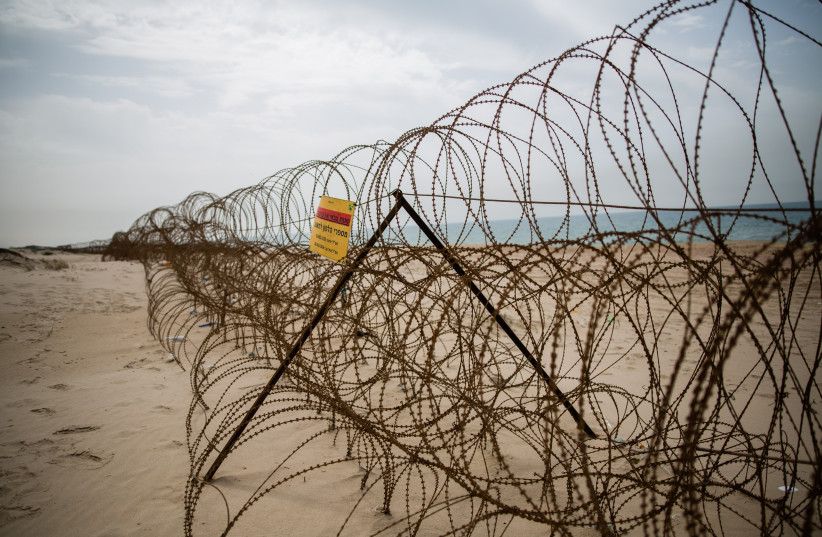
 A barbed wire fence is seen on Zikim beach, in southern Israel near the border with Northern Gaza Strip, on April 5, 2016 (credit: CORINNA KERN/FLASH90)
A barbed wire fence is seen on Zikim beach, in southern Israel near the border with Northern Gaza Strip, on April 5, 2016 (credit: CORINNA KERN/FLASH90)

Biden and US Secretary of State Antony Blinken have said they thought Hamas’ Oct. 7 assault on Israel that left over 1,400 people dead was in part motivated to disrupt a potential normalization of ties between Israel and Saudi Arabia.

Saudi Arabia, home to Islam’s two holiest shrines, gave its blessing to Gulf neighbors United Arab Emirates and Bahrain establishing relations with Israel in 2020 under the US administration of Donald Trump.

Advertisement

Riyadh has not followed suit, saying Palestinian statehood goals should be addressed first.

Gulf states including Saudi Arabia worry a wider conflict would affect their national security and have been pressing for a ceasefire in Gaza and a lift of the siege on the strip.

Although it has called for a “humanitarian pause” for aid deliveries, the United States has thus far not supported a ceasefire, with White House national security council spokesman John Kirby saying a ceasefire at this stage will benefit Hamas.

Since Oct. 7, Israel’s heavy air strikes on Hamas-ruled Gaza have killed over 5,700 Palestinians, including over 2,300 children, Gaza officials say.

Gaza, a 45 km-long (25-mile) strip of land that is home to 2.3 million people, has been ruled politically since 2007 by Hamas but faces a blockade from Israel.
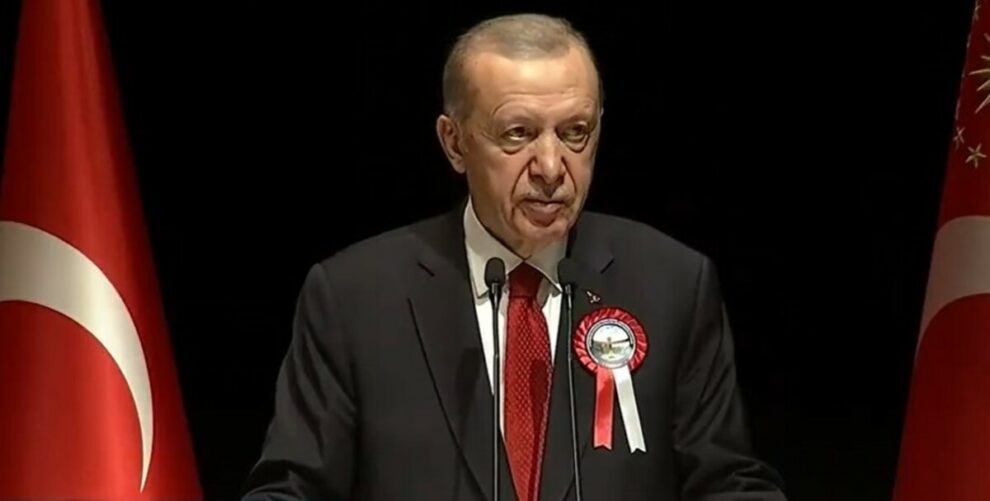

Erdogan says UN Security Council has ‘deepened’ Gaza crisis

23:12 ALERT 9 words San Francisco, United States Erdogan says UN Security Council has 'deepened' Gaza crisis

Source: Video Screenshot

Turkish President Tayyip Erdogan on Tuesday accused the United Nations Security Council of deepening the crisis in Gaza by bowing to the “Israeli regime”.

Erdogan, a fervent supporter of the Palestinian cause, had taken a more measured tone in the first days of the war, calling on both sides for restraint.

But he become much more vocal after the Ahli Arab hospital in Gaza was hit one week ago, leading to large and angry protests across the Muslim world.

“The international community is not rising to the challenge in the face of the Israeli regime’s unlawful and unrestrained attacks against civilians,” Erdogan said in a statement marking the 78th anniversary of the establishment of the United Nations.

“We observe that the United Nations Security Council has deepened the crisis with its one-sided attitude, instead of stopping the bloodshed, ensuring a ceasefire as soon as possible, and taking steps to prevent civilian casualties,” Erdogan said.

Israel was left stunned after militants from the Palestinian Islamist movement stormed across the Gaza border on October 7 and went on a rampage that Israeli officials say killed more than 1,400 people.

They also snatched more than 220 hostages in the worst-ever attack in Israel’s history, that has prompted a ferocious Israeli bombardment of the Palestinian territory which Gaza’s Hamas rulers say has killed 5,791 people.

Erdogan’s comments appeared moments after he spoke by phone with Russian President Vladimir Putin, whose country is one of the five permanent Security Council members, alongside Britain, China, France and the United States.

The council “can only look on (at) the collective punishment of the people of Gaza,” Erdogan said, accusing it of paralysing the work of the UN agency in charge of helping Palestinian refugees.

“However, we remain a strong supporter and defender of the values represented by the (broader) United Nations and the principle of multilateralism, which are at the heart of the rules-based global system,” he said.


Russia says US military reinforcement in Middle East risks 'escalation'

Source: Unsplash

The United States‘ reinforcement of its military presence in the Middle East risks an “escalation” of the war between Israel and Hamas, Russian Foreign Minister Sergei Lavrov said Monday.

Speaking about the US deployment of warships to the region during a meeting in Tehran, Lavrov said “the more a state takes this kind of proactive measures, the greater the risk and the danger of an escalation of the conflict”.

He also said the United States was “already among the countries intervening the most” since the October 7 attack by Hamas on Israel, and subsequent reprisals by Israeli forces on the Gaza Strip.

But Lavrov acknowledged that efforts by Washington as well as the European Union were necessary in order to secure a diplomatic resolution of the latest fighting.

“We have to act on the basis of the joint potential of countries in the region, and of the European Union and, probably, the United States, and it is difficult to do without them,” he said.

Lavrov was in Tehran for talks with regional counterparts over the conflict between Armenia and Azerbaijan, which launched a lightning offensive against Armenian separatists in the Nagorno-Karabakh region last month.

He said participants had also discussed the Israel-Palestinian conflict, on which they had “very similar positions”.

“Russia does not accept any manifestation of terrorism, any manife