Hezbollah leader, along with Hamas deputy politburo head Saleh al-Arouri and Ziyad al-Nakhala, secretary general of Palestinian Islamic Jihad, reiterate position on ‘Zionist enemy’
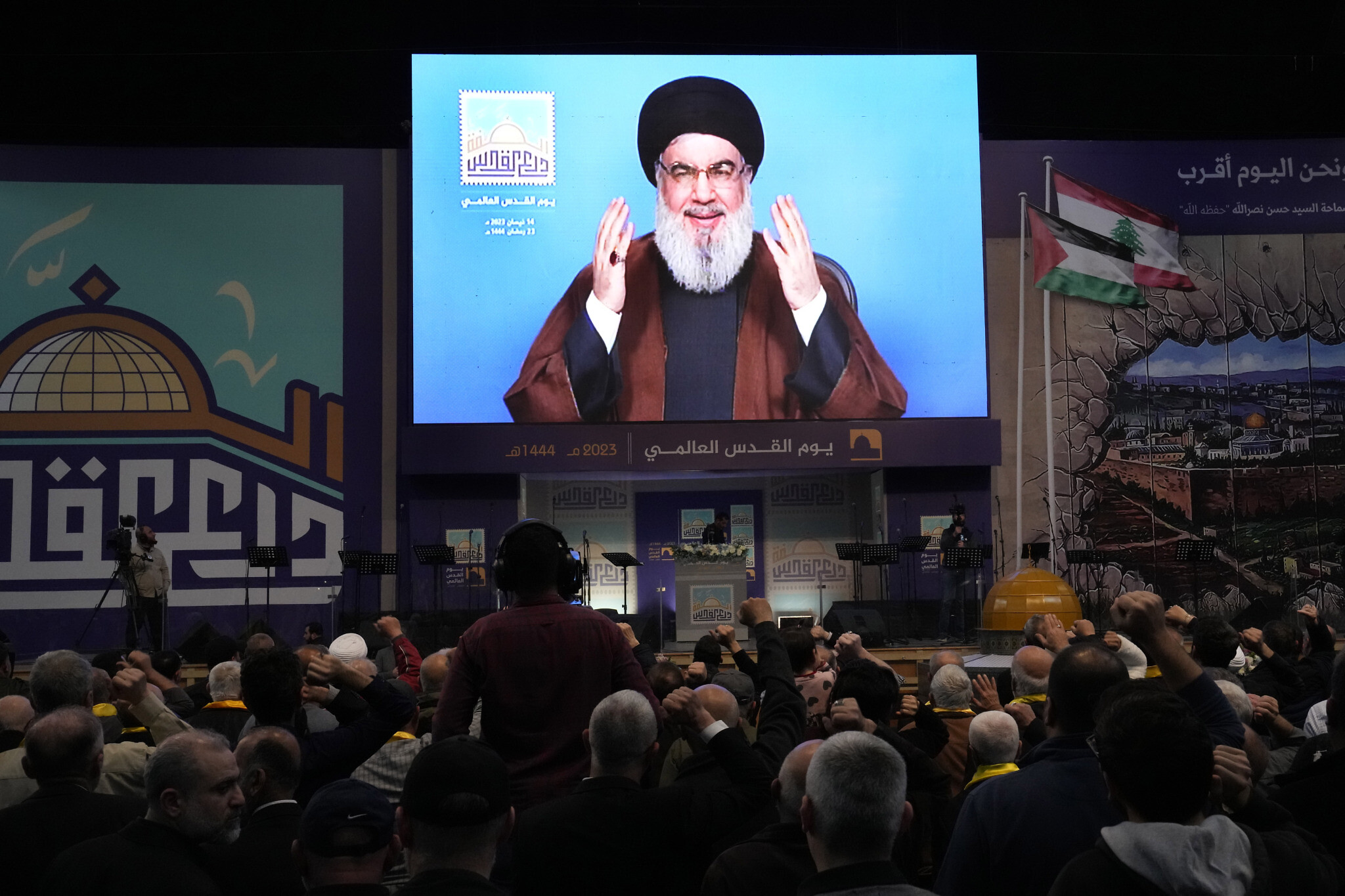
Hezbollah leader Hassan Nasrallah greets his supporters through a screen via a video link from a secret place, during a rally to mark Jerusalem day, in a southern suburb of Beirut, Lebanon, April 14, 2023. (AP Photo/ Hussein Malla)

Hezbollah leader Hassan Nasrallah greets his supporters through a screen via a video link from a secret place, during a rally to mark Jerusalem day, in a southern suburb of Beirut, Lebanon, April 14, 2023. (AP Photo/ Hussein Malla)

The head of the Hezbollah terror group met with Hamas and Palestinian Islamic Jihad terror chiefs on Saturday amid heightened tensions between Israel and the Lebanese organization, an Iranian proxy, and Israeli warnings in recent weeks it would target terrorists “everywhere” following several recent deadly terror attacks in the West Bank.

Hassan Nasrallah met with Hamas deputy politburo head Saleh al-Arouri and Ziyad al-Nakhala, secretary general of the Palestinian Islamic Jihad terror group, in Lebanon for a meeting on “the latest political developments, especially with regard to the Palestinians,” Israel’s Channel 13 reported Saturday, citing a joint statement by the terror groups.

“The three made a joint assessment of the situation in the West Bank, regarding the increase in resistance there [against Israel], as well as regarding the latest Israeli threats,” according to the report.

State of Jerusalem: The Maqdasyin

Loaded: 13.47%

The statement said the groups reiterated their “permanent and firm position” toward the fight “against the Zionist enemy, toward the occupation, and toward the importance of coordination and daily contact between the resistance movements — especially in the Palestinian territories and Lebanon.”

In addition, Iran’s Foreign Minister Hossein Amir-Abdollahian arrived in Lebanon and also met with Nasrallah, according to the report.

The meetings came almost a week after Prime Minister Benjamin Netanyahu warned that “Hamas and the other Iranian proxies understand very well that we will fight with all means against their attempts to use terrorism against us – in Judea and Samaria, Gaza and everywhere else,” referring to the West Bank and the Palestinian coastal enclave ruled by Hamas. “Whoever tries to hurt us, whoever finances and organizes, whoever dispatches terrorists against Israel, will pay the full price.”

The prime minister’s stipulation of “everywhere else” and “Iranian proxies” echoed similar remarks he made recently that were taken to mean that Israel’s response to terror attacks could include actions beyond its borders, or in the West Bank and Gaza Strip.

Netanyahu’s comments came in response to threats of an escalation last weekend by the Lebanon-based al-Arouri, who told a Lebanese news outlet that any Israeli targeted killings of the terror group’s leaders would spark a “regional war.”

At the weekly cabinet meeting last Sunday, Netanyahu said that he had “heard the verbiage by the senior Hamas official Arouri, from his hiding place in Lebanon. He knows very well why he and his colleagues are in hiding.”

There have also been simmering tensions along Israel’s northern border with Lebanon amid a series of actions taken by Hezbollah that Israel sees as provocations.

Last week, the United Nations voted Security Council voted to continue the mandate of its peacekeeping force in the border area, known as UNIFIL.

Mangoush was suspended and subsequently fired following Israeli publication of the meeting, leading to her fleeing Libya.

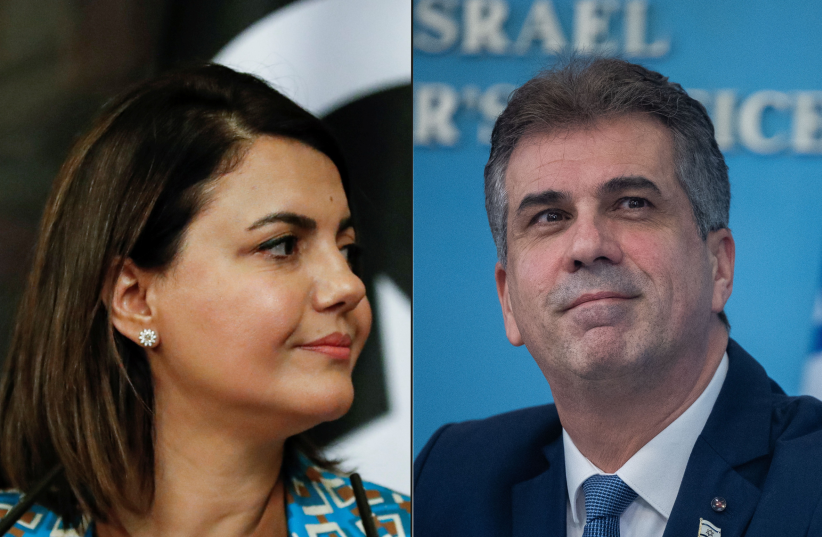
 Libyan Foreign Minister Najla Mangoush (left) and Israeli Foreign Minister Eli Cohen (photo credit: MAXIM SHIPENKOV/POOL VIA REUTERS/FILE PHOTO, YONATAN SINDEL/FLASH90)
Libyan Foreign Minister Najla Mangoush (left) and Israeli Foreign Minister Eli Cohen
(photo credit: MAXIM SHIPENKOV/POOL VIA REUTERS/FILE PHOTO, YONATAN SINDEL/FLASH90)

Libya has officially launched an investigation into the secret meeting in Rome between former foreign minister Najla Mangoush and Israeli counterpart Eli Cohen last month, the North African nation’s attorney-general’s office announced Sunday morning.

Mangoush was suspended and subsequently fired following Israeli publication of the meeting, leading to her fleeing Libya.

Tripoli’s investigative task force will “measure the amount of damage inflicted on the interests of the Libyan state from [the reports] as well from the interrogation of those involved in the meeting,” the attorney general’s office said.

Libya’s Dbeibeh rejects peace with Israel

Last week, Libyan Prime Minister Abdulhamid al-Dbeibeh rejected any notion of normalization with Israel, doubling down on investigating the “serious matter” of Rome and vowing to uncover “what happened in Rome, regardless of the circumstances, reasons, and methods, and regardless of good or bad intentions.

“Even if it was a side meeting, or in passing, it requires a harsh response to be a lesson on the nation’s sanctities,” Dbeibeh was quoted by Libyan media as saying.

The prime minister stressed his and his unity government’s “complete rejection” of normalization with Israel and “bias toward the Palestinian people and their just cause.”


Following recent use of IEDs in attacks, most notably in a blast near Joseph’s Tomb, commandos warned it “will only get worse” in the West Bank.

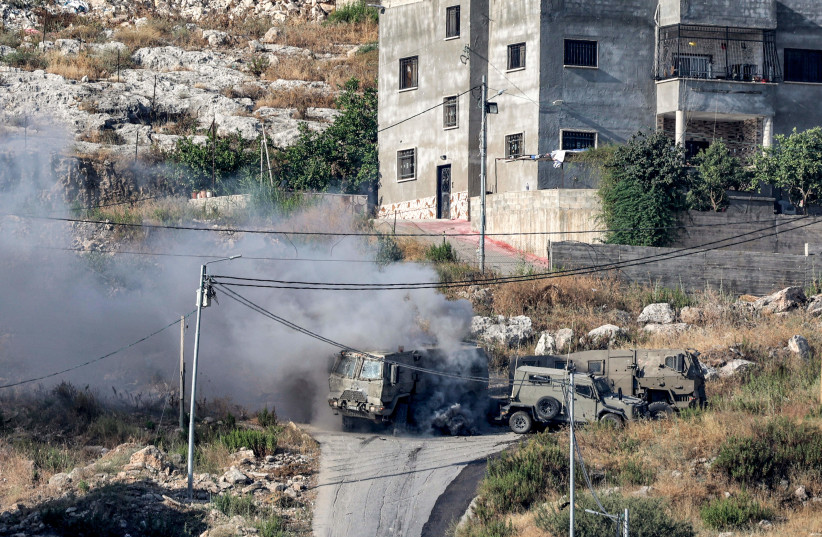
 Smoke billows from the aftermath of the detonation of a Palestinian explosive charge on an Israeli armoured vehicle during an Israeli army raid in Jenin in the West Bank on June 19, 2023. (photo credit: JAAFAR ASHTIYEH/AFP via Getty Images)

Smoke billows from the aftermath of the detonation of a Palestinian explosive charge on an Israeli armoured vehicle during an Israeli army raid in Jenin in the West Bank on June 19, 2023.
(photo credit: JAAFAR ASHTIYEH/AFP via Getty Images)

Israeli military commandos warned on Sunday morning that the IDF’s armored vehicles are not equipped to deal with terror attacks carried out using improvised explosive devices (IED), which are thought to be funded and supplied to the West Bank by Iran.

Following recent use of IEDs in attacks, most notably in a blast near Joseph’s Tomb where an IDF officer and three soldiers were wounded last week, the commandos warned that “it is clear to all of us where this is going.

“It will only get worse.”

IDF commandos lament lack of armored vehicles

The commandos lamented the lack of armored vehicles available for operations in the West Bank. “Everybody has seen the explosive terror labs uncovered in the Jenin operation.

The IDF destroys a lab used by Palestinian terrorists to make explosives on August 16, 2023 (IDF SPOKESPERSON’S UNIT)

“On one hand, we’re talking about an increased amount of explosives, a situation which urges caution. On the other, there is an issue with the availability of armored jeeps, this is felt on our way to our targets and by the targets.”

IDF denies reports

The IDF Spokesperson’s Unit rejected the claims on Sunday, stressing that “there is no shortage of armored vehicles.

“The vehicles are under continued maintenance in order to ensure their operational capacity remains at a high level.”

The IDF also hit back at accusations that Israeli forces secured Joseph’s Tomb by foot last week due to this perceived lack of vehicles, writing that the claim is “incorrect.”

The Israeli forces were wounded when an explosive device struck their armored vehicle.