Senior official tells Al-Manar TV Israel will be playing defense, not offense in future conflict, as war of words between Israel and terror group escalates

ToI Staff12 August 2023, 9:58 pm
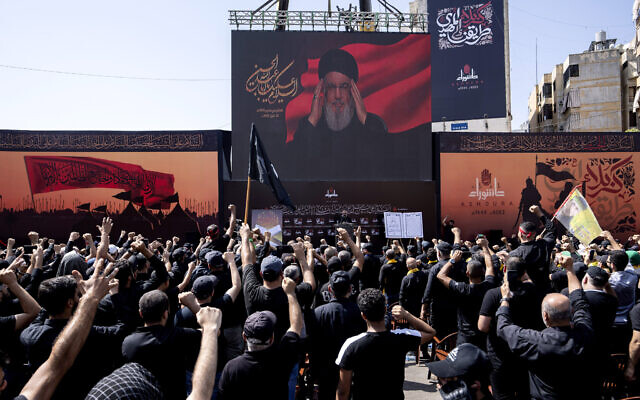
Hezbollah leader Sheikh Hassan Nasrallah speaks via a video link during activities marking the Shiite Muslim holy day of Ashura in the southern suburbs of Beirut, Lebanon, July 29, 2023. (AP Photo/Hassan Ammar)

The next war between Israel and Hezbollah will take place in Israel’s Galilee region, a senior commander in the Lebanese terror group warned on Saturday, the latest threat in an escalating war of words between the two sides.

“Our battle will be in the Galilee, and if the enemy and its tanks enter Lebanon, they will not be able to leave,” the commander said in an interview with the Hezbollah-linked Al-Manar TV network, which identified him as Hajj Jihad but blurred his face for the broadcast.

The threat came four days after Defense Minister Yoav Gallant toured Israel’s border with Lebanon and warned the head of Iran-backed Hezbollah, Hassan Nasrallah, “not to make a mistake.”


“If… an escalation or conflict develops here, we will return Lebanon to the Stone Age,” Gallant said.

In the Saturday interview, Jihad said that Hezbollah will destroy all IDF military posts in the next battle, turning them into “graveyards” and causing all Israeli soldiers to flee.

“The Israeli army lacks fighting spirit. This is not based on the word of the Islamic resistance but according to the Zionists themselves, who do not trust it,” Jihad told Al Manar. The remark appeared to be a reference to the recent deterioration of the IDF’s readiness due to thousands of active duty reservists who have said they will cease reporting for volunteer duty over the government’s judicial overhaul.

Nasrallah has gloated several times in recent months over the societal rifts sparked by the overhaul, saying they have left Israel at its most vulnerable point in years.

Jihad contrasted Israel’s ostensible lack of fighting spirit with that of Hezbollah and declared, “We have completed the necessary preparations… and the world will see… the defeat of the Zionist army in the upcoming battle.”

He claimed that Hezbollah has been preparing for the next war with Israel every day since 2006’s Second Lebanon War.

“The next war will not be in southern Lebanon, but in the Galilee region,” Jihad said, claiming that the Israeli Air Force will not be able to enter the skies above southern Lebanon (the Air Force has repeatedly operated in Syria in recent years against Iran-linked targets, and Israeli spy drones operate over Lebanon’s skies regularly).

He said that the IDF’s preparations confirm that it is focused on defense from an attack in the Galilee, as opposed to offensive strikes in Lebanese territory.

In recent months, Hezbollah activity has repeatedly been spotted along the border, in incidents that Israel sees as deliberate provocations, including the erection of two tents on the Israeli side of the United Nations-recognized Blue Line in the Mount Dov area. The Iran-backed group later took down one of the tents, while threatening to attack if Israel moves to dismantle the other one.

Defense Minister Yoav Gallant (right) and head of the IDF Northern Command, Maj. Gen. Ori Gordin, look toward Lebanon from the Mount Dov area, August 8, 2023. (Ariel Hermoni/Defense Ministry)

Other recent incidents have included camouflaged Hezbollah members walking along the border in violation of a UN resolution, and Hezbollah activists crossing the Blue Line (though not the Israeli fence) on numerous occasions, including attempts to damage the border fence and army surveillance equipment.

In April, dozens of rockets were fired from Lebanon at Israel, injuring three and damaging buildings. Though Israel blamed the attack on the Palestinian terror group Hamas, it was seen as having been carried out with the tacit approval of Hezbollah, which maintains tight control of southern Lebanon.

Separately, in March, the IDF accused Hezbollah of sending a terrorist to infiltrate Israel from Lebanon and plant a bomb at a junction in northern Israel. The blast seriously wounded an Israeli man.

Israel and Lebanon do not have a formal border due to territorial disputes; however, they largely abide by the Blue Line. The Blue Line is marked with blue barrels along the border and is several meters from the Israeli fence in some areas, which is built entirely within Israeli territory.

Hezbollah has long been the IDF’s most potent adversary on Israel’s borders, with an estimated arsenal of nearly 150,000 rockets and missiles that can reach anywhere in Israel.

Work on a new border wall with Lebanon began in 2018. By 2020, the military and Defense Ministry Borders and Security Fence Directorate had completed only 15 kilometers (9 miles) of concrete walling along the approximately 130-kilometer (80-mile) border in order to protect the 22 adjacent Israeli villages. Eventually, the plan is to construct a barrier along the entire border — a project that would cost NIS 1.7 billion ($470 million).

Emanuel Fabian contributed to this report

State media and local residents say repeated blasts heard before dawn in Damascus; war monitor says sites involved were weapons warehouses of Iran-backed militias

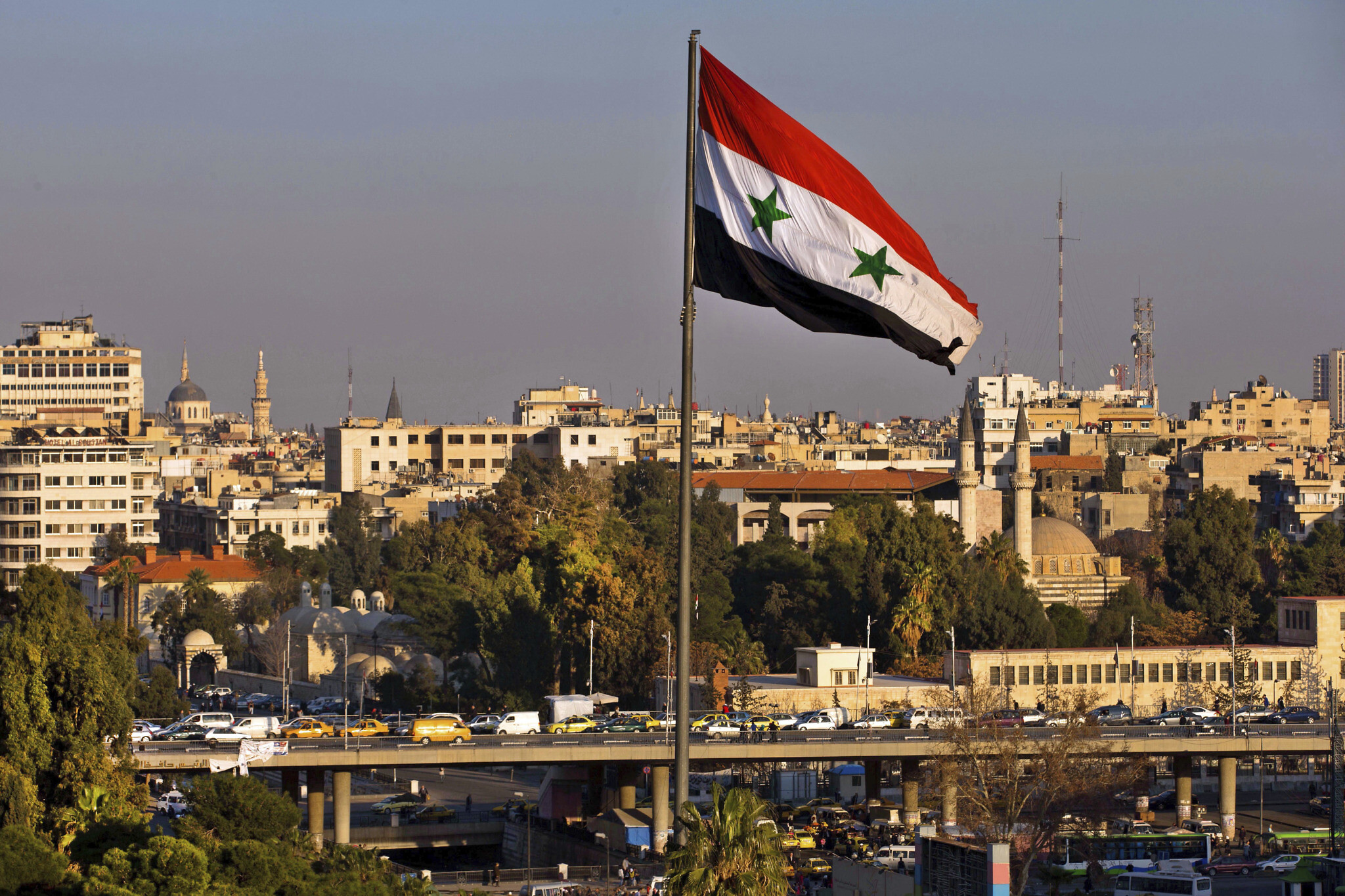
Illustrative: A Syrian national flag waves as vehicles move on a bridge during rush hour, in Damascus, Syria, on Feb. 28, 2016. (Hassan Ammar/AP)

Illustrative: A Syrian national flag waves as vehicles move on a bridge during rush hour, in Damascus, Syria, on Feb. 28, 2016. (Hassan Ammar/AP)

DAMASCUS, Syria — The sound of repeated explosions could be heard in the area around the Syrian capital before dawn on Sunday, state media and Damascus residents said.

There was no immediate statement from government officials on the source or target of the attack, but similar incidents in the past have usually been attributed to Israeli airstrikes, with Syrian air defenses responding to shoot down the missiles.

The latest such incident was on August 7, when Syrian state media reported that Israeli airstrikes hit areas around Damascus, killing at least four Syrian army soldiers. Another four soldiers were wounded in the alleged Israeli sortie at around 2:20 a.m. and there was unspecified property damage, Syria’s state-run SANA media outlet reported.

State of Jerusalem The Maqdasyin

Loaded: 14.26%

SANA said at the time that Syrian air defenses managed to knock down “some” of the Israeli missiles. Syria regularly claims to intercept Israeli projectiles, though military analysts doubt such assertions.

The Syrian Observatory for Human Rights, an opposition-linked war monitor, said those strikes targeted weapons and munitions warehouses and positions of Iran-backed militias around Damascus.

Israel, which has vowed to stop Iranian entrenchment next door, has purportedly carried out hundreds of strikes on targets in government-controlled parts of neighboring Syria in recent years, but it rarely acknowledges them. It has admitted to conducting sorties against Iran-backed groups attempting to gain a foothold in the country.

The Israeli military says it also attacks arms shipments believed to be bound for those groups, chief among them Lebanon’s Hezbollah. Additionally, airstrikes attributed to Israel have repeatedly targeted Syrian air defense systems.

In July, fighter jets reportedly carried out strikes against targets in Damascus, wounding two soldiers. Early the same month, Israel attacked a Syrian air defense battery after a missile launched from the system earlier in the night exploded in Israeli airspace.

Israel has also reportedly targeted the international airports in Damascus and the northern Syrian city of Aleppo several times over the past few years, often putting it out of commission.


Iran’s fast-moving development of weapons-grade uranium is bringing the possibility of an Iranian first nuclear test closer.

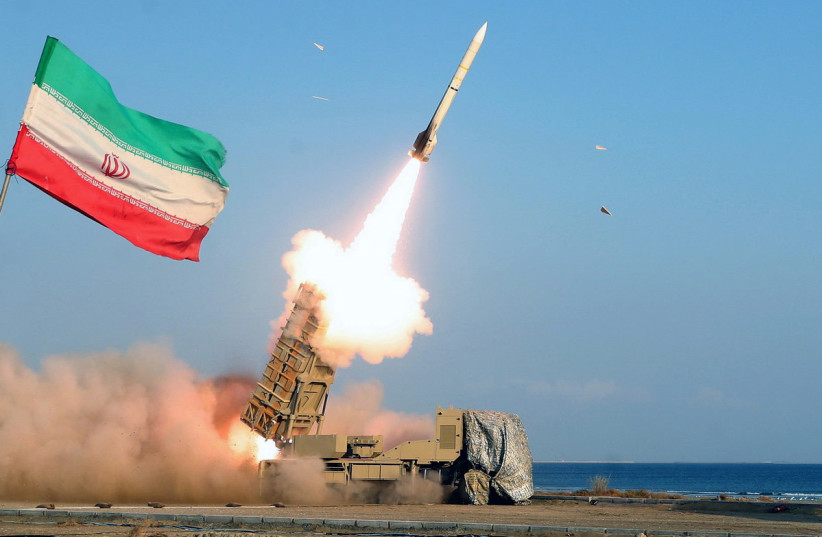
 A missile is launched during an annual drill in the coastal area of the Gulf of Oman and near the Strait of Hormuz, Iran (photo credit: REUTERS)
A missile is launched during an annual drill in the coastal area of the Gulf of Oman and near the Strait of Hormuz, Iran
(photo credit: REUTERS)

The Islamic Republic of Iran is close to possibly testing a nuclear weapons device and has sought to obtain illicit technology for its active atomic weapons program, according to a series of shocking European intelligence reports released in 2023.

The Middle East Media Research Institute (MEMRI) first published translations of the intelligence documents on its website. The Jerusalem Post is the first Israeli newspaper to report on the intelligence findings from the Netherlands, Sweden and Germany.

The most unsettling revelation from the batch of  intelligence data comes from the Netherlands General and Intelligence Security Service (AVID).

The AVID determined the Iranian regime’s fast-moving development of weapons-grade uranium “brings the option of a possible Iranian first nuclear test closer.”

According to the Dutch intelligence report, “Last year, Iran proceeded with its nuclear program. The country continues to increase stocks of 20% and 60% enriched uranium. By means of centrifuges, this can be used for further enrichment to the 90% enriched uranium needed for a nuclear weapon.”

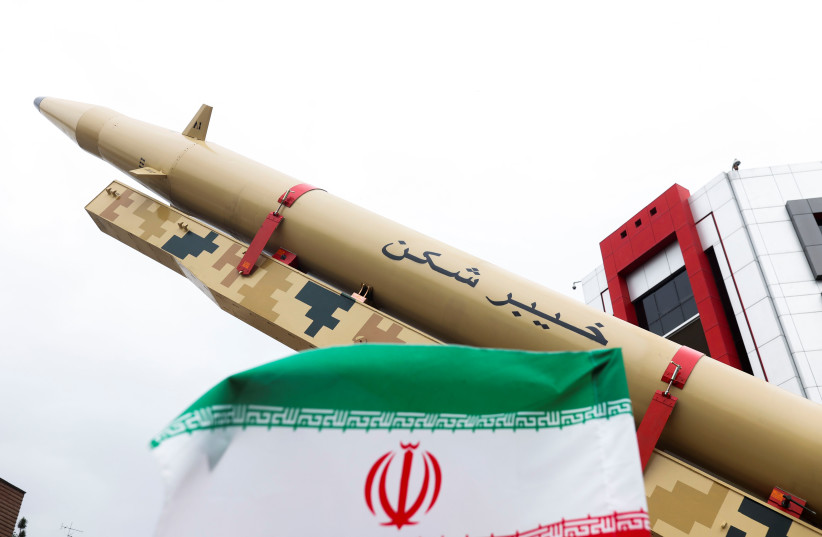
 An Iranian missile is displayed during a rally marking the annual Quds Day, or Jerusalem Day, on the last Friday of the holy month of Ramadan in Tehran, Iran April 29, 2022. (credit: MAJID ASGARIPOUR/WANA (WEST ASIA NEWS AGENCY) VIA REUTERS)An Iranian missile is displayed during a rally marking the annual Quds Day, or Jerusalem Day, on the last Friday of the holy month of Ramadan in Tehran, Iran April 29, 2022. (credit: MAJID ASGARIPOUR/WANA (WEST ASIA NEWS AGENCY) VIA REUTERS)

How close is Iran to nuclear power?

The AVID report added “Iran is further ignoring the agreements that were made within the framework of the Joint Comprehensive Plan of Action (JCPOA). And by deploying increasingly more sophisticated uranium enrichment centrifuges it is enlarging its enrichment capacity.”

The European reports mainly cover Iran’s alleged illicit conduct in 2022.

The Swedish Security Service wrote in its annual report in 2023 that “Iran engages in industrial espionage, which is mainly aimed at the Swedish high-tech industry and Swedish products that can be used in nuclear weapons program.”

Germany’s Federal Office for the Protection of the Constitution (BfV)—the country’s federal domestic intelligence agency—said in its report “The authorities for the protection of the constitution were able to find, in 2022, a consistently high number of indications of proliferation relevant procurement attempts by Iran for its nuclear programs.”

The German domestic intelligence agency defines proliferation as “the activities of foreign powers (that) also include procuring products and knowledge for the production of weapons of mass destruction, their delivery systems, other armaments or elements of new weapon systems.”

The Jerusalem Post located a 2023 report from Denmark’s national security and intelligence service (PET) that stated “International sanctions have been imposed on Iran due to its nuclear and missile programs, human rights violations and weapons sales to Russia. PET assesses that Iranian actors attempt to circumvent the sanctions by trying to procure Danish products and technology, including via third-party countries, that may be used in Iran’s weapons production or military programs.”

Israeli Brig. Gen. Yossi Kuperwasser (res.), a senior researcher at the Israeli Defense Security Forum and an expert on Iran, told the Post “Iran is evidently committed to its nuclear weapons plan.”

Kuperwasser continued “The European intelligence reports describe covert Iranian efforts to shorten the breakout time to a nuclear arsenal by illegally acquiring equipment and knowledge from various European countries.”

Kuperwasser , who is widely considered a leading expert on Iran’s nuclear weapons program, added “The reports only expose part of the Iranian efforts in Europe, and it would be wise to assume that many of those efforts have remained clandestine. Iran is likely interpreting Western policy towards it as a sign of weakness since European and US actions against Iran (have) been passive and unintimidating.”

He said the US and other international powers striving  to reach an interim atomic deal with the Islamic Republic are “rewarding Iran with a new ‘understanding’ and would only motivate Iran to continue and enhance its efforts to obtain the required components of nuclear weapons.”

The Post has previously reported on the Islamic Republic’s circumvention of sanctions targeting its atomic weapons program before the JCPOA in 2015 and after the agreement was reached. Former President Donald Trump withdrew from the JCPOA in 2018 because, according to his administration, the deal did not stop Iran’s ambitions to build a nuclear weapons device and stop Tehran’s sponsorship of international terrorism.

The US government under both Democrat and Republican administrations has classified Iran’s regime as the world’s worst state-sponsor of terrorism.

Ayelet Savyon, director of MEMRI’s Iran Media Project, said “The reality is that Iran has not in any way backed off from its efforts to build nuclear weapons, has taken every opportunity to advance its technological capabilities to this end and has for years misled the international community and lied about its intentions while at the same time widely publicizing its goal to legitimately attain nuclear-threshold status and continues doing so to this day.”