BEHIND THE LINES: There is room for asking whether the situation is really as optimal as is often presented.
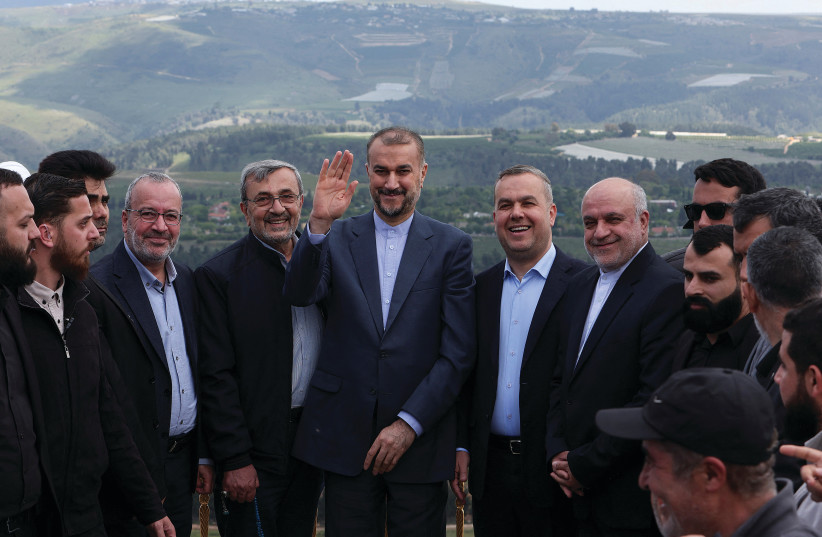
 IRANIAN FOREIGN Minister Hossein Amirabdollahian gestures as he stands next to Hezbollah officials during his visit in April to Maroun Al-Ras, a Lebanese village near the border with Israel. (photo credit: AZIZ TAHER/REUTERS)
IRANIAN FOREIGN Minister Hossein Amirabdollahian gestures as he stands next to Hezbollah officials during his visit in April to Maroun Al-Ras, a Lebanese village near the border with Israel.
(photo credit: AZIZ TAHER/REUTERS)

An Israeli airstrike killed four Syrian soldiers in an attack on targets in the Damascus area Sunday night, according to reports in foreign and regional media. The pro-regime SANA news agency confirmed that “Four army personnel were martyred, and four others were injured.”

The Opposition-linked Syrian Observatory for Human Rights (SOHR), meanwhile, gave a slightly different figure, writing, “Israeli airstrikes targeted, in the early hours of Monday morning, several positions hosting warehouses and military posts of Iranian-backed militias in the vicinity of the area of Damascus International Airport, the area of Demas Airport and the surrounding areas of Al-Keswa to the west of Damascus.” The Observatory also reported that “four regime soldiers” were killed, but added that two other “unidentified persons” also died.

This latest strike is part of an apparent increased tempo of Israeli operations against the Iranian infrastructure in Syria. Again according to SOHR, Monday’s attack was the latest in a total of 22 attacks carried out by Israeli forces against Syria in the course of 2023. The Observatory reports that 79 people have been killed in these attacks, including six members of Iran’s Islamic Revolutionary Guards Corps (IRGC) and three members of Lebanese Hezbollah, as well as 22 IRGC-backed non-Syrian militiamen, and four IRGC-backed Syrian militiamen. The bulk of the remaining casualties were members of the Syrian regime’s security forces.

If SOHR’s figures are accurate, or close to accuracy, this represents a considerable death toll. Israel’s actions this year, of course, are part of a longer campaign. Jerusalem’s “war between wars,” or MABAM in Hebrew, has been prosecuted for over a decade now. Without doubt, it has left a trail of destroyed ordnance, shattered convoys, and dead operatives across Syria. Israeli national security officials past and present appear satisfied with the progress made. Some 80% of what Iran would like to have had in place by now in terms of infrastructure facing Israel has been neutralized, according to one estimate.

Yet there is room for asking whether the situation is really as optimal as is often presented. Specifically, the question is whether the war between wars is addressing the totality of the Iranian project to Israel’s North, or whether, as a result of the undoubted successes in one particular area (the targeting, by air power or occasionally by artillery, based on successful intelligence gathering, of specific Iranian static or moving targets in Syria), Israel has allowed itself to be channeled into only focusing on that area.
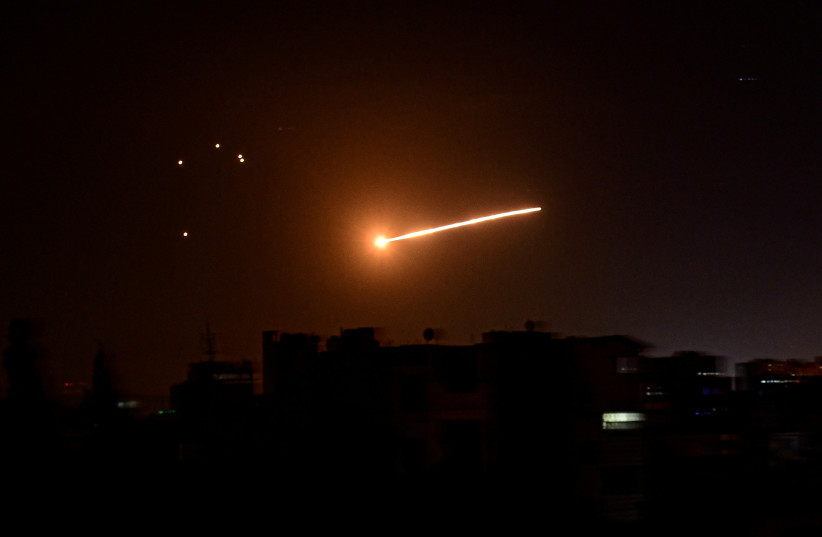
A streak of light is seen in the night sky in the vicinity of the Syrian capital Damascus during what Syrian authorities said was an Israeli air strike, in this handout released by state news agency SANA on February 24, 2020. (credit: SANA/HANDOUT VIA REUTERS)A streak of light is seen in the night sky in the vicinity of the Syrian capital Damascus during what Syrian authorities said was an Israeli air strike, in this handout released by state news agency SANA on February 24, 2020. (credit: SANA/HANDOUT VIA REUTERS)

IF THE LATTER is the case, it would mean that large and perhaps decisive parts of the Iranian project are being left to themselves, and are growing in strength, with Israel deterred by political or military means from striking at them. The situation is not static, since if Israel is perceived as largely acquiescing to rules of the game imposed by Iran, this will lead to a decline in Israel’s deterrent power, making further aggressive moves by Iranian proxies more likely.

Unfortunately, and despite Israel’s ongoing air campaign, a considerable body of evidence exists in support of this perception. The emerging picture is one in which Iran is operating its various proxies in Iraq, Syria, and Lebanon as a single structure, without excessive reference to formal state borders. Israel, meanwhile, because of political and military constraints, is attacking only a limited number of elements within this structure.

Perhaps most significantly, the latest evidence suggests that significant parts of the formal structure of the Assad regime in Syria itself are today operating as fully-fledged elements of the Iranian project.

In the field of arms shipments, for example, the Syrian National Defense Forces, the 4th Armored Division, the Air Force Intelligence Directorate, and elements of the Border Guard all act in cooperation with the IRGC, Lebanese Hezbollah, and the Iraqi Shia militias in the process of shipping arms by land, sea, and air to the various components of the Iranian structure between the Iraq-Iran border and the Mediterranean Sea (and perhaps beyond). The IRGC, that is Iran, is the senior, controlling element in this process.

Recent reports by the Alma Research and Education Center, which focuses on the challenges to Israel’s North, detail how CERS, the Syrian Scientific Studies and Research Center, has come under direct IRGC and Lebanese Hezbollah control. According to the report, CERS, which employs around 20,000 personnel, is engaged in production and development of advanced weapons systems, including chemical and biological weapons. An additional report from the same source describes the wholesale assimilation of an IRGC-linked militia, the Imam Ali Brigade, into the 4th Division. The report notes that “the 4th Division has evolved into an Iranian proxy, reporting directly to the Quds Force, which conducts direct offensive operations against Israel and American soldiers in Syria.”

In the area of smuggling of the amphetamine-type stimulant Captagon, which has become a crucial source of income for the Iranian-led bloc in this area, a similar level of unification pertains. The drugs are produced in Lebanon and Syria and smuggled across the border from Syria to Jordan. Participating in this process are, once more, the 4th Division and Air Force Intelligence, along with Hezbollah, southern Bedouin tribes such as the al-Nauaimi, who work in close cooperation with Hezbollah, and elements of the Syrian Border Guard trusted by the Iranian element. The IRGC manages the process. Try figuring out from that list where Iran begins and its proxies, including the Syrian regime, end.

THE SMUGGLING routes across the border are known for the transfer of drugs. Might other materials, including weaponry and ammunition also be transported the same way, and by the same networks? It certainly seems plausible. As is well known, the weaponry for the Iran-supported emergent militias of Jenin and Nablus largely enters from Jordan.

A week ago, the Israeli media reported that an “unusual” attempt at smuggling had been intercepted near Ashdot Yaacov in the Jordan Valley. No further information regarding the unusual nature of the attempt has emerged. But it should be noted that weaponry making its way from Jordan into the West Bank, in particular more sophisticated forms of armament, has first to be brought into Jordan.

Iranian project operates across borders

What may be glimpsed from all these examples is that the Iranian project operates across borders, with a clear hierarchy of control, and without regard to the distinctions separating countries, or separating supposedly sovereign governments in Iraq, Syria and Lebanon from the Iranian interest. Israel, by contrast, does respect these distinctions. It leaves Iraq alone, and avoids attacking the Syrian regime (thereby also avoiding attacking the manifold Iranian assets which today exist under the official banner of the regime, as well as those elements of the regime which today work in close cooperation with the IRGC.) Perhaps most serious of all, in Lebanon, Israel accepts a situation of mutual deterrence with Hezbollah, the IRGC’s oldest franchise, and as a consequence, largely leaves it to itself.

The end result of all this, it seems, is a growing confidence and even recklessness on the part of the enemy. This cannot be traced only to the current internal unrest in Israel. Iranian outlets have been talking about the “unification of the fronts” since Ramadan of 2021.

In March, an ominous incident took place in which an operative came from Hezbollah-controlled southern Lebanon down to Megiddo, carrying a powerful improvised explosive device. In April, 34 rockets were launched from southern Lebanon, with the certain knowledge of Hezbollah. In early July, an anti-tank missile was launched at Ghajar, on Israel’s northern border. This is without reference to the legion of lesser provocations also taking place along the border, including the placing of temporary structures on Israeli soil by Hezbollah.

The continued successes of Israeli air power over Syria are worthy of note. Nevertheless, given the broader realities outlined here, the increasingly urgent question is whether the current dimensions of the war between wars remain adequate for addressing the task at hand, namely, the need to strike at the full fabric of the Iranian effort to Israel’s North, both in order to substantively weaken this effort and to rebuild deterrence against its most forward elements.

Choosing not to decide on this matter is also a choice, namely the choice to acquiesce to the continued Iranian advance.


Opposition leader Yair Lapid warned that “Israel can’t agree to uranium enrichment in Saudi Arabia, because it endangers its national security.”

 Head of the Yesh Atid party MK Yair Lapid speaks during a faction meeting at the Knesset, the Israeli parliament in Jerusalem, on July 17, 2023 (photo credit: Chaim Goldberg/Flash90)
Head of the Yesh Atid party MK Yair Lapid speaks during a faction meeting at the Knesset, the Israeli parliament in Jerusalem, on July 17, 2023
(photo credit: Chaim Goldberg/Flash90)

Any Saudi deal which allows for uranium enrichment would help spark a nuclear arms race, endangering Israel and the region, Opposition leader MK Yair Lapid warned on Thursday.

He spoke to Channel 12 and to a visiting delegation of US House Democrats on the issue, as concern grew in Israel about the potential pitfalls of its much-sought-after normalization deal with Riyadh.

“Israel can’t agree to uranium enrichment in Saudi Arabia, because it endangers its national security,” Lapid told Channel 12. “It would harm our campaign against Iran. It would lead to a regional nuclear arms race. Egypt and Turkey won’t agree to uranium enrichment on Saudi territory unless they can do it, too. But they will want Russian or Chinese technology,” Lapid said.

Saudi Arabia has demanded US support for a civilian nuclear program as part of a wide-ranging deal with Washington that would also include normalization of ties with Israel.

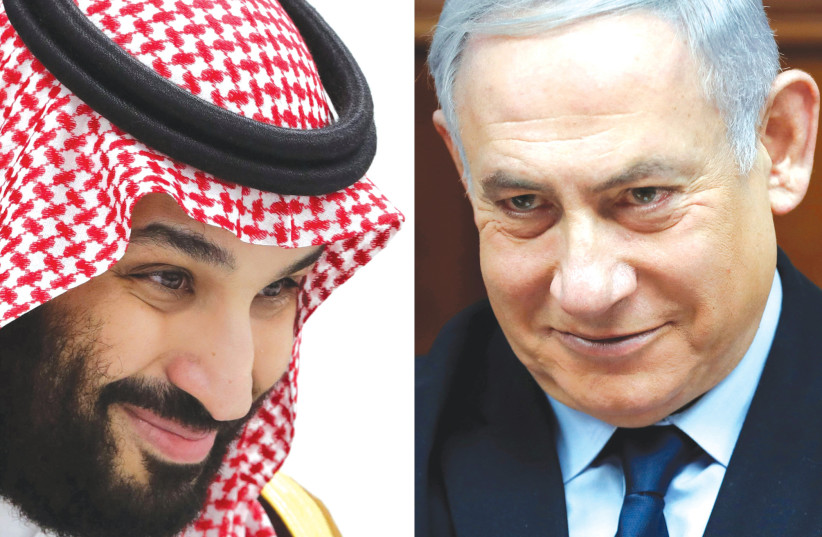
Prime Minister Benjamin Netanyahu has touted an Israeli-Saudi deal as a historic move that would end the country’s conflict with its Arab neighbors. Lapid embraced such a deal when he was prime minister and remains committed to it, but not at any cost, he said.

 THE NEWEST Saudi lobbyist is the prime minister of Israel, says the writer.  (credit: REUTERS)THE NEWEST Saudi lobbyist is the prime minister of Israel, says the writer. (credit: REUTERS)

“There is no problem with a civilian nuclear program,” Lapid said. “There are countries in the Middle East such as the United Arab Emirates that have a civilian program. What they do not have is the ability to produce uranium.

“But with respect to Saudi Arabia, “that is what is on the table now and it can’t be on the table,” he added.

Likud strikes back

The Likud Party immediately attacked Lapid for his warnings, claiming that Netanyahu would not do anything to endanger Israel. It referenced Netanyahu’s successful launch of the US-brokered Abraham Accords, under whose rubric Israel agreed to normalize ties with four Arab countries.

“Netanyahu brought four historic peace agreements that only strengthened the security and status of the State of Israel, and he will continue to do so,” the party said. “It would be better for Lapid, who gave Hezbollah free Israeli gas reserves, not to preach to Prime Minister Netanyahu that he will continue to protect Israel’s vital security interests in any peace settlement.”

But Lapid wasn’t the only opposition politician to voice concern. Labor Party leader Merav Michaeli called on the Knesset’s Foreign Affairs and Defense Committee to discuss the deal and its implications for Israel. She accused Netanyahu of pursuing the deal to distract attention from his contentious judicial reform plan and his own legal woes.

“In recent weeks, it has emerged that there are advanced talks led by the US ahead of a possible normalization agreement between Israel and Saudi Arabia, the consequences of which on issues of security and foreign affairs are not clear,” Michaeli said. “Meanwhile, the issue of the nuclear balance in the Middle East arises, which has far-reaching consequences, requires thorough discussion.

“We must make sure that fateful policy decisions are made according to the security and existential interests of the State of Israel, not according to Netanyahu’s personal and political interest.”

Michaeli said she was also concerned about whether or not the agreement would help advance a peace deal with the Palestinians and “does not harm the prospects for that.”

Foreign Minister Eli Cohen, in contrast, has given multiple media interviews in the last weeks, about the potential benefits with Saudi Arabia, explaining that it would help the economy and provide a regional security architecture against Iran.

He predicted that a deal could happen as early as March, explaining that US President Joe Biden wants to reach a deal before his re-election campaign kicks into full gear.

Cohen wrote an opinion piece in favor of the deal in The Wall Street Journal on Tuesday. The Journal also published a piece Wednesday explaining that the US and Saudi Arabia had agreed to the broad outline of a deal, including concessions to the Palestinians, but did not flush out the details.

US State Department spokesman Matthew Miller said the report vastly overstated the situation.

Finance Minister Bezalel Smotrich spoke out in support of the agreement, praising Netanyahu’s ability to bring about peace with Arab states, as in the Abraham Accords signed in 2020 that brought peace with Morocco, Bahrain, and the UAE. “Netanyahu has already proven it, and I trust the prime minister to do the right things for peace with Saudi Arabia. I would be very happy to see millions of tourists from the Arab world come to Israel,” according to the ultra-Orthodox news site BeHadrei Haredim.

Smotrich also dismissed rumors that peace with the Arab kingdom would be contingent on the prime minister reforming his coalition with opposition leader Yair Lapid (Yesh Atid) and National Unity head Benny Gantz, by dropping Smotrich’s Religious Zionism Party and National Security Minister Itamar Ben-Gvir’s Otzma Yehudit (Jewish Power) Party.

Lapid also told Channel 12 that he has no intention of joining Netanyahu’s government.

Chairman of the Abraham Accords caucus MK Dan Illouz (Likud) said in a statement to The Jerusalem Post that “The potential for Saudi Arabia to join the Abraham Accords represents a pivotal moment for the Middle East. The accords have been transformative, largely because they moved past the traditional veto power the Palestinians held over regional peace – a crucial step that paved the way for broader peace initiatives.

“We must be wary of returning to old dynamics, especially given the Palestinians’ historical tendency to reject peace overtures while endorsing terrorism. By emphasizing direct bilateral relations, we edge closer to what once seemed an unattainable dream: a lasting peace that could end the Arab-Israeli conflict and significantly alter the course of world history.”


Plumbing new depths of irresponsibility, the coalition’s dominant far-right lawmakers, indulged by the PM, are dragging the security establishment deep into the political maelstrom

David Horovitz
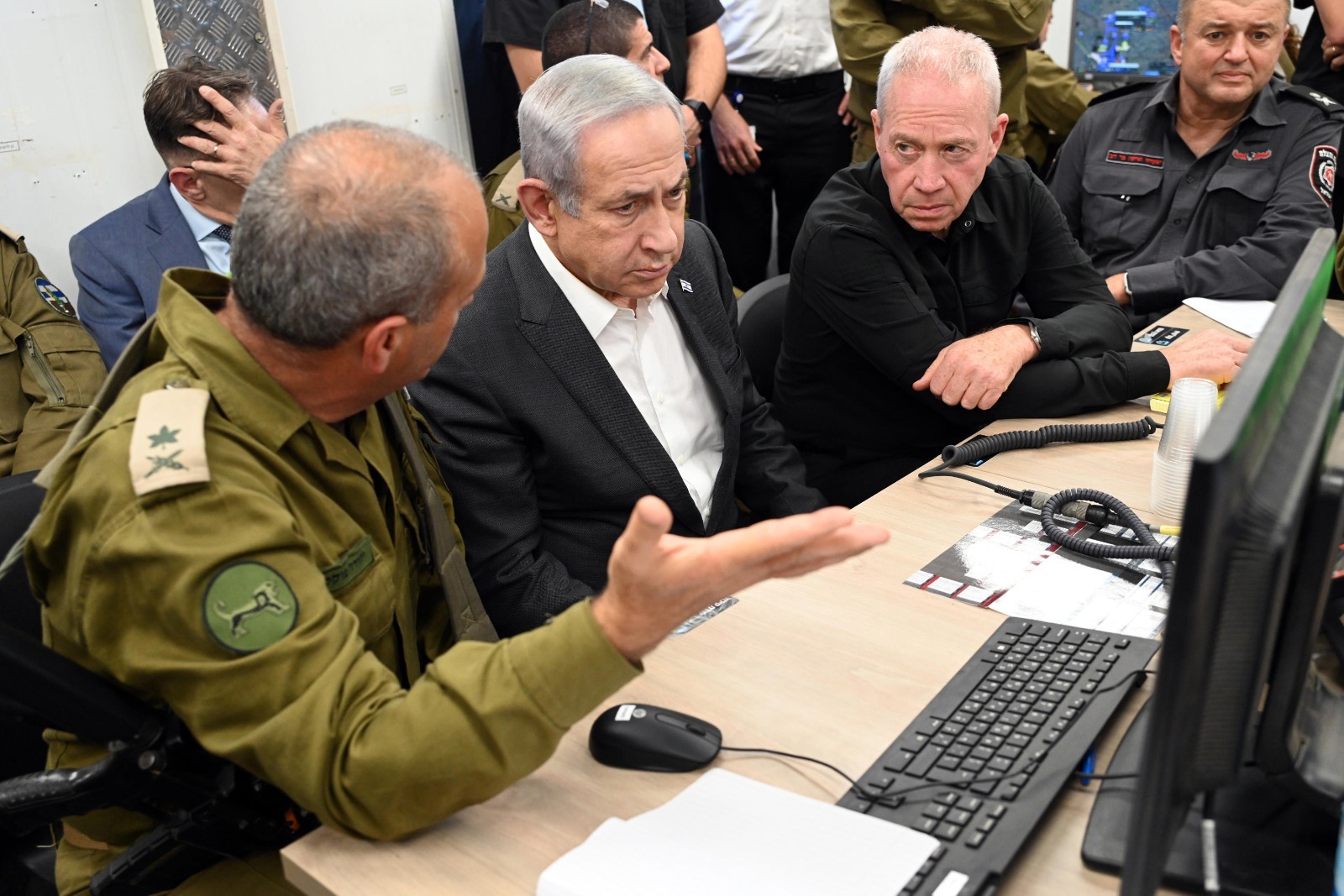
Prime Minister Benjamin Netanyahu (C) and Defense Minister Yoav Gallant (R) visit a military post near Jenin, July 4, 2023. At left is IDF General Yehuda Fox. (Haim Zach/GPO)

Prime Minister Benjamin Netanyahu (C) and Defense Minister Yoav Gallant (R) visit a military post near Jenin, July 4, 2023. At left is IDF General Yehuda Fox. (Haim Zach/GPO)

This Editor’s Note was sent out on Wednesday in ToI’s weekly update email to members of the Times of Israel Community. To receive these Editor’s Notes as they’re released, join the ToI Community here.

Our external enemies must be rubbing their eyes in disbelief, astounded at their good fortune.

Since before its foundation, tiny Israel has managed to fend off conventional war after war designed to wipe it out. It has resisted decades of terrorism, most remarkably through the relentless suicide bombings of the Second Intifada. As Hamas subverted every available Gaza resource to develop rocket capabilities down south, and Hezbollah amassed a six-figure-sized rocket arsenal across the northern border, Israel devised and constantly improved Iron Dome and a multi-level array of other missile and rocket defenses. As Iran has closed in on nuclear weapons, Israel has set it back and, in the words of its previous IDF chief of staff, prepared “vigorously for an attack on Iran” should the need arise.

Binary Options Fraud – ToI journalist Simona Weinglass’ story

Loaded: 44.56%

Now, however, under the hard-right coalition of Prime Minister Benjamin Netanyahu, in which the extreme fringe increasingly sets the tone and agenda, Israel’s vital last sphere of consensus — the security establishment that acts, and must act, 24/7 to keep this country safe — has been swept into the destructive maelstrom of our politics.

In late March, with the coalition about to pass legislation to gain control over the appointment of Israel’s judges, Netanyahu’s defense minister, Yoav Gallant, warned resonantly: “The events taking place and the issues in Israeli society aren’t skipping over the Israel Defense Forces. Unprecedented feelings of anger, pain and disappointment have risen. And I see the source of our strength eroding…

“The growing rift in our society is penetrating the IDF and security agencies,” he elaborated. “This poses a clear, immediate, and tangible threat to the security of the state.”

Rather than heed Gallant’s plea and stop the legislative blitz, Netanyahu initially fired him. But a combination of massive public protests and jitters in small pockets of his coalition forced a rethink — a temporary halt to the lawfare on democracy, and the rescinding of Gallant’s dismissal.

Less than five months later, however, the situation Gallant warned against is taking shape before our eyes. Thousands of volunteer reservists have made clear they will not report for service in an Israel they see as undergoing a kind of constitutional coup, in which the first overhaul law has now been enacted, the prime minister refuses to say whether he would honor a potential High Court decision to strike it down, and the core legislation to give the coalition near-complete authority over the appointment of judges is set to be passed into law in the next Knesset session.

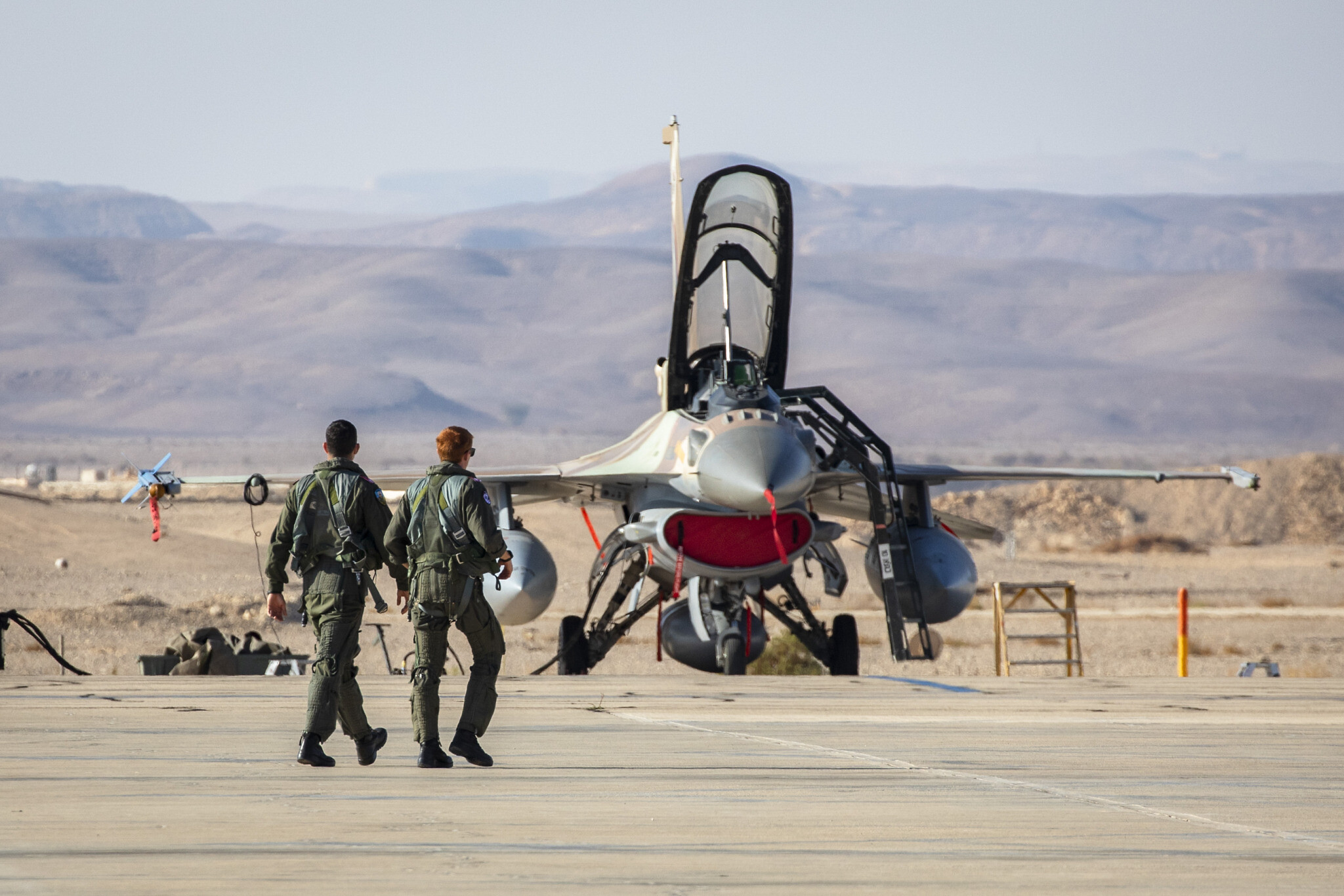
File: Israeli Air Force pilots walk to their plane during the ‘Blue Flag’ international exercise at the Ovda airbase in southern Israel on October 24, 2021. (Olivier Fitoussi/Flash90)

Some of the reservists have begun following through on their threats, with the IDF Spokesman acknowledging on Tuesday that IDF “readiness” — in a “people’s army” heavily dependent on its reservists — has already been impacted, and especially in the Israel Air Force.

And while Netanyahu has for years demonized his political opponents, the media, the police and the state prosecution as dangerous leftists who threaten the well-being of the state, members of his irresponsible coalition have now taken to castigating senior figures in the IDF and the Shin Bet security service as destructive leftists, too.

Yehuda Fox, the general who oversees the West Bank, is denounced for failing to halt Palestinian terrorism, for “deliberately” endangering the lives of Israeli West Bank settlers, for ostensibly “prioritizing” the welfare of the Palestinians. Ronen Bar, the Shin Bet chief, is attacked for reportedly warning Netanyahu that Jewish terrorism by settler extremists against Palestinians in the West Bank is fueling Palestinian terrorism.

Likud MK Tally Gotliv declares that “the ideas of the left have also reached the top of the Shin Bet,” and that the “deep state has reached the head of the Shin Bet and the heads of the IDF.”

In the horrifying summation of Otzma Yehudit MK Limor Son Har-Melech, senior defense officials do not know how to “distinguish between the enemy and your own people.”

Otzma Yedudit MK Limor Son Har-Melech (3R) poses with activists who set up an illegal outpost in the West Bank on January 20, 2023 (Courtesy)

In one of his innumerable American TV interviews, Netanyahu this week acknowledged that he cannot control what his extremist coalition colleagues choose to say. He did help broker the pre-election agreements, however, that enabled many of them to make it into the Knesset, and he most certainly controlled their entry into positions of power, authority and influence in the government of Israel.

But not only is Netanyahu pleading helplessness as the radical colleagues he empowered incite against Israel’s essential security establishment, he is also proving tardy and somewhat half-hearted in defending Israel’s protectors.

And far from being inclined to stop the legislative axe descending on Israeli democracy, as he reluctantly did in March, he is instead issuing transparently empty promises to seek compromise, while recommitting to that core legislation to take control of the appointment of new judges.

The next overhaul law “would probably be about the composition of the committee that elects judges,” he told Bloomberg this week, before adding, with unintentional candor: “That’s basically what’s left.”

What has become of Netanyahu, once a defender of the independence of the judiciary? What has become of a former outstanding military man who was fully cognizant of the necessity to ensure the security establishment was unified, respected, and protected from the casual, shortsighted viciousness and radicalism that passes for politics? Why did he choose to give so much power in this government to messianists whose pyromaniacal agendas run counter to the most fundamental interests of the state? And why is he exhibiting such weakness as they pursue those agendas?

We’ve searched in vain for adequate answers to all those questions through weeks and months of mounting self-destruction. But with most Israelis recognizing that the country is in a state of emergency, the answers matter less now than the simple imperative to halt. To halt the deepening social and economic crisis. To halt the racist policymaking. To halt the disingenuous misrepresentation of a strategic process that will remake the way Israel is governed and change its democratic-tolerant Jewish orientation and ethos. To halt the unilateral legislation intended to achieve that disastrous goal.

And no less urgently, to heed the security establishment’s warnings — of rising danger in the West Bank, of rising concerns across the northern border. And to restore cohesion in the military ranks — if necessary by firing the lawmakers inciting against officers and security chiefs, and by rebuilding the security establishment’s confidence and trust in its political masters.

Israeli troops detain a wanted Palestinian in the West Bank city of Jenin, April 11, 2023. (Screenshot: Twitter)

Our enemies cannot believe what we are doing to ourselves. They cannot believe that the source of our strength, our existential military strength, is being eroded by our own hand.

If that is not enough to bring Netanyahu to his senses, then nothing is.