
Netanyahu: New nuclear agreement won’t stop Iranian bomb

A Western official said over the weekend that the objective of the impending nuclear deal between the US and Iran is to stop Israel from attacking Iran.
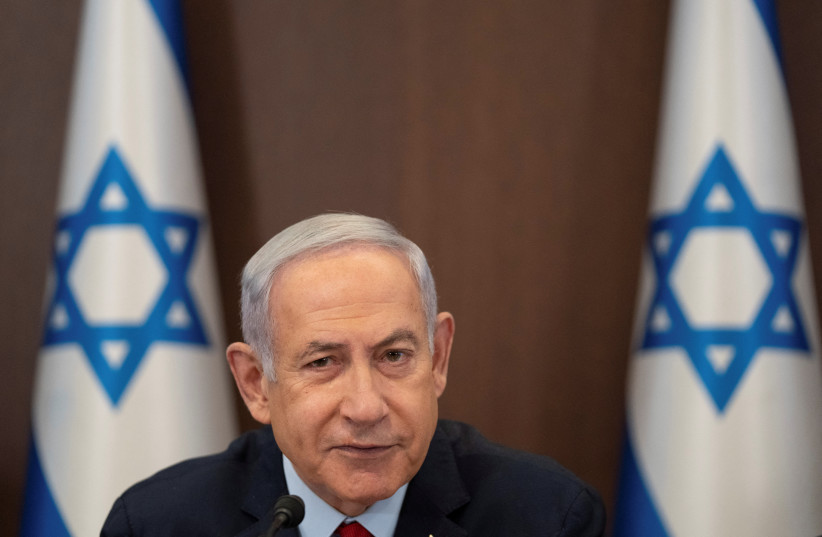
 Israeli Prime Minister Benjamin Netanyahu chairs a cabinet meeting at the prime minister's office in Jerusalem, June 18, 2023. (photo credit: Ohad Zwigenberg/Pool via REUTERS)
Israeli Prime Minister Benjamin Netanyahu chairs a cabinet meeting at the prime minister’s office in Jerusalem, June 18, 2023.
(photo credit: Ohad Zwigenberg/Pool via REUTERS)

A new agreement with Iran will not prevent it from attaining a nuclear weapon, Prime Minister Benjamin Netanyahu warned on Sunday.

“Our first mission is to stop Iran from going nuclear,” Netanyahu said at the opening of the weekly cabinet meeting. “We made clear to our American friends time after time, and I am doing it again today, that we oppose agreements, first of all to the original agreement called the JCPOA, which will just pave Iran’s way to the bomb and will pad it with hundreds of millions of dollars.”

Netanyahu said that his “principled opposition” to the JCPOA played a part in ensuring the US does not return to that deal.

“We also tell [the Americans] that more limited understandings, what’s called a ‘mini-deal,’ does not serve our purpose, in our opinion, and we oppose that, as well,” he said.

The prime minister added that “Israel will do whatever it needs on its own to defend itself from Iranian aggression, whether on the nuclear file or its terrorist proxies.”
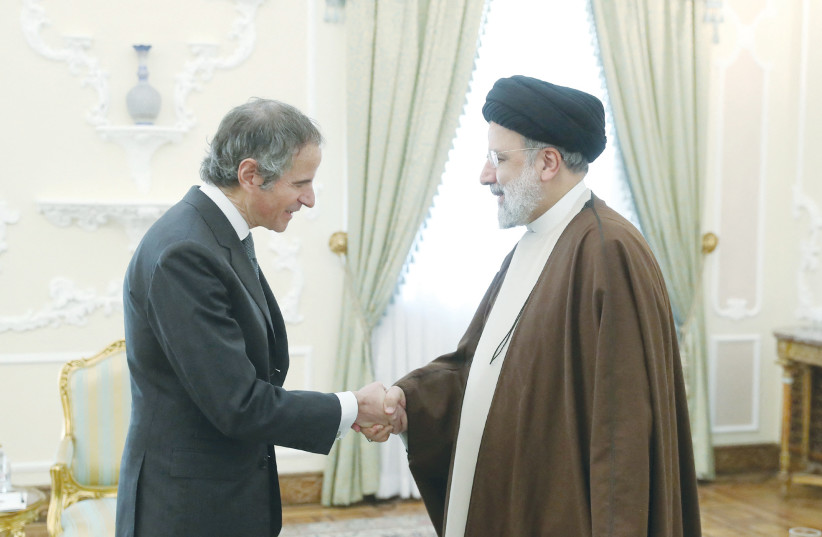
 IRANIAN PRESIDENT Ebrahim Raisi meets with IAEA Director-General Rafael Grossi in Tehran in March. The writer says US President Joe Biden may grant Raisi an end to all IAEA investigations (credit: Iran’s Presidential Website/West Asia News Agency/Reuters)IRANIAN PRESIDENT Ebrahim Raisi meets with IAEA Director-General Rafael Grossi in Tehran in March. The writer says US President Joe Biden may grant Raisi an end to all IAEA investigations (credit: Iran’s Presidential Website/West Asia News Agency/Reuters)

Western official: The US-Iran nuclear deal is meant to stop Israel from attacking Iran

A Western official told Reuters over the weekend that the objective of the impending nuclear deal between the US and Iran is to stop Israel from attacking Iran.

“If [the] Iranians miscalculate, the potential for a strong Israeli response is something that we want to avoid,” the official said.

The US and Iran are close to concluding a series of unwritten understandings by which the US would provide sanctions relief in exchange for Iran limiting its nuclear program, according to numerous diplomatic sources in recent weeks.

The sides negotiated indirectly via Oman after talks last year did not bring the sides back to the JCPOA, as US President Joe Biden promised in his 2020 election campaign.

The deal would have Iran halt its uranium enrichment at 60% purity, far beyond the 3.67% permitted in 2015, but below the 90% needed for a nuclear weapon. The US warned in the talks that it would exact a heavy price from Iran if it enriches to 90%.

Iran would also free Americans it is holding in prison, stop selling ballistic missiles to Russia and stop its proxies’ attacks on US contractors in Syria and Iraq, according to The New York Times.

The US would waive nearly $20 billion in sanctions, and not add further sanctions or pursue resolutions against Iran in the UN Security Council or the International Atomic Energy Agency.

State Department spokesperson Matt Miller has repeatedly denied there was any deal with Iran, but he may be relying on semantics and the Biden administration is avoiding an agreement in writing in order not to trigger the Iran Nuclear Agreement Review Act (INARA), which requires the president to give Congress the text of any deal regarding Iran’s nuclear program and triggering a 30-day review period.

An Iranian official told Reuters, “Call it whatever you want, whether a temporary deal, an interim deal or a mutual understanding – both sides want to prevent further escalation.”
The kingdom broke ties with Iran in 2016 after protesters attacked the Saudi embassy in Tehran in retaliation for Riyadh’s execution of a prominent Shiite cleric.

The kingdom broke ties with Iran in 2016 after protesters attacked the Saudi embassy in Tehran in retaliation for Riyadh’s execution of a prominent Shiite cleric.

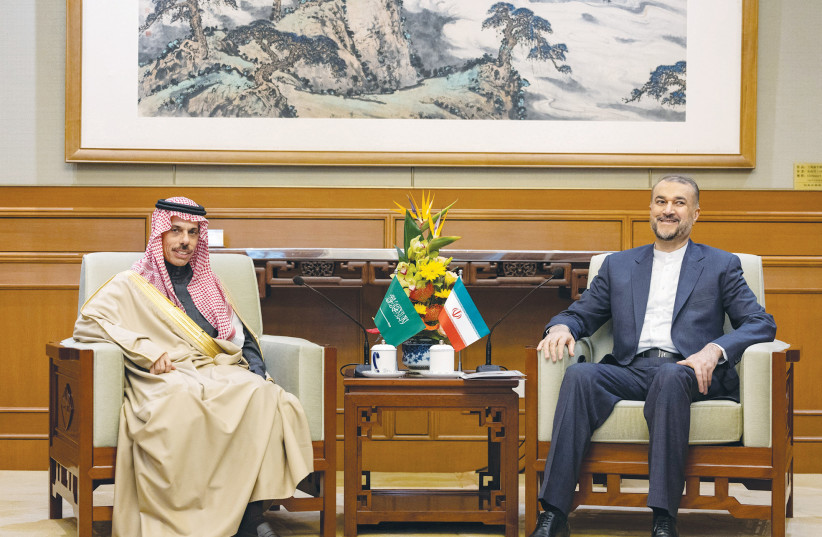
 IRAN’S FOREIGN Minister Hossein Amir-Abdollahian meets with Saudi Foreign Minister Prince Faisal bin Farhan Al Saud in Beijing, last month. (photo credit: SAUDI PRESS AGENCY/REUTERS)

IRAN’S FOREIGN Minister Hossein Amir-Abdollahian meets with Saudi Foreign Minister Prince Faisal bin Farhan Al Saud in Beijing, last month.
(photo credit: SAUDI PRESS AGENCY/REUTERS)

Saudi Arabia’s foreign minister Prince Faisal bin Farhan arrived in Tehran on Saturday, according to both Saudi and Iranian media.

The trip is an important step in the reconciliation process between Saudi Arabia and Iran that began earlier this year. China helped broker a deal between Riyadh and Tehran. Saudi Arabia’s Crown Prince is meanwhile on a trip to France and Iran’s President recently travelled to South America.

Iran officially reopened its embassy in Saudi Arabia on June 7.

The kingdom broke ties with Iran in 2016 after protesters attacked the Saudi embassy in Tehran in retaliation for Riyadh’s execution of a prominent Shiite cleric.

Re-building relations between Iran and Saudi Arabia

The visit by Bin Farhan is seen as very important in the Gulf and Iran. He is going to meet with his Iranian counterpart Hossein Amirabdollahian and Iran’s president, reports at Al-Arabiya said.

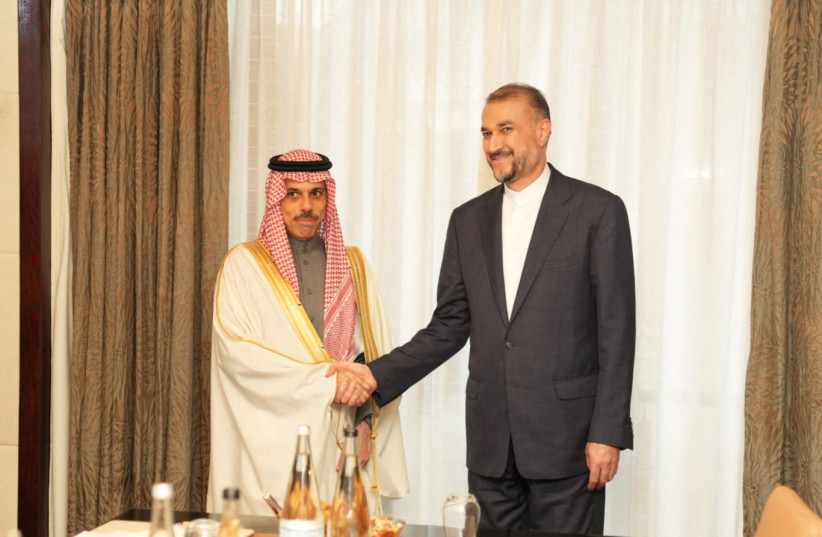
 Iranian Foreign Minister Hossein Amir-Abdollahian meets with Saudi Arabia's Foreign Minister Prince Faisal bin Farhan Al Saud in Cape Town, South Africa, June 2, 2023.  (credit: IRAN'S FOREIGN MINISTRY/WANA (WEST ASIA NEWS AGENCY)/HANDOUT VIA REUTERS)Iranian Foreign Minister Hossein Amir-Abdollahian meets with Saudi Arabia’s Foreign Minister Prince Faisal bin Farhan Al Saud in Cape Town, South Africa, June 2, 2023. (credit: IRAN’S FOREIGN MINISTRY/WANA (WEST ASIA NEWS AGENCY)/HANDOUT VIA REUTERS)

“The Saudi minister is expected to officially inaugurate the kingdom’s embassy, later on Saturday, in the capital. Both nations reopened their diplomatic missions in recent weeks,” Arab News reports.

The reopening of the embassy is important and is part of a wider thaw in the region. Iranian diplomats have already returned to the Iranian embassy in Riyadh.

The shift comes amid many other moves in the region

France has also reached out to Iran’s President and is trying to help solve the presidential crisis in Lebanon, where numerous votes in parliament have not resulted in a new president being elected.

Meanwhile, the Arab League has welcomed Syria’s return after more than a decade. This signals a wider new era of diplomacy in the region. This replaces decades of conflict, such as the US-led war on terror and the threat of ISIS. However groups like ISIS remain a threat and there are still destabilizing forces, such as Iranian-backed militias. Iran is keen to use those militias and terror groups, such as Hezbollah or Palestinian Islamic Jihad, to threaten Israel.

The Saudi foreign minister’s trip will be watched closely in the region. It is already being monitored by media in the Gulf and also Iranian pro-government media such as Fars News and other media such as Al-Mayadeen.


US pessimistic on Israel-Saudi normalization

June 18, 2023
US pessimistic on Israel-Saudi normalizationSenior American officials say that the chances of an agreement are less than 50%.

By JNS

Despite its best efforts, Washington believes that the chances of an Israel-Saudi normalization agreement are less than 50%, according to senior U.S. administration officials cited by The New York Times.

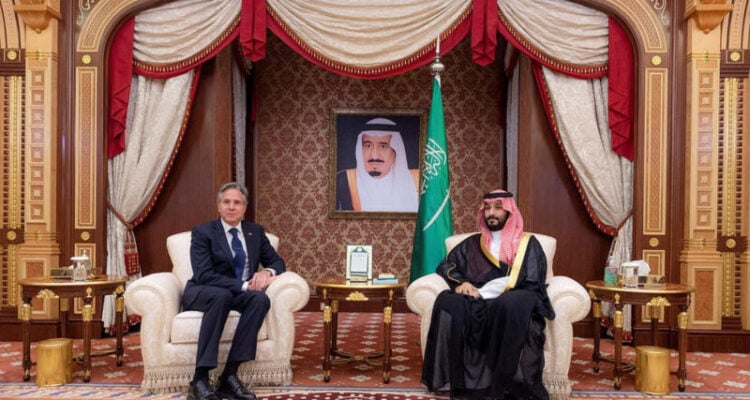
Last week, White House Coordinator for the Middle East and North Africa Brett McGurk led an unpublicized delegation to Saudi Arabia. The trip came days after U.S. Secretary of State Antony Blinken met with Crown Prince Mohammed bin Salman in the kingdom, and then briefed Israeli Prime Minister Benjamin Netanyahu on the Saudi demands during a 40-minute phone call.

These demands reportedly include U.S. assistance with Riyadh’s civilian nuclear program, and security guarantees.

White House National Security Advisor Jake Sullivan visited Saudi Arabia on May 7.

Saudi Arabia moves closer to Iran

The report comes amid warming relations between Riyadh and Tehran following the reestablishment of diplomatic ties between the two countries in March in an agreement mediated by Beijing.

Saudi Foreign Minister Prince Faisal bin Farhan arrived in Iran on Saturday in the first visit to the country by a Saudi official in more than seven years. Riyadh severed relations with Tehran in 2016 after its diplomatic missions there and in Mashhad were attacked following Saudi Arabia’s execution of a prominent Shi’ite religious leader.

  NETANYAHU, SAUDI CROWN PRINCE SPEAK ON PHONE AMID PEACE TALKS

Prince Fasail met with his Iranian counterpart and other top officials in Tehran, including Iranian President Ebrahim Raisi, who just returned from Venezuela. The Iranian president criticized Israel during his talks with the Saudi foreign minister.

“Only the enemies of Islam, led by the Zionist regime, are upset with the progress in bilateral and regional cooperation between Iran and Saudi Arabia,” said Raisi, according to the Iranian state news agency IRNA.

Raisi also voiced his opposition to normalization efforts between Arab countries and Israel.

“The Zionist regime is not only an enemy of the Palestinians, it is a threat to all Muslims. The normalization of relations with Israel not only fails to promote security but also goes against the opinions of the Islamic Ummah [community].”