Jason Greenblatt, ex-Middle East special representative, says Biden making expansion of Abraham Accords harder, and gives money too easily to Palestinians
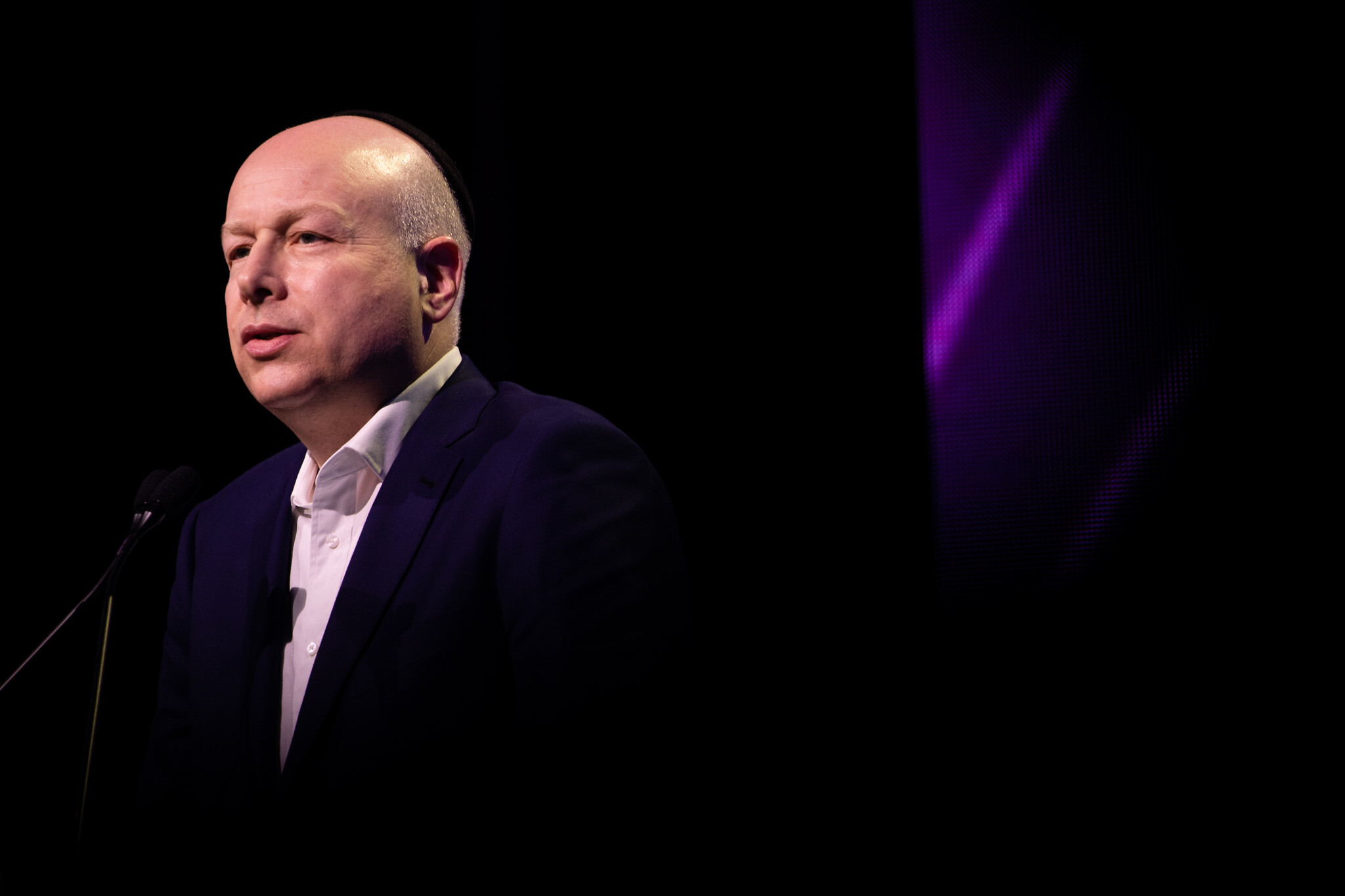
 

File: Former US Special Envoy to the Middle East, Jason Greenblatt, speaks at an OurCrowd investor summit in Jerusalem, February 13, 2020. (Yonatan Sindel/Flash90)

File: Former US Special Envoy to the Middle East, Jason Greenblatt, speaks at an OurCrowd investor summit in Jerusalem, February 13, 2020. (Yonatan Sindel/Flash90)

The Biden administration has misjudged its approach to the Middle East, a senior official from the Donald Trump White House said in an interview as he joined the leadership of an Israeli think tank.

“It alienated the crown prince of Saudi Arabia, and wasn’t particularly great with the United Arab Emirates,” said Jason Greenblatt, Trump’s Middle East special envoy who became senior director at the Jerusalem Center for Public Affairs last month.

The Biden approach, which includes taking America’s Arab allies to task over their human rights records, has made it harder for Israel to add new countries to the Abraham Accords, in Greenblatt’s telling.

“I think they put a wedge between us and the countries that — in particular Saudi — that might have been interested in moving forward,” he told The Times of Israel.

“We need countries around the world whether we are on the same page on human rights or not,” said Greenblatt. “I’m not saying ignore it. I’m not saying don’t engage on it. But the notion that we could simply write off countries because we don’t agree with whether it’s human rights or anything else, I think is an unrealistic approach to the benefit for the safety, security, and benefit of the United States or any country for that matter.”

The White House did not respond to requests for comment on Greenblatt’s remarks.

Greenblatt was the architect of Trump’s Mideast plan that many saw as favoring Israel. He worked as the White House’s special representative for international negotiations until resigning in October 2019.
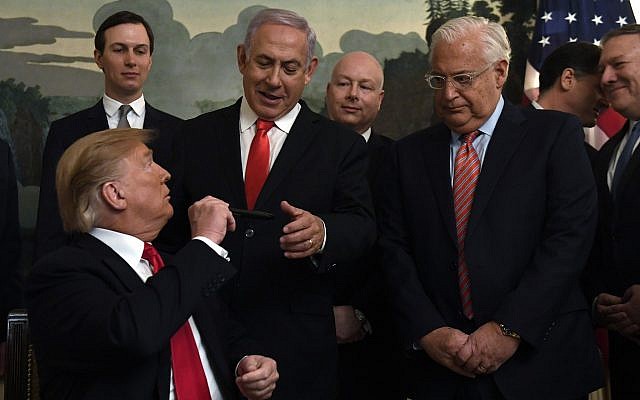
US President Donald Trump, left, turns to give a pen to Israeli Prime Minister Benjamin Netanyahu, center, at the White House in Washington, March 25, 2019, after signing the official proclamation formally recognizing Israel’s sovereignty over the Golan Heights. From left, White House adviser Jared Kushner, US special envoy Jason Greenblatt, US Ambassador to Israel David Friedman, Israeli Ambassador to the US Ron Dermer, and Secretary of State Mike Pompeo. (AP/Susan Walsh)

He joined Israeli venture capital firm OurCrowd in 2020 to focus on cultivating investment from Saudi Arabia, the United Arab Emirates, Qatar and Bahrain.

Two years later, he published “In the Path of Abraham: How Donald Trump Made Peace in the Middle East-And How to Stop Joe Biden from Unmaking It,” arguing that the policies of the current US administration risk undoing the achievements of his former boss.

Several Gulf officials who worked closely with Greenblatt in laying the groundwork for the Abraham Accords endorsed the book.

Abdullah Al Khalifa said that Greenblatt “approached his role of achieving peace between Arab nations and Israel with zeal, passion and sincerity.”

“While Jason and I have different views about certain issues, including the best route to a just and peaceful settlement for the Palestinian people, he and I share common ground in our passion to help make the world a better place,” said Qatar’s Sheikh Mohammed Bin Abdulrahman Al Thani.

Qatar and Israel do not have diplomatic relations.

Caution in the Gulf

With the distance between the White House and the Saudis, Greenblatt isn’t optimistic about Riyadh normalizing its relations with Israel anytime soon.

“I think Saudi Arabia itself is busy with its own things, right?” he said. “The amount of projects and social change and other changes that they’re doing in their country is mind boggling. I go back there quite often and with each visit I’m surprised. So while the Abraham Accords would be nice for the kingdom, I don’t think it’s their priority at the moment.”

Prime Minister Benjamin Netanyahu has pledged to establish diplomatic ties with the Saudis, even saying that he could get it done within the year.
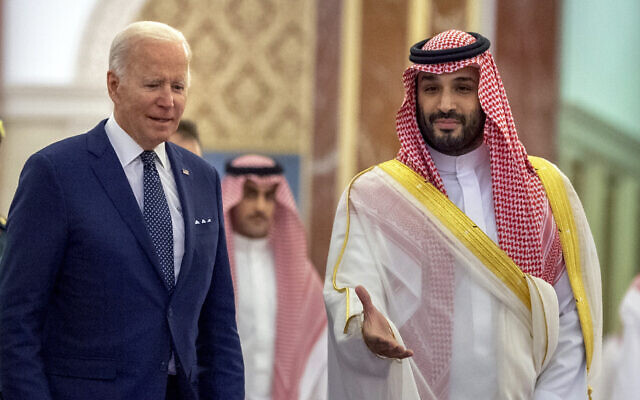
File: In this photo released by the Saudi Royal Palace, Saudi Crown Prince Mohammed bin Salman, right, welcomes US President Joe Biden to Al-Salam Palace in Jeddah, Saudi Arabia, July 15, 2022. (Bandar Aljaloud/Saudi Royal Palace via AP, File)

While Saudi officials have privately expressed interest in such an agreement in recent years, the prospects of Israeli-Saudi normalization remain unclear.

Riyadh has presented extensive demands to the United States regarding major improvements to their bilateral relationship, especially around defense guarantees, as a prerequisite for a deal. The policies of Netanyahu’s government, which has already garnered several blistering condemnations from the Gulf kingdom over its policies toward the Palestinians, has made normalization less palatable to both the palace and the street, but some observers say Mohammed bin Salman, the country’s de facto leader, is still open to a deal by the end of the year.

“He’s certainly a courageous and creative leader, and he might pull it off, but I don’t think it’s in the top list of things that the Saudis need to get done or want to get done in the next year,” Greenblatt explained.

There have also been signs of moderate discord in Israel’s ties with the Gulf states that have recognized Israel. There have been no high-level visits in either direction, and the two Gulf countries – the UAE especially – have repeatedly and openly condemned Israeli leaders and policies under the new government.
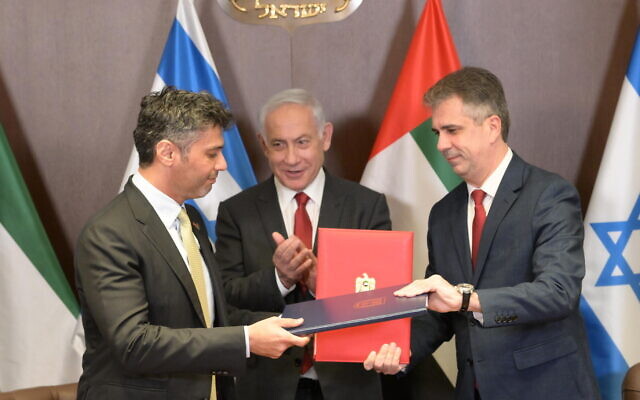
In this handout photo, Prime Minister Benjamin Netanyahu applauds as Foreign Minister Eli Cohen and UAE Ambassador to Israel Mohamed al-Khaja exchange signed copies of the custom agreement between the countries, March 26, 2023. (Amos Ben Gershom/GPO)

Ambassadors from Israel’s Gulf allies avoided an iftar dinner hosted by the Foreign Ministry in April to send a message to Jerusalem.

The data also shows a worrying and unmistakable trend: As time goes on, the Abraham Accords are becoming less popular on the streets of Israel’s newly allied nations.

“I think the UAE takes a much more cautious approach to business,” explained Greenblatt. “Israelis have a different, let’s call it excited attitude, and they think everything is quick and fast and easy.”

“I think Israelis have come to realize that it’s going to take more time, relationship building, trust building before those things come true, even though there is plenty of business that continues to grow,” he continued. “Emiratis just have a different culture of how they approach these things.”

Despite the noticeable lack of high-profile Abraham Accords initiatives, Greenblatt remains optimistic about the overall trends: “There’s a difference between public diplomacy, photo ops, things like the Negev Forum, which are very nice and interesting and useful, and the things that happen on the ground on a daily basis in terms of tourism, business opportunities, friendship and culture moving forward.”

Handing out cash

Greenblatt argued that Biden has done some things right in his approach to the Palestinians.

“I’m happy to see that the Biden administration does not believe that this is the time to try to push a peace effort with the Palestinians,” he said. “I fully agree with him on that. So I don’t think the old views are coming back in that sense.”
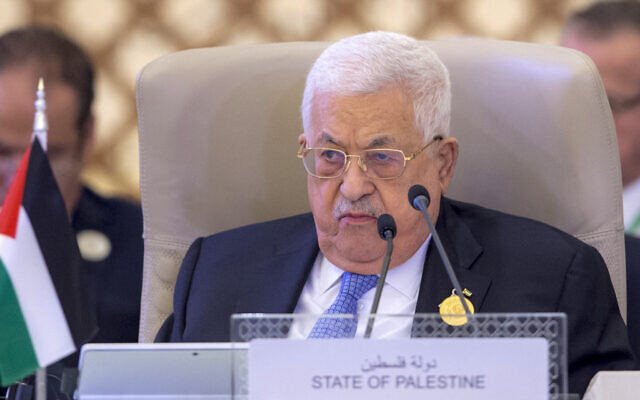
In this photo provided by Saudi Press Agency, SPA, Palestinian President Mahmoud Abbas attends the Arab summit in Jeddah, Saudi Arabia, Friday, May 19, 2023. (Saudi Press Agency via AP)

But the lawyer criticized the Biden administration’s decision to restore funding for the Palestinian Authority. After Donald Trump cut off most US funding, Biden allocated nearly $100 million for the Palestinians weeks after coming into office.

Greenblatt said the White House was “handing out money like it’s candy.”

“Handing out US taxpayer money like it’s candy for the Palestinians is neither good for the Palestinian people, nor good to develop any form of potential for peace down the road,” he maintained.

The former Trump aide also had qualified praise for Mahmoud Abbas, the octogenarian leader of the PA. “I think deep down he probably does want some form of peace. It may not be the peace that Israel could agree to, but I think he does not have either the courage or — probably the best word is — the strength to be able to do it.”
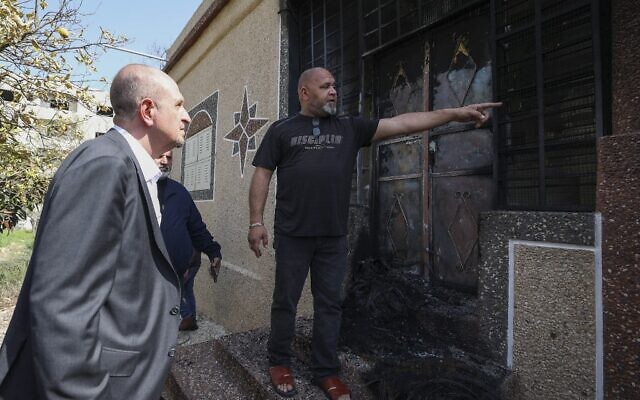
US Special Representative for Palestinian Affairs Hady Amr, left, speaks to residents as he inspects damaged Palestinian property during a visit to Huwara, on February 28, 2023. (Jaafar Ashtiyeh/AFP)

Greenblatt said that one of the reasons he wrote the book is to argue against “stale” views on Israel and the Palestinians that prevail in Washington.

“When I started at the White House, there were people, mostly diplomats and other government officials throughout the world, who had a very specific view on the Israeli-Palestinian conflict and the Israeli-Arab conflict,” he recounted. “And they’d come into my office and explain those views, and it turned out many of those views were stale. So I wanted to share what we learned, why we did what we did and who we were.”

Despite his dim view of the Palestinian Authority, he hopes that a new generation of Palestinian leadership could assert itself once Abbas is out of the picture.

“I think it will take time for their voices to be heard and there may be a lot of them,” he said. “There may be a silent majority.”
Nasrallah says any mistake by Jerusalem could ‘blow up the entire region,’ after IDF Military Intelligence chief issues similar warning

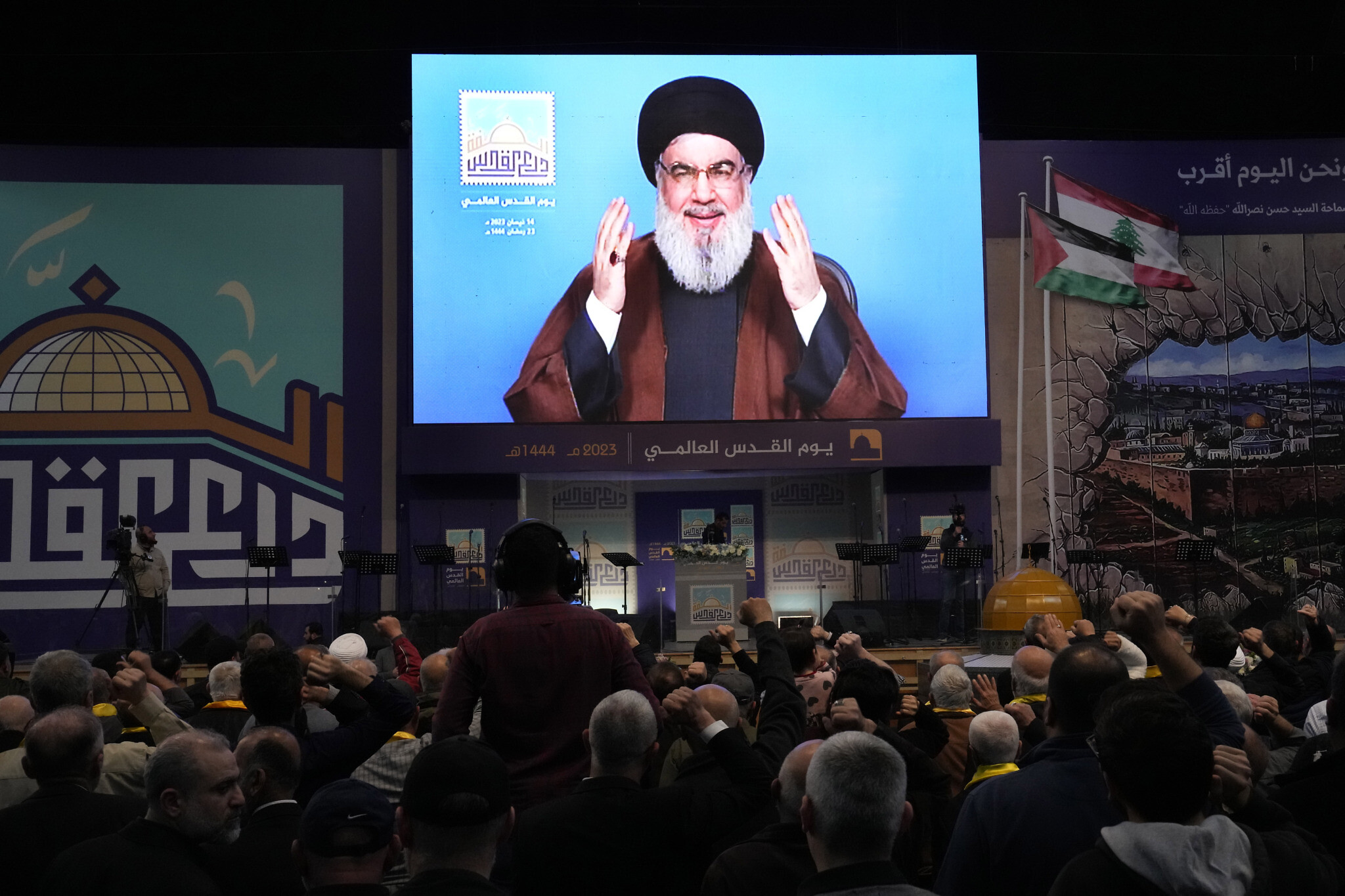
Hezbollah leader Hassan Nasrallah greets his supporters through a screen via a video link from a secret place, during a rally to mark Jerusalem day, in a southern suburb of Beirut, Lebanon, Friday, April 14, 2023. (AP Photo/Hussein Malla)

Hezbollah leader Hassan Nasrallah greets his supporters through a screen via a video link from a secret place, during a rally to mark Jerusalem day, in a southern suburb of Beirut, Lebanon, Friday, April 14, 2023. (AP Photo/Hussein Malla)

Hezbollah leader Hassan Nasrallah on Thursday fired back at Israel following a series of warnings from Jerusalem directed at his Lebanese terror group.

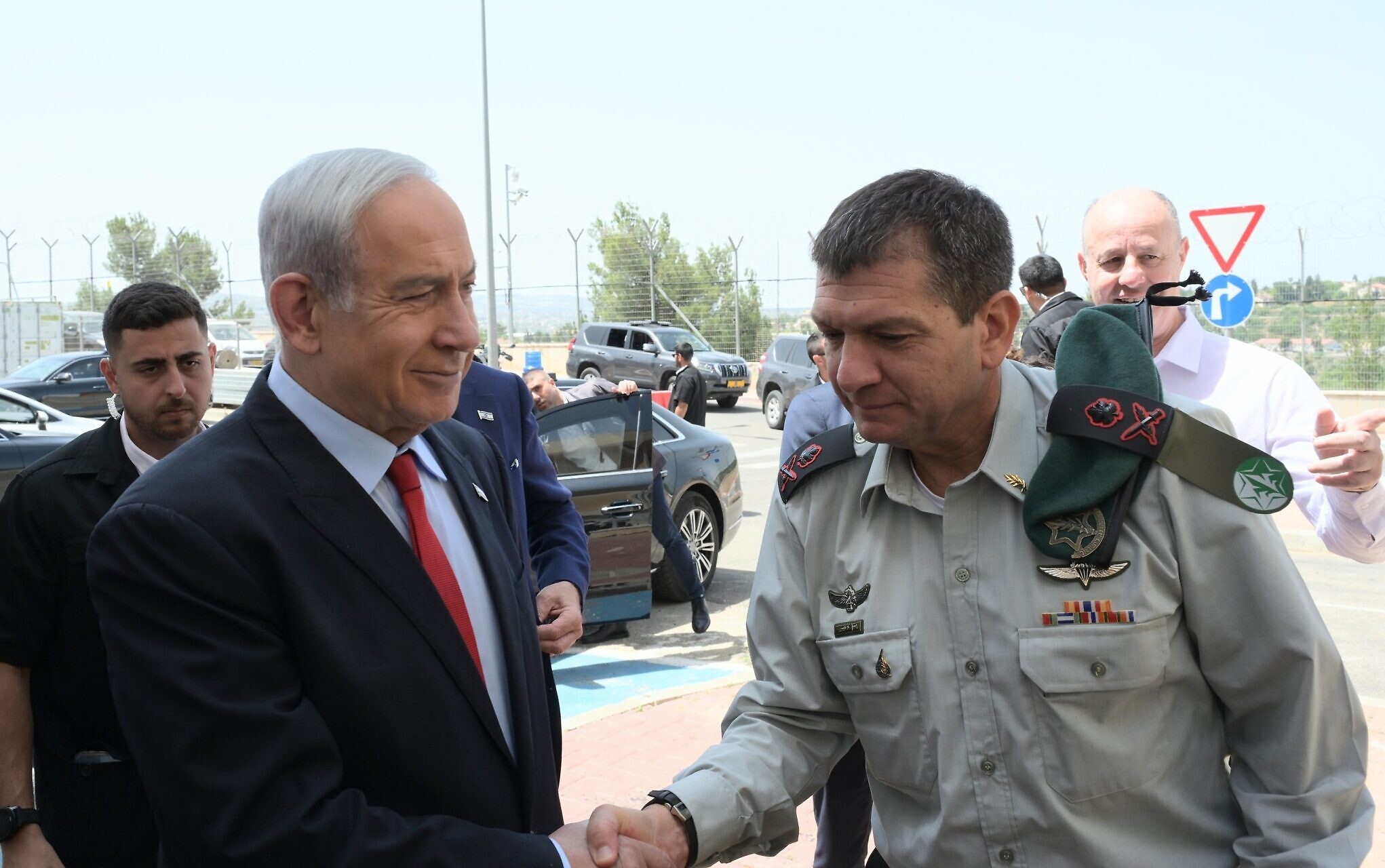
At a conference earlier this week, Military Intelligence chief Aharon Haliva said Nasrallah was “close to making a mistake that could plunge the region into a big war,” and on Tuesday the IDF dropped flyers in southern Lebanon warning against border incursions.

Speaking at a “Liberation Day” marking the 23rd anniversary of Israel’s withdrawal of military forces from southern Lebanon, Nasrallah said Israeli leaders should “be careful and not make wrong calculations.”

“The Israelis must retract their threats and give up their arrogance,” Nasrallah said, according to Naharnet.

“Any mistake might blow up the entire region,” he added, directly addressing Haliva’s remarks.

Taking a shot at Prime Minister Benjamin Netanyahu, the Hezbollah chief claimed Israel “failed to restore deterrence” during fighting earlier this month against the Iran-backed Palestinian Islamic Jihad terror group, leading to the Israeli warnings.

In this handout photo, Prime Minister Benjamin Netanyahu and IDF Military Intelligence Directorate chief Aharon Haliva tour an undisclosed intelligence base, May 23, 2023. (Amos Ben Gershom/GPO)

“The deterrence equation is what’s protecting Lebanon,” he said.

Nasrallah also said: “You are not the ones to threaten a grand war; we are the ones who rather threaten you with it.”

The speech came after Haliva assessed Monday that “the chances of an escalation that could deteriorate into war is not low,” and that, as far as Nasrallah is concerned, a recent flareup on the Israel-Lebanon border may not be over.

Haliva alluded to Nasrallah’s past comments that Hezbollah’s abduction of two Israeli soldiers on the border in 2006, which set off the Second Lebanon War, was a mistake, but said he is now starting to believe the balance of power can be tested.

“The story of the terrorist at the Megiddo Junction isn’t a one-off,” Haliva told the Herzliya conference, referring to a bombing attack in March that seriously injured a man, and is suspected to have been orchestrated by Hezbollah. “Nasrallah is close to making a mistake that could plunge the region into a big war. He is close to making this mistake from Lebanon or Syria.”

Haliva’s remarks came a day after Hezbollah invited media outlets to cover a major drill simulating war with Israel, claiming it was ready for a potential conflict with the Jewish state.

A man throws a boy in the air in front of a large portrait of Hezbollah leader Sayyed Hassan Nasrallah, as he marks ‘Liberation Day’ the 23rd anniversary of Israel’s withdrawal from southern Lebanon on May 25, 2000, at the southern Lebanese-Israeli border village of Kfar Kila, Thursday, May 25, 2023. (AP Photo/Mohammed Zaatari)

Also Friday, the Israel Defense Forces said troops downed a small drone that flew over the border from Lebanon.

In an image shared by the army, the drone appears to be a commercially available quadcopter manufactured by Chinese company DJI.

Defense officials have previously noted that at least some of the drones the Lebanon-based Hezbollah terror group uses for surveillance purposes are commercially available devices.

There was no statement from Hezbollah or affiliated media outlets on the drone downing.

Lebanon and Israel are technically in a state of war and the heavily guarded border is commonly penetrated by drones from both sides.

Lebanon regularly complains about Israeli surveillance drones invading its airspace, but the IDF maintains that such incursions are necessary to track the activities of Hezbollah, which the Lebanese government is supposed to keep in check.


Iran unveils 2,000 km ballistic missile – IRNA

Iran has expanded its missile program, particularly its ballistic missiles, despite opposition from the US and expressions of concern by European countries.

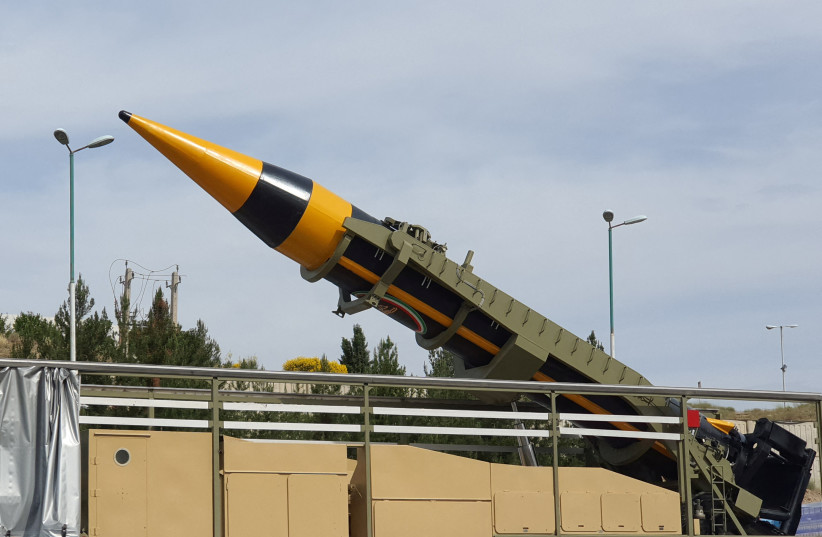
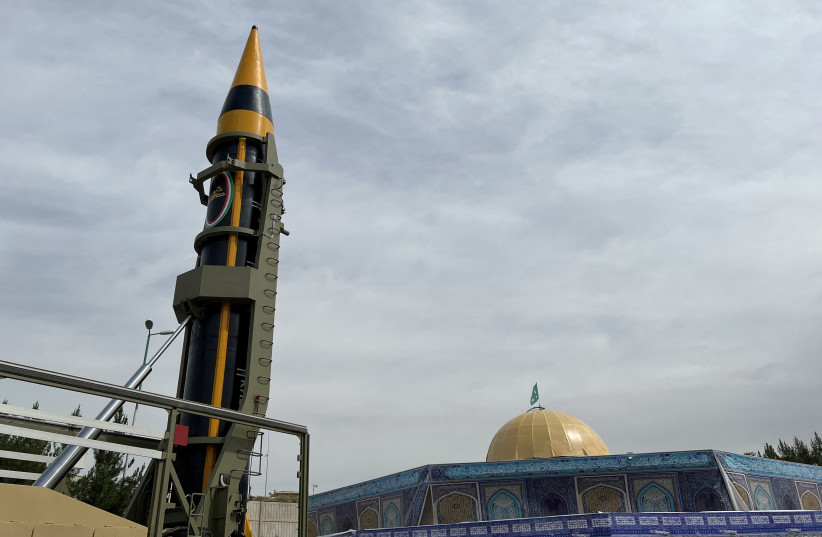
 A new surface-to-surface ballistic missile called Khaibar with a range of 2,000 km, unveiled by Iran, is seen in Tehran, Iran, May 25, 2023 (photo credit: WANA (WEST ASIA NEWS AGENCY) VIA REUTERS)
A new surface-to-surface ballistic missile called Khaibar with a range of 2,000 km, unveiled by Iran, is seen in Tehran, Iran, May 25, 2023
(photo credit: WANA (WEST ASIA NEWS AGENCY) VIA REUTERS)

Iran unveiled the fourth generation of its Khorramshahr ballistic missile under the name Khaibar, with a range of 2,000 km (1,243 miles) and a 1,500 kg (3,300 lb) warhead, the official IRNA news agency reported on Thursday.

Iran has expanded its missile program, particularly its ballistic missiles, despite opposition from the United States and expressions of concern by European countries. Tehran says the program is purely defensive and is for deterrence.

“Iran’s newest ballistic missile and the latest product of the defense ministry’s Aerospace Industries Organization (AIO) was unveiled today in a ceremony attended by the defense minister,” IRNA added.

US charged Chinese national for helping Iran

The United States charged a Chinese national last week with violating US sanctions by providing to Iran materials used to produce ballistic missiles, according to federal prosecutors in Manhattan.

 A new surface-to-surface ballistic missile called Khaibar with a range of 2,000 km, unveiled by Iran, is seen in Tehran, Iran, May 25, 2023 (credit: WANA (WEST ASIA NEWS AGENCY) VIA REUTERS)A new surface-to-surface ballistic missile called Khaibar with a range of 2,000 km, unveiled by Iran, is seen in Tehran, Iran, May 25, 2023 (credit: WANA (WEST ASIA NEWS AGENCY) VIA REUTERS)

Xianfjiang Qiao works at Sinotech Dalian Carbon and Graphite Manufacturing Corporation, a China-based company that the US Treasury Department placed on sanctions list in 2014 for helping Iran buy parts to produce ballistic missiles. Sanctions bar companies from using the US financial system.

Has Iran Named Its Missile after an Anti-Jewish Battle?

Reports suggest that Iran has named its missile “Khaybarshekan,” a name that appears to reference a historic battle involving Jews during the early Islamic period.

The phrase “Khaybar, Khaybar ya yahud” is frequently used in the region as part of anti-Semitic chants, promoting the mass murder or genocide of Jewish people.

During the recent May conflict between Israel and Hamas, anti-Semitic protests erupted across Europe and the United States, featuring chants of a similar nature, as highlighted by the American Jewish Committee.

Seth J. Frantzman contributed to this article.