While waves of terror may have deterred individual immigrants at times, overall aliyah has been largely unaffected, and immigration from around the world continues in full force.
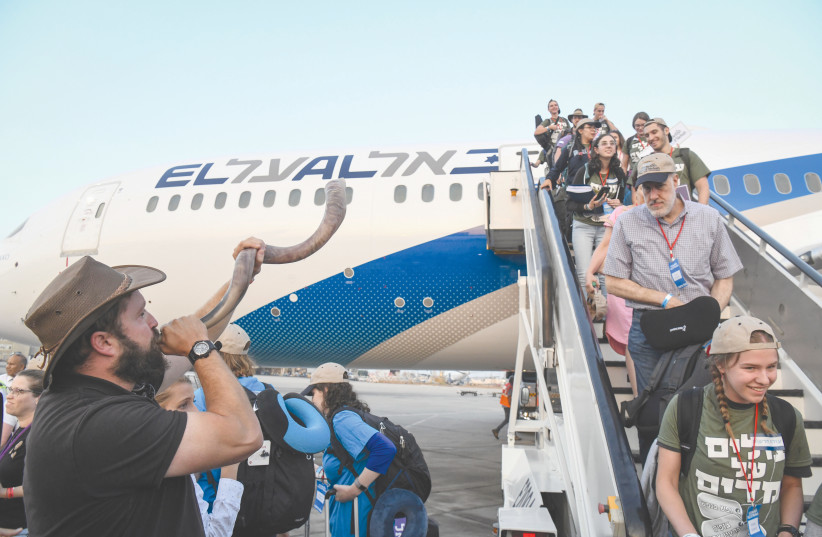
 NEW IMMIGRANTS from North America receive a shofar’s welcome upon arriving at Ben-Gurion Airport on a special ‘aliyah flight’ on behalf of Nefesh B’Nefesh.  (photo credit: FLASH90)
NEW IMMIGRANTS from North America receive a shofar’s welcome upon arriving at Ben-Gurion Airport on a special ‘aliyah flight’ on behalf of Nefesh B’Nefesh.
(photo credit: FLASH90)

The British Jewish community and the town of Efrat suffered a tragic and horrific loss this weekend when sisters Maia and Rina Dee were murdered in Friday’s terrorist attack in the Jordan Valley.

The sisters were killed, and their mother, Lucy, was critically wounded in what had initially been reported as a traffic accident. Emergency personnel soon discovered, though, that Palestinian terrorists had fired at the vehicle, causing it to veer off the road and crash, before approaching it and firing at its occupants from close range. More than 20 bullet casings were found at the scene.

IDF soldiers, who immediately began scanning the area for the suspects and set up checkpoints in an effort to apprehend them, have yet to find the perpetrators.

Tensions have been steadily building in recent weeks and the Passover holiday has been off to a difficult start. The Dee sisters’ murders were preceded by dozens of rockets fired by terrorists in Lebanon and the Gaza Strip into northern and southern Israel. Hours after the Jordan Valley attack, an Italian tourist, 35-year-old Alessandro Parini, was murdered and seven other pedestrians were wounded in a car-ramming attack in Tel Aviv. The perpetrator, an Arab citizen of Israel from Kafr Kassem, was killed by a police officer as he reached for what was thought to be a weapon.

This reality has not been easy to absorb. The country has been left reeling by each attack, only to be hit by another soon after.
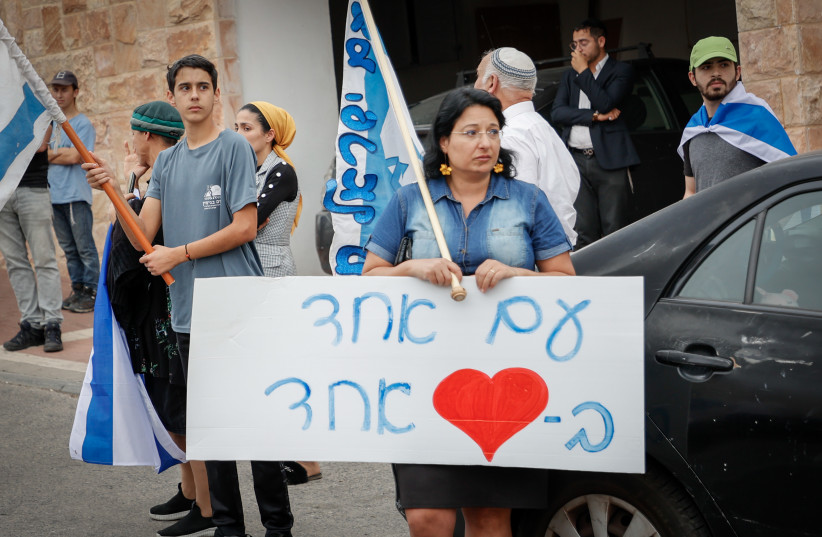
 Family and friends gather outside the house of Maia and Rina Dee, ahead of their funeral in Efrat on April 09, 2023. The 2 sisters were killed 2 days ago in a terror attack in the Jordan valley. Their mother, injured in the attack, is still in critical condition. (credit: GERSHON ELINSON/FLASH90)Family and friends gather outside the house of Maia and Rina Dee, ahead of their funeral in Efrat on April 09, 2023. The 2 sisters were killed 2 days ago in a terror attack in the Jordan valley. Their mother, injured in the attack, is still in critical condition. (credit: GERSHON ELINSON/FLASH90)

But while each new piece of horrifying news naturally demands our attention, it is important to take a moment to think about the victims – who they were and why they were here.

Who were the victims?

Maia was 20 when she was murdered on Friday, and her younger sister, Rina, was only 15. They were on their way to spend Shabbat in Tiberias along with their parents. Their father, Rabbi Leo Dee, was in a separate vehicle and witnessed his daughters’ murder.

Prior to making aliyah – immigrating to Israel – the Dee family was a beloved member of the Jewish communities of Hendon in London and Radlett just outside London. In a statement, British Chief Rabbi Sir Ephraim Mirvis called Rabbi Leo and Lucy Dee his “dear colleagues.”

They, like many of those who work at and read The Jerusalem Post, came to Israel with Zionism in their hearts, believing in Israel’s fundamental right to exist and wanting to be a part of this historic project – to continue building it from the ground up.

The tragedy of the Dee sisters’ loss is further highlighted by the heartbreak surrounding their identities as immigrants. Coming to Israel, believing in the country, loving this land – those all put them in the line of fire. They came to Israel and were murdered by terrorists who reject the Zionism that brought them here in the first place.

This is not the first time immigrants have been victims of terrorism. Immigrants have been killed and wounded in countless attacks since before Israel’s founding, and there is virtually no immigrant community in Israel that hasn’t experienced terrible loss.

Remarkably, though, this has never slowed down or stopped aliyah. While waves of terror may have deterred individual immigrants at times, overall aliyah has been largely unaffected, and immigration from around the world continues in full force. Losses like that of Maia and Rina Dee are deeply felt by the immigrant communities in which the victims lived, which are often tight-knit and almost familial. However, that hasn’t prevented thousands of Jews from joining those communities every year, driven by the strength of their convictions and the belief that this is a country worth fighting for.

Israel is grappling with the latest wave of terror and violence as we prepare to observe Remembrance Day for the Fallen of Israel’s Wars and Victims of Terrorism in two weeks. During this time, let us recognize the immigrants who left their places of birth, immigrated to a new country and made the ultimate sacrifice in the Jewish people’s fight to live freely in their homeland.

May their memories be a blessing, and may their loss not have been in vain.

Ebrahim Raisi: “The crimes of the Zionist regime are a sign of weakness and are proof of a bright and promising future for the resistance movement.”

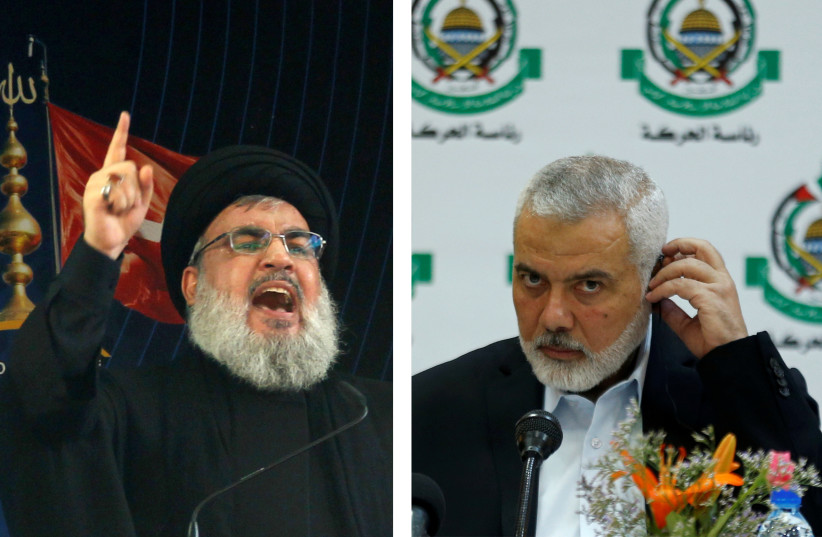
 LEFT: Hezbollah leader Sayyed Hassan Nasrallah RIGHT: Hamas Chief Ismail Haniyeh (photo credit: REUTERS/AZIZ TAHER, REUTERS/MOHAMMED SALEM)
LEFT: Hezbollah leader Sayyed Hassan Nasrallah RIGHT: Hamas Chief Ismail Haniyeh
(photo credit: REUTERS/AZIZ TAHER, REUTERS/MOHAMMED SALEM)

Hamas leader Ismail Haniyeh met in Beirut with Hezbollah chief Hassan Nasrallah to discuss resistance efforts against Israel, after a tense weekend in which his terror group fired rockets across the country’s southern and northern borders.

Haniyeh’s deputy Saleh al-Arouri was also present at the meeting, which was reported on by the affiliated news outlet Al-Mayadeen.

In Israel, the IDF continued to reinforce itself with additional reserve forces, which was itself a response to several days of rocket attacks from Gaza, then Lebanon and then Syria, as well as multiple terror incidents and tension surrounding the Temple Mount at the height of Passover and Ramadan.

The IDF last week had already called up unspecified numbers of reservist Border Police officers, and air defense and air force attack personnel. On Saturday, it was announced that there would be reinforcements of police in Tel Aviv following a car-ramming attack there.

“The crimes of the Zionist regime are a sign of weakness and are proof of a bright and promising future for the resistance movement.”

Iranian President Ebrahim Raisi

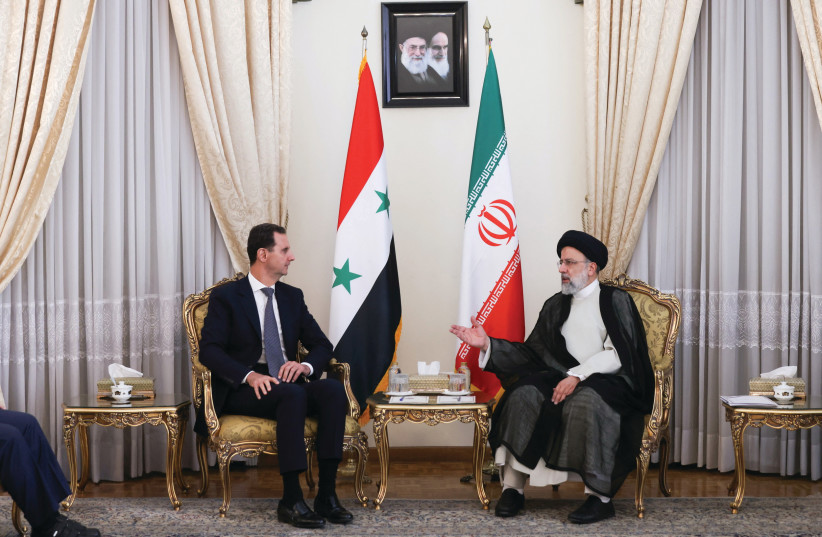
 IRAN’S PRESIDENT Ebrahim Raisi meets with Syrian President Bashar Assad in Tehran, earlier this month.  (credit: OFFICIAL PRESIDENTIAL WEBSITE / REUTERS)IRAN’S PRESIDENT Ebrahim Raisi meets with Syrian President Bashar Assad in Tehran, earlier this month. (credit: OFFICIAL PRESIDENTIAL WEBSITE / REUTERS)

Then on Sunday, the IDF and Israel Police announced that they were calling up an additional four companies of reservists, after having called up six companies in recent weeks.

All of this came after the IDF called up multiple additional battalions (larger than companies) in recent weeks to handle security issues in Huwara and other West Bank hot spots.

Al Mayadeen reported that Nasrallah and Haniyeh discussed further coordination of “resistance” efforts.

The IDF has also sent clear signals that it views Iran, Syria and Hezbollah as being responsible for the overall threat picture, even as it accused Hamas or Palestinian groups affiliated with it of actually firing the rockets.

In its responses to rocket fire, the IDF struck not only Hamas positions in Lebanon and Gaza, but also Iranian ones in Syria, as well as some affiliated with the regime of Syrian President Bashar Assad.

There was speculation that the IDF was trying to get Assad to restrain Iran and get Tehran to restrain the groups that fired on Israel, or face further IDF retaliation.

There have been no new rockets fired on any front since the IDF’s latest airstrikes against Syria on Sunday morning.

Iranian, Syrian presidents talk “resistance” against Israel

Also on Sunday, Assad and Iranian President Ebrahim Raisi discussed Ramadan and “resistance” efforts against Israel. According to Iranian state media outlets, Raisi told Assad that “the crimes of the Zionist regime are a sign of weakness and are proof of a bright and promising future for the resistance movement.”

Raisi further claimed the world was changing and that support was now growing for the “axis of the resistance” against Israel, according to the Iranian Students’ News Agency.

As of press time, Sunday had been the quietest day in terms of new violence in several days.

Ongoing Israeli-Palestinian clashes amid Passover, Ramadan

Although there were confrontations between Palestinians and the Israel Police, they were muted compared to last week. On Wednesday, police stormed al-Aqsa Mosque in order to ferret out Palestinians who tried to barricade themselves inside overnight in violation of a curfew agreed upon with the Wakf Islamic religious trust, through which Jordan administers the Muslim holy sites.

In that incident, police fired stun grenades and removed the people inside; Palestinians in the mosque shot fireworks and threw stones at Israeli forces. Dozens of Palestinians were reportedly injured or arrested in those clashes.

Footage from the scene published by Palestinian media showed police officers hitting Palestinians in the mosque with chairs and batons and arresting many of them.

A few hours after last week’s clashes, 10 rockets were fired from the Gaza Strip toward southern Israel. That was followed by further rocket fire in the next two days from Gaza, Lebanon and later Syria.

Although 842 Jews ascended the Temple Mount on Sunday, a 43% increase in worshipers compared to last Passover, the larger numbers did not lead to more conflict.

In fact, over Saturday night and Sunday, the police did not have much direct conflict with Palestinians, despite some of them violating the curfew again.

There were also no new terror incidents on Sunday after multiple incidents on Friday in Tel Aviv and the Jordan Valley.

The rise in tensions in recent weeks between Israelis, Palestinians and neighboring countries comes amid the coinciding holidays of the week of Passover and the month of Ramadan, both of which see worshipers flock to Jerusalem’s holy sites.

Tovah Lazaroff and Tzvi Joffre contributed to this report.


Ancient fragments of New Testament manuscript uncovered

Medievalists from the Austrian Academy of Sciences were able to uncover a previously erased layer of text.

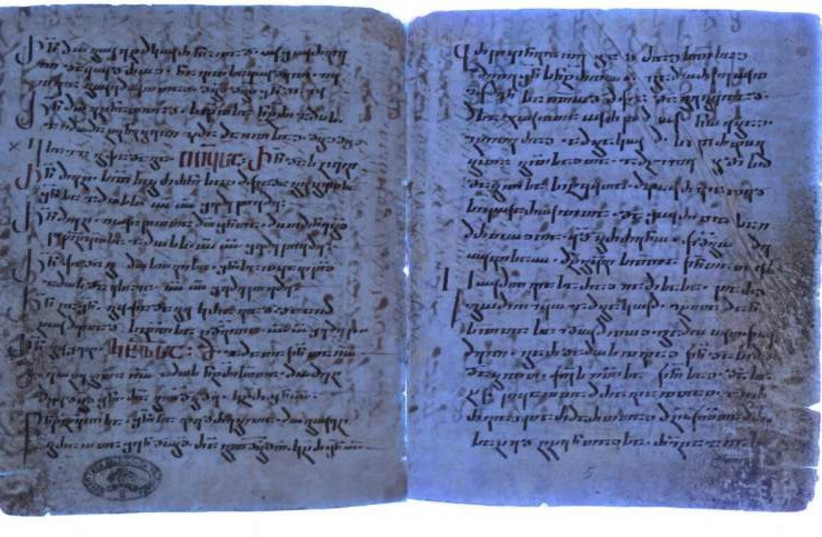
Syriac translation of the New Testament fragment placed under UV light (photo credit: Wikimedia Commons)
Syriac translation of the New Testament fragment placed under UV light
(photo credit: Wikimedia Commons)

More than 1,000 years ago, scribes in the ancient Land of Israel erased part of a religious book in order to reuse it. Since parchment was scarce in the desert during the Middle Ages, this was the only way they could make the resource last. Now, experts have been able to uncover lost words from ages past.

Efforts of a “medievalist,” a specialist in medieval history and culture, from the Austrian Academy of Sciences (OeAW) were able to uncover lost messages from the multi-layered manuscript. Expert Grigory Kessel discovered one of the oldest translations, dating back to the 3rd and 6th centuries respectively, and was able to conserve some of the remaining pages.

The pages contained fragments dating back to ancient Syria. According to Kessel and his team of researchers, only two manuscripts were known to contain the ancient Syriac translation of the holy book. The two are kept safe in modern days in the British Library in London and St. Catherine’s Monastery at Mount Sinai in Egypt.

How was this extra layer restored?

These small fragments were uncovered in the Vatican Library using ultraviolet photography, revealing a previously unknown layer of the manuscript. This offered “a unique gateway to the very early phase in the history of the textual transmission of the Gospels,” researchers said in a statement.

OeAW (Austrian Academy of Sciences) (credit: Wikimedia Commons)OeAW (Austrian Academy of Sciences) (credit: Wikimedia Commons)

Directors of the Institute for Medieval Research at the OeAW praised Kessel’s efforts to restore the ancient manuscript.

According to a statement released by Claudia Rapp, the director of the Institute for Medieval Research at the OeAW, “Grigory Kessel has made a great discovery thanks to his profound knowledge of old Syriac texts and script characteristics.”

This ancient translation was written at least a century before the oldest Greek manuscripts that have survived through the years, including the Codex Sinaiticus.

“This discovery proves how productive and important the interplay between modern digital technologies and basic research can be when dealing with medieval manuscripts,” Rapp added.