Several airstrikes attributed to Israel by foreign reports have struck Syria throughout the week. Some reportedly killed IRGC members in the country.

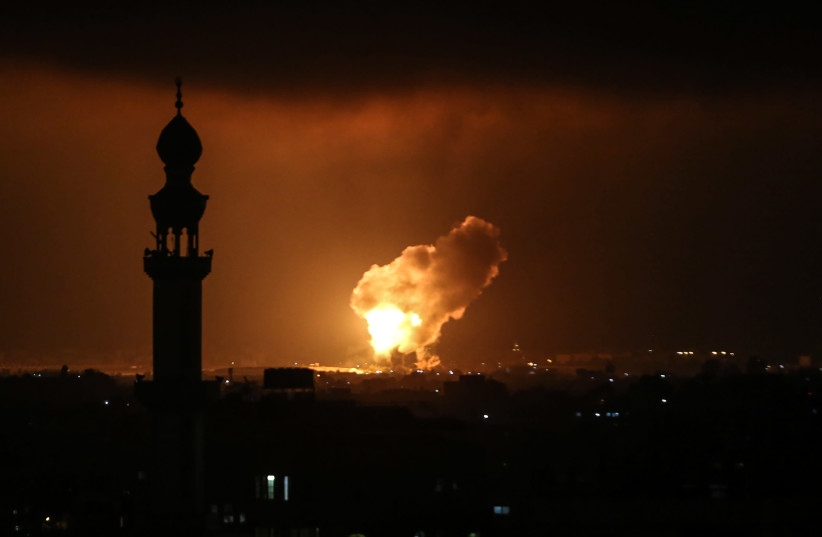
Illustrative image of an airstrike. (photo credit: ABED RAHIM KHATIB/FLASH90)
Illustrative image of an airstrike.
(photo credit: ABED RAHIM KHATIB/FLASH90)

Explosions due to alleged Israeli airstrikes were reported in the vicinity of the Syrian capital city of Damascus early Tuesday morning, according to local media reports cited by Army Radio.

Syrian state media outlets reported that multiple explosions were heard near the capital and that Syrian air defenses were activated to intercept what are alleged to be Israeli missiles.

Previous alleged Israeli airstrikes in Syria throughout the week

This airstrike is the fourth to have struck Syria this week. Previous airstrikes reportedly killed IRGC members in the country.

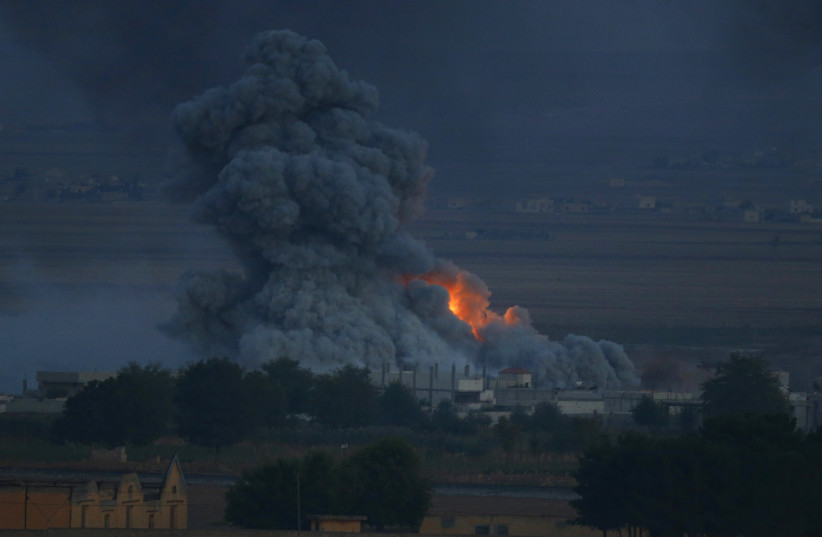
 Smoke rises over the Syrian town of Kobani after an airstrike, as seen from the Mursitpinar crossing on the Turkish-Syrian border in the southeastern town of Suruc in Sanliurfa province October 24, 2014. (credit: REUTERS/KAI PFAFFENBACH)Smoke rises over the Syrian town of Kobani after an airstrike, as seen from the Mursitpinar crossing on the Turkish-Syrian border in the southeastern town of Suruc in Sanliurfa province October 24, 2014. (credit: REUTERS/KAI PFAFFENBACH)

On Thursday, an IRGC adviser to Syria named Milad Heydari was killed in an airstrike, which Iran blamed on Israel.

Another airstrike killed IRGC member Meqdad Meqdani, according to Iranian media reports.

This also comes a day after a drone believed by the IDF to be of Iranian origin invaded Israeli airspace from Syria.

This is a developing story.

Tzvi Joffre and Reuters contributed to this report.


Abdullah II meets with delegation led by PA president, weeks after diplomatic tiff with Israel over Smotrich’s comments on Palestinians while standing behind ‘Greater Israel’ map


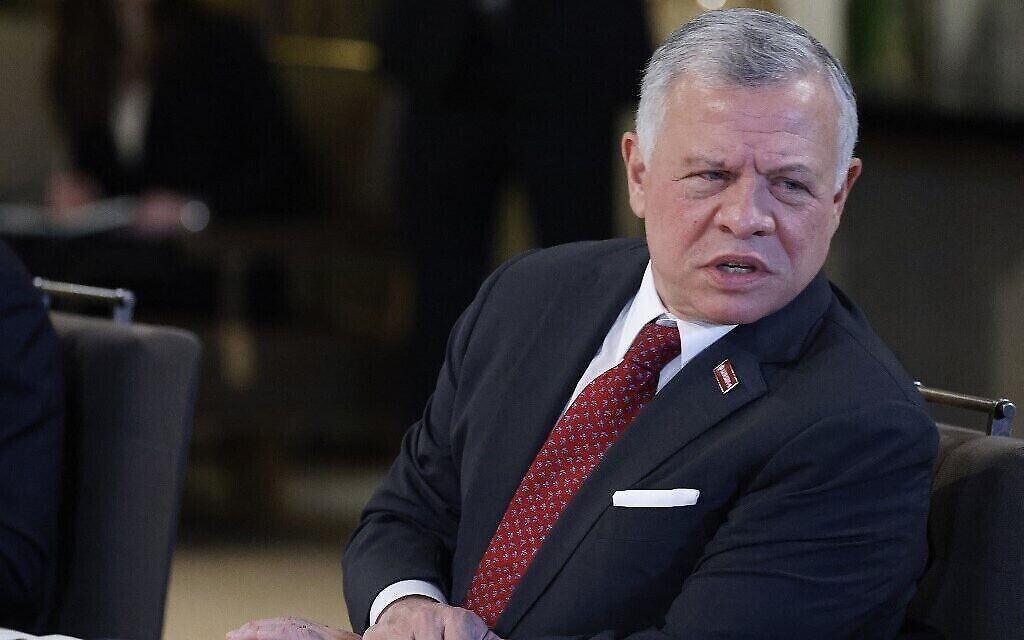
King Abdullah II of Jordan listens to French President Emmanuel Macron (not pictured) during a working lunch at the Al-Husseiniya Palace in the Jordanian capital Amman on December 21, 2022. (Ludovic Marin/Pool/AFP)

King Abdullah II of Jordan listens to French President Emmanuel Macron (not pictured) during a working lunch at the Al-Husseiniya Palace in the Jordanian capital Amman on December 21, 2022. (Ludovic Marin/Pool/AFP)

AMMAN, Jordan — Jordan’s King Abdullah II expressed on Sunday a commitment to “safeguard” Jerusalem’s holy sites, in a meeting in Amman with Muslim and Christian religious leaders from the city.

A statement from the royal court said the king told the delegation, led by Palestinian Authority President Mahmoud Abbas, that Jordan “will always be with you.”

“It is the duty of every Muslim to deter Israeli escalations against… holy sites in Jerusalem,” the king said, according to the statement.

State of Jerusalem: The ‘Secular’ Struggle

The king touted a longtime commitment to preserving “peace and harmony” at Jerusalem’s flashpoint Temple Mount site, which houses the Al-Aqsa mosque compound or the Noble Sanctuary, Islam’s third holiest site. The Temple Mount is revered by Jews as the historic location of the two Jewish Temples, making it Judaism’s holiest site.

Jordan views itself as a custodian of the Temple Mount — a status Israel does not recognize, though it acknowledged the kingdom’s “special role” at the site in the countries’ peace treaty. Jordan in 1994 became the second Arab country to recognize and sign a peace treaty with neighboring Israel, after Egypt.

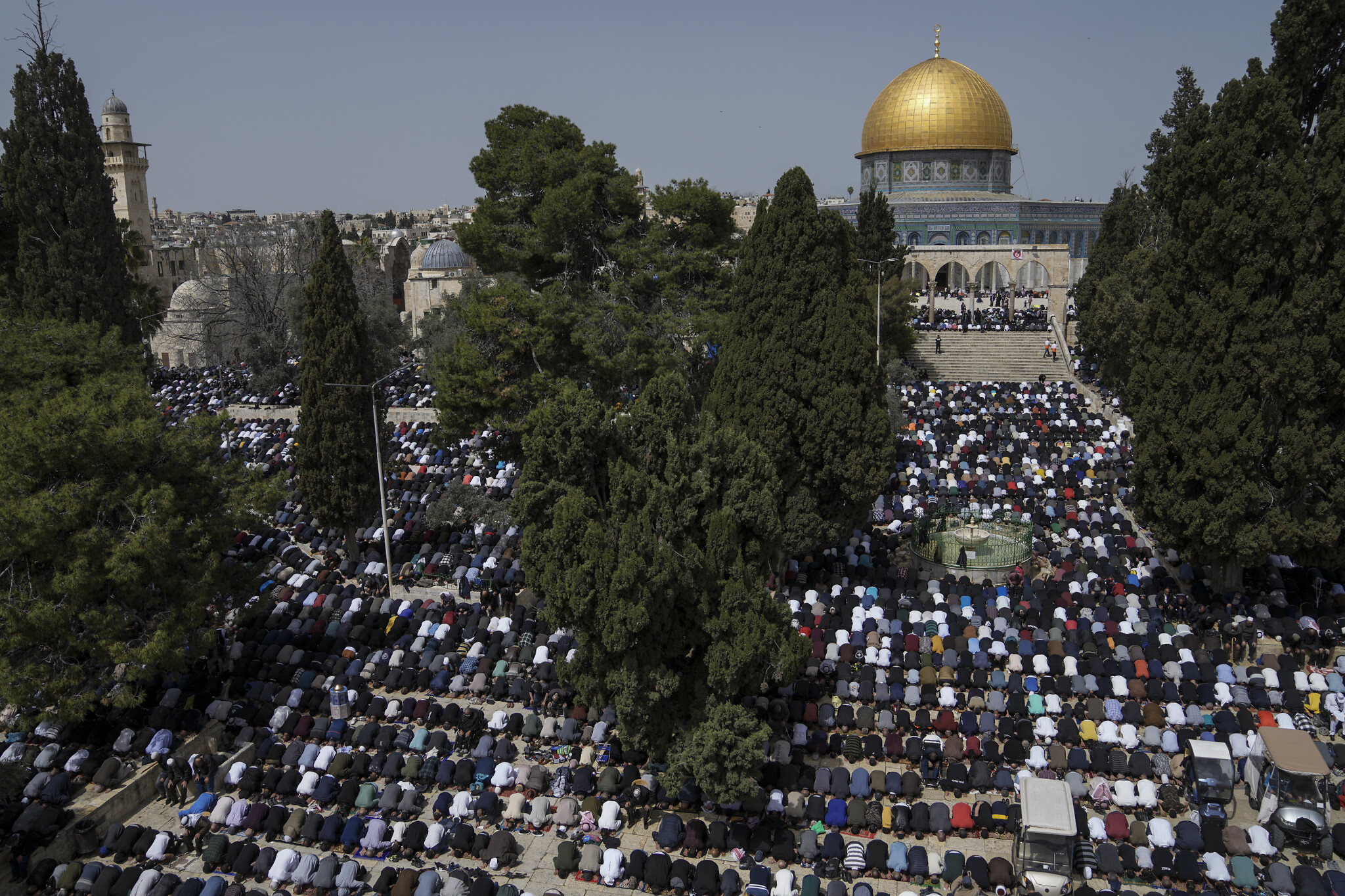
Muslims offer prayer on the first Friday of Ramadan outside the Dome of Rock at the Al-Aqsa Mosque on the Temple Mount in Jerusalem’s Old City, Friday, March 24, 2023. (AP Photo/Mahmoud Illean)

Israel captured the Temple Mount and Jerusalem’s Old City from Jordan in the 1967 Six Day War, almost two decades after Amman conquered it during the War of Independence in 1948. However, Israel allowed the Jordanian Waqf to continue to maintain religious authority atop the mount.

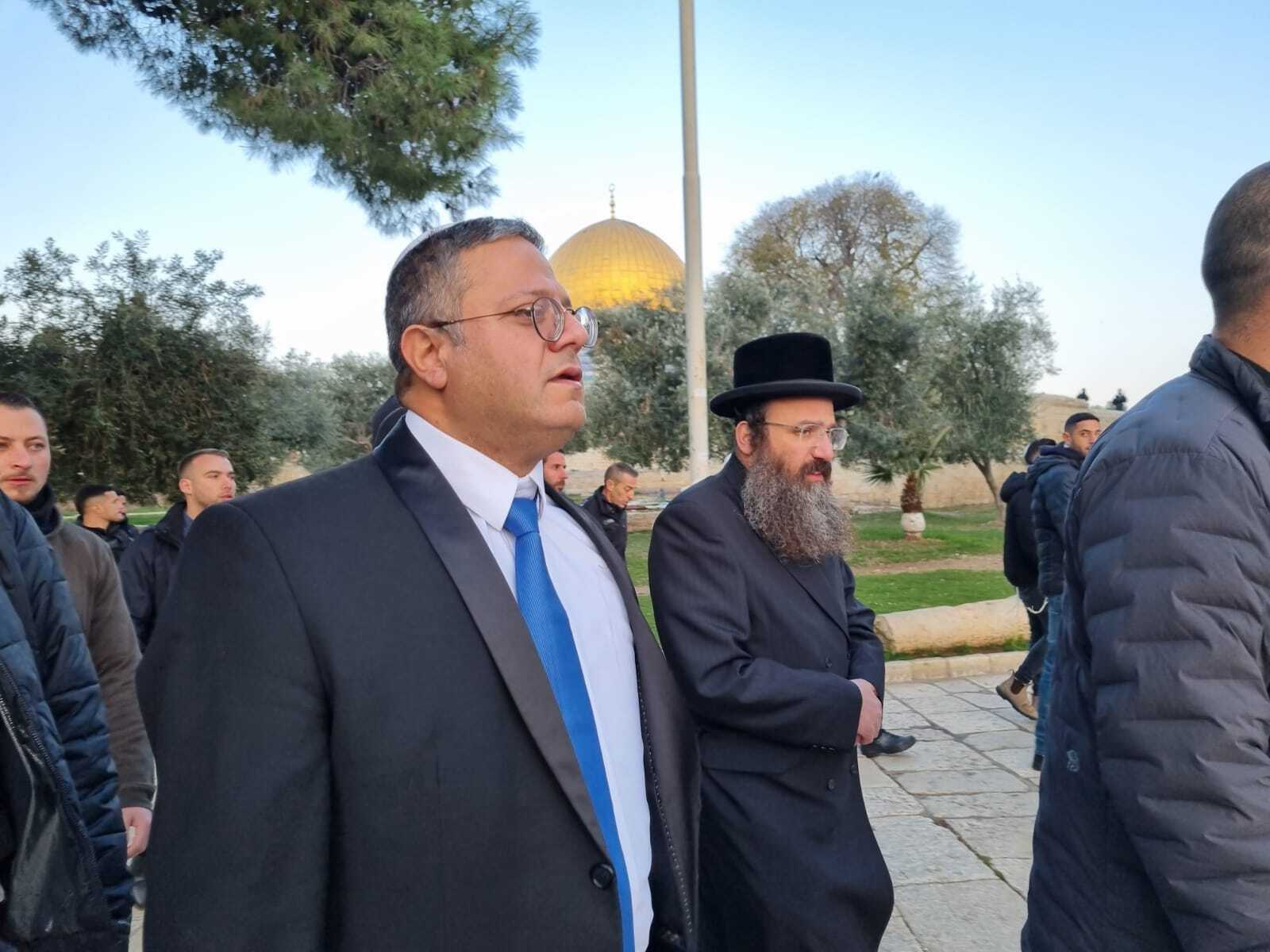
Under an arrangement that has prevailed for decades under Jordan’s custodianship, Jews and other non-Muslims are permitted to visit the Temple Mount during certain hours but may not pray there. In recent years, Jewish religious nationalists, including members of the new governing coalition like far-right National Security Minister Itamar Ben Gvir, have increasingly visited the site and demanded equal prayer rights for Jews there, infuriating the Palestinians and Muslims around the world.

In January, Prime Minister Benjamin Netanyahu paid a previously unannounced visit to Amman to meet with King Abdullah II, in a sit-down where he reportedly promised that this status quo on the Temple Mount would be preserved.

National Security Minister Itamar Ben Gvir visits the Temple Mount, January 3, 2023. (Courtesy Minhelet Har Habayit)

In his remarks on Sunday, Abdullah also hailed “Jerusalemites’… efforts to safeguard” the holy sites and “stressed the need to stop the displacement of Christians, as well as the repeated attacks on churches, religious figures and Christian property in Jerusalem,” according to the statement.

Christian places of worship in Jerusalem have seen a wave of attacks in recent months, some of them blamed on Jewish extremists.

Churches in Jerusalem appealed to the government on Friday to ensure Christians are able to worship freely during Easter and its run-up, expressing concern at mounting violence and acts of desecration over the past year.

Jerusalem’s Catholic Christian community marked Palm Sunday with masses attending religious processions in the Old City.

Roman Catholic deacons walk with palm fronds as they circle in a procession around the Edicule, traditionally believed to be the burial site of Jesus Christ, at the Church of the Holy Sepulchre in Jerusalem on April 2, 2023, Palm Sunday according to Catholic Christians. (MENAHEM KAHANA / AFP)

The Jordanian king’s remarks followed tensions with the Israeli government over a far-right minister’s remarks denying the existence of the Palestinian people and fears of a flare-up of violence during the Muslim fasting month of Ramadan, which began on March 23.

During Sunday’s meeting the Jordanian king “called on the international community to take a stand against the exclusionary and racist statements made recently by some Israeli officials,” the statement said.

Last month, Finance Minister Bezalel Smotrich of the far-right Religious Zionism party caused an international outcry after saying in a speech at a conference in Paris that the Palestinian people are an “invention” while standing behind a map of “Greater Israel” that includes modern-day Jordan.

Finance Minister Bezalel Smotrich speaks in Paris on March 19, 2023. (Ynet screenshot; used in accordance with Clause 27a of the Copyright Law)

Tensions with Jordan flared and the kingdom summoned the Israeli envoy in protest, with Amman panning the “reckless incitement and a violation of international norms.”

The Israeli Foreign Ministry sought to tamp down the backlash, tweeting that “Israel is committed to the 1994 peace agreement with Jordan” and that “there has been no change in the position of the State of Israel, which recognizes the territorial integrity of the Hashemite Kingdom,” in both Hebrew and English.

National Security Council chairman Tzachi Hanegbi later phoned Jordanian Foreign Minister Ayman Safadi to offer a similar assurance regarding Israel’s commitment to its peace with Jordan.


Car bombing rocks Syrian capital Damascus, state media says

Target unclear, according to government-controlled SANA agency, but area is home to UN headquarters, several embassies; two people lightly hurt

Screen capture from a video showing the aftermath of a reported car bombing in the Syrian capital of Damascus, April 2, 2023.  (Screenshot/Twitter, used in accordance with Clause 27a of the Copyright Law)

Screen capture from a video showing the aftermath of a reported car bombing in the Syrian capital of Damascus, April 2, 2023. (Screenshot/Twitter, used in accordance with Clause 27a of the Copyright Law)

A car bombing rocked the Syrian capital Damascus on Sunday evening, state media said, with no deaths reported and no immediate claims of responsibility for the attack.

“An explosive device detonated in a civilian car, setting it alight without causing casualties,” said state news agency SANA, quoting a police source. The agency did not blame Israel. Syrian state media generally is quick to attribute airstrikes in the country to Israel and has repeatedly done so in recent weeks.

The Syrian Interior Ministry said Sunday “two people were slightly injured” in the blast that targeted a pick-up truck, adding that “investigations are ongoing”.

State of Jerusalem: The ‘Secular’ Struggle

It was not immediately clear who was responsible for the rare car bombing attack in the Syrian capital, or who the target was.

The attack took place in an area home to United Nations headquarters, several embassies, and restaurants, according to an AFP correspondent in Damascus.

On February 27, a Syrian officer who worked “in developing weapons” was killed in a car bombing in the Damascus countryside, according to the Syrian Observatory for Human Rights war monitor.

Sunday’s bombing attack comes amid increased airstrikes attributed to Israel in Syria in recent days and heightened tensions between Israel and Iran related to Tehran’s presence on Israel’s northern border.

The bombing also came hours after Israeli Air Force combat helicopters and planes downed an unidentified aircraft that appeared to have crossed into Israeli airspace from Syria on Sunday, according to the military.

The unidentified aircraft was tracked by the military and “taken down over an open area,” without posing a threat to residents of the area, the IDF said in a statement.

Hebrew media said the military believes the aircraft was of Iranian origin.

Earlier Sunday, Iran said that a second member of its Islamic Revolutionary Guard Corps (IRGC) had died of injuries sustained in an alleged Israeli airstrike in Syria early Friday. An IRGC adviser, was also killed in the strike Friday.

Late Saturday, SANA said that Israeli jets carried out airstrikes on several targets near the city of Homs, injuring five soldiers. Western intelligence sources told Reuters that Saturday’s strikes hit a series of air bases in central Syria where Iranian personnel are based.

A Israeli intelligence and imagery firm, ImageSat International, published images that it said showed damage caused to the Syrian military airport at al-Dabaa near Homs in the alleged airstrike after midnight on Saturday. ImageSat said the airstrike likely targeted Iranian-backed Hezbollah drone activity, destroying an aircraft shed, a UAV communication station and a communication vehicle.

Some Israeli media outlets on Sunday reported unattributed assessments that the string of airstrikes in Syria — three in four consecutive nights — could be linked to last month’s suspected Hezbollah bombing near Megiddo in northern Israel, which Jerusalem believes was carried out by a terrorist who crossed the Lebanon border fence using a ladder. One man was seriously wounded in the attack.

While many details of the investigation into the Megiddo bombing are barred from publication, Haaretz cited speculation that the series of airstrikes on Iranian targets in Syria could indicate that the IRGC was involved in the latest security incidents.

As a general rule, Israel’s military does not comment on specific strikes in Syria, but it has acknowledged conducting hundreds of sorties over the last decade against Iran-backed groups that have been attempting to gain a foothold in the country.

The IDF says it also attacks arms shipments believed to be bound for those groups, chief among them Hezbollah. Additionally, airstrikes attributed to Israel have repeatedly targeted Syrian air defense systems.

Prime Minister Benjamin Netanyahu did not directly mention the strikes at a cabinet meeting on Sunday, but said Israel was acting against foreign threats.

“We are exacting a high price from the regimes that support terror outside Israel’s borders,” he said.
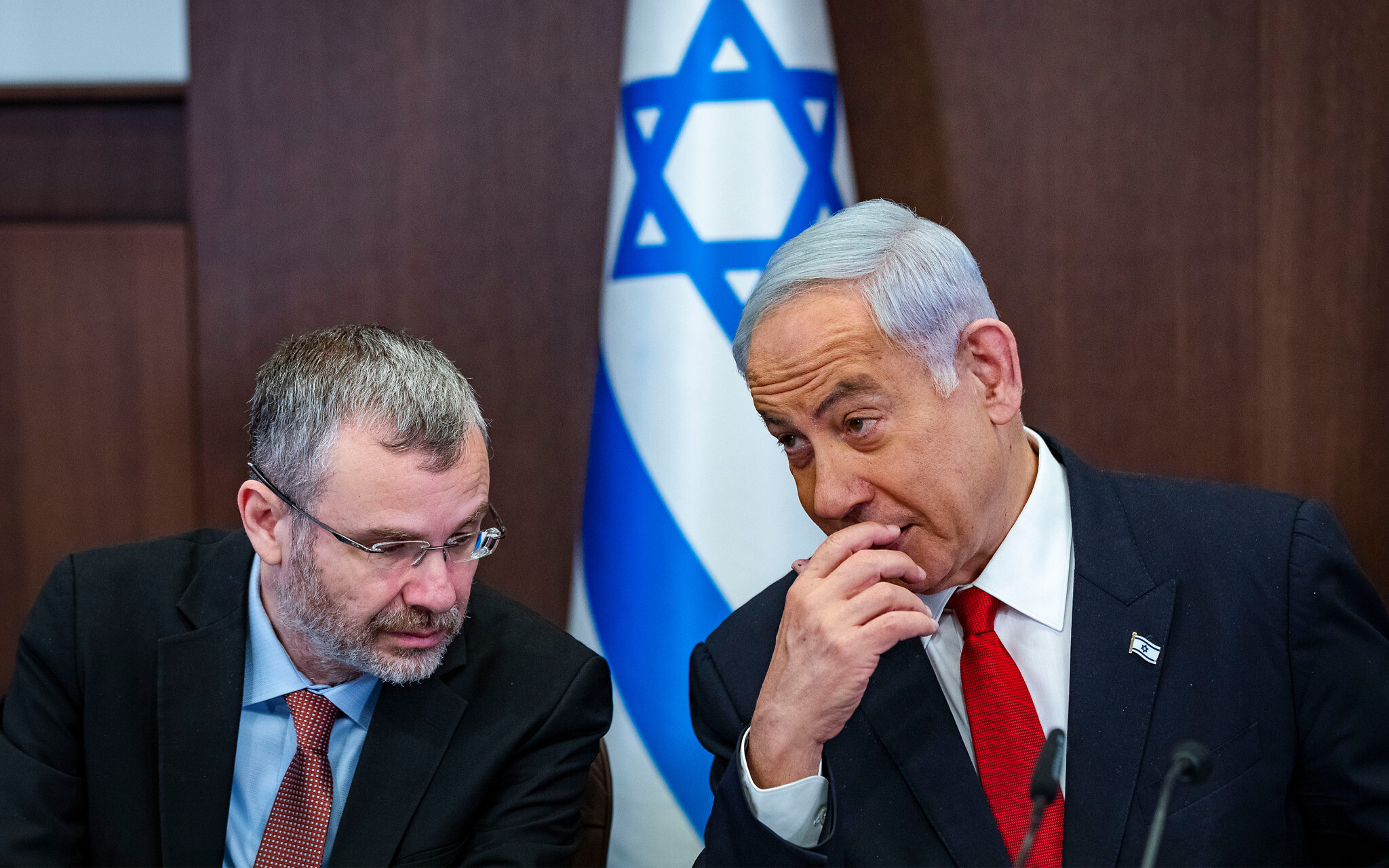
Prime Minister Benjamin Netanyahu, right, with Justice Minister Yariv Levin, left, during a cabinet meeting at the Prime Minister’s Office in Jerusalem on April 2, 2023. (Olivier Fitoussi/Pool)

Netanyahu said that a major domestic crisis over his government’s plan to overhaul the judiciary has not affected Israel’s ability to strike.

“The internal argument in Israel doesn’t harm and won’t harm our determination or intensity or our capabilities to act against our enemies on all fronts, in any place and at any time necessary,” he said.

Some reservists have pledged not to show up for duty so long as the overhaul moves forward, prompting military and defense officials to warn of damage to the military’s capabilities. Netanyahu has paused the overhaul for now.

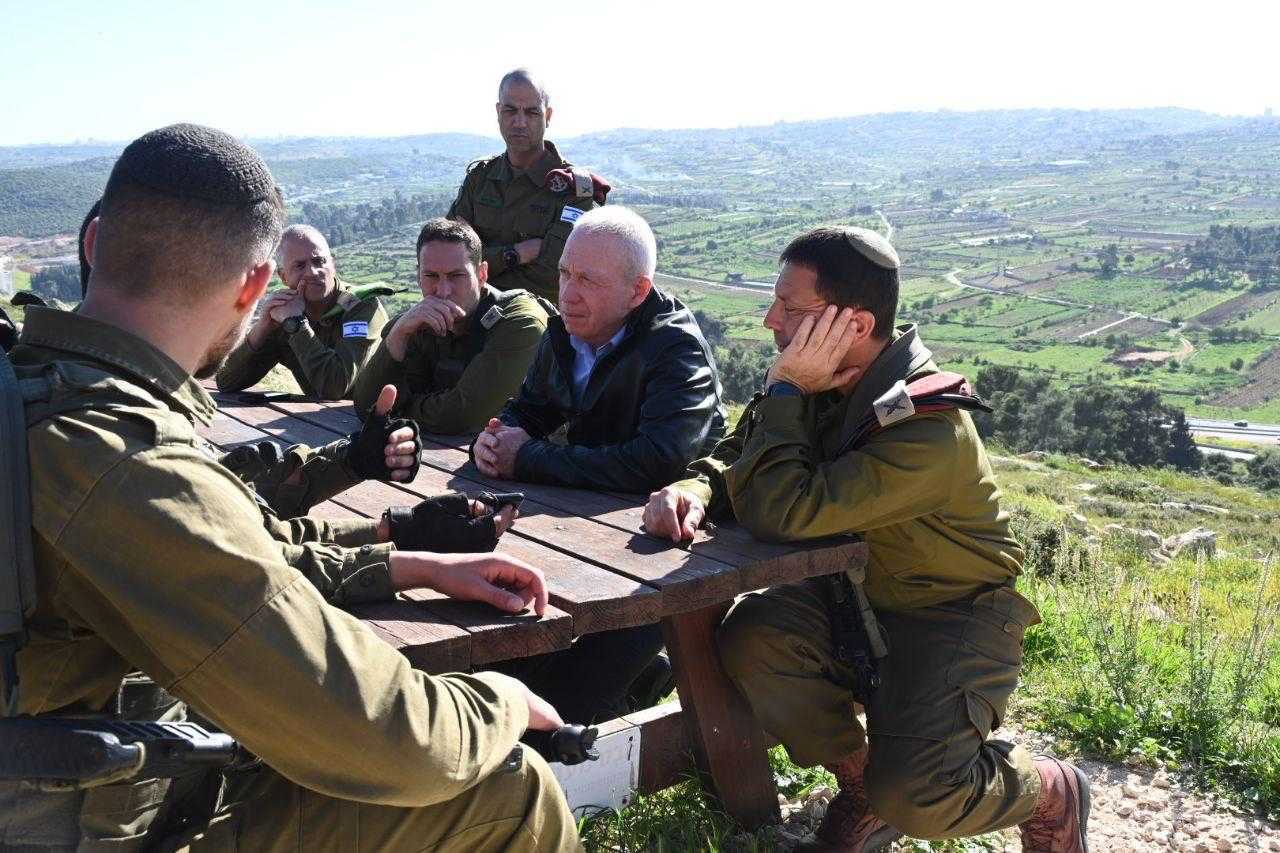
Later Sunday, Defense Minister Yoav Gallant commented about Syria during a visit to soldiers in the West Bank but did not directly confirm the recent airstrikes.

Defense Minister Yoav Gallant (second from right), during a briefing in the West Bank on April 2, 2023. (Ariel Hermoni/ Defense Ministry)

“We will not allow the Iranians and Hezbollah to harm us. We have not allowed it in the past, we won’t allow it now, or anytime in the future,” Gallant said. He also accused Iran of seeking to entrench its presence along Israel’s borders.

“When necessary – we will push them out of Syria to where they belong – and that is Iran,” Gallant said.

The latest alleged airstrikes came after two attacks in recent weeks against the Aleppo International Airport, also attributed to Israel. Those attacks temporarily closed the airport’s runway. Also this month, Israel carried out a rare daytime strike against targets in northwestern Syria, injuring three soldiers and causing damage, Syria’s SANA news agency said.