
Washington is reluctant to publicly censure Iran at the IAEA next week
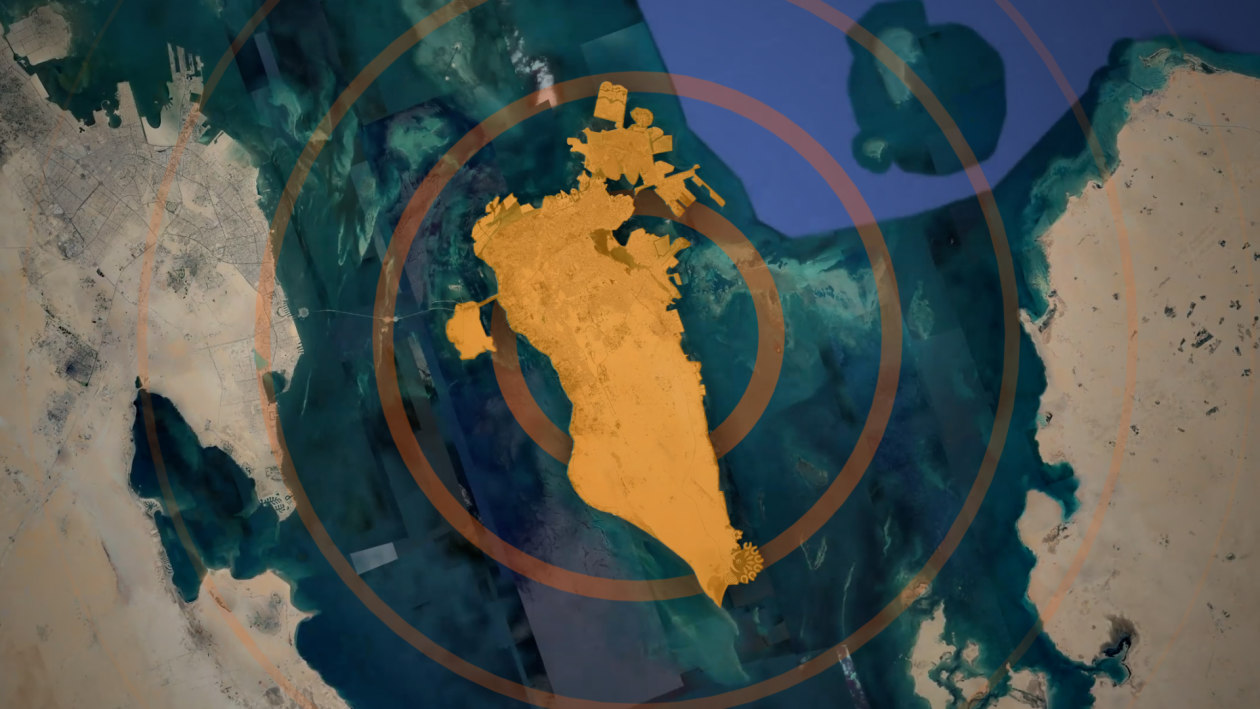
Bahrain: The Tiny Island Playing a Big Role in the Middle East
YOU MAY ALSO LIKE

Bahrain: The Tiny Island Playing a Big Role in the Middle East

Bahrain: The Tiny Island Playing a Big Role in the Middle EastPlay video: Bahrain: The Tiny Island Playing a Big Role in the Middle East
Bahrain plays an important role when it comes to countering Iran and reshaping politics in the Middle East. WSJ’s Shelby Holliday traveled to the Arab kingdom to learn more about its role on the global stage. Illustration: David Fang

Listen to article

The U.S. and its European allies have split over the response to Iran’s production of near-weapons-grade uranium, with Britain, France and Germany favoring a public censure of Tehran while the Biden administration is reluctant to do that, according to diplomats involved in the discussions.

The International Atomic Energy Agency said this week that Iran had produced particles of enriched uranium of around 84% in recent weeks, just shy of the roughly 90% needed for weapons-grade nuclear fuel.

The production of weapons-grade material could spark a crisis over Tehran’s nuclear program. European diplomats say it could be the trigger to kill off the 2015 nuclear deal. Israeli officials have signaled that weapons-grade enrichment is a red line, although they haven’t publicly set out what their response would be. Washington has long warned Iran against crossing that threshold.

The IAEA has said discussions with Tehran on what happened are continuing and officials close to the agency have said they can’t say with certainty whether Iran’s production was accidental or intentional. Tehran says the production of the 84% enriched uranium was unintended.

This week’s IAEA report said that Iran wasn’t stockpiling near-weapons-grade material and that it was still producing 60% enriched uranium at Fordow, a high but less dangerous level.

When the incident was first reported in the media, European officials warned that the enrichment of uranium at that level would be “an unprecedented and extremely grave development.”

Britain, France and Germany wanted to formally censure Iran at an IAEA board of governors meeting next week by passing a resolution calling out Iran’s nuclear activities, the diplomats said.

The board could refer the matter to the United Nations Security Council but hasn’t done so on previous occasions when Iran has been censured.

However, U.S. officials are arguing against a rebuke although a final decision hasn’t yet been taken. Washington wants to see what the agency concludes about the production of the material. IAEA Director-General Rafael Grossi is headed to Tehran on Thursday.

IAEA Director-General Rafael Grossi is headed to Tehran on Thursday.PHOTO: ROSATOM PRESS SERVICE/HANDOUT/SHUTTERSTOCK

They also note that Iran was censured at the IAEA board’s last meeting in November. The European countries are unlikely to push a resolution without Washington’s support.

In a press briefing on Wednesday, State Department spokesman Ned Price said Washington was “going to continue to consult very closely with our partners to do what we believe will be most effective” to address Iran’s nuclear challenge ahead of the IAEA board meeting.

The U.S. and its partners could call an extraordinary IAEA board meeting at some future point if the agency came to a clear conclusion about whether Iran intended to produce the material.

In the past, Iran has reacted angrily to formal rebukes at the board, stepping up its nuclear work or restricting the oversight of IAEA inspectors in response.

The dispute comes as worries grow about Iran’s nuclear ambitions, while the prospects of reviving the 2015 deal—which lifted most international sanctions on Tehran in exchange for tight but temporary limits on its activities—appear slight.

In Munich last month, U.S. Secretary of State Antony Blinken and his British, French and German counterparts tasked senior officials to consider what diplomatic options existed for stopping Tehran from advancing its program.

SHARE YOUR THOUGHTS

How should the West respond to Iran’s latest nuclear activities? Join the conversation below.

U.S. and European diplomats say fresh talks for reviving the 2015 nuclear deal aren’t currently on the agenda given Iran’s brutal crackdown on antigovernment protesters and its support for Russia’s war in Ukraine.

It isn’t the first time the U.S. and its European partners have diverged over how to handle Iran’s nuclear program. Senior European negotiators left the Vienna negotiations on reviving the nuclear deal last March while the U.S. and Iran were still talking, frustrated that Washington and Tehran wouldn’t close a deal.

Some European diplomats have said that over the past 12 months, Washington has appeared unwilling to either pay the political cost of reviving the nuclear pact or take the risks of a tougher stance on Iran’s nuclear work.

After the U.S. left the nuclear deal in 2018, Iran began to expand its nuclear program. Two years ago, it started producing 60%-enriched uranium, the only nonnuclear weapons country to do so. Iran has far more than enough 60% material for a single nuclear weapon if further enriched to weapons-grade levels, a process that would take a few weeks, U.S. officials say.

A satellite image provided by Maxar Technologies shows Iran’s Fordow plant.PHOTO: -/AGENCE FRANCE-PRESSE/GETTY IMAGES

Iran claims its nuclear program is for purely peaceful purposes. Central Intelligence Agency Director William Burns said last week that the agency doesn’t believe Iran has taken a decision to resume work on making a nuclear weapon.

The discovery of near-weapons-grade material in Iran is the latest run-in between Iran and the agency. The IAEA reported this week it took samples at Iran’s underground Fordow nuclear site on Jan. 22, the day after it discovered Iran had connected up cascades of advanced centrifuges, machines for enriching uranium, without informing the agency.

Iran has also failed to cooperate with an IAEA probe into undeclared nuclear material found in Tehran, the agency says.

The traces of 84%-enriched uranium were found in the cascades Iran had connected up without informing the agency. The aim of that work, diplomats say, was to produce highly enriched uranium more efficiently and possibly to experiment with pathways for producing weapons-grade material.

“Whether Iran’s enrichment to 84 percent was accidental or not, the message to Iran needs to be clear—that nearing weapons grade levels is unacceptable,” said Eric Brewer, deputy vice president at the Nuclear Threat Initiative, a Washington-based security think tank and a former director for counter-proliferation at the National Security Council. “Iran needs to hear this from everyone.”
Iran’s analysis is that Israel doesn’t have enough interceptors to deal with a long war with Iran and its proxies.

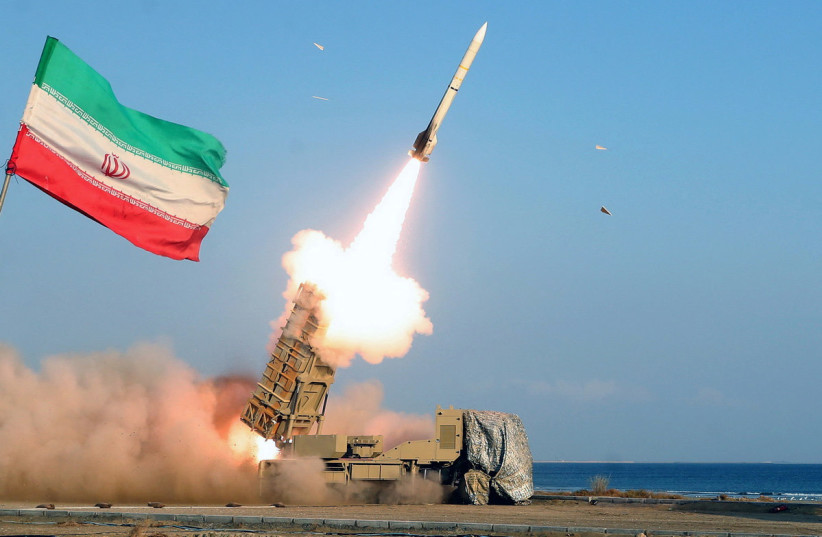
 A missile is launched during an annual drill in the coastal area of the Gulf of Oman and near the Strait of Hormuz, Iran (photo credit: REUTERS)
A missile is launched during an annual drill in the coastal area of the Gulf of Oman and near the Strait of Hormuz, Iran
(photo credit: REUTERS)

Iranian pro-regime media is closely following developments in Israel, particularly reports about Israel-Iran tensions. On Tuesday Iran’s Fars News reported that “Israel does not have the ability to take military action against Iran.”

Iran ascribed this report to “Zionist media” and was ostensibly re-reporting based on other regional media, but the overall length of the Iranian report indicates that Iran wants to closely analyze the current tensions with Israel.

Iran’s media has highlighted claims that Israel’s “missile depot” has been “emptied” during recent conflicts with the “Palestinian resistance.” The report emphasized that “Israel is not ready to attack Iran.”

 Ian thinks that Israel is not in a position to attack, will that change the Tehran regime’s calculations and policies?

This is a key question and it is worth looking at what issues the regime is currently focused on.

First of all, Iran believes that current issues in Israel make it more complex for Israel to confront Iran.

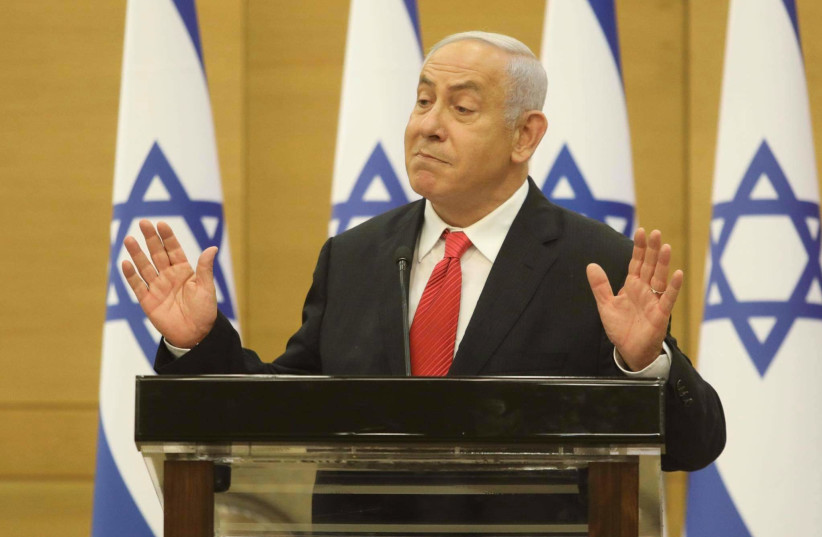
Benjamin Netanyahu is seen gesturing at the Knesset, on July 26, 2021. (credit: MARC ISRAEL SELLEM/THE JERUSALEM POST)Benjamin Netanyahu is seen gesturing at the Knesset, on July 26, 2021. (credit: MARC ISRAEL SELLEM/THE JERUSALEM POST)

Why does Iran think that Israel “does not have the ability to take military action,” according to the report? Reports in the last weeks have shed light on some of these issues. For instance, Breaking Defense wondered in November 2022, after the Israeli elections, whether a return to power by Prime Minister Benjamin Netanyahu would increase the chances of a “solo strike” on Iran. Iran International, a media organization that opposes Iran’s regime, also noted on February 22 that “Israel signals readiness for a military confrontation with Iran.”

On January 11, Michael Makovsky, a former Pentagon official, who is president and CEO of the Jewish Institute for National Security of America noted in The New York Post “Israel is ready to strike Iran’s nuclear program if necessary — America must prepare to work with it.” JINSA also recently praised US Senator Tom Cotton for legislation that would have Israeli pilots train on the KC-46A refueling tankers.

“America needs to provide our Israeli allies with the military capabilities they need to protect themselves from an increasingly dangerous Iran. Training these pilots now will send a message to Tehran and will ensure that Israel is able to use these planes the day they receive them,” said Cotton in a statement.

But Iran knows there are many issues involved. The tankers won’t be delivered to Israel soon. Iran’s Fars News noted that Israel “can continue cyber activities and destabilizing measures against Iran.” It is no coincidence that Iran also announced today that it is conducting an air defense drill and practicing with its own cyberdefense capabilities. Another focus of Iran has been attempting to analyze Israel’s 10-day war with Hamas in 2021. That was a war that Iran helped provoke, encouraging Hamas to confront Israel. Iran backs Hamas and it wanted to have Hamas attempt to fire large salvos of missiles in an attempt to try to overwhelm the Iron Dome system.

Iran’s analysis is that Israel doesn’t have enough interceptors to deal with a long war with Iran and its proxies. Its proxies include militias in Iraq and Syria, as well as Hezbollah, and groups such as Palestinian Islamic Jihad. Iran also works with the Houthis in Yemen and Hamas. Iran thinks that Israel does not currently have a clear policy alongside the US or European countries to deter Iran. That means Iran thinks the “military option is not on the table,” according to the Fars News report.

Iran is also closely watching how foreign countries react to Israel’s current right-wing government. The increasing attacks in the West Bank, and the controversy caused by settler attacks on Palestinians are of great interest to Iran. In the past Iran has tried to stoke tensions against Israel during Ramadan, which is approaching. Israel has tried to calm tensions and has met with the Jordanians. Iran’s media notes that while Israel is focused on the West Bank, Iran is ”conducting extensive air defense maneuvers” and some of Israel’s new government ministers are not meeting with their US or European counterparts. Iran is thus able to “prevent any aggressive action by America or Israel.”

In Iran’s view, which it bases on its own assessment of reports in Israeli and foreign media, Israel has dithered over the last years in terms of preparations to strike Iran. Meanwhile, Iran has built up its drone and missile force that it could use to fire large numbers of missiles. It’s not clear if this refers to missiles in the hands of Hezbollah and Hamas, or if it means actual Iranian missiles. In the past Iran has moved ballistic missiles to Iraq and also via Syria to Lebanon.

“The new statements of the Zionist circles [are] that there is no serious military option against Iran in the hands of Netanyahu.”

Iran views Israel as “crisis-stricken.”  

Tehran has watched Israel’s protests closely. It refers now to media reports about the potential that Israeli reservists could refuse to serve as a form of protest. “100 officers from the special operations brigade of the Zionist regime announced that they will leave their military service if the movement towards reforms continues,” the Fars News report says.

Iran’s regime is watching Israel closely these days, amid the increased tensions that have come about due to Iran’s enrichment of uranium. Iran would still need to reach “breakout,” the period of time when Iran has enriched to 90% and then decides to build a bomb. Iran then needs to produce several dozen kilograms of weapon-grade uranium. While breakout time may be several months, the time to build a bomb takes many more months. This weaponization would require deterrence by Israel and other states.

The key point for Iran is that the regime thinks divisions in Israeli society, the current violence in the West Bank, Western opposition to the far-right parts of Netanyahu’s government, and lessons of the 2021 conflict in Gaza, all mean that a chance of a conflict has diminished. Iran could see this as giving it a window to do more work on weaponization. However, it could also prefer to move more slowly, bolstering air defenses, sending air defenses to Syria and cementing ties with Russia. These are the key changes that may be afoot as Tehran thinks the tensions in the region are mostly smoke, but not so much fire.


It comes down to whether Prime Minister Benjamin Netanyahu is prepared to give in to US pressure to deliver to embattled Ukraine the anti-missile defense technology that Israel developed with US funding. According to an NBC News report Tuesday night, Netanyahu may be cracking under the pressure (Netanyahu bows to U.S. pressure to distance Israel from Putin).

Tovah Lazaroff, who moonlights as the Deputy Managing Editor of The Jerusalem Post, conceded on the NBC website that “Russia has been Netanyahu’s partner in neighboring Syria, where it is one of President Bashar al-Assad‘s most important military backers. An agreement with Israel has made it possible for the Israeli army to conduct aerial raids against Iranian-linked targets there.”

In other words, should Netanyahu make the foolish mistake of arming Ukraine with the David’s Sling system, Israel would not be able to continue to attack the continuous Iranian and Hezbollah shipments of weapons and military technology north of its border.

On February 1, Russian Foreign Ministry spokesperson Maria Zakharova put it bluntly: “We say that all countries that supply weapons [to Ukraine] should understand that we will consider these [weapons] to be legitimate targets for Russia’s armed forces.”

She added: “Any attempts––implemented or even unrealized but announced for the supply of additional, new, or some other weapons––will lead to an escalation of this crisis. And everyone should be aware of this.”

Zakharova responded to a CNN interview with Netanyahu, where he said that he was “looking into” giving Ukraine “other kinds of aid” in addition to humanitarian aid. He then went into a lengthy explanation of why it would be suicidal for Israel to furnish Ukraine with Israel’s advanced defense systems:

“Just miles from here, on our northern border in Syria, Israeli aircraft and Russian aircraft are flying within spitting distance of each other,” he said, adding: “Iran is trying to plant itself in Syria right next to our northern border, the way they did in Lebanon with Hezbollah. I’ve adopted a policy over the last 7-8 years to militarily hit Iran’s military installations. They wanted to build an army here of 100,000 Shiite militia commanded by Iranian generals and we’ve systematically degraded them.”

“Israel needs to have freedom of action in the air… I was very open with Putin about that. We can clash or we can make sure that we coordinate in such a way that our air forces do not clash,” the PM stated clearly.

President Volodymyr Zelensky has been applying pressure on Israel steadily and relentlessly to give him the defense systems, a move that in turn would leave Israel defenseless on its northern border. On October 17, the West’s favorite spoiled child told the Munich Security Conference (over Zoom): “We do not have yet the David’s Sling from Israel, but I believe it is just temporary.”

And a day earlier, Ukrainian Foreign Minister Dmytro Kuleba told his visiting Israeli counterpart Eli Cohen in Kiev: “Israel knows perfectly well the list of our military and defensive requests which we have provided … and we will be waiting for some decisions to be taken. We are talking about the provision of the Ukrainian skies.”

Netanyahu should be more concerned with the provision of the Israeli skies.

Lazaroff reported on a visit by two Israeli MKs of Ukrainian extraction, both of whom are on the outs with Netanyahu these days: Yuli Edelstein (Likud), who was demoted by the PM from minister to Knesset committee chairman; and Ze’ev Elkin (National Unity) who slammed the door on Netanyahu to join Gideon Sa’ar and later Benny Gantz (Bibi made him Minister of Water). Ignoring these pesky details, Lazaroff presented their pro-Ukrainian message as a sign of a coming shift in Israeli policy about the Putin-Zelensky confrontation.

“Israel can and should do much more than it has done so far,” Brother Yuli and Brother Ze’ev said in a joint statement in Kiev. “We must stop being afraid, and take an active unequivocal position in accordance with the basic moral values, as would be expected from any Western country.”

Message received. Although it should be noted that more than most other Western countries, Israel is very much a Middle-Eastern country, where strategic mistakes such as poking the Russian bear end up with responses reminiscent of the Cocaine Bear, a 500-pound black bear that consumed a large amount of cocaine and embarked on a drug-fueled murderous rampage.
