
Darius the Great is the father of King Ahasuerus, also known as the biblical Achashverosh from the story of Purim • Discovery was made by international media advisor to Israeli President Isaac Herzog

 The Darius inscription. (photo credit: SHAI HALEVI / ISRAEL ANTIQUITIES AUTHORITY)
The Darius inscription.
(photo credit: SHAI HALEVI / ISRAEL ANTIQUITIES AUTHORITY)

An inscription bearing the name of the Persian king Darius the Great was discovered in the Tel Lachish National Park in the first discovery of an inscription bearing the king’s name anywhere in Israel.

The discovery was made by Eylon Levy, the international media advisor to Israeli President Isaac Herzog.

Levy reportedly chanced on a 2,500-year-old potsherd with the inscribed letters of the ancient king and reported it to the Israel Antiquities Authority.

The king’s name on the inscription, Darius the Great, is the father of King Ahasuerus, also known as the biblical Achashverosh from the story of Purim and the Book of Esther.

“When I picked up the ostracon and saw the inscription, my hands shook. I looked left and right for the cameras because I was sure someone was playing an elaborate prank on me,” said Levy.
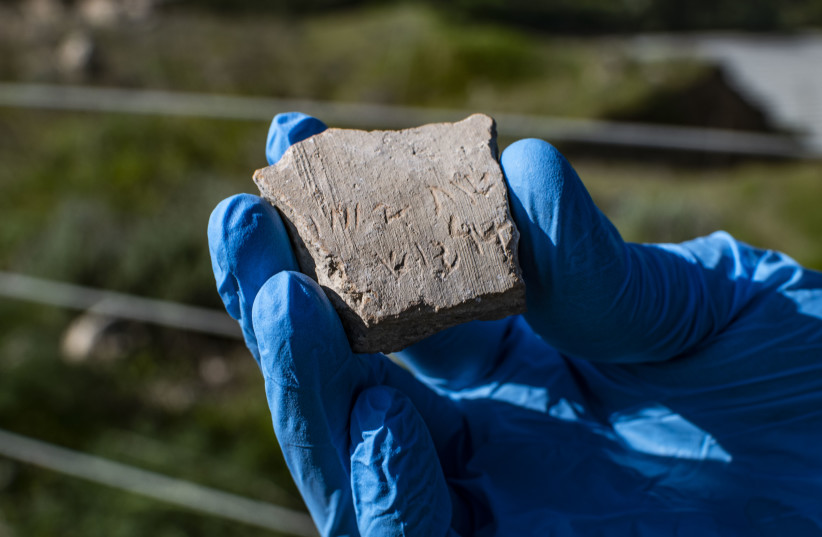
 The Darius inscription. (credit: YOLI SCHWARTZ/ISRAEL ANTIQUITIES AUTHORITY)The Darius inscription. (credit: YOLI SCHWARTZ/ISRAEL ANTIQUITIES AUTHORITY)

“When I was walking around here with a friend just exploring the history, I was turning over pieces of pottery and stones in my hand and suddenly, I found something that had letters on it and I thought this was too good to be true,” Levy added.

Analysis of the discovery

When Levy found the potsherd, he reported it to the Israel Antiquities Authority, where he said that three people at the organization were skeptical that it was real but intrigued by what Levy had found.

A few weeks later, Levy received a phone call from Saar Ganor of the Israel Antiquities Authority and said that he was “on his way from the Dead Sea Scrolls labs. We’ve put it through three scanners. This is authentic. No modern had could do it and it’s from two and a half thousand years ago from before the story of Purim.”

“When I was walking around here with a friend just exploring the history, I was turning over pieces of pottery and stones in my hand and suddenly, I found something that had letters on it and I thought this was too good to be true.”

Eylon Levy

Ganor analyzed Levy’s discovery with Dr. Haggai Misgav of the Hebrew University of Jerusalem and they both confirmed that the artifact dated to the Persian royal administration at Lachish in the Achaemenid period, at the turn of the fifth century BCE.

The inscription reads “Year 24 of Darius,” which dates back to 498 BCE. The king’s reign began in 522 BCE and ended in 486 BCE.

 Examining the inscription under a microscope in the Israel Antiquities Authority Analytical Laboratory. (credit: Saar Ganor/Israel Antiquities Authority)Examining the inscription under a microscope in the Israel Antiquities Authority Analytical Laboratory. (credit: Saar Ganor/Israel Antiquities Authority)
 Right to left: Yakov Ashkenazi, Eylon Levy, Dr. Haggai Misgav and Saar Ganor. (credit: YOLI SCHWARTZ/ISRAEL ANTIQUITIES AUTHORITY)Right to left: Yakov Ashkenazi, Eylon Levy, Dr. Haggai Misgav and Saar Ganor. (credit: YOLI SCHWARTZ/ISRAEL ANTIQUITIES AUTHORITY)

Eli Escuzido, Director of the Israel Antiquities Authority, stated that “it’s amazing that visitors to the site come across such a rare inscription ‘reviving’ the Persian King Darius known to us from the sources! His son King Ahasuerus could never have imagined that we would find evidence of his father in Israel 2,500 years after the dramatic events in his royal court!”
While US officials say Iran has grown closer to producing fissile material, they do not believe it has mastered the technology to actually build a bomb.

 Nuclear bomb explosion (photo credit: PUBLIC DOMAIN)
Nuclear bomb explosion
(photo credit: PUBLIC DOMAIN)

Iran could make enough fissile for one nuclear bomb in “about 12 days,” a top US Defense Department official said on Tuesday, down from the estimated one year it would have taken while the 2015 Iran nuclear deal was in effect.

Under Secretary of Defense for Policy Colin Kahl made the comment to a House of Representatives hearing when pressed by a Republican lawmaker why the Biden administration had sought to revive the deal, the Joint Comprehensive Plan of Action (JCPOA).

“Because Iran’s nuclear progress since we left the JCPOA has been remarkable. Back in 2018, when the previous administration decided to leave the JCPOA it would have taken Iran about 12 months to produce one bomb’s worth of fissile material. Now it would take about 12 days,” Kahl, the third ranking Defense Department official, told lawmakers.

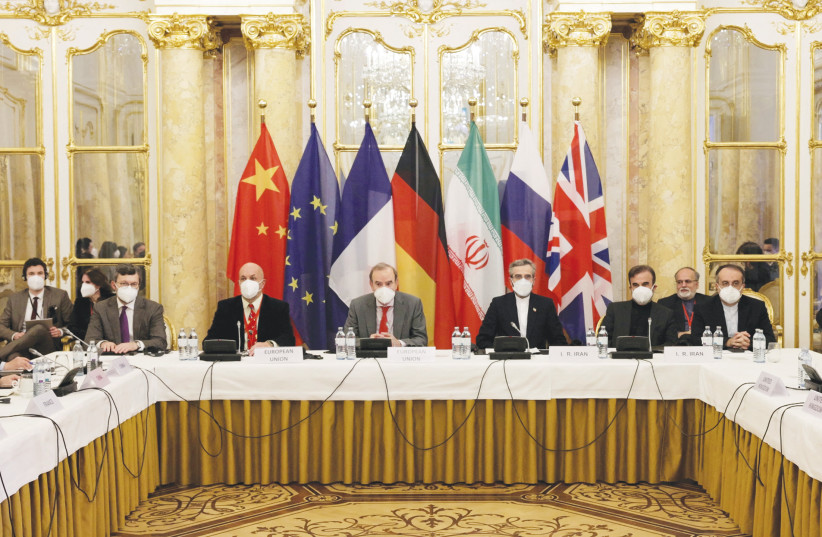
 MEMBERS OF the JCPOA Joint Commission convene in Vienna last month. (credit: EU Delegation in Vienna/European External Action Service/Reuters)MEMBERS OF the JCPOA Joint Commission convene in Vienna last month. (credit: EU Delegation in Vienna/European External Action Service/Reuters)

“And so I think there is still the view that if you could resolve this issue diplomatically and put constraints back on their nuclear program, it is better than the other options. But right now, the JCPOA is on ice,” Kahl added.

US officials have repeatedly estimated Iran’s breakout time – how long it would take to acquire the fissile material for one bomb if it decided to – at weeks but have not been as specific as Kahl was.

While US officials say Iran has grown closer to producing fissile material, they do not believe it has mastered the technology to actually build a bomb.

The 2015 Iran deal

Under the 2015 deal, which then-US President Donald Trump abandoned in 2018, Iran had reined in its nuclear program in return for relief from economic sanctions.

Trump reimposed US sanctions on Iran, leading Tehran to resume previously banned nuclear work and reviving US, European and Israeli fears that Iran may seek an atomic bomb. Iran denies any such ambition.

The Biden administration has tried but failed to revive the pact over the last two years.


Two Israelis shot dead in West Bank terror attack — IDF

Officials say gunman opened fire at Israeli-owned car in Huwara, killing brothers Hillel Yaniv, 21, and Yagel Yaniv, 19; troops launch manhunt for attacker

Israeli security forces secure the scene of a shooting attack in Huwara, in the West Bank, near Nablus, February 26, 2023. Inset: Brothers Hillel (right) and Yigal Yaniv, who were killed in the attack. (Nasser Ishtayeh/Flash90; courtesy)

Israeli security forces secure the scene of a shooting attack in Huwara, in the West Bank, near Nablus, February 26, 2023. Inset: Brothers Hillel (right) and Yigal Yaniv, who were killed in the attack. (Nasser Ishtayeh/Flash90; courtesy)

Two Israeli brothers were shot dead in a terror attack in the northern West Bank town of Huwara on Sunday, the military and medics said.

The Israel Defense Forces said a Palestinian gunman opened fire from close range at an Israeli-owned car on the Route 60 highway, then fled the scene, apparently on foot.

The two were named as brothers Hillel Yaniv, 21 and Yagel Yaniv, 19, residents of the West Bank settlement of Har Bracha.

Graphic footage from the attack in Huwara showed the victims’ car riddled with bullets. Troops at the scene found 12 nine-millimeter shell casings, indicting the attacker used a handgun or makeshift submachine gun.

An initial probe of the shooting suggested the gunman took advantage of a traffic jam on the highway to carry out the attack.

The Magen David Adom ambulance service initially said its medics were treating two men who were critically hurt and were taking them by helicopter to a hospital. However, they were later announced to have died.

The IDF said it had launched a manhunt for the gunmen, closing off several roads in the area.

Brothers Hillel (right) and Yagel Yaniv, who were killed in a terror attack near Huwara on February 26, 2023. (Courtesy)

On Sunday evening, after holding a situation assessment with top defense officials, Defense Minister Yoav Gallant ordered the military to ramp up operations in the West Bank to locate the gunman.

“Gallant directed the security forces to focus operational and intelligence efforts to capture the terrorists, while taking any necessary action, including offensive actions, to prevent further attacks,” his office said in a statement.

Gallant also approved a bolstering of military forces in the West Bank, “with the aim of expanding defense operations in the settlements and on the roads,” his office added.

Huwara has long been a flashpoint in the West Bank as it is just about the only Palestinian town through which Israelis regularly travel in order to reach settlements in the northern West Bank.

There have been several shooting attacks against Israeli motorists on Route 60 in Huwara.

In recent months, Palestinian gunmen have repeatedly targeted military posts, troops operating along the West Bank security barrier, Israeli settlements and civilians on the roads.

Israeli security forces secure the scene of a shooting attack in Huwara, in the West Bank, near Nablus, February 26, 2023. (Nasser Ishtayeh/Flash90)

Tensions between Israel and the Palestinians have been high for the past year, with the IDF conducting near-nightly raids in the West Bank amid a series of deadly Palestinian terror attacks.

A string of Palestinian terror attacks in Jerusalem in recent weeks left 11 people dead and several more seriously hurt.

Over 60 Palestinians have been killed since the beginning of the year, most of them while carrying out attacks or during clashes with security forces, but some were uninvolved civilians and others were killed under circumstances that are being investigated.

The attack on Sunday came as Israeli and Palestinian officials sat down for a meeting in Jordan in a bid to restore calm to the West Bank and the Gaza Strip amid deadly violence.
